
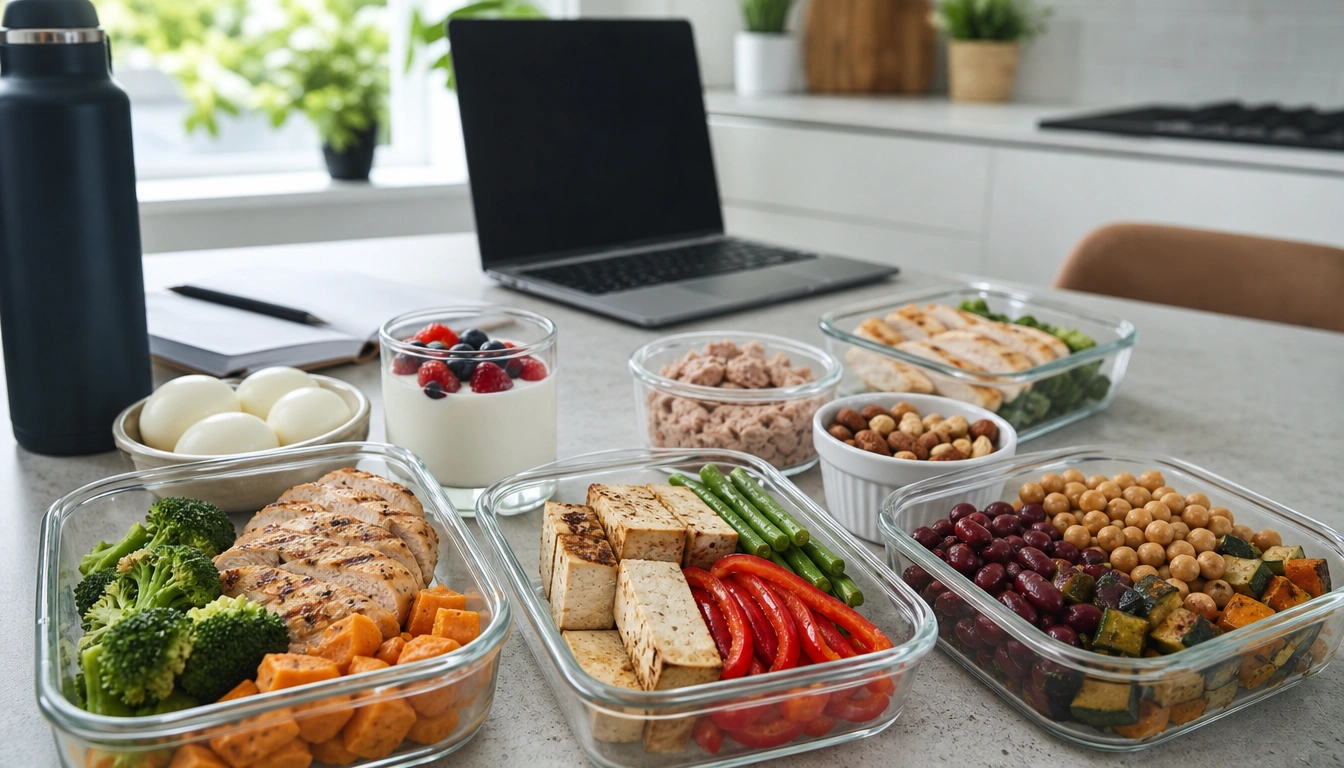
A simple protein meal plan for busy professionals does not need calorie counting or elaborate meal prep. Start with a protein anchor at each meal, aim for a quarter of the plate from protein foods, and keep shelf-stable or ready-to-eat options available for rushed workdays. For many adults, that means mixing Greek yogurt, eggs, fish, poultry, tofu, beans, lentils, cottage cheese, or similar foods across the day.
Key Takeaways
- Build meals around a protein anchor first, then add vegetables, fruit, and whole grains for balance and staying power.
- A quarter-plate protein pattern is an easy visual guide when you do not want to track calories or macros.
- Older adults may do better with roughly 25–30 grams of protein per meal to support muscle maintenance.
- Whole or minimally processed protein foods usually beat ultra-processed meats because they come with better fats, fiber, and micronutrients.
- Plant-based protein can absolutely fit a busy schedule if you mix sources across the day and keep convenient staples on hand.
- If you have kidney disease or another medical condition, protein targets should be individualized with a clinician or dietitian.
Why busy professionals struggle with protein consistency and how much you actually need
Simple protein meal plan for busy professionals works best when it solves the real problem: not a lack of information, but a lack of time and decision energy. Meetings run long, commuting cuts into meal windows, and convenience foods are usually built around speed rather than satiety. Protein helps because it supports muscle repair and tends to be more filling than a snacky, refined-carb-heavy meal, which can reduce the mid-afternoon crash that pushes people toward vending machines.
The baseline reference point from the National Academy of Medicine is 0.8 grams of protein per kilogram of body weight per day for adults. That is a minimum population guideline, not a custom target for every schedule or goal. Many active adults, and many people who want better appetite control or muscle maintenance, may aim higher, with public health and clinical guidance often discussing ranges around 1.2 to 1.6 grams per kilogram per day for selected groups.
For a busy professional, the more useful question is usually not, “What is my exact number?” It is, “How do I distribute protein so each meal actually helps?” That is where meal timing matters. Older professionals in particular may benefit from getting roughly 25–30 grams per meal, because aging can make muscle maintenance harder and smaller protein doses may not stimulate muscle protein synthesis as effectively.
In practice, this means a sedentary office worker does not need bodybuilding-style eating. The target is consistency: enough protein at breakfast to prevent a slump, enough at lunch to avoid a 3 p.m. crash, and enough at dinner to support recovery and fullness. According to Harvard’s healthy plate approach, a quarter of the plate can be protein, with the rest filled out by vegetables, fruit, and whole grains.
The simplest way to build a protein-focused plate without calorie counting
Think in plates, not apps. At most meals, make protein the most intentional part of the plate, then add color and fiber around it. A practical plate is often half vegetables or fruit, one quarter protein, and one quarter whole grains or starchy plants. That pattern helps you avoid the common busy-day mistake of eating a carb-heavy lunch that looks efficient but leaves you hungry again an hour later.
The quarter-plate protein model is flexible enough for office life. A breakfast plate might be eggs or Greek yogurt with fruit and toast. A lunch bowl might include chicken, tuna, tofu, beans, or cottage cheese alongside grains and vegetables. Dinner might be salmon with microwaved rice and a steam-in-bag vegetable mix. You are not trying to make every meal identical; you are trying to make sure each meal contains a real protein anchor.
Food quality matters here. Not all protein foods contribute equally to long-term health. Whole or minimally processed options usually bring along healthier fats, more potassium or calcium or iron, and less sodium than deli meats, sausages, hot dogs, or similar ultra-processed choices. Those foods can be convenient, but they should not become the default protein source simply because they are easy.
A practical way to judge the plate is to ask: Does this meal have a clear protein source, produce, and a simple carb or fiber source? If yes, you probably have a meal that will hold up through a workday. If not, you may have a snack pretending to be lunch.
Batch-and-assemble: the no-cook pantry and fridge staples that make this work
Busy professionals do better with a system than with motivation. The easiest system is batch-and-assemble: keep a small set of proteins, vegetables, and starches ready, then combine them in minutes. The goal is not gourmet cooking; it is reducing the number of decisions between leaving a meeting and eating something decent.
Useful pantry staples include canned tuna or salmon, canned chickpeas, black beans, lentils, nut butters, and shelf-stable milk or soy beverages if you use them. Fridge staples can include plain Greek yogurt, cottage cheese, eggs, pre-cooked chicken strips, tofu, edamame, bagged salad, pre-washed greens, hummus, and washed fruit. If you prefer plant-based meals, keep tofu, tempeh, beans, lentils, edamame, soy yogurt, and whole grains ready to go.
Batching can be very small. You do not need a Sunday meal-prep marathon. You can cook one grain, wash some produce, hard-boil a few eggs, and portion a protein or two into containers. That is enough to create multiple lunches and backup dinners. A major win is having mix-and-match parts instead of fully cooked meals that you get bored with by day three.
For the office, convenience matters. A desk drawer or office fridge can hold shelf-stable or long-lasting options such as nuts, roasted edamame, tuna packets, single-serve nut butter, plain protein bars with minimal added sugar, or shelf-stable dairy or soy beverages if your workplace allows them. This is not about hoarding snacks; it is about making the easy choice the better choice.
Fast meal templates for breakfast, lunch, and dinner
Templates lower friction because you do not have to invent a meal every day. For breakfast, aim for a fast protein base you can eat in under five minutes. Greek yogurt with berries and chia seeds is a strong option. So are eggs with toast and fruit, cottage cheese with sliced tomatoes and crackers, or tofu scramble made ahead and reheated. If mornings are chaotic, even a smoothie with a protein-rich base and fruit can work, though whole foods usually keep you fuller longer.
Lunch needs to be portable and not messy. A simple bowl works well: pre-cooked grain, a protein, chopped vegetables, and an easy dressing. Tuna with beans and greens. Chicken with quinoa and cucumbers. Tofu with rice and shredded carrots. Lentils with chopped peppers and feta if you eat dairy. The format matters more than the exact ingredients.
Dinner should be the least complicated meal, not the most elaborate. Think of a protein, a vegetable, and a fast starch. Salmon with microwave rice and frozen broccoli. Eggs with sautéed spinach and toast. Rotisserie chicken with bagged salad and a baked potato. Tofu or shrimp with steam-in-bag vegetables and instant brown rice. These are not “special diet” meals; they are practical meals that protect your time.
If you want the meal plan to feel repeatable, pick two breakfast templates, two lunch templates, and two dinner templates, then rotate them. Repetition is useful in busy weeks because it removes decision fatigue. Variety can come from sauces, vegetables, and grain choices rather than from reinventing the whole meal.
Desk-friendly protein snacks and meeting-day backup options
Long meetings and unpredictable calendars are where good intentions usually fall apart. The solution is a small backup system. Keep desk-friendly protein snacks available so you are not forced into a pastry, chips, or candy bar when a meeting runs over. Good options include roasted edamame, nuts, single-serve yogurt if refrigeration is available, tuna packets, jerky or meat sticks with a short ingredient list, cottage cheese cups, cheese sticks, or roasted chickpeas.
Use snacks as gap fillers, not meal replacements by default. A snack works best when it bridges the time between meals or prevents overeating later. If you know you will miss lunch, pair a snack with something more substantial rather than relying on crackers alone. Protein plus fiber is the more stable combination.
For plant-forward planning, the main idea is to mix protein sources across the day so your total intake covers a broad range of amino acids. That does not mean every plant protein must be “complete” in one sitting. It means meals can complement each other over the day: beans at lunch, soy or tofu at dinner, oats with nut butter and yogurt at breakfast, or lentils one meal and edamame another. A varied day makes plant-based protein much easier to sustain.
If you are mostly plant-based, pay attention to texture and convenience. Pre-cooked lentils, canned beans, tofu cubes, edamame, soy yogurt, hummus, and seed toppings make it easier to build a real protein pattern without extra cooking. The goal is not perfection; it is having enough dependable combinations to make plant-forward eating realistic on workdays.
When a high-protein plan is not appropriate
A higher-protein pattern is not one-size-fits-all. The biggest exception is chronic kidney disease or impaired kidney function. People with kidney disease may need individualized protein guidance, and unmonitored high-protein eating can create problems. If kidney disease is present, protein changes should be discussed with a physician or nephrologist rather than self-prescribed.
Other situations also call for personal guidance: diabetes with kidney involvement, significant liver disease, a history of eating disorders, unexplained weight loss, or any therapeutic diet prescribed for a medical condition. In those cases, the right protein target depends on diagnosis, medications, lab work, and overall calorie intake. A registered dietitian nutritionist can help translate that into a workable meal plan.
Even without a medical condition, more protein is not automatically better. If a plan crowds out vegetables, whole grains, fruit, and fluids, it becomes less balanced. If it leans heavily on ultra-processed meats, it may be less heart-friendly than a plan built around eggs, fish, yogurt, beans, tofu, poultry, and nuts. The safest plan is the one that fits your actual health needs and your actual workday.
A realistic one-day sample routine for a busy work schedule
Here is what a realistic day can look like without fancy cooking. Breakfast: Greek yogurt with berries and walnuts, plus whole-grain toast. Lunch: a grain bowl with chicken or tofu, greens, cucumbers, tomatoes, and olive oil and lemon. Afternoon backup: roasted edamame or a cheese stick and fruit if you have a long gap before dinner. Dinner: salmon, microwave rice, and steamed vegetables. If you prefer plant-based eating, swap the chicken or salmon for tofu, tempeh, lentils, or beans.
That schedule works because each eating occasion has a protein anchor, and none of them require a long cooking session. It also leaves room for normal life. If breakfast is missed, the lunch bowl still carries the day. If lunch is delayed, the desk snack prevents a vending-machine crash. If dinner is late, the meal is still simple enough to happen after a long commute.
The biggest benefit of this style of eating is that it scales. A very busy week can still be supported by the same structure: one protein at breakfast, one at lunch, one at dinner, and one backup snack option if needed. You can repeat the framework for weekdays and loosen it up on weekends.
How to make the plan sustainable during travel, overtime, and chaotic weeks
Sustainability comes from building a system that survives imperfect weeks. Travel days, client dinners, overtime, and back-to-back meetings can all be handled with a few rules. First, keep at least one protein backup in your bag, car, or desk. Second, choose the easiest acceptable protein option when your schedule is disrupted, not the most “ideal” option you can imagine. Third, rely on repetition. A meal you will actually eat beats a perfect plan that collapses after two days.
Travel-friendly protein foods include nuts, tuna packets, roasted chickpeas, shelf-stable milk or soy beverages, protein bars with modest added sugar, peanut butter packets, jerky, and instant oatmeal paired with yogurt or nut butter when available. At restaurants, the easiest move is to center the meal on grilled fish, chicken, eggs, tofu, beans, or a similar protein and add vegetables and a starch.
During overtime weeks, do not chase novelty. Use your most reliable rotation. Grocery order the same few items. Keep the same breakfast template. Use frozen vegetables and microwave grains. Make the workweek boring if boring keeps you consistent. That consistency, more than any single superfood, is what makes a protein-focused plan useful for busy professionals.
If you need a mental shortcut, remember this: protein anchor, produce, simple carb, repeat. That pattern is easy to shop for, easy to pack, and easy to adjust for omnivore or plant-forward eating. It is also flexible enough to survive a schedule that rarely looks the same two days in a row.
Frequently Asked Questions
How much protein do busy adults need per day?
The baseline adult recommendation is 0.8 grams per kilogram of body weight per day. Many adults with active lifestyles, older age, or body composition goals may use a higher range, but the right target depends on health status, activity, and total diet.
What are the easiest high-protein breakfast, lunch, and dinner ideas with minimal prep?
Breakfast can be Greek yogurt, eggs, or cottage cheese with fruit. Lunch can be a grain bowl with tuna, chicken, tofu, or beans. Dinner can be salmon, rotisserie chicken, tofu, or eggs with vegetables and a fast starch like rice or potatoes.
Can plant-based proteins work in a busy meal plan?
Yes. Beans, lentils, tofu, tempeh, edamame, soy yogurt, nuts, and seeds can fit a busy schedule well. The easiest approach is to mix different plant proteins across the day and use convenient staples so meals stay practical.
Is a higher-protein diet safe for people with kidney problems?
Not always. People with chronic kidney disease or reduced kidney function should not assume a high-protein plan is safe. Protein needs should be individualized with a clinician or nephrologist because kidney health changes the guidance.
What are the best desk-friendly protein snacks to prevent vending-machine eating?
Good options include nuts, roasted edamame, tuna packets, cheese sticks, cottage cheese cups, yogurt if refrigerated, roasted chickpeas, or jerky with a short ingredient list. Pairing protein with fiber or fruit usually helps more than snack foods alone.
The Bottom Line
A practical protein meal plan for busy professionals is built on repeatable structure, not complicated recipes. Aim to make protein the anchor of each meal, then add vegetables, fruit, and a simple carbohydrate so the meal actually holds you over.
The easiest version is a quarter-plate protein pattern, a few no-cook pantry and fridge staples, and a backup snack strategy for long meetings. Older adults may need more attention to per-meal protein, while people with kidney disease need individualized guidance.
Medical disclaimer
Medical disclaimer: This content is for educational and informational purposes only and is not a substitute for professional medical advice, diagnosis, or treatment. Dietary needs and supplement suitability vary by individual.
Sources
- U.S. Government / Health Authority — acl.gov. Accessed October 2026.
- National Institutes of Health (NIH) — nih.gov. Accessed October 2026.
- Academic Research Institution — harvard.edu. Accessed October 2026.
- Academic Research Institution — harvard.edu. Accessed October 2026.
- Academic Research Institution — harvard.edu. Accessed October 2026.
- Academic Research Institution — harvard.edu. Accessed October 2026.
