
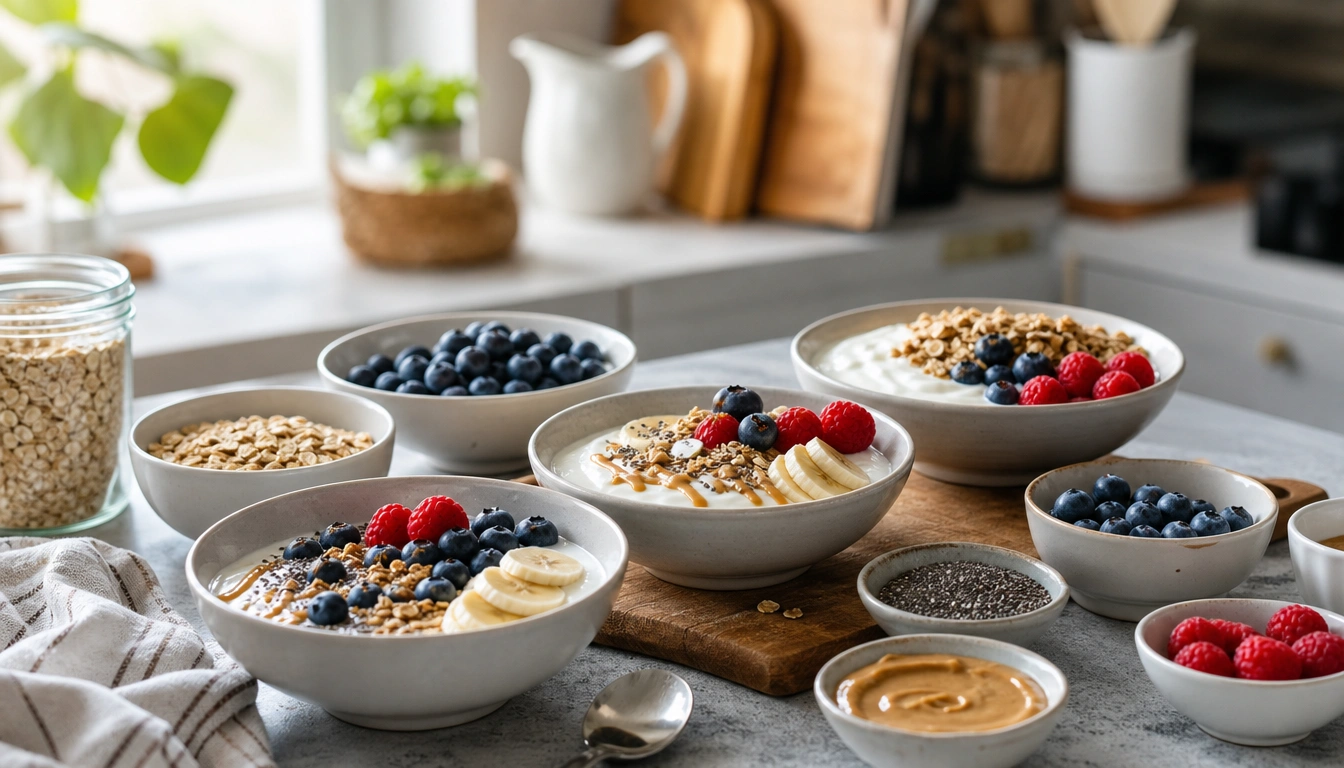
The easiest healthy yogurt bowl ideas start with plain yogurt and a few flexible add-ins: fruit for sweetness, a protein or fat boost, and a crunchy topping for texture. That simple formula works for adults and kids, can be made in minutes, and is easy to adapt for toddlers, picky eaters, budget breakfasts, and dairy-free families.
Key Takeaways
- Use a simple Base + Boost + Crunch formula instead of following a strict recipe.
- Plain Greek or strained yogurt is usually more filling than flavored yogurt because it is higher in protein and lower in added sugar.
- For toddlers, avoid whole nuts and hard seeds; use age-appropriate textures and full-fat yogurt under age two.
- Unsweetened soy yogurt is the best dairy-free swap when you still want a protein-rich breakfast.
- Night-before prep with dry jars and pre-portioned toppings makes yogurt bowls realistic on school mornings.
Why yogurt bowl ideas work on rushed mornings
Busy parents need breakfasts that are fast, flexible, and easy to repeat without getting boring. Yogurt bowls fit that reality well because they require no cooking, can be assembled in under five minutes, and work with whatever is already in the fridge or pantry. They also make it easier to build a breakfast with protein, fiber, and produce instead of relying on a sweet packaged cereal or a grab-and-go pastry.
That matters for the whole family. The CDC encourages practical habits that support healthy eating patterns, and yogurt bowls are a good example of a simple meal that can be adjusted for different ages and appetites. A parent can make one bowl that feels light, another that is more substantial, and a kid version that is familiar and not overly sweet.
The other advantage is repeatability. Once you know the basic formula, you can swap fruit, change the crunch, or use a different yogurt without starting from scratch. That makes breakfast less stressful and less expensive.
Build a balanced yogurt bowl with Base + Boost + Crunch
A yogurt bowl does not need a strict recipe. A useful family method is Base + Boost + Crunch. The base is the yogurt itself. The boost adds staying power, usually from fruit, nuts, seeds, or nut butter. The crunch brings texture and helps the bowl feel more satisfying.
Base: start with plain yogurt whenever possible. Plain Greek or strained yogurt is especially useful because it is naturally thicker and usually higher in protein than regular yogurt. That higher protein content can help a breakfast feel more filling.
Boost: add fruit for natural sweetness and fiber, then choose one protein- or fat-supporting topping. Berries, banana, peaches, mango, or apple slices all work. Chia, ground flax, nut butter, hemp hearts, or chopped nuts can make the bowl more satisfying.
Crunch: use oats, a small amount of granola, toasted coconut, or crushed cereal if you want texture. If you use granola, choose one that is lower in added sugar and keep the portion modest. The goal is a bowl that tastes good enough for kids but still behaves like a real breakfast, not dessert.
Fast yogurt bowl combinations for different needs
Once the formula is clear, the easiest yogurt bowl ideas are simple combinations built around what your family already likes.
Classic high-protein bowl: plain Greek yogurt, mixed berries, chia seeds, and chopped walnuts. This version works well for adults and older children who like tart, fresh flavors.
Kid-friendly sweet bowl: plain yogurt with sliced strawberries or banana, a spoonful of applesauce if needed, and a few oats or soft granola pieces. Keep the sweetness mostly from fruit so the bowl stays breakfast-like.
Tropical bowl: yogurt with mango or pineapple, unsweetened shredded coconut, and pumpkin seeds. Frozen fruit that has been thawed is an easy budget-friendly option.
Peanut butter banana bowl: yogurt with banana slices and a swirl of natural peanut butter or almond butter. Add oats for more texture and staying power.
Budget pantry bowl: plain yogurt, frozen berries, oats, and ground flax or chia. This version uses low-cost staples and still gives you fiber and protein.
If your mornings are especially hectic, use the same base and rotate the toppings. Families often do better when breakfast feels familiar but not identical every day.
Choose the right ingredients for more protein and less sugar
Plain Greek yogurt is usually the best choice for a high-protein breakfast bowl. Regular plain yogurt is still useful, but Greek or strained yogurt tends to be thicker and more filling. Flavor also matters: flavored yogurts can look convenient, but they often bring a lot of added sugar along with the fruit flavor.
Added sugar is a bigger concern in breakfast food because it can make the meal taste more like a treat than a stable start to the day. Starting with plain yogurt lets you control sweetness with fruit, cinnamon, or a very small drizzle of honey or maple syrup when needed. That approach keeps the bowl flexible for adults and children with different preferences.
Fruit choices can be seasonal or frozen. Berries are easy because they add color and fiber. Bananas bring sweetness and softness for kids. Peaches, mango, cherries, and apples also work well. For crunch, use oats, pumpkin seeds, hemp hearts, chopped nuts, or a small amount of lower-sugar granola. If you want more richness, use nut butter instead of relying on sweet toppings.
Yogurt bowl ideas for toddlers and young children
Yogurt bowls can be great for children, but texture and size matter. For toddlers, the biggest concern is choking risk from whole nuts, large seeds, and hard chunks. Whole almonds, walnuts, and thick clumps of nut butter are not ideal for very young children. Smooth nut butter should be stirred into the yogurt so it is evenly dispersed, not served as a sticky spoonful.
For toddlers and children under two, full-fat plain yogurt makes sense because young children need dietary fat for growth and brain development. That is one case where the usual low-fat recommendation for adults does not apply in the same way. For older children, you can usually choose plain yogurt based on preference and family nutrition goals.
Safer toddler toppings include mashed banana, soft berries cut small, applesauce, finely ground flax, hemp hearts, or oats softened in yogurt. If you want crunch, keep it mild and age-appropriate. The more a topping looks like a whole piece that could roll or break apart, the more careful you should be.
If you are unsure about the right texture for your child, make the bowl softer and less chunky first. You can always make it more textured later as they get older and more experienced with finger foods.
Dairy-free and lactose-free yogurt bowls that still feel substantial
For families avoiding dairy or managing lactose intolerance, unsweetened soy yogurt is usually the strongest plant-based option because it is more likely than many other non-dairy yogurts to provide meaningful protein. Coconut-based yogurt can work for texture, but it is often lower in protein, so it may need help from toppings if you want it to keep a child or adult full for long.
To build a more satisfying dairy-free bowl, pair the yogurt with protein-supporting toppings such as hemp hearts, chia, ground flax, peanut butter, almond butter, or a small handful of nuts for older children and adults. Oats also help make the bowl more filling. If the yogurt is thin, stir in oats and let it sit for a few minutes so it thickens before serving.
When choosing a plant-based yogurt, look for plain and unsweetened first. If the yogurt already contains sugar, it becomes harder to control the overall sweetness of the bowl. The same base-plus-boost idea still works; you only need to be more intentional about choosing protein support.
Night-before prep that actually fits family life
Breakfast gets easier when the morning work is moved to the night before. One of the simplest methods is the dry jar approach. Fill small containers or jars with toppings such as oats, chia, flax, nuts for older family members, or granola. In the morning, add yogurt and fruit, shake or spoon, and serve.
You can also pre-portion yogurt into containers for grab-and-go use. Keep fruit washed, berries drained, and bananas or apples ready to slice if needed. If several people in the house eat breakfast at different times, line up the containers in the fridge so each person can assemble their own bowl quickly.
For the best texture, store wet and dry ingredients separately until serving time. That keeps granola crunchy and prevents oats from getting soggy too early. If you are packing breakfast to take out the door, use a container with two compartments or pack the crunchy toppings in a small separate bag or cup.
Make them appealing for picky eaters and school-day portability
Picky eaters usually do better with choice, repetition, and familiar flavors. Instead of loading a bowl with too many toppings, offer two or three simple options. A child might prefer banana and cinnamon one day, then strawberries and a little granola the next. Keeping the yogurt plain and the toppings recognizable often works better than mixing everything together.
For school mornings, portability matters as much as nutrition. Pack the yogurt in one container and the toppings in another so the texture stays better. If your child dislikes mixed textures, let them add the toppings themselves. That small bit of control can improve acceptance.
One last practical tip: build bowls around what your family already buys. Frozen fruit, oats, seeds, and nut butter are usually cheaper than specialty breakfast products. If you keep a few of those pantry-friendly items on hand, yogurt bowls become a dependable option rather than an occasional weekend idea.
Frequently Asked Questions
How do I build a balanced yogurt bowl without a strict recipe?
Use the Base + Boost + Crunch idea. Start with plain yogurt, add fruit for fiber and sweetness, then include one staying-power topping such as oats, nut butter, chia, flax, or nuts for older children and adults.
What yogurt is best for a high-protein, low-sugar breakfast?
Plain Greek or strained yogurt is usually the best fit because it is typically higher in protein and lower in sugar than flavored yogurt. Plain regular yogurt can still work, especially if you add protein-rich toppings.
How can I make yogurt bowls more filling for kids and adults?
Choose a thicker plain yogurt, then add fiber and healthy fats. Berries, oats, chia, flax, nut butter, hemp hearts, or a small amount of nuts can help a bowl feel more satisfying for longer.
What toppings are safe for toddlers and young children?
Use soft, age-appropriate toppings such as mashed fruit, small pieces of soft fruit, applesauce, oats, or finely ground seeds. Avoid whole nuts and hard, round, or sticky toppings that could increase choking risk.
Can I use plant-based yogurt and still get enough protein?
Yes, but unsweetened soy yogurt is usually the best plant-based option for protein. If you use another non-dairy yogurt, add protein-supporting toppings such as hemp hearts, chia, flax, nut butter, or oats.
The Bottom Line
Simple yogurt bowl ideas for busy parents work best when you keep the structure easy: plain yogurt, fruit, and one or two toppings for protein, fiber, or crunch. That gives you a breakfast that is fast, flexible, and easy to repeat.
Plain Greek or strained yogurt is often the most filling choice, while unsweetened soy yogurt is the strongest dairy-free swap. For toddlers, keep textures soft and avoid choking hazards. For busy mornings, the best strategy is usually prep the night before and let each family member customize the bowl at serving time.
Medical disclaimer
Medical disclaimer: This content is for educational and informational purposes only and is not a substitute for professional medical advice, diagnosis, or treatment. Dietary needs and supplement suitability vary by individual.
Sources
- Centers for Disease Control and Prevention (CDC) — cdc.gov. Accessed October 2026.
