
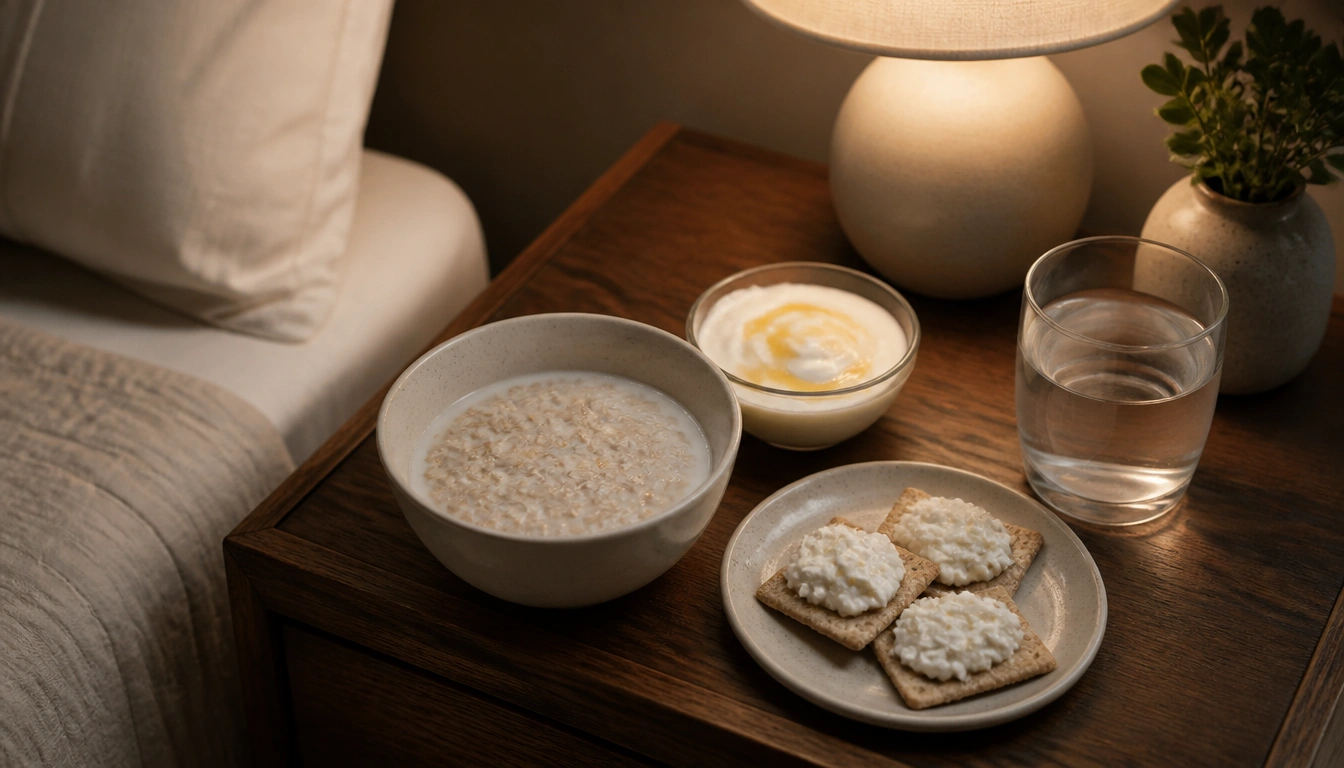
If you’re hungry at night, the best sleep-friendly snack is usually a small, light combination of protein and a gentle carbohydrate eaten 1 to 2 hours before bed. Good options include Greek yogurt with a little honey, oatmeal made with milk or soy milk, whole-grain crackers with cottage cheese, or a small banana or kiwi with almond butter. Keep portions modest and avoid heavy, spicy, or high-fat foods if reflux or blood sugar is a concern.
Key Takeaways
- Pairing a little carbohydrate with tryptophan-containing foods may support the body’s sleep-wind-down signals better than eating either one alone.
- A small protein-containing snack can help older adults support overnight muscle repair without needing a large late meal.
- For many adults over 50, the safest bedtime snack is light, not heavy: think small portions eaten 1 to 2 hours before bed.
- Reflux, hiatal hernia, diabetes, and chronic kidney disease can change which evening snacks make sense.
- If nighttime hunger is happening with snoring, gasping, or sleep problems lasting two or more weeks, food may not be the real fix.
Why evening hunger changes after 50
Adults over 50 often notice that sleep and digestion become less forgiving at night. Sleep may become lighter, with more awakenings, and the digestive system may take longer to move food along. That matters because a snack that felt harmless at 35 can feel heavy at 55, especially if it is large, fatty, or spicy.
At the same time, many older adults are trying to preserve muscle mass, keep blood sugar steadier overnight, and avoid reflux. A thoughtful evening snack can help with all three goals. The aim is not to eat more at night. The aim is to choose something small enough to settle comfortably, while still giving your body a useful nutrient mix before sleep.
Public health guidance from the CDC supports avoiding large meals, excess fluids, and alcohol close to bedtime because they can interrupt sleep and aggravate reflux. For many people, that means the best choice is a modest snack rather than a second dinner.
How sleep-friendly snacks work
Sleep-supportive snacks work best when they are built around a simple idea: combine a sleep-supportive nutrient with enough fuel to make it useful. Tryptophan is an amino acid found in several protein foods, and it is part of the pathway the body uses to make serotonin and melatonin. A small amount of carbohydrate can help that tryptophan reach the brain more efficiently because it creates a mild insulin response that shifts competing amino acids out of the way.
That does not mean sweets are the answer. A small amount of complex or unrefined carbohydrate is usually more helpful than sugary food because it is gentler on blood sugar and often easier to digest. Oats, whole grains, fruit, or a small amount of honey can serve that role without turning the snack into dessert.
Protein matters too. Research in older adults suggests that a modest protein-containing snack before bed can support overnight muscle protein synthesis. That is one reason dairy foods such as Greek yogurt or cottage cheese are often useful at night. They can support recovery while still being light enough for many people to tolerate.
A third benefit is blood sugar steadiness. If someone wakes from a blood sugar dip, the body may release stress hormones such as cortisol and adrenaline, which can make sleep more fragmented. A balanced snack with protein plus a gentle carbohydrate may help reduce that swing for some people.
Best snack formulas for adults over 50
There are three practical formulas that work well for many older adults. The first is protein + complex carbohydrate. This can include Greek yogurt with a small spoonful of honey, cottage cheese with whole-grain crackers, or milk with oatmeal. The carbohydrate supports the tryptophan pathway, while the protein helps with overnight repair and satiety.
The second formula is protein + healthy fat. A small spoonful of almond butter with fruit can be satisfying if you need a snack that keeps hunger away without feeling bulky. This option can work well when blood sugar stability matters, but the portion should stay small because fat slows digestion.
The third formula is gentle carbohydrate + dairy or soy. Warm oatmeal with milk or soy milk is a good example. It is easy to chew, easy to portion, and often soothing in the evening. Soy milk can be a useful option for people who avoid dairy, as long as it fits their individual nutrition plan.
For adults over 50, the best formula is usually the one that solves hunger without creating a stomach full of food. If the snack starts to feel like a full meal, it is probably too much for bedtime.
Practical snack examples and portions
Greek yogurt with a little honey is one of the simplest bedtime snack ideas. Choose a small bowl rather than a large serving, and keep the honey to a light drizzle. The yogurt offers protein, and the small amount of carbohydrate helps make the snack more sleep-supportive than plain protein alone.
Warm oatmeal with milk or soy milk is another easy option. A small bowl is usually enough. Oats provide a slow, steady carbohydrate base, while milk or soy milk adds protein and a softer texture that many people find calming at night. This is often a good choice if you want something warm but not heavy.
Whole-grain crackers with cottage cheese can work well when you want something savory. The crackers provide a complex carbohydrate, while the cottage cheese adds protein. Keep the portion modest so the snack stays light and does not sit too heavily in the stomach.
Banana or kiwi with almond butter is a good option when you want fruit with a little staying power. Fruit supplies a gentle carbohydrate, and almond butter adds fat and some protein. For many people this is satisfying in a very small portion. If you are watching potassium intake, though, the fruit choice may need to change.
The most useful rule is simple: if the snack looks large enough to replace dinner, it is too much for bedtime. A light snack should settle, not stretch the stomach.
What to avoid at night
Some foods make sleep worse even if they are technically healthy. Large portions are the biggest problem because they increase stomach fullness and can keep the digestive system busy when you are trying to wind down. High-fat meals also linger longer in the stomach, which raises the chance of discomfort or reflux.
Spicy foods are a common trigger for heartburn, especially for people with GERD or a hiatal hernia. Alcohol can make sleep less stable and may worsen reflux as well. Excess fluids close to bedtime can increase nighttime bathroom trips, which is another reason to keep evening eating and drinking modest.
It also helps to notice personal triggers. Some people do fine with dairy. Others feel better with soy or another gentle option. Some people can eat fruit at night without trouble, while others notice more reflux or blood sugar swings. The goal is not to label foods as universally good or bad. The goal is to notice which foods are consistently easy on your body at night.
Special situations and exceptions
GERD or hiatal hernia: If reflux is a frequent issue, snack timing matters as much as food choice. Eating within a couple of hours of lying flat can worsen symptoms for some people. In that situation, the safest choice may be to avoid late eating altogether or keep the snack even smaller and earlier. Head-of-bed elevation can also help some people, but food timing still matters.
Type 2 diabetes: A bedtime snack is not automatically helpful for everyone with diabetes. If nighttime blood sugar drops are a concern, the right snack may help, but it should fit the person’s treatment plan and medication schedule. Some people need a snack to prevent lows; others may not. Because blood sugar medications differ, it is best to coordinate evening eating with a clinician or registered dietitian rather than guessing.
Chronic kidney disease: CKD can change how much protein, potassium, phosphorus, or fluid is appropriate. That means popular snack ideas such as dairy, nuts, bananas, or larger servings of yogurt may need adjustment. A renal specialist can help decide what fits best. For some people with CKD, the safest bedtime snack is not the internet’s favorite option, but the one matched to lab values and diet limits.
Is it hunger or a sleep problem?
Nighttime hunger can absolutely wake someone up, but not every nighttime awakening is food-related. If the pattern is occasional and improves when you eat a light snack earlier in the evening, hunger may be the main issue. If sleep stays poor even when you are not hungry, something else may be going on.
It is time to seek medical evaluation if the problem lasts two or more weeks, starts disrupting daytime functioning, or comes with loud snoring, gasping, or witnessed breathing pauses. Those signs can point to a sleep disorder such as obstructive sleep apnea, or to chronic insomnia that needs a different kind of treatment.
A good clue is whether you wake because your stomach feels empty or because you feel suddenly alert, short of breath, or repeatedly unrefreshed. If it is the second pattern, a snack may not solve the real problem.
How to put this into practice without overthinking it
Start by choosing one small snack formula that fits your health needs and your budget. Eat it about 1 to 2 hours before bed, not right as you are lying down. That timing gives your body a chance to begin digestion while still allowing the snack to do its job overnight.
Keep portions modest. A small bowl, a few crackers, or a single piece of fruit with a spoonful of nut butter is usually more appropriate than a full plate of food. If you are prone to reflux, earlier is usually better. If you are prone to blood sugar dips, consistency may matter more than variety.
Then test the snack for a few nights and pay attention to what changes. Did you fall asleep more comfortably? Did you wake up hungry? Did you notice heartburn, bloating, or a bathroom trip? Small adjustments usually work better than dramatic changes. The best bedtime snack is the one that helps you sleep without creating a new problem.
Frequently Asked Questions
How late before bed should an older adult eat a snack?
A light snack is usually best about 1 to 2 hours before bed if hunger is the issue. That gives your body time to start digesting before you lie down. If you have reflux or a hiatal hernia, earlier may be better, and some people do best avoiding late eating altogether.
Which snack combinations are best for sleep and overnight muscle support?
A protein-plus-carbohydrate snack is often the most practical choice. Examples include Greek yogurt with a little honey, oatmeal with milk or soy milk, or cottage cheese with whole-grain crackers. These options can support overnight satiety, digestion, and muscle maintenance without feeling too heavy.
What evening snacks should adults over 50 avoid if they have reflux?
Large meals, high-fat foods, spicy foods, alcohol, and very late snacks are common reflux triggers. For some people, tomato-based foods, peppermint, or acidic items can also be a problem. The safest approach is a small, bland snack earlier in the evening or no snack if that works better.
Can a bedtime snack help with nighttime blood sugar drops?
It can for some people, but it depends on the cause of the drop and the medications involved. A small snack with protein and a gentle carbohydrate may help steady blood sugar overnight. If you use diabetes medication, talk with your clinician before making bedtime snacks a routine.
When should nighttime hunger be discussed with a doctor instead of solved with food?
If sleep trouble lasts two or more weeks, affects daytime functioning, or comes with snoring, gasping, or witnessed breathing pauses, it should be checked out. Those symptoms may point to a sleep disorder rather than simple hunger, and food alone will not solve the underlying issue.
The Bottom Line
For adults over 50, a bedtime snack can be useful when it is small, balanced, and timed well. The most helpful choices usually combine a little protein with a gentle carbohydrate, such as yogurt and honey, oatmeal with milk, or cottage cheese with crackers.
The main limits are portion size and personal health conditions. Reflux, diabetes, and chronic kidney disease can all change which foods make sense, so the best snack is the one that fits your body and your care plan. If nighttime hunger is paired with snoring, gasping, or weeks of poor sleep, it is time to look beyond food.
Medical disclaimer
Medical disclaimer: This content is for educational and informational purposes only and is not a substitute for professional medical advice, diagnosis, or treatment. Dietary needs and supplement suitability vary by individual.
