
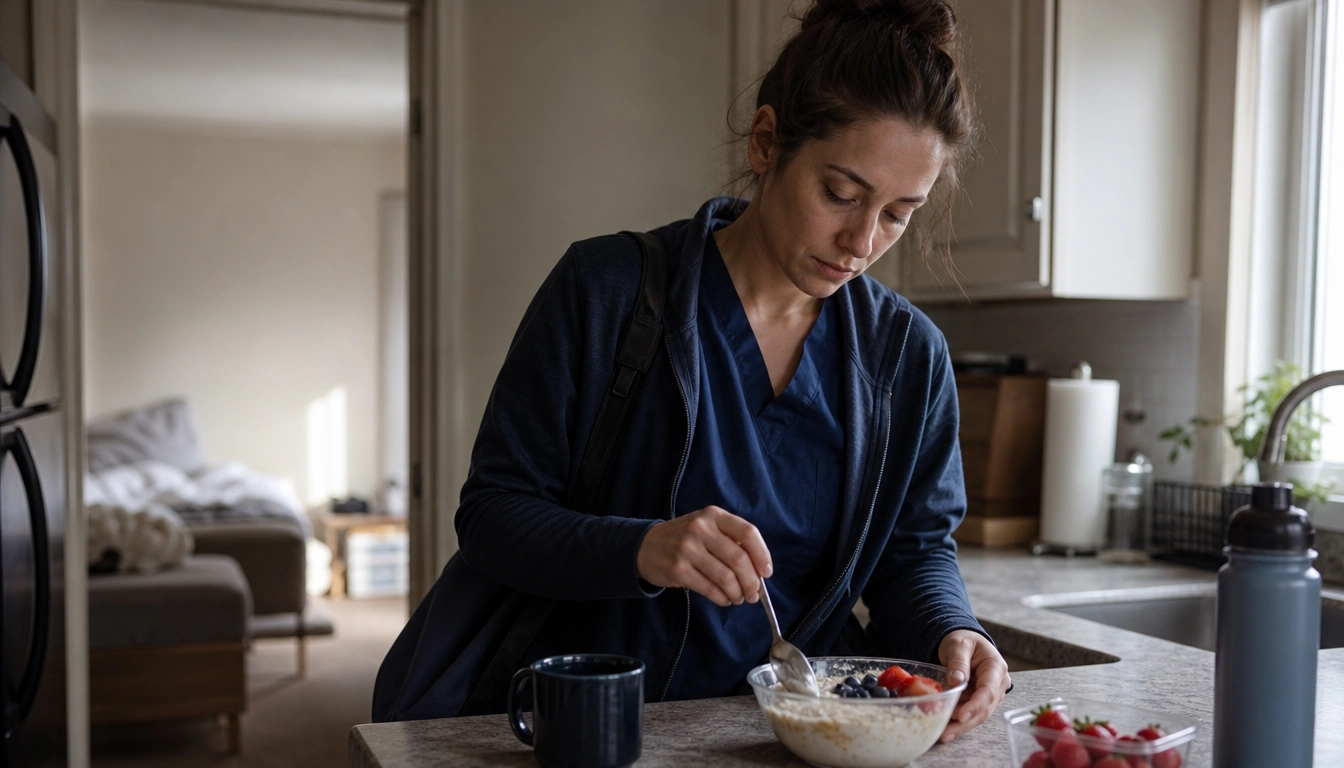
After a night shift, the safest sleep-friendly choice is usually a small snack, not a full meal: something easy to digest that combines a complex carbohydrate with a little protein, such as oatmeal, toast with nut butter, or plain yogurt with fruit. If you are heading straight to sleep, keep the portion modest and avoid greasy, spicy, or high-caffeine foods that can worsen reflux, stomach upset, and sleep quality.
Key Takeaways
- Night-shift eating follows different body rhythms than daytime eating, so timing and portion size matter more than they do for day workers.
- A small snack before daytime sleep can be easier on digestion and may help you avoid waking up hungry, while a heavy meal can worsen reflux and sleep disruption.
- A practical snack formula is a complex carbohydrate plus a little protein or a tryptophan-containing food.
- If solid food feels too heavy, softer options like oatmeal, yogurt, or a banana with nuts are often easier to tolerate.
- People with diabetes, pre-diabetes, GERD, IBS, or suspected shift work sleep disorder may need individualized advice.
Why shift workers need a different evening-snack strategy than day workers
For shift workers, the question is not just what to eat before sleep after a night shift, but also when the body is trying to digest it. According to the CDC and NIH, the circadian system affects appetite, glucose handling, and sleepiness. During the biological night, digestion is less efficient than it is in daylight, and glucose tolerance is typically worse. That means the same meal that feels ordinary after a daytime schedule can feel much heavier after overnight work.
This is why a sleep-friendly evening snack has a different job than a normal dinner. It should bridge hunger without pushing the body into a long digestive workload right before sleep. For many shift workers, that small window before daytime rest is also the last chance to prevent a hungry, restless sleep. The goal is to keep intake light enough to protect sleep while avoiding the “famished and wakeful” problem that can shorten sleep later.
The practical result is a middle path: not a full meal, not total fasting if hunger is strong, but a small, planned bite that fits the body’s night-shift rhythm.
The difference between a light sleep-friendly snack and a meal that can disrupt daytime sleep
A light snack is typically small enough that you do not feel heavy, sluggish, or overly full afterward. A meal is more likely to contain larger portions, more fat, more spice, and more total volume, which can slow stomach emptying and raise the chance of reflux or nausea. For a person trying to sleep during the day after a night shift, that difference matters.
Heavy meals can also make the commute home harder. Sleep debt already slows reaction time, and a large overnight meal can add a second layer of grogginess. The combination is not ideal for driving safety or public transit navigation. A modest snack is less likely to leave you sleepy in the wrong way or physically uncomfortable while you are trying to get home.
If you are deciding between “eat a lot now” and “eat very little,” think in terms of comfort and function. A small snack can help you avoid waking up hungry, but it should not feel like dinner. If a food leaves you with heartburn, bloating, or a sense of fullness that lingers, it is probably too much for a pre-sleep choice after night work.
How to choose a snack using the simple carb-plus-protein framework
A useful framework is to pair a complex carbohydrate with a little protein or a tryptophan-containing food. The carbohydrate gives steady fuel, while the protein helps the snack feel more satisfying. This combination is often more sleep-friendly than sugar alone, which may be less filling and can be less predictable for energy and appetite.
Examples of this framework include oats with milk, whole-grain toast with a thin layer of nut butter, plain Greek yogurt with fruit, or a banana with a small handful of nuts. These are not magic foods, but they are practical because they are usually easy to portion, easy to transport, and less likely than greasy leftovers to upset the stomach.
If you tolerate warm foods well, oatmeal is a strong option because it is soft, bland, and easy to digest for many people. If you prefer something colder, plain yogurt with berries can work well. If you need a no-cook option, a banana plus a few walnuts or pumpkin seeds is simple and portable. The best choice is the one you can eat without feeling overly full, nauseated, or revved up afterward.
Best snack ideas by tolerance: warm foods, cold foods, and no-cook options
Warm foods: Small oatmeal, cream of wheat, or another soft grain bowl can be helpful when your stomach feels unsettled. Keep the portion modest and avoid turning it into a large breakfast bowl with lots of added sugar, syrup, or heavy toppings. A splash of milk or fortified plant milk can add a little protein without making it dense.
Cold foods: Plain Greek yogurt, cottage cheese if you tolerate dairy, or a small serving of unsweetened yogurt with fruit can be convenient after a shift. These options are useful when you are too tired to cook but still want something gentle. Keep portions small, especially if dairy tends to feel heavy or trigger bloating.
No-cook options: Whole-grain crackers with nut butter, a banana with a few nuts, or a simple turkey or hummus wrap can work when you have almost no energy left. If solid food feels unappealing, a small smoothie made with milk or yogurt, fruit, and oats may be easier to manage. Just avoid making the smoothie large or overly sweet, because a big liquid snack can still feel heavy.
Convenience matters. The best snack is often the one you can actually keep on hand at work or in your bag, rather than the one that sounds ideal but is never available after a long shift.
How timing changes: when to eat before sleep and when to stop eating
The timing of the snack matters nearly as much as the food itself. Public health guidance commonly advises avoiding heavy, high-fat, or spicy meals within 2 to 3 hours of sleep. For shift workers, that usually means the largest food intake should happen before the end of the shift or earlier in the night, not right before bed.
If you are hungry close to sleep, choose a small snack instead of a meal. If you are only mildly hungry, you may not need to eat much at all. The goal is to stop eating once the urge to sleep becomes the priority. A snack should calm hunger, not restart a full evening eating pattern.
It also helps to watch your caffeine and nicotine timing. Caffeine can linger for hours, and nicotine can make it harder to wind down. Even if the snack itself is light, a caffeinated drink, energy shot, or cigarette close to sleep can undo the benefit. If you know you are sensitive, give yourself a longer buffer before your sleep window.
Practical swap guide for common convenience foods, vending-machine options, and budget-friendly choices
Shift workers often have to choose from whatever is available. That makes a swap guide more useful than a perfect food list.
| If you have this | Try this instead | Why it helps |
|---|---|---|
| Chips or candy | Whole-grain crackers with peanut butter | More filling, less sugar-heavy, and usually steadier before sleep |
| Large fast-food meal | Small sandwich or wrap with lean protein | Lighter volume and less grease |
| Energy drink | Water or herbal tea with a small snack | Avoids stimulant carryover into sleep |
| Pastry or donut | Oatmeal cup or yogurt with fruit | Better balance of carbohydrate and protein |
| Nothing available except vending snacks | Nuts, trail mix without excess candy, or a plain granola bar | More portable and less likely to spike hunger again quickly |
Budget-friendly choices can still be sleep-friendly. Oats, bananas, peanut butter, yogurt, eggs, and crackers are usually affordable and easy to store. If you are buying food at a convenience store, look for the simplest option with the shortest ingredient list and the least grease. That often means a better outcome than a highly processed meal substitute.
Special considerations for diabetes, reflux, IBS, and chronic sleep disruption
If you have diabetes or pre-diabetes, the same snack advice may not fit your glucose patterns. Night work can make glucose handling less predictable, so the timing, portion size, and carbohydrate type may need to be individualized. A registered dietitian or clinician can help you adjust for your work schedule and your medication plan.
If you have GERD, reflux, or frequent heartburn, the safest pre-sleep snack is usually the one that is smallest and least irritating. Large portions, fatty foods, peppermint, spicy foods, and lying down too soon after eating can all make symptoms worse. A bland snack taken earlier in the post-shift wind-down is often better than eating right before you lie down.
For IBS, the issue is often not just “healthy” versus “unhealthy” food, but whether a food triggers bloating, cramps, or urgency. Dairy, high-fiber foods, sugar alcohols, onions, and certain convenience foods can be problematic for some people. Keep a simple symptom log if you notice patterns. For suspected shift work sleep disorder, repeated insomnia or excessive sleepiness tied to your schedule is a sign that food changes alone may not be enough. If sleep remains poor despite better timing and better snack choices, a sleep specialist can help you sort out whether another condition is involved.
Common mistakes that make a snack less sleep-friendly
The most common mistake is turning a snack into a meal. Oversized portions are more likely to cause heaviness, reflux, and sleep disruption. A second mistake is choosing foods that are technically quick but not actually calming: greasy takeout, very spicy leftovers, or a large amount of fried food can sit poorly in the stomach.
Caffeine is another frequent problem. Coffee, tea, cola, energy drinks, and even some chocolate products can keep you alert longer than you expect. Nicotine can do the same. If you are trying to sleep during the day, these stimulants often work against the routine you are trying to build.
Some shift workers also eat too little and then wake up hungry. That can happen if the snack is only a few bites and has no staying power. If you notice that pattern, add a small amount of protein or choose a more filling carbohydrate so your sleep is not interrupted by hunger. The aim is balance: enough food to take the edge off, not so much that your body treats it like another dinner.
Frequently Asked Questions
How close to bedtime can I eat after a shift?
A small snack can be reasonable closer to sleep if you are hungry, but a heavy, greasy, or spicy meal is better avoided within about 2 to 3 hours of sleep. If you need food right before bed, keep it light and easy to digest.
What makes a snack better for sleep than a heavy meal?
A sleep-friendly snack is smaller, lower in fat and spice, and less likely to cause reflux or stomach heaviness. It also helps reduce the chance that digestion will interfere with daytime sleep or make the commute home feel worse.
Which foods are easiest to digest before daytime sleep?
Many people tolerate oatmeal, yogurt, toast with nut butter, bananas, crackers, or a small smoothie better than fried or heavily seasoned foods. The easiest option is the one that feels gentle for your own stomach.
Should shift workers avoid caffeine, nicotine, or spicy foods before sleep?
Yes, if they affect you. Caffeine and nicotine can delay sleep, and spicy foods can worsen reflux or stomach discomfort. If you are sensitive, avoid them well before your planned sleep window.
What should shift workers do if they have diabetes, GERD, or IBS?
They may need a more individualized plan. Diabetes and pre-diabetes can make timing and carbohydrate choice more important, GERD may require smaller and earlier snacks, and IBS can mean avoiding specific trigger foods. A clinician or dietitian can help tailor advice.
The Bottom Line
After a night shift, the most sleep-friendly choice is usually a small, simple snack rather than a full meal. Aim for a gentle carbohydrate plus a little protein, and keep the portion modest enough that it does not leave you feeling heavy or bloated.
If you are commuting home, dealing with reflux, or trying to sleep during the day, convenience matters. Oatmeal, toast with nut butter, yogurt with fruit, or a banana with a few nuts are practical choices that many shift workers can tolerate well.
If you have diabetes, GERD, IBS, or ongoing sleep disruption, the same snack advice may need to be adjusted. When symptoms keep happening, it is worth discussing your schedule, eating pattern, and sleep with a healthcare professional.
Medical disclaimer
Medical disclaimer: This content is for educational and informational purposes only and is not a substitute for professional medical advice, diagnosis, or treatment. Dietary needs and supplement suitability vary by individual.
Sources
- Centers for Disease Control and Prevention (CDC) — cdc.gov. Accessed October 2026.
- National Institutes of Health (NIH) — nih.gov. Accessed October 2026.
- National Institutes of Health (NIH) — nih.gov. Accessed October 2026.
- National Institutes of Health (NIH) — nih.gov. Accessed October 2026.
- Centers for Disease Control and Prevention (CDC) — cdc.gov. Accessed October 2026.
