
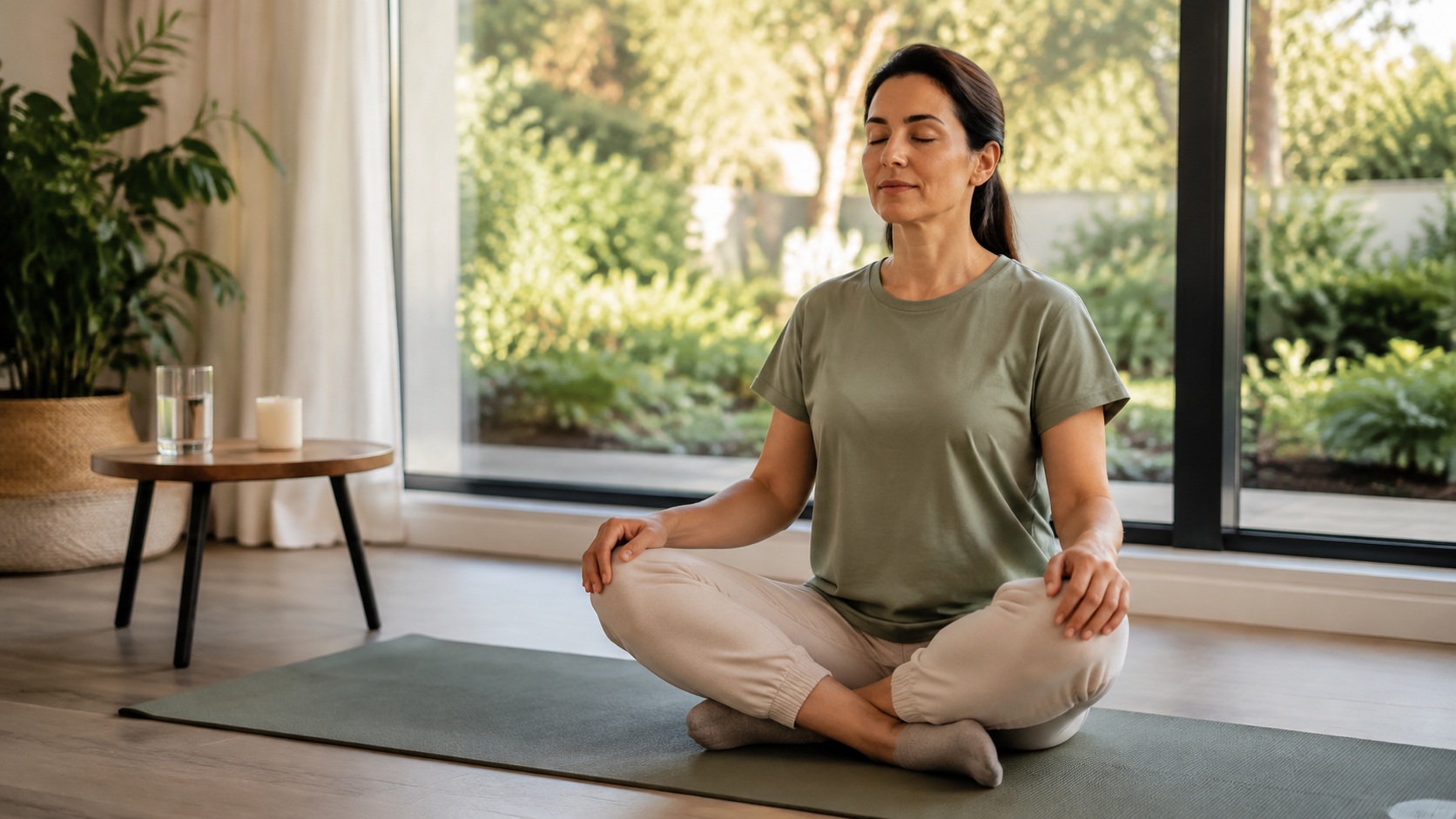
A stress relief routine for beginners can be surprisingly simple. Start with a few minutes of slower breathing, add some movement, reduce unnecessary demands, and create a short evening wind-down routine. You do not need to eliminate stress completely. The goal is to give your body and mind regular opportunities to recover while building habits that make everyday pressure easier to handle.
Key Takeaways
- Stress relief works better as a repeatable routine than as an occasional emergency response.
- Slow breathing and progressive muscle relaxation are practical techniques that may reduce perceived stress and physical tension.
- Regular physical activity, adequate sleep, regular meals, hydration, and social connection support overall stress management.
- Mindfulness may help some people, but you do not need long meditation sessions to begin.
- Persistent anxiety, depression, panic, trauma symptoms, or stress that interferes with daily life deserves professional support.
What Does Stress Relief Actually Mean?
Stress is a normal response to demands, uncertainty, conflict, deadlines, illness, major changes, and other challenges. Short periods of stress are not automatically harmful. Problems become more likely when the stress response stays activated for long periods or starts interfering with sleep, mood, concentration, relationships, or physical health.
A useful stress routine does not promise to make every difficult situation disappear. Instead, it gives you practical ways to reduce physical tension, recover after stressful events, organize demands, and create healthier conditions for coping.
NIMH recommends a broad self-care approach that includes regular exercise, nutritious meals, hydration, adequate sleep, relaxing activities, realistic goals, and attention to caffeine and alcohol. These habits work together rather than functioning as one quick cure.
Beginner mindset: do not try to create a perfectly calm life. Build a small collection of habits that helps you recover more consistently when stressful days happen.
A Simple Daily Stress Relief Routine
| Time | Simple habit | Purpose |
|---|---|---|
| Morning | Take several slow breaths and identify your main priorities | Start with less mental clutter |
| Midday | Walk or move for 5–15 minutes | Break up prolonged tension and sitting |
| Stressful moment | Slow your breathing and relax tense muscles | Create a brief recovery pause |
| Evening | Reduce stimulation and use a short relaxation routine | Support recovery and sleep |
Think of this schedule as a template rather than a prescription. A five-minute routine that you use regularly can be more practical than a 45-minute routine that disappears after a few days.
Step 1: Start With Slow Breathing
Breathing exercises are among the simplest stress-management techniques because they require no equipment. NCCIH notes that slow, deep breathing may help lower physiological arousal and may reduce perceived stress.
A 2023 meta-analysis of randomized controlled trials found a small-to-moderate reduction in self-reported stress with breathwork compared with control conditions. The evidence was encouraging, although many studies had methodological limitations.
Beginner Breathing Exercise
- Sit or stand in a comfortable position.
- Breathe in gently through your nose.
- Let the exhale become slow and comfortable.
- Avoid forcing unusually large breaths.
- Continue for a few minutes while keeping the pace relaxed.
One randomized study also found benefits from five minutes of daily structured breathing over one month, particularly with an exhale-focused breathing pattern. That does not mean one specific technique works best for everyone. Comfort and regular practice matter more than copying a complicated breathing ratio.
Keep breathing comfortable. Stop if a technique makes you dizzy, lightheaded, panicky, or uncomfortable. Gentle breathing is enough for a beginner stress routine.
Step 2: Add a Short Walk
Physical activity can support both physical and mental health. NIMH recommends regular exercise as part of mental self-care and notes that even smaller amounts of movement can add up.
For stress management, the walk does not need to be a fitness test. Five to 15 minutes at a comfortable pace can create a change of environment, interrupt prolonged sitting, and give your attention a temporary break from work or other demands.
An outdoor walk can also provide daylight and time away from screens. If outdoor walking is not practical, indoor walking, gentle cycling, stretching, or another form of comfortable movement can serve the same habit-building role.
Step 3: Relax Your Muscles on Purpose
Stress often shows up physically. You may notice a tight jaw, raised shoulders, clenched hands, or tension through the neck and back without realizing how long you have been holding it.
Progressive muscle relaxation involves deliberately tightening and then releasing different muscle groups. A 2024 systematic review covering 46 publications and more than 3,400 adults found that progressive muscle relaxation was associated with improvements in stress, anxiety, and depression across a range of populations.
Simple Tension Check
- Unclench your jaw.
- Let your shoulders drop away from your ears.
- Relax your hands and fingers.
- Notice whether you are tightening your stomach.
- Take one slow exhale while letting unnecessary tension soften.
A full progressive muscle relaxation session can take longer, but even a brief body scan can help you notice tension before it builds for hours.
Step 4: Try a Few Minutes of Mindfulness
Mindfulness means bringing attention to what is happening in the present moment without immediately judging or reacting to every thought. It does not require clearing your mind.
Research summarized by NCCIH suggests that mindfulness-based approaches may reduce symptoms of stress and anxiety in some populations. Results vary across studies, and mindfulness should not be presented as a guaranteed treatment for every mental health condition.
Beginners can start by noticing the sensation of breathing for two or three minutes. Each time your attention wanders, simply bring it back. Wandering is normal and does not mean the practice has failed.
Meditation is optional. If sitting quietly makes you more uncomfortable, try walking, gentle movement, music, progressive muscle relaxation, or another calming activity instead.
Step 5: Reduce the Number of Open Loops
Stress can increase when every task feels equally urgent. NIMH recommends setting goals and priorities, deciding what needs attention now, and recognizing when new demands may be too much.
Instead of writing an enormous daily list, identify one to three important tasks. Then move lower-priority items to another day when possible.
This approach does not remove workload, but it can reduce the feeling that you must mentally track everything at once. Writing tasks down can also make it easier to stop rehearsing them repeatedly.
Step 6: Protect Regular Meals and Hydration
Stress can disrupt normal eating patterns. Some people skip meals when busy, while others eat rapidly or rely heavily on snack foods when overwhelmed.
NIMH recommends healthy, regular meals and adequate hydration as part of mental self-care. A practical routine might simply mean making time for lunch, keeping water available, and having easy foods on hand for demanding days.
You do not need a special anti-stress diet. A balanced pattern built around fruits, vegetables, whole grains, protein foods, healthy fats, and adequate fluids provides a more reliable foundation than supplements or highly restrictive wellness plans.
Step 7: Pay Attention to Caffeine and Alcohol
Caffeine affects people differently. A normal amount may feel fine for one person while contributing to jitteriness, racing thoughts, or poor sleep in someone who is more sensitive.
NIMH recommends paying attention to how caffeine and alcohol affect your mood and well-being. If anxiety rises after several caffeinated drinks, reducing the amount or switching later drinks to decaffeinated options may be worth testing.
Alcohol can feel relaxing in the short term, but relying on it as your main stress-management tool can create additional problems and may interfere with sleep. Building other ways to unwind gives you more options.
Step 8: Create an Evening Recovery Routine
Sleep and stress influence each other. Stress can make sleep harder, while poor sleep can make everyday problems feel more difficult to manage.
NIMH recommends making sleep a priority and following a regular sleep schedule. Your evening routine does not need to be elaborate. Lowering stimulation, finishing work when possible, dimming lights, and doing something relaxing can create a clearer transition toward sleep.
Simple Evening Options
- Take a warm shower.
- Read something enjoyable.
- Practice several minutes of slow breathing.
- Use progressive muscle relaxation.
- Write tomorrow’s main tasks down and stop planning for the night.
- Keep bedtime and wake time reasonably consistent.
A 5-Minute Stress Reset
When you do not have time for a longer routine, use a short reset instead.
- Minute 1: stop what you are doing and notice where your body feels tense.
- Minutes 2–3: breathe slowly and comfortably, allowing each exhale to feel unhurried.
- Minute 4: relax your jaw, shoulders, hands, and abdomen.
- Minute 5: decide on the single next action you need to take.
This routine will not solve a major life problem in five minutes. Its purpose is to interrupt escalating tension and help you return to the situation with a little more control.
A 15-Minute Stress Relief Routine
| Time | Activity |
|---|---|
| 3 minutes | Slow, comfortable breathing |
| 7 minutes | Walk, stretch, or move gently |
| 3 minutes | Relax tense muscles or practice mindfulness |
| 2 minutes | Write down your next priority and one task that can wait |
How to Build the Routine Over Four Weeks
| Week | Focus |
|---|---|
| Week 1 | Practice two to five minutes of slow breathing once daily |
| Week 2 | Add a short daily walk or movement break |
| Week 3 | Add muscle relaxation or brief mindfulness |
| Week 4 | Build an evening wind-down and simplify daily priorities |
You do not need to progress every seven days. Repeat a stage until it fits naturally into your schedule. Stress management should reduce pressure rather than become another demanding performance goal.
Common Stress Relief Mistakes
Trying to Eliminate All Stress
Stress is part of ordinary life. A more realistic goal is learning how to recover, set limits, solve problems, and recognize when demands have become excessive.
Making the Routine Too Long
A routine that requires an hour every day may become another source of pressure. Begin with a few minutes and add more only when it remains useful.
Using Relaxation Only During a Crisis
Breathing or muscle relaxation can help during stressful moments, but practicing on ordinary days makes the techniques more familiar and easier to use when pressure rises.
Ignoring the Source of Stress
Relaxation cannot solve every structural problem. An unmanageable workload, unsafe relationship, financial crisis, untreated medical condition, or severe sleep problem may require practical action and outside support in addition to coping techniques.
Treating Self-Care as a Substitute for Mental Health Care
Self-care supports mental health, but it does not replace therapy, medication, medical evaluation, or other appropriate treatment when those are needed.
When to Seek Professional Support
Consider speaking with a healthcare or mental health professional when stress feels persistent, overwhelming, or difficult to manage despite making reasonable changes.
Professional support is especially important when anxiety, low mood, panic, trauma symptoms, substance use, severe insomnia, or difficulty functioning at work, school, or home continues or worsens.
Relaxation practices can complement appropriate treatment, but NCCIH specifically advises against using them to postpone conventional medical or mental health care.
Urgent help matters: if stress is accompanied by thoughts of suicide, self-harm, or immediate danger, contact emergency services or an appropriate crisis service rather than relying on a self-care routine.
Frequently Asked Questions
The Bottom Line
A stress relief routine for beginners does not need dozens of wellness habits. Start with slow breathing, a short movement break, regular meals, adequate hydration, and an evening routine that supports sleep. Add progressive muscle relaxation or mindfulness when those approaches feel useful.
Consistency matters more than complexity. Stress management also includes changing what you can change, setting priorities, asking for help, and getting professional support when stress becomes persistent or starts interfering with daily life.
Medical disclaimer
Medical disclaimer: This content is for educational and informational purposes only and is not a substitute for professional medical advice, diagnosis, or treatment. Dietary needs and supplement suitability vary by individual.
Sources
- National Institute of Mental Health. Caring for Your Mental Health. Accessed September 2026.
- National Center for Complementary and Integrative Health. Stress. Accessed September 2026.
- National Center for Complementary and Integrative Health. Relaxation Techniques: What You Need To Know. Accessed September 2026.
- National Center for Complementary and Integrative Health. Meditation and Mindfulness: Effectiveness and Safety. Accessed September 2026.
- Fincham GW, Strauss C, Montero-Marin J, Cavanagh K. Effect of Breathwork on Stress and Mental Health: A Meta-Analysis of Randomised-Controlled Trials. Scientific Reports. 2023;13:432.
- Balban MY, Neri E, Kogon MM, et al. Brief Structured Respiration Practices Enhance Mood and Reduce Physiological Arousal. Cell Reports Medicine. 2023;4(1):100895.
- Muhammad Khir S, Wan Mohd Yunus WMA, Mahmud N, et al. Efficacy of Progressive Muscle Relaxation in Adults for Stress, Anxiety, and Depression: A Systematic Review. Psychology Research and Behavior Management. 2024;17:345–365.
