
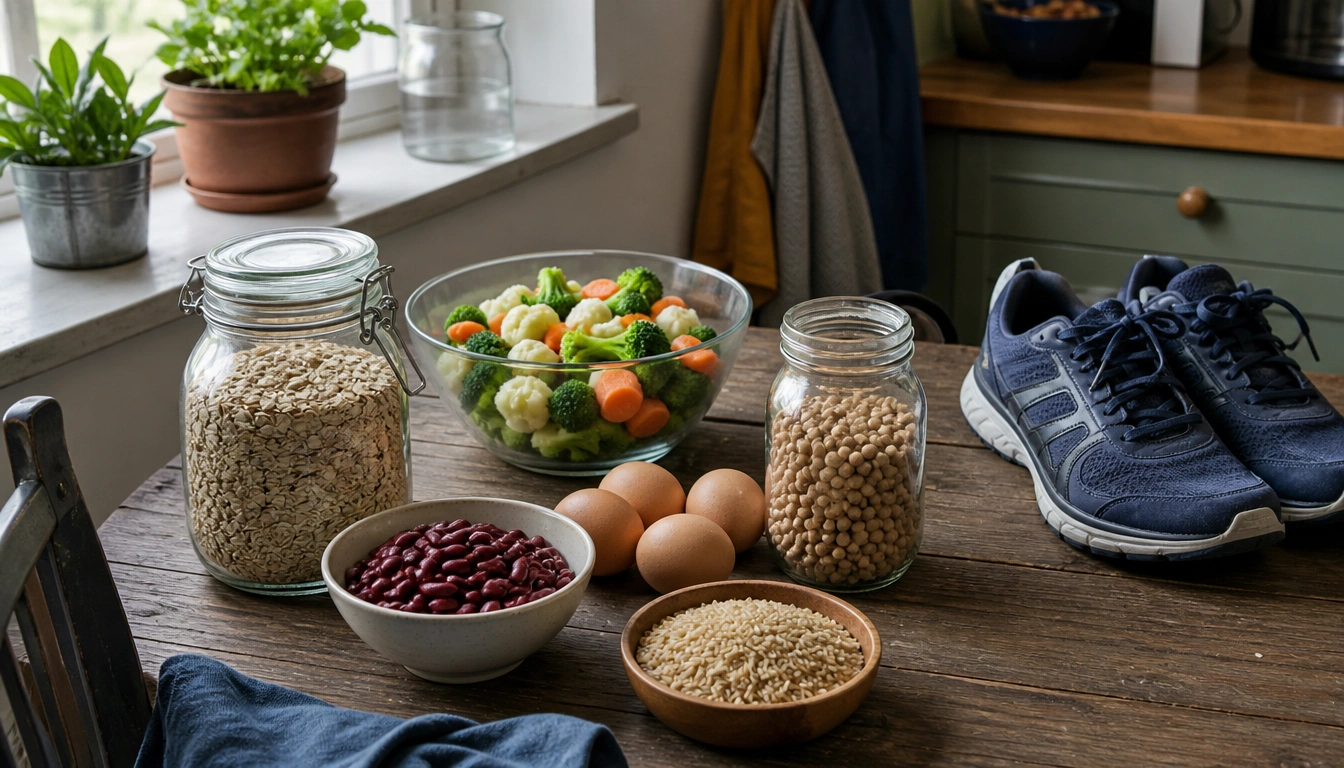
The most affordable way to eat well and stay active consistently is to build around low-cost staples, plan meals before shopping, use frozen or canned produce when fresh food is too costly, and rely on free movement like walking and bodyweight exercises. Public health guidance from the CDC, WHO, and USDA shows that healthy habits work best when they are simple, repeatable, and adjusted to your schedule, age, and health needs.
Key Takeaways
- Beans, lentils, oats, brown rice, eggs, frozen vegetables, and canned produce can be low-cost staples that still support fullness, energy, and nutrient intake.
- You do not need a gym to meet activity goals: brisk walking, stair climbing, dance, and bodyweight work can count toward weekly aerobic and strength targets.
- Meal planning, unit pricing, store brands, and shopping the freezer or canned aisle can lower your food bill while reducing waste.
- If you work long hours or live far from full grocery stores, shelf-stable foods such as peanut butter, tuna, beans, oats, and shelf-stable milk can help fill gaps.
- Children, older adults, and people with chronic disease or limited mobility may need different activity goals or medical guidance before making major changes.
Why budget-friendly healthy habits are realistic, not restrictive
Healthy habits are often easier to maintain when they are built from ordinary foods and ordinary movement. That matters for people on tight budgets, because routines that depend on specialty products, expensive memberships, or highly specific meal plans usually break down when money or time gets tight. The better approach is to use a few dependable habits that can survive a busy week.
Public health guidance from the USDA, CDC, and World Health Organization supports that idea. A diet pattern built around beans, lentils, oats, brown rice, eggs, and produce can be nourishing without being expensive. These foods are practical because they are filling, versatile, and easy to stretch across multiple meals. Fiber-rich foods can help with fullness, and protein-containing foods can help meals feel more satisfying between eating times.
That same logic applies to activity. The CDC and WHO recommend regular weekly movement, but they do not require a paid fitness setting. Brisk walking, bodyweight exercises, dancing at home, and active chores can all contribute to your weekly total. The habit becomes sustainable when it fits into real life instead of asking for a perfect schedule.
For many families, the healthiest plan is not the fanciest one. It is the one you can repeat when money is short, when work runs late, or when the freezer and pantry need to do most of the work.
Building meals around the plate method without overspending
MyPlate offers a simple framework that also works on a budget: fill about half your plate with vegetables and fruit, one-quarter with grains, and one-quarter with protein. You do not need expensive ingredients to follow that pattern. You need a few low-cost building blocks that can be mixed and matched.
Start with the cheapest foods that do the most work. Dry beans and lentils are usually among the most economical protein choices, and they also bring fiber, which can make meals more satisfying. Eggs are another flexible option for breakfast, lunch, or dinner. Oats, brown rice, whole-wheat pasta, potatoes, and corn tortillas can provide affordable energy. Frozen vegetables and fruit can be especially useful because they are often less expensive than fresh items and reduce spoilage.
A budget-friendly plate might look like scrambled eggs with frozen spinach and toast, lentil soup with carrots and brown rice, or canned tuna with beans, cabbage, and tortillas. None of those meals require specialty shopping. They rely on inexpensive foods that can be stored, cooked, and reused in different ways.
If you are trying to save money without getting stuck in repetitive meals, think in components rather than recipes. Cook a pot of grains, a pot of beans or lentils, and one or two vegetables, then combine them in different ways during the week. That keeps food affordable and reduces the urge to order out when you are tired.
Shopping strategies that cut cost and waste
One of the easiest ways to overspend is to shop by package size or by habit instead of by value. Unit pricing helps you compare the cost per ounce, pound, or gram so you can see which option is actually cheaper. Sometimes a larger package is the better deal, but not always, especially if part of it will spoil before you use it.
Store brands can also lower the bill. In many cases, the nutrition profile is similar to the name-brand version, especially for staples like oats, canned vegetables, dried beans, frozen fruit, pasta, and peanut butter. If the product is simple and familiar, the store brand is often worth trying.
Frozen and canned foods are especially useful when you live far from a full grocery store, have limited transportation, or cannot shop often. Frozen produce is usually picked and frozen at peak ripeness, and canned produce can last much longer than fresh items. Choose low-sodium canned vegetables and beans when possible, and rinse them to reduce sodium further. Canned fish, tomatoes, and beans can make a shelf-stable pantry more useful without raising costs much.
Seasonal produce can also help, but the best choice is the one you can use before it spoils. If bananas, greens, or berries are likely to go bad before you finish them, frozen alternatives may save more money overall.
Meal planning and prep for busy schedules
Meal planning does not have to mean a full day of batch cooking. A simple weekly system is often enough. Before shopping, choose three or four core meals you can repeat in different forms. Then make a short list based on what you already have at home, what is on sale, and what will keep well.
A practical plan might include one breakfast, one lunch, and two dinner options built from overlapping ingredients. For example, oats can cover breakfast, rice can pair with beans for dinner, and eggs can fill a gap when the week gets busy. If you cook a large batch of lentils or chicken on the weekend, you can use it in soup, wraps, or grain bowls during the week.
Meal prep is most useful when it prevents waste. Chop only what you are likely to use, refrigerate leftovers in clear containers, and freeze portions that you will not eat soon. If fresh produce is risky because your schedule changes often, lean more heavily on shelf-stable items that can wait for you.
For people working two jobs or juggling childcare, the goal is not perfection. The goal is having food ready before you are exhausted. A pantry that includes oats, beans, rice, tuna, peanut butter, shelf-stable milk, and frozen vegetables can support quick meals even when your week changes at the last minute.
Free and low-cost movement that meets public health activity goals
According to the CDC and WHO, adults should aim for at least 150 minutes of moderate-intensity aerobic activity each week, or 75 minutes of vigorous activity, plus muscle-strengthening work on two or more days per week. Those targets sound formal, but they can be reached with ordinary movement.
Brisk walking is one of the most practical options because it is free, scalable, and easy to repeat. Other low-cost aerobic choices include dancing at home, climbing stairs, active commuting when possible, and chasing kids at the park. For strength, bodyweight squats, wall push-ups, lunges, glute bridges, and step-ups can work major muscle groups without equipment. A sturdy chair, a wall, or a set of stairs is often enough.
“Exercise snacks” help when time is tight. Ten minutes of walking during a lunch break, a short walk after dinner, or a few sets of squats while cooking can add up across the week. Short sessions are not useless just because they are short. They still count toward your total movement.
Daily movement also matters outside formal workouts. Standing more, taking the long way to the bus stop, carrying groceries in smaller trips, and taking stairs when it is safe can all add activity without adding cost.
Adapting the plan for children, older adults, and people with limited mobility
Life stage changes what “enough” looks like. Children and adolescents need more daily movement than adults, and the CDC recommends at least 60 minutes of moderate-to-vigorous physical activity each day for this age group. Free play, school recess, walking to school when safe, playground time, and community sports can all help.
Older adults benefit from a broader mix of activity. In addition to aerobic movement and strength work, balance and flexibility matter more with age because they support mobility and can help reduce fall risk. Simple options include standing on one foot near a counter, heel-to-toe walking, gentle stretching, tai chi, or chair-based exercise. The National Institute on Aging also emphasizes that activity can be adapted to ability, which matters for people who are not starting from a high fitness level.
People with limited mobility can still build a useful routine. Seated marches, arm raises, resistance-band work, and chair squats may be more appropriate than standing exercise. If pain, dizziness, or balance problems are present, the safest starting point may be a clinician-guided plan that matches current ability.
For families, it helps to treat activity as shared time. A walk after dinner, active play in a park, or a living-room dance session can give children movement while making exercise feel less like a chore for adults.
Common mistakes that make healthy habits more expensive than they need to be
One common mistake is assuming that healthier foods must be fresh, organic, or prepackaged in a certain way. That can push people toward expensive products when lower-cost options would work just as well. Frozen vegetables, canned beans, plain oats, and store-brand yogurt are often more budget-friendly than specialty items and can still fit a healthy pattern.
Another mistake is buying too many ingredients for a meal plan that is too ambitious. If you plan five complicated recipes but only cook two of them, the extra food may spoil. Start smaller. Choose meals that reuse ingredients and that you actually have time to prepare.
People also sometimes overspend by shopping while hungry, skipping unit pricing, or treating every healthy habit as all-or-nothing. A routine does not need to be perfect to help. If one week is messy, use the next shopping trip to reset with a smaller, more realistic plan.
Finally, avoid turning budget eating into under-eating. Saving money is not a success if it leads to constant hunger, poor concentration, or nutrient gaps. If your food budget is so limited that it is hard to get enough protein, iron, vitamin B12, or calories, the plan needs to change.
How to know when budget-friendly self-management is not enough
Money-saving habits are useful, but they are not a substitute for medical care when health risks are present. If you have cardiovascular disease, uncontrolled high blood pressure, diabetes, severe joint problems, significant mobility limitations, or symptoms that change with activity, it is wise to ask a clinician before making major changes to diet or exercise.
The same is true if you have been inactive for a long time and want to start exercising more quickly. The safest path is gradual. Increase walking time, strength work, or intensity step by step so your muscles, joints, and cardiovascular system can adapt. Sudden jumps in intensity can lead to strain or injury.
Professional guidance can also help when special nutrition needs are likely. That may include pregnancy, eating disorders, unexplained weight change, frequent dizziness, or a very restricted food budget that makes it hard to meet basic nutrient needs. A registered dietitian, primary care clinician, or other qualified professional can help you build a plan that fits both your health and your finances.
For many people, the best long-term strategy is still simple: use affordable staples, move in ways that fit your day, and ask for help when the plan stops meeting your health needs.
Frequently Asked Questions
How can I eat healthy on a tight grocery budget?
Build meals around a few low-cost staples such as beans, lentils, oats, rice, eggs, frozen vegetables, and canned fruit or vegetables. Plan a short shopping list before you go, compare unit prices, and use store brands when the nutrition is similar. Those steps usually lower cost without making meals less balanced.
What cheap foods are the most nutritious and filling?
Beans, lentils, oats, brown rice, potatoes, eggs, peanut butter, frozen vegetables, canned tomatoes, and canned fish are common budget-friendly choices. Foods with fiber, protein, and water content tend to be more filling, which can help meals last longer between eating times.
How can I exercise at home for free and still meet public health activity guidelines?
Use a mix of brisk walking, stair climbing, dancing, and bodyweight exercises such as squats, wall push-ups, lunges, and step-ups. Adults should aim for weekly aerobic activity plus strength work on at least two days. Short sessions can add up across the week.
How do I plan meals to reduce food waste and save money?
Choose a few meals that reuse the same ingredients, shop from a list, and buy foods that will keep long enough for your schedule. Freeze leftovers, use the freezer aisle when fresh produce spoils too quickly, and keep shelf-stable backup foods on hand for busy weeks.
What should people with chronic conditions or mobility limits do before changing diet or exercise habits?
Talk with a healthcare professional first if you have heart disease, uncontrolled blood pressure, diabetes, severe joint pain, dizziness, or major mobility limits. A clinician or registered dietitian can help you change habits gradually and safely, especially if your food budget is already very tight.
The Bottom Line
Affordable healthy habits are usually built from simple parts: low-cost staples, a short meal plan, smart shopping, and free movement that fits the day you actually live. You do not need expensive products to eat better or stay active more often.
The most reliable routines are the ones that survive hard weeks. Frozen and canned produce, store brands, beans, lentils, eggs, oats, and walking can carry a lot of the work when money, time, or transportation are limited. If you have a chronic condition, major pain, or a high-risk health situation, get individualized guidance before making big changes.
Medical disclaimer
Medical disclaimer: This content is for educational and informational purposes only and is not a substitute for professional medical advice, diagnosis, or treatment. Dietary needs and supplement suitability vary by individual.
Sources
- Centers for Disease Control and Prevention (CDC) — cdc.gov. Accessed November 2026.
- World Health Organization (WHO) — who.int. Accessed November 2026.
- Centers for Disease Control and Prevention (CDC) — cdc.gov. Accessed November 2026.
- U.S. Government / Health Authority — medlineplus.gov. Accessed November 2026.
- myplate.food — myplate.food. Accessed November 2026.
