
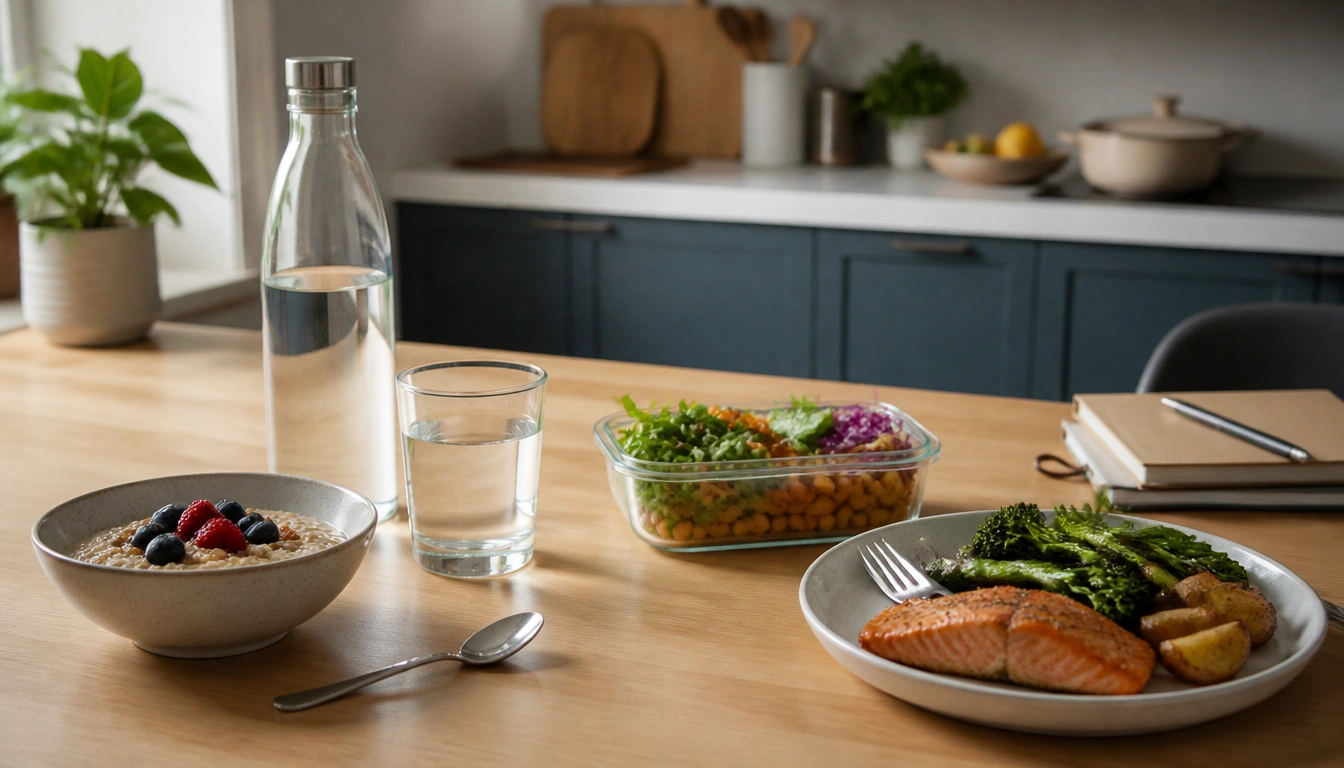
If you are an absolute beginner, start with a simple water intake habit plan built around three anchor moments: when you wake up, with lunch, and with dinner. Do not try to perfect your intake from day one. Aim for steady sipping, watch for urine that is clear to pale yellow, and remember that tea, coffee, sparkling water, milk, and water-rich foods all contribute to hydration.
Key Takeaways
- Use existing routines to make drinking easier: waking, lunch, and dinner are reliable beginner anchors.
- You do not need a rigid ounce goal to start; flexible public-health guidance is usually enough for a beginner.
- Hydration includes more than plain water, including tea, coffee, milk, sparkling water, and water-rich foods.
- A useful self-check is urine color: clear to pale yellow usually suggests good hydration for most healthy adults.
- Beginner barriers like forgetting, taste, and bathroom trips are easier to solve with cues, flavor add-ins, and smaller sips.
- Heat, exercise, pregnancy, breastfeeding, older age, and certain medical conditions can change fluid needs or require clinician guidance.
Start with a three-anchor water intake habit plan
The easiest way to begin a water intake habit plan for absolute beginners is to attach drinking to moments that already happen every day. A practical starter routine is one glass on waking, one with lunch, and one with dinner. Those three anchors create a stable baseline without forcing you to count every sip or remember a schedule from scratch.
This approach works because habits stick better when they are linked to something familiar. You do not need to become a “water person” overnight. You only need a repeatable pattern that reduces decision-making. If a full glass feels like too much at first, start smaller and build up. The goal in the first week is consistency, not perfection.
For many beginners, the morning glass is the easiest win because it has a clear cue: get up, drink water, start the day. Lunch and dinner are useful because they are already tied to sitting down and pausing. If your day is irregular, replace lunch or dinner with another reliable anchor such as arriving at work, taking medication, or returning home.
Use flexible guidance instead of a rigid daily quota
Public-health advice for hydration is intentionally flexible because people differ in body size, climate, activity level, and diet. The UK National Health Service commonly advises adults to aim for 6 to 8 cups or glasses of fluid a day. In the United States, the National Academies’ adequate intake reference values are higher and include fluids from foods as well as drinks. These numbers are useful context, but they are not a perfect personal target for every day.
For an absolute beginner, that means you can start with a simple floor rather than an exact quota. If you are currently drinking very little, three anchor drinks is already a meaningful improvement. Once that feels normal, you can add another glass or two around snacks, exercise, or hot weather. The point is to build a routine that you can keep, not a target you can only meet on your best days.
It also helps to think in terms of “enough for my day” rather than “the same number every day.” A quiet desk day, a long walk, and a humid outdoor shift will not create the same fluid needs. Flexible guidance gives you room to adjust without turning hydration into a constant math problem.
Remember that hydration is not only plain water
One of the biggest beginner misconceptions is that only plain water counts. In reality, total fluid intake includes many beverages and also moisture from food. Tea, coffee, sparkling water, and milk can all contribute to hydration. Water-rich foods such as fruit, vegetables, soup, and yogurt also add to your daily fluid intake, which is why public-health guidance does not rely on plain water alone.
This matters if you dislike the taste of tap water or struggle to drink enough during the day. A cup of tea at breakfast, a glass of sparkling water in the afternoon, and milk with a meal can all help. You do not need to reject other drinks to “qualify” as hydrated. The more useful question is whether your overall intake is steady enough to support normal body needs.
There is one caution: some drinks are better hydration helpers than others depending on your health and context. Sweetened drinks can add a lot of sugar, and alcohol does not serve as a reliable hydration strategy. For a beginner, the simplest base is still water or unsweetened drinks, with food moisture as a helpful extra.
Check how the plan is working without tracking ounces
If you do not want to count ounces, use a few practical signs to judge whether your routine is working. Urine color is the most helpful day-to-day check for most healthy adults. A clear to pale yellow color usually suggests you are getting enough fluid. Dark yellow or amber urine is a common sign that you may need more.
Thirst is another clue, though it is not perfect. If you are always catching up at the end of the day, your routine may be too sparse. Energy and focus can also help you notice patterns. Mild dehydration can affect alertness, mood, and comfort, so if you feel sluggish, headachy, or unusually dry, your intake may need attention.
Consistency matters just as much as volume. A beginner does not need to feel “well hydrated” after one large bottle. What you want is a repeatable pattern that spreads fluids through the day. That is why the anchor-habit method is so useful: it creates regular contact with water, which is often more effective than one big catch-up session.
Fix the common beginner problems before they derail you
Forgetting is usually the first barrier. The easiest fix is to connect drinking with something you already do, then make the cue obvious. Put a glass by the coffee maker, keep a bottle next to your laptop, or leave a cup near the place where you eat. If you can see the water, you are more likely to drink it.
If you dislike plain water, make small changes instead of giving up. Try chilled water, ice, cucumber slices, lemon, lime, or mint. Unsweetened sparkling water can feel more interesting without adding sugar. Herbal tea can also be a good option if you want warmth or flavor. The goal is to make drinking pleasant enough that it becomes routine.
Busy schedules often make people skip drinks until they are very thirsty, then chug too much at once. That can feel uncomfortable and lead to more bathroom trips. A steadier approach works better: sip through the day and pair drinks with meals or transitions. If restroom disruption is a concern, smaller, more frequent drinks are usually easier than large gulps.
If you find yourself bloated after drinking, slow down and reduce the amount you take in at one time. If you work in a setting where bathroom access is limited, plan for modest, regular sips rather than large volumes. Most beginner barriers are not about willpower; they are about making the habit easier to do than to skip.
Set up your environment so water is the easy choice
Environment does a lot of the work for you. Put water where your eyes land: on the nightstand, next to the toothbrush, beside the lunch plate, on your desk, or in the car cup holder. A visible bottle or glass works as a reminder and makes the next sip feel effortless. The fewer steps between you and the water, the better.
It can help to choose one container for work and one for home. That reduces decision fatigue and makes progress obvious. Some people prefer a bottle with volume markings because it shows how much has been consumed, while others prefer a simple glass because it feels less technical. Either can work. Choose the option you are more likely to use.
You can also make water more appealing by changing the experience, not the rule. Keep it cold if you like cold drinks. Add fruit slices if that makes plain water easier to drink. Switch between still and sparkling water if variety helps. The best setup is the one that makes your routine feel natural instead of forced.
Adjust the plan for exercise, heat, pregnancy, breastfeeding, and age
Some situations raise fluid needs or make regular drinking more important. Exercise and hard physical work increase fluid loss through sweat, so you may need extra drinks before, during, and after activity. Hot or humid weather can also increase losses, as can high altitude. In those settings, the anchor plan still works, but you may need to add a bottle around movement or outdoor time.
Pregnancy and breastfeeding are also times when fluid needs rise. A simple routine can still help, but it may not be enough on its own if you are thirsty more often or producing milk. Older adults may need extra structure because thirst can become less noticeable with age. In that case, routine matters more than thirst alone.
Medical fluid restrictions are the main exception. People with conditions such as heart failure, advanced kidney disease, or certain electrolyte problems may need individualized guidance from a clinician. If a doctor has given you a fluid limit, follow that plan instead of general wellness advice. That is especially important when you are trying to build a new habit.
Because fluid needs change with context, the best beginner plan is adjustable. Keep the same anchors, then add or reduce fluids based on your day, your body, and any medical instructions you have been given.
Know the safety signs that need medical attention
Most beginner hydration plans are safe, but two extremes matter: being too dry and drinking too much too quickly. Signs that deserve medical attention include extreme dizziness, confusion, a rapid heartbeat, fainting, or not urinating for many hours. If dehydration is happening alongside vomiting or diarrhea and you cannot keep fluids down, seek care promptly.
Too much water can also be a problem, especially if a very large amount is consumed in a short time. This can dilute sodium in the blood and lead to hyponatremia, sometimes called water intoxication. Warning signs can include severe headache, nausea, confusion, and lethargy. In serious cases, it can become an emergency.
The safest beginner strategy is steady intake, not dramatic overcorrection. Drink across the day, pay attention to urine color and how you feel, and ask for medical advice if you have a condition that changes fluid needs or if symptoms seem severe. Hydration should support daily life, not create new problems.
Frequently Asked Questions
How much water should a beginner aim for each day?
There is no single perfect number for everyone. Beginners usually do better with a flexible goal, such as the NHS-style 6 to 8 cups of fluid a day, then adjusting for heat, exercise, and appetite. Start with a simple routine first, then refine it if needed.
Does coffee, tea, sparkling water, or food count toward hydration?
Yes. Tea, coffee, sparkling water, milk, and water-rich foods all contribute to total fluid intake. Plain water is not the only source of hydration. If you prefer other unsweetened drinks or eat a lot of fruits and vegetables, those count too.
What’s an easy routine for remembering to drink water without tracking every ounce?
Use anchor habits. Drink water when you wake up, with lunch, and with dinner. Put water where you can see it, such as on your desk or by the sink. When the cue is visible and tied to an existing routine, memory becomes less of an issue.
How can I tell if I’m drinking enough water?
For most healthy adults, urine that is clear to pale yellow is a practical self-check. Dark yellow or amber urine can mean you need more fluids. You can also pay attention to thirst, energy, and whether you are consistently drinking across the day instead of all at once.
What should I do if I dislike the taste of plain water?
Try chilled water, ice, lemon, lime, cucumber, or mint. Unsweetened sparkling water and herbal tea can also help. If plain water still feels unpleasant, use other fluids and water-rich foods to make hydration easier and more sustainable.
The Bottom Line
An absolute beginner does not need a perfect hydration plan. A simple routine built around waking, lunch, and dinner can create a dependable baseline without obsessive tracking. If that routine is easy enough to repeat, it is doing its job.
Use urine color, thirst, and how steady your routine feels as your main checks. Remember that fluids come from more than plain water, and that hot weather, exercise, pregnancy, breastfeeding, older age, and medical conditions can change what is right for you. If you have severe dehydration symptoms, symptoms of overhydration, or a condition that requires fluid limits, get medical guidance rather than trying to self-correct aggressively.
Medical disclaimer
Medical disclaimer: This content is for educational and informational purposes only and is not a substitute for professional medical advice, diagnosis, or treatment. Dietary needs and supplement suitability vary by individual.
Sources
- National Health Service (NHS) — sath.nhs.uk. Accessed October 2026.
- Centers for Disease Control and Prevention (CDC) — cdc.gov. Accessed October 2026.
- National Institutes of Health (NIH) — nih.gov. Accessed October 2026.
- National Health Service (NHS) — www.nhs.uk. Accessed October 2026.
- National Health Service (NHS) — kch.nhs.uk. Accessed October 2026.
- Academic Research Institution — harvard.edu. Accessed October 2026.
