
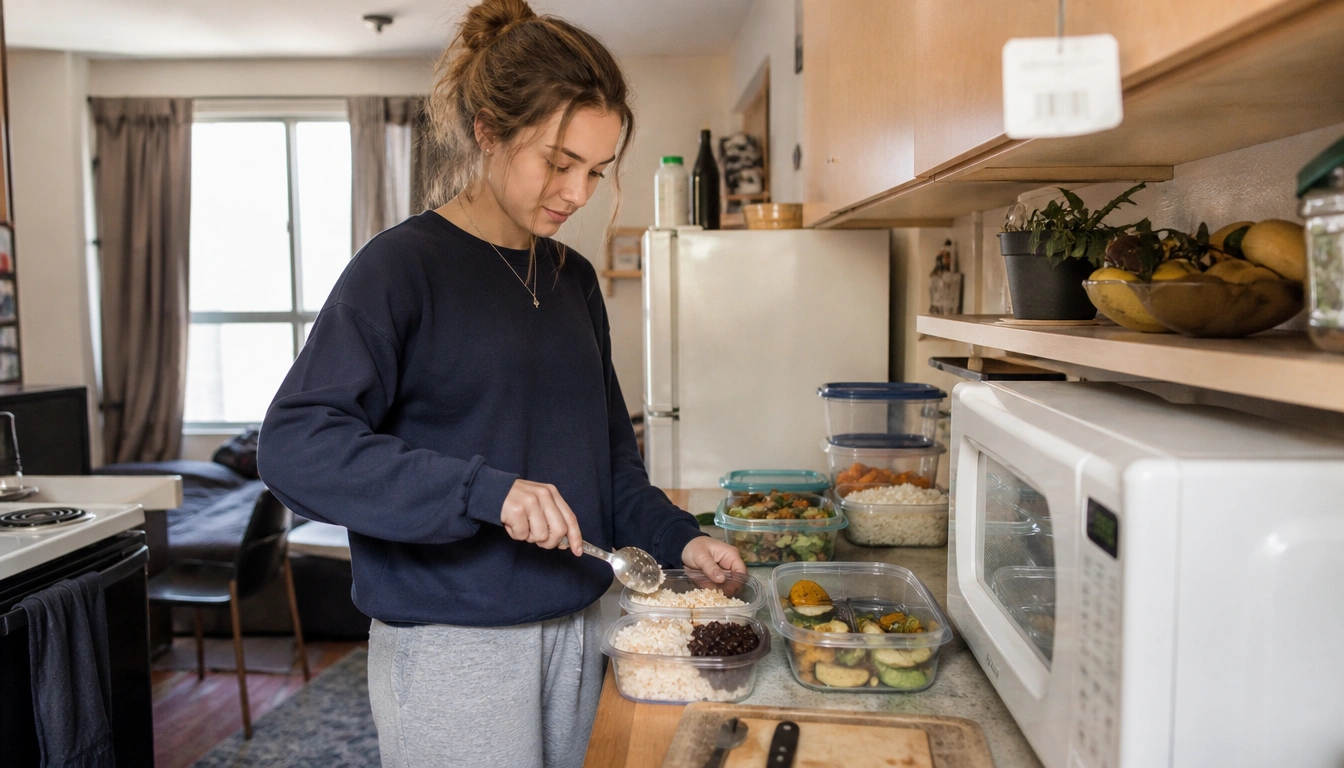
Yes—college students can realistically meal prep on the weekend by focusing on flexible food basics instead of complicated recipes. Start with a few meals or components you know you’ll actually eat, use budget staples like grains, beans, frozen vegetables, and store-brand foods, and pack portions for the next 3 to 4 days. If you need food later in the week, freeze it after cooling.
Key Takeaways
- Meal prep works best when it lowers weekday stress, cuts takeout spending, and makes a decent meal faster than ordering one.
- If you have a dorm setup, prioritize microwave-friendly and no-cook foods; if you have a full kitchen, you can batch-cook more freely.
- Prepping grains, proteins, and vegetables separately gives you more mix-and-match options than repeating the same exact meal all week.
- Use the 2-hour cooling rule, the 3–4 day fridge window, and the freezer for anything you won’t eat soon.
- The biggest savings usually come from store-brand staples, frozen or canned produce, and less food waste—not from making elaborate recipes.
- A simple grain + protein + vegetable can become bowls, wraps, salads, or stir-fries without extra shopping or extra cooking.
Why weekend meal prep helps college students
Weekend meal prep for college students is less about becoming a perfect planner and more about making weekday life easier. A few ready-to-eat ingredients can help you avoid expensive takeout, skipped meals, and the last-minute “What do I eat now?” problem that tends to show up between classes, labs, work shifts, and late-night studying.
There is also a real nutrition benefit. Public health guidance from the USDA and CDC emphasizes building meals around vegetables, fruits, whole grains, and lean proteins. When those foods are already in the fridge, they are more likely to get eaten than when you have to start from scratch after a long day. Meal prep can also reduce decision fatigue, which matters more than many students expect. If food decisions are already handled, you have more mental energy left for assignments and exams.
Money is another major reason this habit helps. A student budget usually stretches farther when you buy ingredients that can be reused in several meals instead of paying for convenience food every day. Even a small prep session can make the week feel less chaotic.
What to prep first: full meals or flexible components
For many students, especially beginners, prepping separate components is easier to sustain than building the exact same full meal five times. Component prep means cooking a grain, a protein, and one or two vegetables, then combining them in different ways during the week. That approach gives you variety without requiring a different grocery list every weekend.
Full meals can still work if you genuinely enjoy leftovers and your schedule is predictable. But if you get bored quickly, mix-and-match prep is usually the better fit. One batch of rice, one tray of chicken or tofu, and one container of roasted vegetables can become a bowl one day, a wrap the next, and a quick stir-fry later in the week.
This also lowers the risk of wasting food. If you only want to eat one prepared meal two or three times, you do not need to force the rest of the week into the same container. You can prep what you know you’ll finish and leave room for flexibility.
Dorm kitchen, microwave-only, and apartment setups
Your housing situation should shape your prep plan. Students in dorms with only a microwave and mini-fridge need a different approach than students with a stove, oven, and full refrigerator. The goal is not to copy a meal-prep influencer’s kitchen. The goal is to work with the setup you actually have.
Microwave-only or mini-fridge setup: Focus on foods that are safe, simple, and fast. Think oats, yogurt, fruit, whole-grain bread, nut butter, hummus, canned beans, tuna or salmon packets, pre-cooked grains, frozen vegetables, and rotisserie chicken if you have access to one. If you have a microwave, you can also heat frozen steam-in-bag vegetables and pre-cooked rice or grain packets.
Apartment or full-kitchen setup: You can cook a larger batch of grains, roast vegetables on a sheet pan, simmer beans or lentils, and cook protein in bigger portions. That gives you more room to batch-prep and freeze extra servings for later in the week.
In both settings, the best strategy is the one that feels realistic on a tired Sunday night. A smaller, repeatable plan beats a big plan you will not want to repeat.
A simple weekend workflow that actually fits student life
A good weekend routine does not need to take over your day. The most useful version is short, repeatable, and easy to adjust when classwork gets busy. Start by looking at your week before you shop. If you know you will miss lunch on Tuesday or have a late lab on Thursday, prep around those gaps instead of guessing.
Next, check what you already have. Students often forget about half-used rice bags, canned beans, pasta, or frozen vegetables. Using what is already on hand saves money and reduces waste. Then shop with a short list built around a few flexible ingredients rather than a long recipe list.
During prep, keep the workflow simple: wash and chop produce, cook the grain, cook the protein, and portion everything into containers once it has cooled. Labeling containers with the date helps if you freeze part of the batch. The point is to make weekday choices easier, not to create a second job for yourself.
Best budget-friendly building blocks
The cheapest meal prep usually comes from basic ingredients that can be used in many meals. Store-brand staples often work well here, and frozen or canned produce can be just as practical as fresh when time, budget, or storage is limited. According to USDA guidance, frozen and canned vegetables and fruits can be part of a healthy pattern, especially when you choose options without added sugar or excess sodium.
Grains: Brown rice, white rice, oats, whole-wheat pasta, quinoa, and tortillas are all useful because they stretch across multiple meals.
Proteins: Beans, lentils, eggs, tofu, chicken, tuna, salmon, Greek yogurt, and peanut butter are affordable options that can anchor a meal.
Vegetables and fruit: Frozen broccoli, mixed vegetables, spinach, berries, apples, bananas, carrots, and canned tomatoes are easy to store and often cheaper than pre-cut convenience foods.
Sauces and flavor makers: Salsa, soy sauce, hot sauce, pesto, vinaigrettes, curry paste, and simple spice blends can keep the same ingredients from tasting repetitive.
Snacks: Yogurt, fruit, nuts, hummus, crackers, and cut vegetables can help you avoid impulse buys between classes when hunger hits.
If your budget is tight, the biggest savings usually come from using food you already bought, choosing store brands, and throwing away less. Fancy ingredients are not the win; getting through the week without wasted food is.
How to keep prep from getting boring
Boredom is one of the main reasons meal prep habits fade. The fix is not necessarily more cooking. It is more flexibility. A prepared grain, a protein, and a vegetable can turn into several different meals if you change the texture or sauce.
For example, the same rice can become a burrito bowl with salsa and beans, a stir-fry with soy sauce and frozen vegetables, or a warm bowl with chicken and a simple dressing. A wrap can use the same cooked protein and vegetables that went into a bowl the day before. A salad can use the same protein with a different base and topping.
You can also prep for different meal moods. Some days you want something cold and quick. Other days you want something warm and comforting. If your ingredients can shift between those two formats, you are less likely to abandon the plan by Wednesday. Small changes in sauce, seasoning, or assembly are often enough to make the week feel different without requiring a second round of cooking.
Food safety essentials for student meal prep
Food safety matters just as much as convenience. The CDC and USDA recommend keeping cooked perishable food out of the temperature danger zone and refrigerating it quickly. A practical rule is the 2-hour rule: do not leave cooked food at room temperature for more than two hours, or one hour if it is very hot outside. To cool food faster, divide large pots or trays into shallow containers before refrigerating.
Most cooked grains, proteins, and vegetables are best eaten within 3 to 4 days in the refrigerator when stored properly in airtight containers. If you know a portion will not be eaten in that window, freeze it after cooling. That is especially helpful for Wednesday, Thursday, or Friday meals if you prep on Sunday.
Reheat leftovers until they are steaming hot throughout. For dorm students, this often means making sure the microwave heats the food evenly and stirring halfway through if needed. If food smells off, looks unusual, or has been sitting out too long, it is safer to throw it away than to risk getting sick.
These guidelines matter most when students are busy, distracted, or trying to stretch food for too long. Good food storage is part of the habit, not an optional extra.
How to make the habit sustainable during busy weeks
The best meal prep habit is the one you can keep during exams, club deadlines, practice, or low-energy weekends. That usually means scaling the plan to match your real week. If you are overwhelmed, prep fewer items instead of quitting completely. Even one grain, one protein, and one vegetable can save you time Monday through Wednesday.
It also helps to decide in advance what “good enough” looks like. Not every week needs three different recipes, matching containers, or perfectly balanced meals. Some weeks, your win is simply having lunch ready before class or not ordering takeout because you are too tired to think.
If you struggle with cooking confidence, start with the easiest version of meal prep you will repeat. As your routine gets easier, you can add more variety, more vegetables, or a larger freezer stash. Students with severe food insecurity, persistent distress around eating, or rapid changes in weight should use campus health, counseling, or student support resources for individualized help rather than trying to solve everything through meal prep alone.
A sustainable system is flexible, not strict. The habit should make your week lighter, not more demanding.
Frequently Asked Questions
What should a college student prep first if they only have a microwave or mini-fridge?
Start with foods that need little or no cooking: oats, yogurt, fruit, whole-grain bread, peanut butter, hummus, canned beans, tuna packets, pre-cooked rice, and frozen vegetables you can microwave. Build around items that keep well and are easy to assemble between classes.
How long can meal-prepped food safely stay in the fridge?
Most cooked meal-prep foods keep for about 3 to 4 days in the refrigerator when stored in airtight containers and cooled promptly. If you will not eat a portion within that window, freeze it after it cools so it is still usable later in the week.
How can students meal prep on a very tight budget without wasting food?
Focus on store-brand staples, frozen or canned produce, and ingredients you can use in several meals. Plan around what is already in your kitchen, cook only what you will realistically eat, and freeze extra portions before they spoil. Less waste usually saves more money than a more elaborate menu.
Should students prep full meals or just meal components for the week?
For many students, meal components are easier to maintain. Cooking a grain, a protein, and vegetables separately gives you more variety and helps prevent boredom. Full meals can work too, but they are less flexible if your schedule changes or you get tired of the same food.
What are the easiest healthy foods to batch cook for college students?
Good starter foods include rice, quinoa, oats, beans, lentils, eggs, chicken, tofu, roasted vegetables, frozen vegetables, and simple sauces. These ingredients are flexible, affordable, and easy to turn into bowls, wraps, or quick reheated meals.
The Bottom Line
Weekend meal prep works best for college students when it is simple, flexible, and built around real schedules. You do not need a perfect menu or a big kitchen to make weekday eating easier.
If you focus on a few affordable building blocks, store leftovers safely, and freeze what you will not eat soon, meal prep can save money and reduce stress without taking over your weekend. The habit becomes sustainable when it fits your dorm, apartment, budget, and energy level.
The most useful version is the one you can repeat next week. Start small, keep the ingredients practical, and let the system do the work during your busiest days.
Medical disclaimer
Medical disclaimer: This content is for educational and informational purposes only and is not a substitute for professional medical advice, diagnosis, or treatment. Dietary needs and supplement suitability vary by individual.
Sources
- U.S. Government / Health Authority — usda.gov. Accessed October 2026.
- Centers for Disease Control and Prevention (CDC) — cdc.gov. Accessed October 2026.
- Centers for Disease Control and Prevention (CDC) — cdc.gov. Accessed October 2026.
- U.S. Government / Health Authority — usda.gov. Accessed October 2026.
- U.S. Government / Health Authority — usda.gov. Accessed October 2026.
- U.S. Government / Health Authority — usda.gov. Accessed October 2026.
- U.S. Government / Health Authority — usda.gov. Accessed October 2026.
