
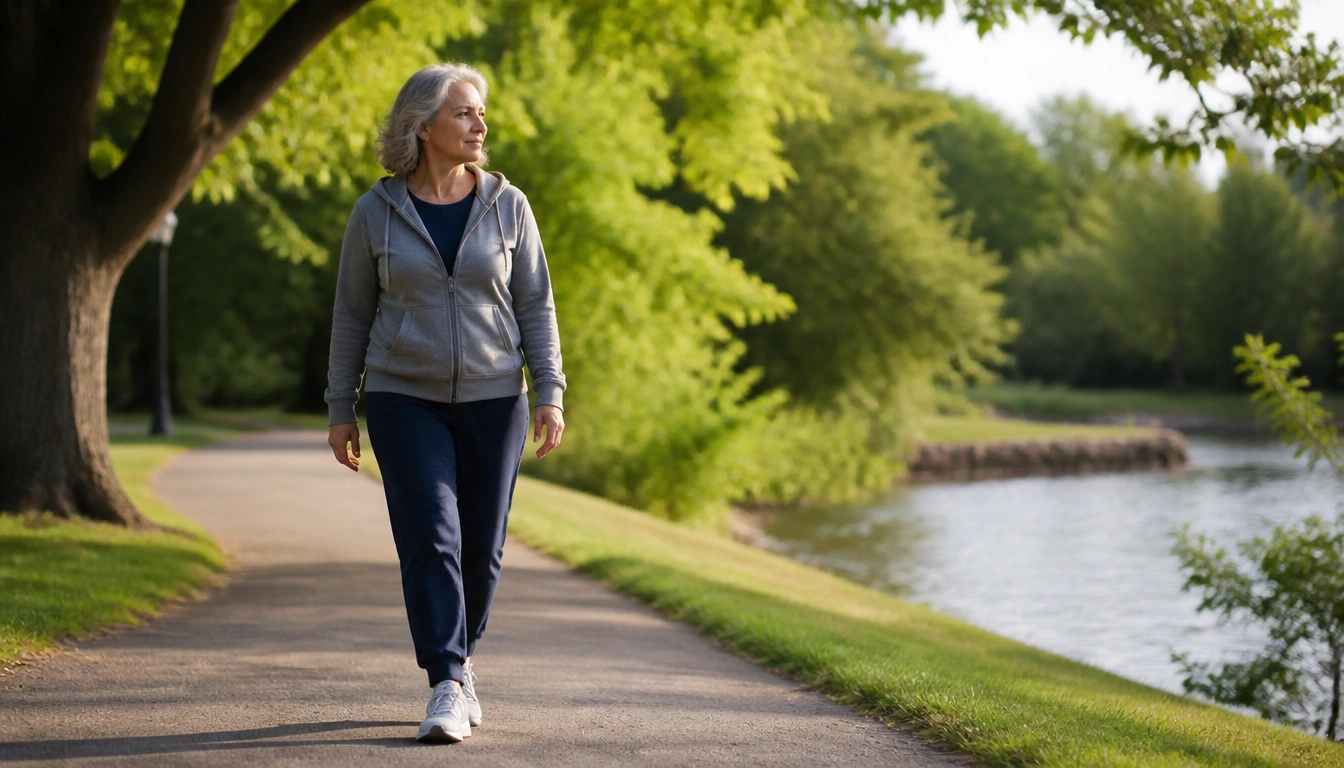
A weekend recovery walk for adults over 50 should feel easy, steady, and restorative—not like a brisk training session. Keep the pace conversational, choose a safe flat route, and use it either as light recovery after a busy week or as gentle aerobic activity if you are building fitness. The goal is to move enough to loosen stiffness and support circulation without leaving you tired or sore.
Key Takeaways
- A recovery walk is lighter than a workout walk: you should be able to talk comfortably and finish feeling refreshed, not drained.
- Very light movement can ease stiffness better than total rest by helping circulation and joint motion.
- For many adults over 50, a weekend walk can count toward weekly aerobic minutes if the pace is moderate enough.
- Flat, predictable surfaces and supportive shoes matter more as balance and joint comfort change with age.
- A short warm-up, a slower finish, water, and a simple protein-plus-carb snack can make the walk feel better and support recovery.
Why a weekend recovery walk matters after 50
A weekend recovery walk works because gentle movement gives your body a chance to keep circulating blood, moving fluid through joints, and easing the stiffness that can build up after sitting or after harder exercise. According to the NHS and the American College of Sports Medicine, regular walking is a practical way for adults to stay active without needing high impact or special equipment.
After age 50, many people notice that joints feel stiffer first thing in the morning, after long drives, or after a busy week. A recovery walk can help break that pattern. It is not about pushing pace. It is about giving muscles, tendons, and joints enough motion to feel looser while keeping stress low.
The same walk can mean different things for different people. If you already exercise most days, it may serve as active recovery. If you are coming from a low-activity baseline, it may be one of your main weekly movement sessions. Both uses are valid, as long as the effort matches your current fitness and recovery needs.
How to choose the right intensity using the talk test
The talk test is one of the simplest ways to judge a weekend recovery walk. If you can speak in full sentences without huffing or gasping, you are usually in an easy-to-moderate range. If conversation becomes choppy or you feel like you are working to keep up with your breathing, you have likely moved beyond recovery intensity.
For a true recovery walk, aim for a pace that feels gentle enough that your body can settle into it quickly. You may notice a mild lift in heart rate and warmer muscles, but not strain. The ACSM describes moderate walking as enough to raise breathing and heart rate while still allowing conversation. A recovery walk is usually one step easier than that.
It also helps to judge how you feel afterward. A good recovery walk typically leaves you looser, calmer, and ready for the rest of the day. If you need a long nap, feel unusually thirsty, or notice lingering fatigue, the walk was probably harder than intended.
How long and how often to walk based on your current activity level
How long a weekend recovery walk should be depends on what your week already looks like. If you already do regular exercise, a shorter walk may be enough to help you recover. If walking is your main form of movement, you may use the weekend walk to build toward the general public-health goal of 150 minutes of moderate-intensity aerobic activity each week, as outlined by the CDC and ACSM.
A useful way to think about it is this: active people can treat the walk as a lighter transition day, while less active people can treat it as an exercise session that still stays gentle. The same route can fit both goals if the pace and duration are adjusted to the person.
For many adults over 50, a recovery walk may be short enough to feel restorative and long enough to get you moving out of stiffness. If your legs feel heavier as the walk goes on, that is a sign to shorten the outing or keep the next one easier. Consistency matters more than making each weekend walk longer.
| Your baseline | How the weekend walk functions | What to watch for |
|---|---|---|
| Regular exerciser | Active recovery | Feel fresher afterward, not fatigued |
| Getting back into movement | Light aerobic exercise | Keep the talk test easy and the route simple |
| Limited fitness or recent inactivity | Gentle building block | Start short, flat, and repeatable |
Best surfaces, shoes, and posture cues for older joints and balance
For older joints and balance, the best surface is usually the simplest one. Flat paved paths, smooth park loops, indoor tracks, and well-kept sidewalks are easier to manage than rocky trails, steep hills, or crowded uneven ground. Predictable footing lowers the chance of twisting an ankle or overworking your knees and hips.
Supportive shoes also matter. Choose footwear that feels stable, cushioned, and secure at the heel. Shoes that are worn out, loose, or too flexible can make balance feel less certain. If you have foot numbness or arthritis, extra comfort and fit become even more important than style.
Posture should stay relaxed. Look ahead, not down at your feet. Keep your shoulders soft, arms swinging naturally, and steps a little shorter if your joints prefer less impact. Shorter stride length can make walking feel smoother for knee or hip osteoarthritis. If balance is a concern, walking with a companion or choosing a route with handrails can add confidence.
A simple pre-walk warm-up and post-walk cool-down routine
A short warm-up helps your body shift from rest to movement more comfortably. Before heading out, spend a few minutes on gentle motions such as marching in place, ankle circles, shoulder rolls, or easy side steps. The goal is not to tire yourself out. It is to wake up the joints and muscles that will do the work.
After the walk, slow down for a few minutes before stopping completely. A gradual cool-down helps your breathing settle and can reduce the “sudden stop” feeling that sometimes leaves older adults stiff. If you like stretching, keep it light and comfortable rather than forceful. Focus on areas that feel tight, such as calves, hips, or the back of the thighs.
Hydration fits into both ends of the walk. A glass of water before heading out is often enough for a short easy walk, especially in warm weather. Afterward, drink again if you feel dry, warm, or slightly tired. A simple recovery snack can help too: think yogurt with fruit, toast with peanut butter, or another combination of protein and carbohydrate.
How to adapt the walk for arthritis, blood pressure, diabetes, or neuropathy
If you have knee or hip osteoarthritis, the main goal is to reduce excess impact while keeping the joints moving. Flat surfaces, shorter steps, and a steady easy pace usually work better than hills or speed changes. Some people find that a shorter but more frequent walk feels better than one longer outing.
If you manage hypertension, walking is often a useful moderate activity, but recovery walks should still stay controlled. Keep breathing comfortable and avoid turning the walk into a power session. If you use medication that affects heart rate or blood pressure, your usual effort cues may matter more than a watch reading.
For diabetes, walking can support blood sugar management, but comfort and foot care matter. Check footwear for pressure points, blisters, or rubbing. If you have neuropathy, reduced sensation can make small foot injuries easier to miss, so smoother surfaces and careful shoe choice are especially useful. For all of these conditions, individual medical advice matters if your symptoms change or you are starting from very little activity.
Common mistakes that make a recovery walk too hard
One common mistake is turning the walk into a challenge. A recovery walk should not become a brisk training session because the route has hills, the group walks faster than expected, or you feel pressure to “make it count.” If your breathing becomes noticeably heavier, the walk has shifted away from recovery.
Another mistake is skipping the warm-up or stopping abruptly at the end. Older joints often prefer a gradual start and finish. Another is choosing unstable terrain just because it looks scenic. A pretty route is not always the best one if it leaves you tense, cautious, or sore afterward.
It also helps to know when the walk is actually your main exercise of the week rather than true recovery. If you are sedentary most days, the walk may be the session that helps you build weekly activity. If you already do enough aerobic exercise through the week, the same walk can be lighter and shorter. Your baseline determines the role it plays.
Safety signals and when to contact a clinician
Stop the walk if you develop chest discomfort, dizziness, new shortness of breath, faintness, or a sharp pain in a joint or muscle. Those are not signs to push through. If symptoms improve quickly after resting, that still does not mean they should be ignored if they were unusual for you.
Contact a healthcare professional if walking regularly leaves you unusually breathless, if balance feels suddenly worse, if you notice swelling or persistent joint pain, or if you have a medical condition and are unsure how to start safely. The NHS and CDC both support physical activity for older adults, but they also make room for individualized care when medical conditions, falls risk, or medication concerns are part of the picture.
If you have been largely inactive, have a history of chest pain, or notice symptoms that are new or unexplained, it is wise to check in before making walking a routine. A safe recovery walk should feel manageable, repeatable, and beneficial, not alarming.
Frequently Asked Questions
How long should a recovery walk be for adults over 50?
The right length depends on your baseline fitness and how your body feels that day. For some people, a short easy loop is enough to loosen stiffness; for others, a longer walk can still feel restorative if the pace stays gentle. The goal is to finish feeling better, not depleted.
What pace counts as recovery intensity versus moderate-intensity walking?
Recovery intensity is slower and easier than moderate walking. You should be able to talk in full sentences without effort. Moderate walking raises your heart rate and breathing more, but you can still speak comfortably. If you cannot sing, you are usually past recovery pace and into moderate work.
What should I do before and after a recovery walk to reduce stiffness and soreness?
Before the walk, do a few minutes of gentle movement such as marching in place, ankle circles, or shoulder rolls. Afterward, slow your pace for a few minutes, then rest, hydrate, and use light stretching only if it feels good. A small snack with protein and carbohydrates can also help recovery.
Is a recovery walk safe if I have knee or hip arthritis?
It often is, but the route and pace matter. Flat surfaces, shorter steps, supportive shoes, and an easy pace usually work better than hills or uneven ground. If walking increases pain sharply or leaves you more swollen or stiff for hours, you should scale back and ask a clinician for guidance.
When should I stop walking and get medical advice?
Stop right away for chest discomfort, dizziness, faintness, new shortness of breath, or sharp pain. Contact a healthcare professional if you notice persistent swelling, worsening balance, unusual fatigue, or symptoms that keep returning. If you are starting from inactivity or have a medical condition, it is sensible to ask before building a new routine.
The Bottom Line
A weekend recovery walk for adults over 50 should be easy enough to support circulation, loosen stiffness, and calm the body rather than tire it out. The best pace is usually one where conversation feels easy and your joints feel better afterward, not worse.
Choose flat, predictable ground, supportive shoes, and a relaxed stride. Add a brief warm-up, a slower finish, water, and a simple snack if needed. If you already exercise regularly, the walk can be true recovery. If you are building fitness, it can still count as part of your weekly activity.
If you have arthritis, balance concerns, diabetes, hypertension, neuropathy, or symptoms that feel unusual, adjust the walk and get medical advice when needed. A good recovery walk is safe, repeatable, and helpful enough that you would be willing to do it again next week.
Medical disclaimer
Medical disclaimer: This content is for educational and informational purposes only and is not a substitute for professional medical advice, diagnosis, or treatment. Dietary needs and supplement suitability vary by individual.
Sources
- National Health Service (NHS) — www.nhs.uk. Accessed October 2026.
- Academic / Medical Research Institution — heart.org. Accessed October 2026.
- American College of Sports Medicine (ACSM) — acsm.org. Accessed October 2026.
