
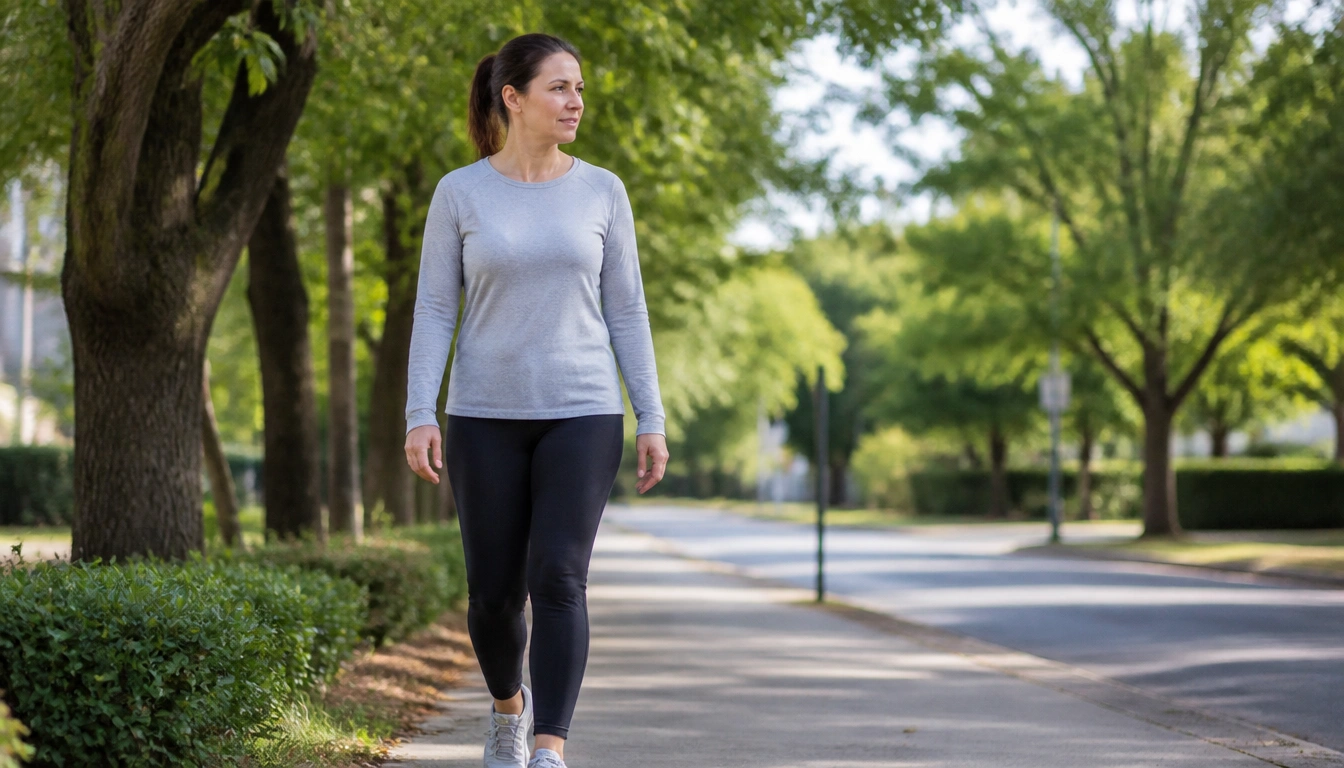
Use a weekend recovery walk as low-to-moderate active recovery, not as a make-up workout. Keep the pace easy enough for the talk test—you can speak in full sentences but not sing—and choose a duration that leaves you feeling looser, not drained. For many home exercisers, that means a short easy walk after a tough week or a longer moderate walk if you also want help meeting weekly aerobic goals.
Key Takeaways
- A recovery walk should reduce stiffness and mental fatigue, not leave you breathless or wiped out.
- Gentle walking can help counter hip flexor tightness, stiff calves, and postural fatigue from desk work or home exercise.
- If weekday movement is limited, weekend walks can help you accumulate aerobic minutes in smaller or longer split sessions.
- Supportive footwear, flat routes, and short mobility work before the walk make it easier on joints and feet.
- Older adults and people with sensitive joints often do better with shorter bouts, flatter terrain, and a slower build-up.
- Stop the walk and seek medical advice if you get chest pain, dizziness, unusual shortness of breath, or sharp joint pain.
Why a weekend recovery walk works better than complete rest
A weekend recovery walk can be a useful bridge between weekday home workouts and total rest. Low-intensity walking keeps the body moving without loading it the way a hard circuit, long cardio session, or strength workout would. That gentle movement helps circulation, which can support nutrient delivery to tired muscles and may help with the heavy, stiff feeling that sometimes follows exercise.
That does not mean every walk is recovery. If the pace turns into a workout, you may add fatigue instead of reducing it. The goal is a walk that feels comfortable, steady, and restorative. For many people, that means walking at a pace that raises breathing slightly but still lets you talk in full sentences. The talk test is a practical way to stay in the moderate-intensity zone without needing special equipment.
Active recovery also has a mental side. If your weekdays are full of screens, indoor workouts, and little change of scenery, a walk can give your mind a reset too. That makes it easier to return to the next training day with less sense of drag.
How walking helps tight hips, stiff calves, and postural fatigue
People who work at a desk and exercise at home often notice the same pattern: hips feel tight, calves feel stiff, and the upper body feels compressed from sitting. Walking helps because it repeatedly loads and unloads the lower limbs in a natural pattern, which can restore some everyday movement you miss when you sit for long stretches.
Hip flexors often feel short and stubborn after sitting. A relaxed walk encourages the hips to open and close through a fuller stride than you usually get in a chair. Calves also benefit from repeated ankle motion and gentle push-off, especially if your week includes little walking. Even posture can feel better after a steady stroll because you are no longer fixed in one position.
If your soreness is general and dull, walking may ease it. If pain is sharp, localized, or joint-related, treat that differently. Recovery walking is for mild post-exercise stiffness and sedentary tightness, not for pushing through an injury.
How to fit weekend recovery walking into a limited schedule
Many home exercisers save most of their movement for the weekend because weekdays are crowded with work, family, or screen time. In that case, the weekend walk can help you partially catch up on weekly aerobic activity while also serving as recovery. Public health guidance from the CDC, NHS, HHS, and the American College of Sports Medicine supports aiming for at least 150 minutes of moderate-intensity aerobic activity each week, and that total can be built from multiple sessions rather than one long workout.
If your weekdays are light on movement, think strategically about the weekend rather than trying to cram everything into one outing. Two shorter walks can be easier on sore legs than one long effort, and they can still contribute meaningfully to your weekly total. For example, you might do one longer moderate walk on Saturday and a gentler walk on Sunday, or split movement across morning and afternoon if time, weather, or joints make one block uncomfortable.
The key is to separate recovery from training. A recovery walk should help you feel better afterward. A weekend cardio walk can be a little more purposeful, but it should still stay in moderate intensity unless you are intentionally training harder and have planned for it.
Simple weekend walk plans for different goals
Your best plan depends on what you want most from the walk: less stiffness, more weekly movement, or both. A short reset walk is often enough after a demanding home workout week. This might be a relaxed 15- to 30-minute stroll at an easy pace, especially if your legs feel heavy or your joints are sensitive.
If you also need aerobic minutes, a longer moderate walk may make sense. That walk should still pass the talk test, but it can be steady and purposeful. A common weekend approach is one longer walk and one shorter recovery walk, which gives you both volume and mobility support without turning every outing into a hard session.
Split-session options are especially useful if you sit for much of the week. You might walk in the morning and again later in the day, or divide one longer walk into two easy bouts. This can be more manageable than one extended outing and may feel better for people who get stiff after staying in one position too long.
| Weekend goal | Walk feel | Best fit |
|---|---|---|
| Short reset | Easy, relaxed, clearly conversational | Mild soreness, desk stiffness, low energy |
| Moderate aerobic walk | Brisk enough to warm up, but still conversational | Adding weekly aerobic minutes |
| Split sessions | Two shorter easy-to-moderate walks | Busy weekends, sensitive joints, low weekday movement |
How to prepare before you step outside
A few minutes of preparation can make a recovery walk smoother, especially if your hips, ankles, or calves feel stiff from sitting or indoor exercise. Start with gentle mobility rather than forceful stretching. Easy ankle rolls, standing hip circles, marching in place, or a few torso twists can help you feel looser before you begin.
Footwear matters more than many people expect. Supportive, well-fitting walking shoes can reduce foot fatigue and make longer walks more comfortable. If you know your route will include hills, uneven pavement, or long stretches, choose shoes that feel stable and familiar rather than trying something new for the first time.
Route choice matters too. Flat terrain is usually the best starting point for recovery, especially if your legs are sore or your joints are sensitive. Check the weather before leaving, dress in layers if conditions may change, and bring water if the walk will last long enough to make hydration relevant.
How to recover after the walk without overcomplicating it
After the walk, the goal is to keep recovery simple. Drink water if you feel thirsty or if you were out for a longer time, especially in warm weather. Then refuel with food if the walk, plus your broader weekend activity, has left you hungry. A balanced meal or snack with protein and carbohydrate supports normal muscle repair and energy replenishment.
Stretching can help, but only when it is useful rather than obligatory. If the walk made you feel looser, a short gentle stretch may be enough to keep that feeling. If a muscle feels irritated, forcing a long stretch is not the answer. Use mobility and easy range of motion first; save deeper stretching for times when the tissue feels calm.
Think of the post-walk window as a chance to transition, not to fix everything at once. Good sleep, regular meals, and lighter movement later in the day often matter more for recovery than one elaborate routine.
How older adults and sensitive joints can adapt the plan
Walking is usually a joint-friendly form of active recovery, but adults over 50 and people with arthritis, prior injuries, or generally sensitive joints may need a softer approach. Shorter bouts, flatter routes, and a slower build-up are often more comfortable than trying to match someone else’s pace or distance. If a joint tends to flare, it is better to keep the walk shorter and repeat it another day than to push through a flare-up.
Supportive footwear becomes even more important here. A shoe that feels stable and cushioned can reduce unnecessary strain, especially on harder pavement. If balance is a concern, choose familiar routes with even surfaces and good visibility. If outdoor conditions are poor, an indoor walking option may be safer than forcing the planned route.
For older adults, the walk can still count as active recovery, but the emphasis should stay on comfort and consistency. The goal is to finish feeling warmed up and freer in movement, not noticeably worse.
When a recovery walk is not the right choice
Not every sore week should end with a walk. If you have chest pain, pressure, dizziness, fainting, sudden shortness of breath, or sharp localized pain, stop and seek medical advice. Those symptoms are not normal training soreness and should not be treated as something to walk through.
A walk may also be inappropriate if you have been largely inactive for a long time and plan to jump suddenly into much longer or faster walking. If you live with cardiovascular disease, significant lung disease, metabolic disease, or another chronic condition that affects exercise tolerance, get medical clearance before significantly increasing activity. That is especially important if you have been sedentary during the workweek and want to use the weekend to make up for it.
Recovery walking should be a low-risk habit that helps you feel better, not a test of toughness. If you are unsure whether your symptoms are ordinary soreness or something more serious, choose rest and get checked.
Frequently Asked Questions
How long should a recovery walk be after bodyweight or resistance-band workouts?
There is no single required length. Many people do well with a short 15- to 30-minute easy walk for soreness relief, while others prefer a longer moderate walk if they are also trying to add aerobic minutes. The right duration is the one that leaves you looser, not more tired.
Should a recovery walk feel brisk or easy if I’m sore from home exercise?
It should usually feel easy to moderate, not hard. Use the talk test: you should be able to speak comfortably in full sentences. If you are puffing, straining, or turning the walk into a workout, slow down.
Can a weekend walk replace some of my weekly cardio if I only exercise at home?
Yes, it can contribute meaningfully to your weekly aerobic total. Public health guidance supports accumulating moderate activity across the week, so weekend walking can help if weekdays are limited. Just remember that a recovery walk and a training walk are not always the same thing.
What should I do before and after a recovery walk to support muscle recovery?
Before the walk, do a few minutes of gentle mobility and choose supportive shoes and a sensible route. Afterward, drink water as needed and eat a balanced meal or snack if you are hungry. Light stretching can help if it feels good, but it is not mandatory.
Is walking still a good recovery option if I sit at a desk all week?
Yes. Walking is often especially helpful for desk workers because it can ease hip tightness, calf stiffness, and postural fatigue. Flat terrain and shorter bouts are good starting points if your body feels stiff from sitting.
The Bottom Line
A weekend recovery walk works best when it stays clearly in the recovery zone: easy to moderate pace, comfortable breathing, and no sense that you are forcing it. That makes it a useful tool for sore home exercisers, desk workers, and people who need a practical way to stay moving on busy weekends.
If weekday movement is limited, use the weekend to balance recovery and aerobic activity with a sensible plan. Flat routes, supportive footwear, gentle pre-walk mobility, and simple hydration and refueling habits can make the walk feel better and safer. If symptoms are sharp, unusual, or concerning, stop and get medical advice rather than trying to walk through them.
Medical disclaimer
Medical disclaimer: This content is for educational and informational purposes only and is not a substitute for professional medical advice, diagnosis, or treatment. Dietary needs and supplement suitability vary by individual.
Sources
- National Health Service (NHS) — www.nhs.uk. Accessed October 2026.
- National Health Service (NHS) — www.nhs.uk. Accessed October 2026.
- American College of Sports Medicine (ACSM) — acsm.org. Accessed October 2026.
- American College of Sports Medicine (ACSM) — acsm.org. Accessed October 2026.
