
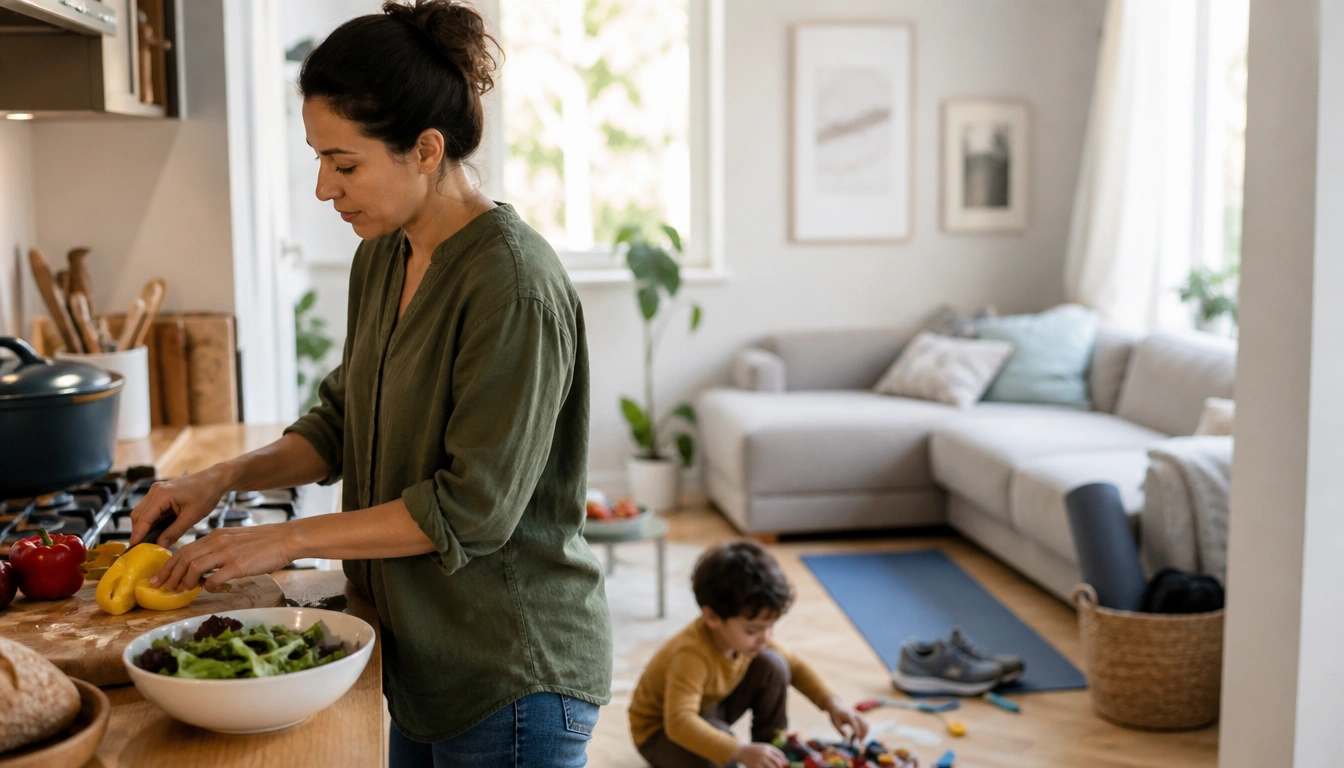
Yes—you can stay healthy with limited time and no wellness apps by building a small, repeatable routine around movement, food, and sleep. The most sustainable version is simple: attach habits to things you already do, use short activity bursts, keep meals broadly balanced, and protect sleep with a phone-free bedroom setup. For many parents, consistency matters more than perfect tracking.
Key Takeaways
- Use existing anchors such as the kettle, school run, or bedtime routine to make habits automatic.
- Short movement bouts still count and can fit around childcare, shifts, and unpredictable days.
- A phone-free sleep setup can reduce screen fatigue and make it easier to wind down.
- Shared meals, basic hydration, and simple prep shortcuts can replace calorie counting and macro tracking.
- If you are postpartum, injured, or exhausted, gentle recovery and “some activity” are better than an all-or-nothing plan.
Why a wellness routine without apps can work better for busy parents
For many parents, wellness apps add another layer of tasks to remember, review, and judge. A routine without apps can feel lighter because it uses behavior, not dashboards, to guide the day. That matters when your attention is already split between school runs, meals, work, childcare, and sleep interruptions.
The goal is not to do everything perfectly. The goal is to make healthy actions easier to repeat. Public health guidance from the CDC and NHS supports steady movement, balanced eating patterns, and sleep routines without requiring digital tracking. If a routine reduces stress and can survive a chaotic week, it is usually more useful than one that looks impressive on paper.
A screen-free routine usually rests on three pillars: movement, food, and sleep. Movement keeps the body and mind from becoming too sedentary. Food habits keep you fueled without constant decision-making. Sleep habits help your body get enough recovery, even if the night is broken up by children or shift work. You do not need a separate app for any of that.
Build your day around anchors you already have
The easiest habits are the ones tied to things you already do. This is habit stacking: pair a new action with a reliable anchor so you do not need to remember it from scratch. For example, stretch while the kettle boils, do a few squats after brushing your teeth, or take two minutes to tidy the kitchen before starting the school run.
Anchors work because they reduce decision fatigue. Instead of asking, “When will I fit this in?” you attach the action to an event that already happens. Morning coffee, a toddler’s snack time, the end of the workday, and the bedtime routine are all natural touchpoints. The smaller and more ordinary the cue, the better.
Visual cues can help too. A yoga mat left in a corner, a resistance band on a doorknob, or walking shoes by the door can prompt action without a notification. The point is to make the healthy choice visible and the default choice easier.
Movement ideas that fit parent life
You do not need a long gym session to make movement worthwhile. Public health guidance for adults emphasizes weekly activity totals, but those totals can be built from small parts. A brisk school run, stroller walk, active play at the park, or a quick walk around the block all contribute.
Short bouts of movement are especially helpful for parents because they fit around interruptions. Think in snack-sized chunks: five minutes of mobility before lunch, a ten-minute walk after dropping off a child, or a short strength circuit during screen-free playtime. Those bursts can help you feel less stiff and more alert without requiring a full change of clothes or a reservation at the gym.
Family life can do double duty here. Walking instead of driving when possible, playing tag in the yard, dancing in the living room, or turning cleanup time into a more active task all build movement into the day. If you have children, active play also shows them that exercise can be normal and playful rather than something separate from real life.
If your schedule is fragmented, treat movement as something you collect across the day. Three ten-minute walks can be more realistic than one long session, and they can still support your weekly activity goals when done consistently.
How to meet weekly activity goals without a gym or fitness tracker
The CDC recommends at least 150 minutes of moderate-intensity aerobic activity each week for adults, plus muscle-strengthening activities on at least two days. That sounds like a lot until you break it into ordinary family tasks. A brisk school run, a stroller walk, a purposeful stair climb, or a short at-home strength circuit all count toward the total.
Muscle-strengthening work does not need to look formal. Bodyweight squats, wall push-ups, lunges, carrying groceries, or lifting a child safely during play can fit the bill. If you are short on time, aim for a few movements you can repeat without setting up equipment. A routine is more likely to stick when it does not require planning a workout around it.
Instead of chasing perfection, look for a weekly rhythm. For example, you might walk most days, do one or two short strength sessions, and use active play on busy weekends. The exact mix matters less than doing enough to keep the habit alive. If a week is messy, resume the next day instead of trying to “catch up.”
For children, the CDC recommends daily physical activity as well, so family movement can support everyone at once. A shared walk after dinner or an active weekend outing may be more realistic than separate adult and child fitness plans.
Simple food habits that replace tracking
Food tracking can be helpful for some people, but many busy parents do better with simple structure instead of numbers. A balanced plate approach is often enough: include a source of protein, some fiber-rich foods such as vegetables or fruit, and a filling carbohydrate or whole-grain option when available. The aim is steadiness, not precision.
Shared meals help because they reduce the need to cook separately for everyone. You do not need a diet app to create a workable pattern. A family dinner built around a main protein, a vegetable, and a starch is simple, flexible, and usually more sustainable than making each meal a project.
Hydration is another low-effort win. Keep water visible during the day and pair drinking with existing routines, such as after waking, with meals, and after school pickup. If you are often depleted, a bottle left on the counter may work better than remembering another task on your phone.
Prep shortcuts can remove friction. Wash fruit when you bring it home, keep quick proteins ready, freeze portions of leftovers, and stock a few reliable backup meals. These are practical systems, not moral rules. The point is to make the healthy option easy enough that you do not need a motivational burst to choose it.
Phone-free sleep habits that support better rest
Sleep is one of the hardest parts of wellness for parents, and sleep apps are not always the answer. Many people sleep better when the bedroom is less stimulating and the wind-down routine is simple. A phone-free bedroom setup can reduce screen fatigue and make it easier to relax before sleep.
One useful step is to park the phone outside the bedroom or at least away from the bed. Replace it with a basic alarm clock if needed. That removes the temptation to check messages, scroll, or review sleep scores when you should be winding down. A non-digital alarm also makes it easier to keep the bed associated with rest.
Morning light can help anchor the body clock. Getting outside for natural light soon after waking, even briefly, can support daytime alertness and nighttime sleep timing. You do not need a device to do that. A short walk to school, a moment on the doorstep, or opening the curtains first thing can be enough to start the day in a steadier way.
At night, keep the routine plain. Dim the lights, choose a low-stimulation activity, and avoid turning bedtime into another performance metric. If your sleep is broken by children, aim for a routine that helps you rest when you can rather than one that assumes uninterrupted nights.
How to adapt for postpartum, injury recovery, or very low-energy seasons
Life after birth, during injury recovery, or in a season of poor sleep calls for a softer standard. In those periods, some activity is better than none. The goal is not to hit a perfect weekly target right away. The goal is to restore capacity safely and gently.
Postpartum parents may need to prioritize recovery, pelvic floor rehab, walking, breathing exercises, or other clinician-guided movement before returning to more demanding workouts. If you have had a C-section, tearing, complications, or persistent pain, get individualized advice before pushing intensity. The same is true after an injury or a long break from exercise.
Very low-energy days are not a failure. A five-minute walk, stretching while the baby naps, or simply standing outside for daylight can be enough. When energy is limited, the smallest version of the habit often keeps the routine alive. Once the season improves, you can build back gradually instead of starting from zero.
If you notice sharp pain, dizziness, chest discomfort with minor exertion, or fatigue that does not improve with rest, it is time to talk with a healthcare professional. Wellness routines are not a substitute for medical care when something feels off.
Keep it realistic: minimum effective dose and a sample weekday routine
The most durable routine is the one you can do on an ordinary day, not only on a good day. A minimum effective dose mindset helps here: choose the smallest version of each habit that still feels useful. That might be a ten-minute walk, a simple breakfast with protein, and a phone parked outside the bedroom. If that is all you manage, the day still counts.
Flexibility matters more than rigidity. A parent with a desk job may need to build movement into the commute and lunch break. A parent who is on their feet all day may need rest, hydration, and shorter recovery-focused movement instead. The routine should fit your season, not force you into someone else’s ideal schedule.
A realistic no-app weekday might look like this: morning light while opening the curtains and getting ready; a brief school run walk or stroller loop; a simple breakfast that includes protein; water with lunch; a five-minute movement break while the kettle boils; family dinner with a basic plate balance; and a phone-free wind-down before bed. That is enough structure to matter without becoming a second job.
If a plan starts to feel punishing, simplify it. The best wellness routine is not the one with the most data. It is the one that survives parent life, supports your energy, and quietly repeats until it becomes normal.
Frequently Asked Questions
What is a realistic screen-free wellness routine for parents with very little time?
A realistic routine usually has only a few repeatable pieces: a short walk or movement snack, one simple meal pattern, water during the day, and a phone-free wind-down at night. If the routine fits between childcare tasks and does not require constant logging, it is more likely to stick.
How can I fit exercise into a busy parenting schedule without a gym or app reminders?
Use movement you already do, such as school runs, stroller walks, stairs, active play, or five-minute home circuits. Tie the habit to an existing anchor like coffee, naps, or bedtime. Short bouts add up, and they are often easier to sustain than formal workouts.
What are simple meal and hydration habits that work without calorie tracking?
A balanced plate approach is usually enough: include protein, fiber-rich foods, and a filling carbohydrate when possible. Keep water visible, drink at routine points in the day, and rely on a few backup meals or prep shortcuts so eating well does not require tracking.
How do I improve sleep as a parent without using sleep-tracking apps?
Protect the sleep environment instead of chasing scores. Park the phone outside the bedroom, use a simple alarm clock, dim lights at night, and get morning daylight when possible. These habits can support a steadier sleep-wake rhythm without adding screen time.
What should I do if I’m postpartum, injured, or too exhausted for a full routine?
Scale down. In recovery or very low-energy seasons, gentle movement, rest, and professional guidance matter more than rigid goals. Some activity is better than none, but sharp pain, dizziness, chest discomfort, or ongoing fatigue should be checked by a healthcare professional.
The Bottom Line
A no-app wellness routine works best when it is built around the life you already have. Use anchors, keep movement small and repeatable, and make meals and sleep easier with simple environmental changes.
You do not need to track everything to make progress. If your routine helps you move a little more, eat a little more steadily, and sleep with less friction, it is doing its job.
For postpartum, recovery, or especially exhausting seasons, lower the bar and protect the basics. A realistic routine is the one you can return to tomorrow.
Medical disclaimer
Medical disclaimer: This content is for educational and informational purposes only and is not a substitute for professional medical advice, diagnosis, or treatment. Dietary needs and supplement suitability vary by individual.
Sources
- National Health Service (NHS) — kentcht.nhs.uk. Accessed November 2026.
- National Health Service (NHS) — berkshirehealthcare.nhs.uk. Accessed November 2026.
- Centers for Disease Control and Prevention (CDC) — cdc.gov. Accessed November 2026.
- Centers for Disease Control and Prevention (CDC) — cdc.gov. Accessed November 2026.
- National Health Service (NHS) — scot.nhs.uk. Accessed November 2026.
