
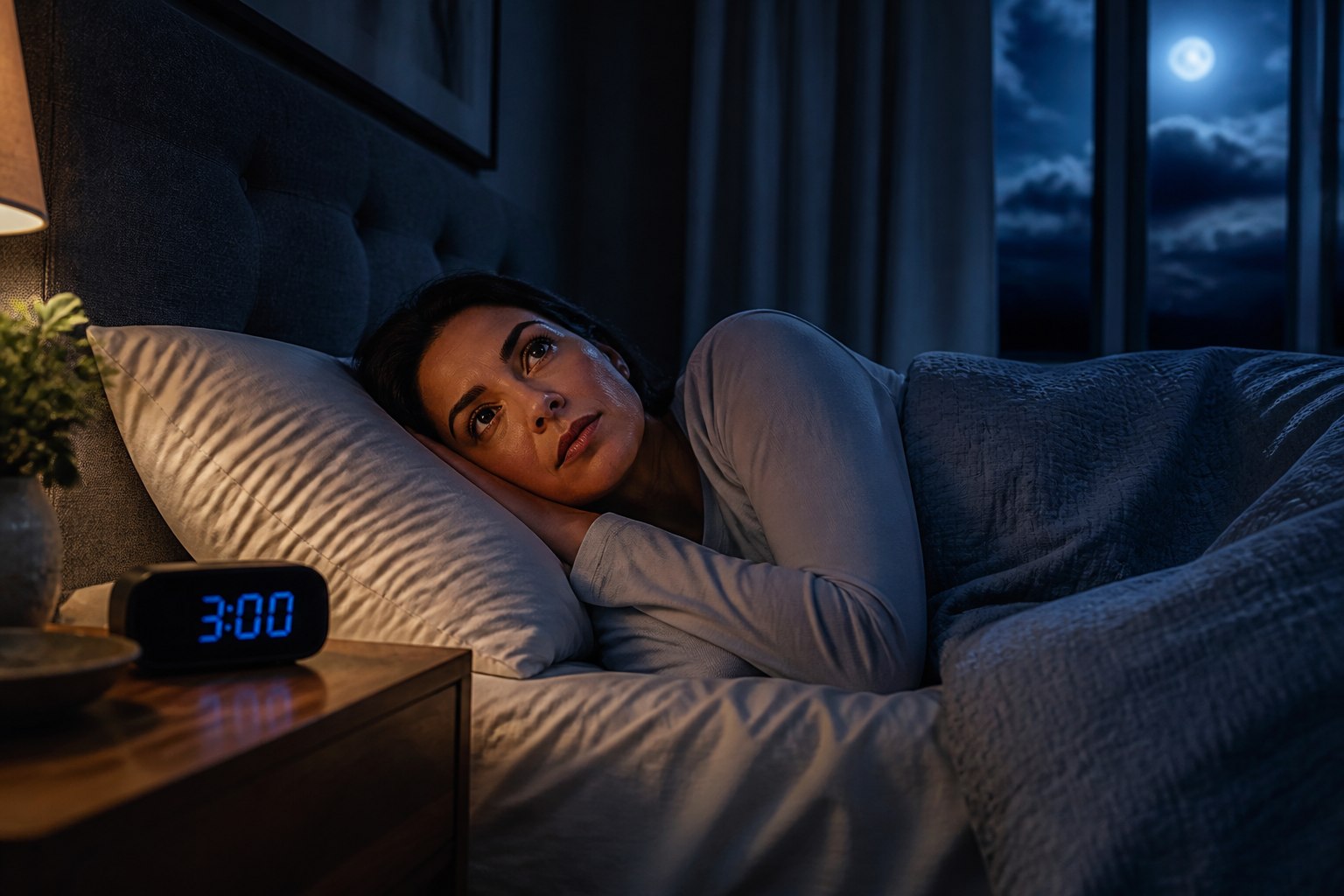
Waking around 3 AM does not point to one specific medical problem. Stress, an inconsistent sleep schedule, alcohol, caffeine, nighttime urination, environmental disturbances, insomnia, menopause-related changes, and sleep disorders such as sleep apnea can all contribute. The pattern matters more than the exact clock time—especially how often it happens, how long you stay awake, and whether poor sleep affects you during the day.
Key Takeaways
- The fact that you wake at approximately 3 AM is not diagnostic by itself; your bedtime, symptoms, and overall sleep pattern provide more useful clues.
- Stress, schedule changes, noise, light, caffeine, nicotine, alcohol, and other habits can increase nighttime waking.
- Repeated waking can also occur with insomnia or another health or sleep condition.
- Loud snoring, breathing pauses, gasping, marked daytime sleepiness, or repeated nighttime urination can be clues worth discussing with a healthcare professional.
- A consistent sleep schedule, less evening caffeine and alcohol, a sleep-friendly bedroom, and a sleep diary are useful first steps for many people.
Why Do I Keep Waking Up at 3 AM?
The exact time on the clock is usually less informative than the pattern surrounding the awakening. Someone who goes to bed at 8:30 PM and wakes at 3 AM has a different sleep pattern from someone who falls asleep after midnight and wakes at the same time.
Clinicians evaluating disrupted sleep generally look at when you fall asleep, how often you wake, how long you remain awake, when you get up for the day, whether you nap, and how rested or sleepy you feel afterward. Your use of caffeine, alcohol, nicotine, medications, and electronic devices can also be relevant.
Useful perspective: Waking at 3 AM is a symptom pattern, not a diagnosis. Looking for repeatable triggers and associated symptoms is more useful than assigning special meaning to the number on the clock.
Common Causes of Waking Up During the Night
Stress and Worry
Stress is a recognized risk factor for insomnia. Work pressures, relationships, finances, caregiving, grief, health concerns, and even worrying about whether you will sleep can make it harder to return to sleep after an awakening.
Clock-watching can reinforce the problem for some people. Seeing 3:02 AM, calculating the hours remaining before morning, and becoming frustrated can increase alertness rather than make sleep easier.
Alcohol
Alcohol may initially make some people feel sleepy, but NHLBI notes that it can produce lighter sleep and make nighttime awakening more likely. That means a drink used to “help with sleep” can sometimes have the opposite effect later in the night.
Caffeine and Nicotine
Caffeine and nicotine can interfere with sleep. Sensitivity differs among individuals, so an afternoon or evening source that seems harmless for one person may affect another person’s ability to stay asleep.
Coffee is not the only source of caffeine. Tea, energy drinks, cola, chocolate, some workout products, and some medications may also contribute.
An Irregular Sleep Schedule
Frequently changing bedtime or wake time can interfere with the sleep-wake cycle. Shift work, travel across time zones, late weekend nights, daytime naps, and other schedule changes can make sleep less predictable.
Light, Noise, and Bedroom Temperature
Noise, excessive light, and uncomfortable temperatures can disturb sleep. A partner’s movements, pets, traffic, notifications, a television, or a bright clock display may become especially noticeable once you briefly wake.
Needing to Urinate
Drinking a substantial amount close to bedtime can increase the chance that you need the bathroom overnight. Repeated nighttime urination can also occur alongside medical or sleep conditions, so a persistent new pattern deserves attention rather than automatically being attributed to drinking water.
Physical Discomfort
Pain, coughing, congestion, digestive discomfort, temperature changes, or other physical symptoms can make uninterrupted sleep difficult. If a specific symptom repeatedly wakes you, addressing the underlying symptom with an appropriate healthcare professional may be more useful than treating the problem as sleep difficulty alone.
Could It Be Insomnia?
Insomnia is not limited to difficulty falling asleep at bedtime. NHLBI describes trouble staying asleep and waking too early without being able to return to sleep as common insomnia symptoms.
Short-term insomnia can occur during periods of stress or after changes in schedule or environment. Long-term insomnia involves a persistent pattern that interferes with sleep despite having adequate opportunity and circumstances for sleep.
| Pattern | What you may notice | Useful next step |
|---|---|---|
| Occasional awakening | Happens after stress, noise, alcohol, schedule changes, or another identifiable trigger | Review habits and look for patterns |
| Difficulty returning to sleep | You become alert, worried, or frustrated after waking | Use sleep-supportive habits and avoid prolonged clock-watching |
| Persistent disrupted sleep | Night waking continues and daytime functioning or well-being is affected | Discuss the pattern with a healthcare professional |
For long-term insomnia, NHLBI identifies cognitive behavioral therapy for insomnia, or CBT-I, as a usual first treatment option. CBT-I addresses sleep habits as well as thoughts and behaviors that can perpetuate difficulty sleeping.
Could Sleep Apnea Cause Nighttime Waking?
Sleep apnea is another possible cause of repeatedly disrupted sleep. NHLBI lists breathing that starts and stops, frequent loud snoring, and gasping for air among symptoms that can occur during sleep.
People may also experience daytime sleepiness or tiredness, dry mouth, headache, insomnia, or frequent nighttime urination. Not everyone recognizes their own nighttime breathing symptoms, so observations from a bed partner can sometimes provide useful information.
Consider medical evaluation: If nighttime waking occurs together with loud habitual snoring, witnessed breathing pauses, gasping, or significant daytime sleepiness, talk with a healthcare professional. A sleep study may be needed to determine whether sleep apnea or another sleep disorder is present.
Hormonal Changes and Sleep
Sleep patterns can change across life stages. NHLBI notes that hormonal changes during pregnancy and menopause can contribute to sleep problems. Hot flashes, temperature changes, physical discomfort, or the need to urinate may also interrupt sleep for some people.
A recurring 3 AM awakening does not by itself establish that hormones are the cause. If sleep disruption begins alongside new menopausal, pregnancy-related, menstrual, or other health symptoms, discussing the broader pattern with a clinician can help identify the appropriate next step.
What to Do When You Wake Up at 3 AM
Keep the Environment Dark and Quiet
Avoid turning on bright lights or immediately reaching for a phone, laptop, or television. A dark, quiet, comfortably cool bedroom supports sleep and reduces unnecessary stimulation.
Avoid Watching the Clock
Repeatedly checking the time can become part of a cycle of worry about sleep. Consider turning the clock face away from the bed or keeping the phone out of immediate reach while still maintaining whatever alarm setup you need for the morning.
Do Something Quiet if You Cannot Return to Sleep
One component of CBT-I is stimulus control, which helps strengthen the association between bed and sleep. NHLBI describes getting out of bed when you cannot sleep and returning when you feel sleepy as one part of this approach.
Choose something calm in dim light rather than starting work, scrolling through stimulating content, or repeatedly trying to force sleep.
Sleep Habits That May Reduce Nighttime Waking
No single bedtime habit can guarantee uninterrupted sleep, but several evidence-based practices can make the sleep environment and schedule more supportive.
- Keep a regular schedule: Aim for a similar bedtime and wake time from day to day.
- Make the bedroom sleep-friendly: Keep it quiet, dark, relaxing, and comfortably cool.
- Review caffeine timing: Avoid caffeine in the afternoon or evening if it interferes with your sleep.
- Limit alcohol near bedtime: Alcohol may promote initial sleepiness while contributing to disrupted sleep later.
- Reduce late-night fluid intake if appropriate: This may help when bathroom trips are disrupting sleep, while still meeting your hydration needs during the day.
- Exercise regularly: Regular daytime physical activity can support sleep, although personal timing and tolerance vary.
Keep a Sleep Diary
A sleep diary can make a vague pattern much easier to understand. Both CDC and NHLBI recommend tracking sleep-related information when sleep quality is a concern.
- When you went to bed.
- About when you fell asleep.
- When and how often you woke during the night.
- How long you believe you were awake.
- When you got up for the day and how rested you felt.
- Naps, exercise, alcohol, caffeine, and medications.
- Symptoms such as snoring, gasping, pain, hot flashes, or bathroom trips.
If you eventually seek medical care, this record can provide more useful information than remembering only that you “always wake at 3 AM.”
When to Talk With a Healthcare Professional
Consider discussing nighttime waking with a healthcare professional when it persists, significantly affects daytime functioning, or occurs with symptoms that suggest another sleep or medical condition.
- You repeatedly remain awake for long periods after waking.
- You are regularly sleepy, exhausted, or unable to concentrate during the day.
- You snore loudly, gasp, choke, or have witnessed pauses in breathing during sleep.
- You frequently wake to urinate without an obvious explanation.
- Pain, breathing difficulty, digestive symptoms, hot flashes, or another physical problem repeatedly wakes you.
- The problem began after a medication change or alongside another new health symptom.
Do not stop or change a prescription medication on your own because you suspect it is affecting sleep. A prescriber or pharmacist can review whether timing, side effects, interactions, or another factor may be relevant.
Frequently Asked Questions
The Bottom Line
Waking up at 3 AM can have many explanations, and the time itself does not reveal the cause. Stress, alcohol, caffeine, an irregular schedule, environmental disturbances, nighttime urination, physical symptoms, hormonal changes, insomnia, and sleep apnea are among the possibilities worth considering.
Start by looking for patterns rather than trying to interpret one isolated awakening. A consistent sleep schedule, a dark and quiet room, sensible caffeine and alcohol timing, and a sleep diary can help clarify what is happening. Persistent sleep disruption, significant daytime impairment, or symptoms such as loud snoring and gasping warrant professional evaluation.
Medical disclaimer
Medical disclaimer: This content is for educational and informational purposes only and is not a substitute for professional medical advice, diagnosis, or treatment. Dietary needs and supplement suitability vary by individual.
Sources
- National Heart, Lung, and Blood Institute, Insomnia: Causes and Risk Factors, accessed September 2026.
- National Heart, Lung, and Blood Institute, Insomnia: Symptoms, accessed September 2026.
- National Heart, Lung, and Blood Institute, Insomnia: Diagnosis, accessed September 2026.
- National Heart, Lung, and Blood Institute, Insomnia: Treatment, accessed September 2026.
- National Heart, Lung, and Blood Institute, Sleep Apnea: Symptoms, updated January 9, 2025.
- National Heart, Lung, and Blood Institute, How Sleep Works: Your Sleep/Wake Cycle, accessed September 2026.
- Centers for Disease Control and Prevention, About Sleep, May 15, 2024.
