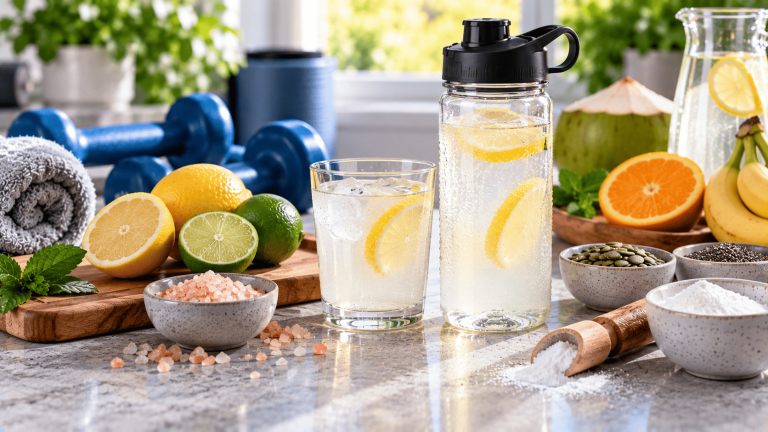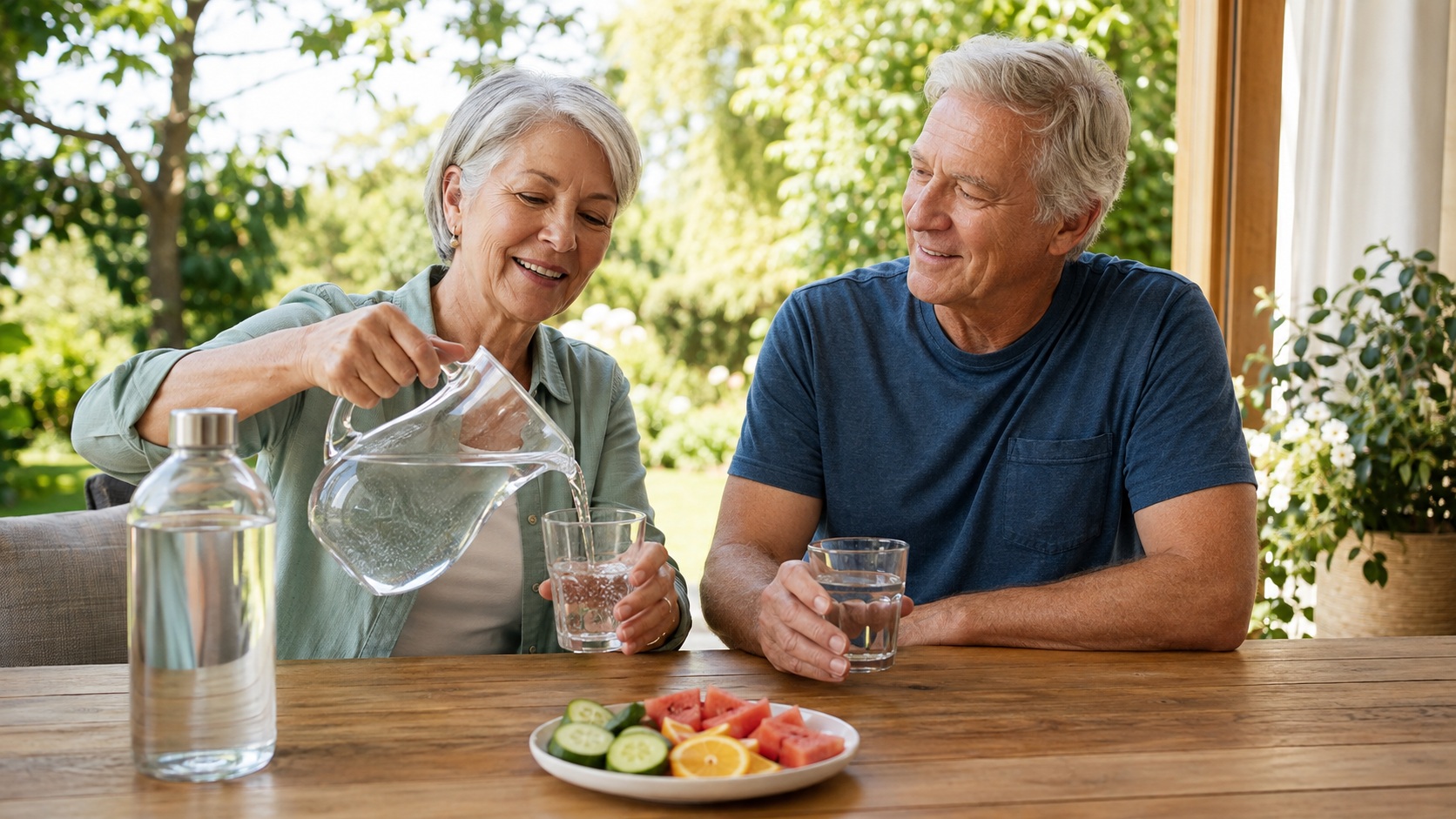
Hydration habits for people over 60 should focus on regular access to fluids rather than forcing one fixed amount every day. Drink throughout the day, include water-rich foods, and adjust intake when heat, exercise, fever, vomiting, or diarrhea increases fluid loss. Thirst may become less noticeable with age, making regular drinking opportunities more useful. Heart disease, kidney disease, bladder problems, and certain medications may require individualized guidance.
Key Takeaways
- There is no universal water prescription that begins at age 60.
- Thirst can become less noticeable with advancing age, so waiting until you feel very thirsty may become less reliable.
- Water, other suitable beverages, and moisture in foods all contribute to total water intake.
- Heat, exercise, fever, vomiting, diarrhea, and some medications can substantially change fluid needs.
- People age 65 and older face greater heat-related risk and need extra attention to hydration during hot weather.
- Heart failure, kidney disease, prescribed fluid limits, and some urinary problems require individualized advice.
Why Hydration Deserves More Attention After 60
Hydration remains important at every age, but several practical changes can make it easier for older adults to fall behind on fluids. NIDDK notes that people may feel less thirsty as they get older even though the body still needs fluids.
Mobility limitations, difficulty opening containers, reduced appetite, urinary concerns, memory problems, medications, and limited access to drinks can also affect intake. A person may drink less intentionally because frequent bathroom trips feel inconvenient.
The solution is not to force large volumes. A better approach creates regular opportunities to drink, makes beverages easy to reach, and adjusts the routine when health or environmental conditions change.
Useful principle: make hydration convenient enough that it does not depend entirely on remembering to drink only after strong thirst appears.
How Much Water Do People Over 60 Need?
The National Academies established general adult Adequate Intake reference values of about 3.7 liters of total water per day for men and 2.7 liters for women. These values apply to total water from drinking water, other beverages, and moisture in food.
In the intake data used to establish those references, beverages contributed roughly 3 liters for men and 2.2 liters for women, with food supplying the remainder. Fruits, vegetables, soups, yogurt, and many prepared foods all contain water.
These numbers are population-level reference values rather than mandatory daily prescriptions. The National Academies specifically notes that an Adequate Intake should not be interpreted as a precise individual requirement.
Climate, physical activity, sweating, fever, diarrhea, vomiting, diet, medications, kidney function, cardiovascular health, and other factors can move individual needs higher or lower.
Important: 3.7 liters for men and 2.7 liters for women refer to total water from food and beverages combined. They are not instructions to drink that amount as plain water.
Habit 1: Drink at Regular Opportunities
NIDDK advises older adults to drink fluids throughout the day because thirst may become less noticeable with age. You do not need to sip constantly, but waiting until the evening to catch up can make hydration harder.
- Have a suitable beverage with breakfast.
- Drink with lunch and dinner.
- Keep fluids nearby during long periods of sitting.
- Bring a drink when leaving home for appointments or errands.
- Pay extra attention after exercise, sweating, or time outdoors in warm weather.
Use ordinary routines as reminders instead of relying on alarms every hour. Meals, medication times, walks, and regular breaks can provide natural cues.
Habit 2: Keep Drinks Easy to Reach
Convenience becomes particularly important when arthritis, weakness, limited mobility, or balance problems make repeated trips to the kitchen difficult.
Keep a bottle or cup near the places where you spend the most time. Choose a container that is easy to lift, open, refill, and clean. A lighter bottle may work better than a large jug if hand strength is limited.
CDC also suggests carrying a reusable water bottle and serving water with meals. Simple environmental changes can remove much of the effort from remembering to drink.
Habit 3: Let Food Contribute to Hydration
Drinking water is not the only way your body gets water. CDC and the National Academies recognize that foods contribute to total intake.
- Berries, oranges, peaches, melon, and other fruits
- Tomatoes, cucumber, leafy greens, peppers, and other vegetables
- Soups and stews
- Milk, yogurt, and suitable fortified alternatives
- Meals prepared with beans, vegetables, sauces, and other moisture-rich ingredients
Water-rich foods can be especially useful when appetite is modest or drinking large glasses feels uncomfortable. They also contribute nutrients that plain water does not provide.
Habit 4: Use Thirst and Urine as Rough Clues
Thirst can still provide useful information, but it may become less noticeable as people age. That makes regular drinking opportunities increasingly valuable.
NIDDK notes that pale-yellow urine commonly suggests that fluid intake is adequate. Darker urine can occur when urine becomes more concentrated.
Urine color is only a rough clue, not a diagnostic test. Vitamins, foods, medicines, urinary conditions, kidney function, and other factors can change color. Persistent changes or blood in the urine deserve medical attention.
Habit 5: Adjust for Walking and Exercise
Physical activity increases water loss when it causes sweating. A short indoor walk creates different needs from a long outdoor hike on a hot day.
Keep fluids available when exercising and increase attention to hydration as duration, heat, humidity, or sweating rises. Normal meals often replace electrolytes after routine activity.
People who exercise or work for prolonged periods in hot environments need a more deliberate strategy. CDC workplace guidance recommends frequent drinking and notes that electrolyte-containing drinks may become useful when sweating continues for several hours.
Match hydration to the activity: an easy neighborhood walk usually does not require the same plan as hours of outdoor activity in summer heat.
Heat Safety Becomes Especially Important After 65
CDC identifies people age 65 and older as being more prone to heat-related health problems. Older adults may not adjust as well to sudden temperature changes and are more likely to have chronic conditions or use medications that affect temperature control or sweating.
During hot weather, CDC recommends drinking more water than usual and not waiting until thirst appears. Cooling measures matter too. Stay in air-conditioned or cooler spaces when possible, limit strenuous activity during extreme heat, and move outdoor activity to cooler parts of the day.
People who take water pills or follow prescribed fluid restrictions should not automatically increase intake based on generic heat advice. CDC recommends asking a healthcare professional how much to drink in hot weather.
Heat safety requires more than water: hydration, cooling, shade, rest, appropriate clothing, and adjusting activity all work together to reduce risk.
Do People Over 60 Need Electrolytes Every Day?
Age alone does not create a daily need for electrolyte powders, tablets, capsules, or sports drinks. Ordinary foods provide electrolytes such as sodium and potassium.
Water and normal meals often cover routine needs during ordinary daily activity. Prolonged sweating, extended heat exposure, vomiting, or diarrhea can create a different situation.
NIDDK advises replacing fluids and electrolytes during acute diarrhea. It also notes that older adults and people with diabetes, kidney disease, or other health conditions should talk with a clinician before using oral rehydration solutions.
Coffee and Tea Can Fit Into Hydration
Water remains an excellent default beverage, but it is not the only fluid in a healthy diet. CDC includes plain coffee, tea, sparkling water, milk, and suitable fortified alternatives among beverage options.
Caffeine tolerance varies. Coffee or tea may worsen sleep, reflux, palpitations, anxiety, bladder urgency, or urinary frequency in some people.
Choose beverages based on your full health picture rather than treating every drink other than plain water as dehydrating.
Hydration and Constipation
Adequate fluid intake works together with dietary fiber. NIDDK advises drinking enough liquids to help fiber work properly and keep stools softer and easier to pass.
Drinking extremely large amounts of water does not automatically cure constipation. Fiber intake, physical activity, medications, health conditions, and bowel habits also matter.
Persistent constipation, rectal bleeding, unexplained weight loss, significant abdominal pain, or a major change in bowel habits deserves medical evaluation.
Hydration and Bladder Problems
Urinary urgency, leakage, or repeated nighttime bathroom trips can lead some older adults to intentionally restrict fluids. Chronic underhydration is not an ideal long-term solution.
NIDDK recommends discussing what, how much, and when to drink with a healthcare professional when bladder-control problems complicate hydration. Moving more of your fluid intake earlier in the day may sometimes be useful, depending on the cause of nighttime symptoms.
Weak urine flow, pain, blood in the urine, repeated urinary infections, severe urgency, or major changes in nighttime urination deserve evaluation rather than aggressive self-directed fluid restriction.
A Simple Daily Hydration Routine
| Part of the day | Practical habit |
|---|---|
| Morning | Have a suitable beverage and place fluids where they will stay visible and accessible |
| Breakfast | Drink with the meal and include water-rich foods when they fit |
| Midday | Check whether you have been drinking regularly rather than waiting for strong thirst |
| Walking or exercise | Keep fluids available and increase attention when heat or sweating rises |
| Evening | Drink with dinner while avoiding unnecessary catch-up drinking immediately before bed |
This schedule creates regular drinking opportunities without prescribing a mandatory number of ounces every hour. Modify it according to your appetite, activity, weather, bladder symptoms, medications, and medical advice.
Medications Can Change Hydration Needs
Medication use becomes more common with age, and some medicines can affect fluid balance, urination, sweating, blood pressure, or heat tolerance. CDC specifically advises having a medication plan during hot weather because some medicines can contribute to dehydration or overheating.
Do not stop, skip, or change a medication because you are worried about dehydration. Talk with the prescribing clinician or pharmacist about what the medicine means for fluid intake and heat exposure.
Diuretics, sometimes called water pills, are an especially important example because clinicians may prescribe them for conditions such as high blood pressure or heart failure. The appropriate hydration strategy depends on why you take them and your overall medical plan.
Can You Drink Too Much Water?
Yes. More water is not automatically better. Drinking excessive amounts, especially over a short period, can disrupt normal water and sodium balance.
This is one reason gallon challenges and aggressive hourly water targets can be misleading. Fluid intake should reflect actual needs rather than the largest amount you can tolerate.
Heart failure, kidney disease, low blood sodium, and prescribed fluid restrictions make excess intake especially important to avoid. Follow individualized medical instructions when they differ from general hydration advice.
Possible Signs of Dehydration
Possible dehydration symptoms can include thirst, dry mouth, darker urine, reduced urination, dizziness, weakness, fatigue, and difficulty tolerating heat. Confusion can be particularly concerning in an older adult.
Symptoms can have many causes, so dehydration should not become the automatic explanation for every episode of fatigue or dizziness. Medication effects, infection, blood-pressure changes, blood-sugar problems, heart conditions, and other illnesses may cause similar symptoms.
Severe confusion, fainting, inability to keep fluids down, major weakness, or signs of heat illness need prompt medical attention rather than routine hydration advice.
Common Hydration Mistakes After 60
Waiting for Strong Thirst
Thirst may become less noticeable with advancing age. Create regular drinking opportunities instead of relying only on a strong thirst signal.
Forcing a Gallon Every Day
A fixed gallon target ignores food intake, sex, activity, climate, sweating, medications, kidney function, body size, and medical conditions.
Drinking Most Fluids Before Bed
Trying to catch up late at night can worsen bathroom trips. When medically appropriate, distribute fluids more evenly across the day.
Using Electrolytes for Every Short Walk
Routine activity often works well with water and ordinary meals. Prolonged sweating or significant gastrointestinal fluid loss creates different needs.
Restricting Fluids Because of Bladder Symptoms
Urinary urgency or nighttime bathroom trips deserve evaluation and an individualized drinking schedule rather than chronic dehydration.
Ignoring Medications and Fluid Restrictions
Generic advice to drink more does not override a prescribed fluid limit or medication plan. Ask your healthcare team how heat, exercise, or illness should change your usual routine.
When Hydration Advice Needs to Be Individualized
General hydration habits work for many healthy adults, but some situations need professional guidance.
- You have heart failure, advanced kidney disease, or a prescribed fluid restriction.
- You take medicines that affect urine output, blood pressure, sweating, or heat tolerance.
- You have persistent excessive thirst or unusually frequent urination.
- Bladder problems cause you to intentionally avoid drinking.
- You repeatedly become dehydrated during exercise or hot weather.
- Vomiting, diarrhea, fever, swallowing problems, or another illness makes fluid replacement difficult.
A healthcare professional can help balance hydration with kidney function, cardiovascular health, medications, urinary symptoms, activity, and environmental risks.
Frequently Asked Questions
The Bottom Line
Hydration habits for people over 60 should stay practical and flexible. Keep fluids accessible, drink at regular opportunities, include water-rich foods, and increase attention to hydration when exercise, heat, fever, vomiting, diarrhea, or sweating raises fluid losses. As age advances, relying only on strong thirst becomes less useful.
Avoid rigid gallon goals and automatic daily electrolyte products. Total-water needs vary, and both food and beverages contribute. People with heart failure, kidney disease, fluid restrictions, bladder problems, or medications that affect fluid balance should follow individualized guidance rather than generic hydration rules.
Medical disclaimer
Medical disclaimer: This content is for educational and informational purposes only and is not a substitute for professional medical advice, diagnosis, or treatment. Dietary needs and supplement suitability vary by individual.
Sources
- Centers for Disease Control and Prevention. About Water and Healthier Drinks. March 5, 2026.
- Centers for Disease Control and Prevention. About Heat and Your Health. July 20, 2026.
- Centers for Disease Control and Prevention. Heat and Older Adults, Aged 65+. June 25, 2024.
- Centers for Disease Control and Prevention, National Institute for Occupational Safety and Health. Workplace Recommendations for Heat Stress. July 16, 2026.
- National Institute of Diabetes and Digestive and Kidney Diseases. Health Tips for Older Adults. Accessed September 2026.
- National Institute of Diabetes and Digestive and Kidney Diseases. Prevention of Bladder Control Problems and Bladder Health. Accessed September 2026.
- National Institute of Diabetes and Digestive and Kidney Diseases. Treatment of Diarrhea. Accessed September 2026.
- National Institute of Diabetes and Digestive and Kidney Diseases. Eating, Diet, and Nutrition for Constipation. Accessed September 2026.
- National Institute on Aging. Healthy Meal Planning: Tips for Older Adults. Accessed September 2026.
- Institute of Medicine. Dietary Reference Intakes for Water, Potassium, Sodium, Chloride, and Sulfate. National Academies Press. 2005.