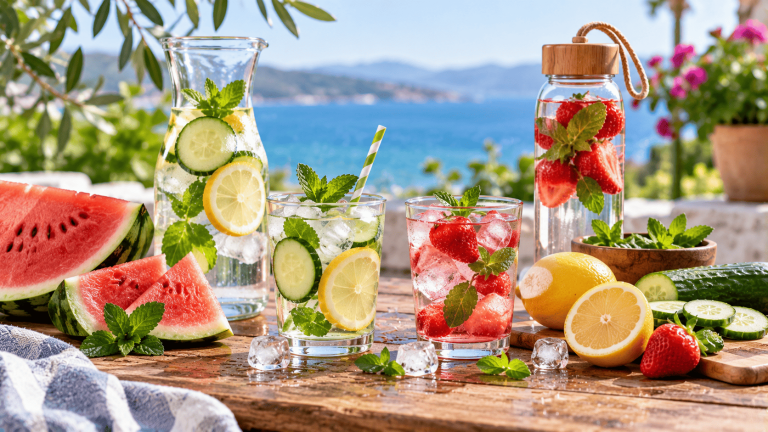
Hydration habits for women over 40 should focus on regular access to fluids rather than forcing one rigid water target. Water, other beverages, and moisture in food all contribute to total intake. Exercise, hot weather, illness, pregnancy, breastfeeding, medications, and medical conditions can change fluid needs. During perimenopause and menopause, keeping cool fluids nearby may also help when hot flashes or night sweats make comfort and hydration harder to manage.
Key Takeaways
- There is no special universal water prescription that begins at age 40.
- The adult reference for women is about 2.7 liters of total water per day from beverages and food combined.
- Individual needs can rise with heat, exercise, sweating, fever, vomiting, diarrhea, pregnancy, or breastfeeding.
- Perimenopause and menopause do not create a separate official hydration requirement, but hot flashes and night sweats can make regular access to fluids more practical.
- Water is usually enough for ordinary daily hydration and shorter workouts; prolonged heavy sweating can increase the value of electrolyte replacement.
- Kidney disease, heart failure, prescribed fluid limits, bladder problems, and some medications require individualized advice.
Why Hydration Matters After 40
Water supports temperature regulation, circulation, digestion, joint lubrication, normal kidney function, and many other basic processes. These needs continue throughout midlife.
Women over 40 may also be managing busy work schedules, exercise, caregiving, medications, bladder symptoms, or the menopause transition. Any of these factors can influence when and how much drinking feels practical.
A useful hydration routine therefore focuses on regular drinking opportunities, accessible beverages, water-rich foods, and adjustments when losses increase rather than treating hydration as a contest to consume the largest volume possible.
Useful principle: aim for a hydration pattern that fits your actual activity, environment, health, and symptoms rather than copying another person’s daily water goal.
How Much Water Do Women Over 40 Need?
The National Academies set an Adequate Intake of about 2.7 liters of total water per day for adult women. This reference continues through the 51-to-70 and older age groups.
Total water means all water from beverages and food combined. The reference is not an instruction to drink 2.7 liters of plain water every day.
National Academies data suggest that about 2.2 liters, or roughly nine cups, may come from beverages in an average pattern, with the remainder coming from food. That is still a population reference rather than a personalized target.
Exercise, hot weather, sweating, altitude, illness, pregnancy, breastfeeding, medications, kidney function, cardiovascular health, and diet can all shift individual needs.
Important: 2.7 liters refers to total water from both foods and beverages. It should not be interpreted as a mandatory plain-water prescription.
Habit 1: Drink Regularly Instead of Catching Up at Night
Spacing fluids across the day can be easier than realizing late in the evening that you have barely had anything to drink.
- Have a drink with breakfast or your first meal.
- Keep water or another suitable beverage available during work.
- Drink with lunch and dinner.
- Bring fluids for longer errands, walks, travel, or outdoor activities.
- Pay more attention after exercise, heavy sweating, or hot-weather exposure.
Regular drinking can also reduce the need for large amounts immediately before bedtime, which may worsen nighttime bathroom trips for some women.
Habit 2: Keep Fluids Easy to Reach
Hydration becomes easier when drinking does not depend on interrupting work, searching for a bottle, or remembering only after several hours have passed.
Keep a glass, bottle, or cup near your desk, workout area, kitchen, or other place where you spend substantial time. Choose a container that is comfortable to carry and easy to clean.
If plain water feels monotonous, chilled water, sparkling water, unsweetened tea, or water flavored with fruit or herbs can add variety without requiring a specialized hydration product.
Habit 3: Let Food Contribute to Hydration
Food contributes meaningfully to total water intake. Fruits, vegetables, soups, yogurt, oatmeal, beans, and many cooked meals contain substantial moisture.
- Berries, melon, oranges, peaches, and other fruits
- Tomatoes, cucumber, leafy greens, peppers, and other vegetables
- Soups and stews
- Milk, yogurt, and suitable fortified alternatives
- Oatmeal, beans, lentils, and other foods prepared with water
This is one reason total-water recommendations should not be converted directly into a plain-water requirement.
Hydration During Perimenopause and Menopause
Perimenopause and menopause can bring hot flashes, night sweats, sleep disruption, mood changes, and urinary symptoms. These experiences can influence drinking habits even though menopause does not create a separate official daily water requirement.
The Office on Women’s Health suggests keeping cold water nearby when a hot flash begins. Cooling strategies such as lighter clothing, fans, and avoiding known triggers may also improve comfort.
Night sweats may increase perceived thirst or lead you to drink during the night. However, repeatedly waking drenched in sweat deserves a broader discussion if symptoms are frequent or severe because treatment options may help reduce the hot flashes themselves.
Urinary urgency or repeated nighttime bathroom trips can create the opposite problem: some women deliberately reduce fluids too much. Addressing the urinary symptoms is usually more useful than chronic underhydration.
Menopause takeaway: hydration can support comfort and normal fluid balance, but water itself does not treat the hormonal cause of hot flashes or night sweats.
Hydration and Hot Flashes
A hot flash can create a sudden sensation of heat, flushing, and sweating. Drinking cold water may feel refreshing and is specifically suggested by the Office on Women’s Health as one practical comfort measure.
Hydration is only one part of managing symptoms. The same federal guidance advises tracking possible triggers such as alcohol, caffeine, spicy food, stress, or hot environments.
Frequent or disruptive hot flashes can also be treated medically. Discuss options with a healthcare professional rather than trying to compensate solely by drinking increasing amounts of water.
Hydration for Exercise After 40
Exercise increases fluid needs when it produces meaningful sweat loss. The amount varies with workout intensity, duration, temperature, humidity, clothing, fitness, and individual sweat rate.
A short indoor strength workout and a long summer run create very different hydration demands. Keep fluids available and increase attention as exercise becomes longer, hotter, or sweatier.
For routine workouts, water plus normal meals often replaces what you lose. During prolonged heavy sweating, replacing sodium and other electrolytes may become more useful.
Match the drink to the workout: a 20-minute walk usually does not require the same hydration strategy as several hours of exercise in hot weather.
Do Women Over 40 Need Electrolyte Drinks?
Not routinely. Age and menopause do not create an automatic daily need for electrolyte powders, sports drinks, tablets, or capsules.
Regular meals supply sodium, potassium, magnesium, calcium, and other minerals. Water can handle routine hydration for many people.
Electrolyte replacement becomes more relevant during prolonged heavy sweating, long endurance activity, extended heat exposure, or significant fluid loss from vomiting or diarrhea.
If you have high blood pressure, kidney disease, heart failure, or take medicines that affect potassium or sodium, review electrolyte products carefully before using them regularly.
Hydration in Hot Weather
Hot weather increases water loss through sweating. Outdoor exercise, gardening, physical work, high humidity, and direct sun can increase those losses further.
Drink regularly during heat exposure and reduce activity when conditions become extreme. Hydration works best alongside shade, cooling, appropriate clothing, rest breaks, and moving strenuous exercise to cooler parts of the day.
Do not use extra water or electrolyte drinks as permission to push through symptoms of heat illness.
Heat warning: confusion, fainting, severe weakness, altered behavior, or other signs of serious heat illness require prompt medical attention and active cooling.
Can Coffee and Tea Count Toward Hydration?
Yes. Coffee and tea contribute fluid. Available evidence does not support the common idea that normal caffeine intake automatically creates a net water deficit in habitual consumers.
Caffeine can still matter for other reasons. The Office on Women’s Health lists caffeine as a possible hot-flash trigger and suggests avoiding caffeine after noon when menopause-related sleep problems are present.
If coffee appears to worsen hot flashes, anxiety, palpitations, reflux, bladder urgency, or sleep, adjust the amount or timing based on your response.
Hydration, Bladder Symptoms, and Nighttime Urination
Urinary urgency, leakage, and repeated nighttime urination can become more noticeable during midlife and menopause. These symptoms sometimes cause women to deliberately drink too little.
A more practical approach is to distribute fluids earlier in the day when appropriate and avoid unnecessary catch-up drinking just before bed.
Persistent urinary symptoms deserve evaluation because treatment may be available. Painful urination, blood in the urine, recurrent infections, new severe urgency, or major changes in nighttime urination should not simply be managed by restricting fluids.
A Simple Daily Hydration Routine
| Part of the day | Practical habit |
|---|---|
| Morning | Have a suitable drink and make fluids accessible for the next few hours |
| Meals | Drink with meals and include water-rich foods |
| Workday | Keep a bottle or cup nearby instead of relying on occasional large drinks |
| Exercise | Keep fluids available and increase attention as heat, duration, or sweating rises |
| Hot flashes | Keep cool water nearby if drinking it improves comfort |
| Evening | Drink according to thirst and needs without forcing large amounts immediately before bed |
This routine creates regular hydration opportunities without requiring a strict number of ounces every hour.
Possible Signs You May Need More Fluid
Possible signs of dehydration can include thirst, dry mouth, darker or more concentrated urine, reduced urination, dizziness, fatigue, weakness, and difficulty tolerating heat.
Urine color can offer a rough clue, but it is not a perfect hydration test. Foods, vitamins, medications, kidney function, and medical conditions can alter color.
Fatigue, dizziness, headaches, palpitations, and weakness also have many causes. Persistent symptoms should not automatically be blamed on dehydration or menopause.
Can You Drink Too Much Water?
Yes. Excessive water intake can dilute blood sodium when the body cannot eliminate water quickly enough. This is one reason aggressive gallon challenges or rigid hourly water goals are unnecessary.
More fluid is not automatically healthier. Match intake to actual losses and medical needs rather than drinking far beyond thirst simply because a social-media routine recommends it.
People with heart failure, kidney disease, low blood sodium, or prescribed fluid restrictions need particular caution.
Medications Can Change the Hydration Picture
Some medicines can affect urination, blood pressure, sweating, sodium, potassium, or heat tolerance. These effects can change how generic hydration advice applies to you.
Diuretics, sometimes called water pills, are one important example. They may be prescribed for high blood pressure, heart failure, or other conditions.
Do not change medication doses or intentionally increase fluid intake to offset a medicine without guidance. Ask the prescribing clinician or pharmacist how the medication affects hydration during exercise, illness, or hot weather.
Common Hydration Mistakes Women Over 40 Make
Forcing a Gallon Every Day
A gallon target ignores water from food, activity, climate, body size, medications, kidney function, and medical conditions. Bigger numbers do not automatically mean better hydration.
Using Electrolytes Every Day Without a Reason
Daily electrolyte products are unnecessary for many healthy women. Ordinary foods provide these minerals, while water handles routine hydration.
Assuming Every Menopause Symptom Is Dehydration
Hot flashes, fatigue, palpitations, headaches, sleep problems, and dizziness can have many causes. Drinking more water does not replace evaluation when symptoms are persistent or severe.
Restricting Fluids Because of Bladder Symptoms
Chronic underhydration is not a good solution for urgency or nighttime urination. Adjust timing when appropriate and seek help for persistent urinary symptoms.
Catching Up Immediately Before Bed
Large late-evening drinks can increase bathroom trips. Regular daytime drinking is often more practical.
Ignoring Prescribed Fluid or Sodium Limits
General advice to drink more does not override medical instructions for heart failure, kidney disease, low sodium, or other conditions.
When to Get Individual Hydration Guidance
General hydration habits work well for many healthy adults, but some situations need more individualized advice.
- You have chronic kidney disease, heart failure, or a prescribed fluid restriction.
- You take medicines that affect urination, sodium, potassium, blood pressure, or heat tolerance.
- You have persistent excessive thirst or unusually frequent urination.
- Bladder symptoms cause you to avoid drinking.
- Hot flashes or night sweats are frequent enough to disrupt daily life or sleep.
- You repeatedly become dehydrated during exercise or hot weather.
- Vomiting, diarrhea, fever, or another illness makes it difficult to replace fluids.
Frequently Asked Questions
The Bottom Line
Hydration habits for women over 40 should stay flexible. Drink regularly, keep fluids accessible, include water-rich foods, and adjust intake when exercise, hot weather, illness, or sweating increases losses. The general 2.7-liter reference applies to total water from both food and beverages and should not become a rigid plain-water target.
During perimenopause and menopause, cool fluids may help with comfort during hot flashes, but water does not treat the hormonal cause of symptoms. Avoid unnecessary gallon challenges and routine electrolyte products, and seek individualized advice when kidney disease, heart conditions, bladder symptoms, medications, or prescribed fluid restrictions affect your hydration plan.
Medical disclaimer
Medical disclaimer: This content is for educational and informational purposes only and is not a substitute for professional medical advice, diagnosis, or treatment. Dietary needs and supplement suitability vary by individual.
Sources
- Institute of Medicine. Dietary Reference Intakes for Water, Potassium, Sodium, Chloride, and Sulfate. National Academies Press. 2005.
- National Academies of Sciences, Engineering, and Medicine. Dietary Reference Intakes tables for total water. Accessed September 2026.
- Office on Women’s Health. Menopause Symptoms and Relief. Accessed September 2026.
- Centers for Disease Control and Prevention. About Water and Healthier Drinks. Accessed September 2026.
- Centers for Disease Control and Prevention. Heat and Health Guidance. Accessed September 2026.
- National Institute of Diabetes and Digestive and Kidney Diseases. Bladder Health and Fluid Guidance. Accessed September 2026.