Mindfulness for Beginners: How to Start a Daily Practice
Mindfulness for beginners can be as simple as noticing one breath, one sound, or the feeling of your feet on the floor. The goal is not to empty your mind. It is to practice returning attention to the present with less judgment.
You do not need special equipment, flexibility, a spiritual belief, or a long block of free time. A short practice can help you learn the skill, but mindfulness is not a guaranteed treatment for stress, anxiety, depression, pain, or sleep problems.
What Is Mindfulness?
Mindfulness is the practice of deliberately paying attention to present-moment experience without immediately labeling it as good, bad, successful, or failed. Your focus might be breathing, physical sensations, sounds, thoughts, or an ordinary activity such as walking.
Mindfulness and meditation overlap, but they are not identical. Meditation usually describes a period set aside for a specific practice. Mindfulness can also happen informally while eating, listening, showering, or waiting in line.
A realistic expectation
A wandering mind is not evidence that you are bad at mindfulness. Noticing that attention wandered—and returning without harsh self-criticism—is the exercise.
Mindfulness for Beginners: A Five-Minute Exercise
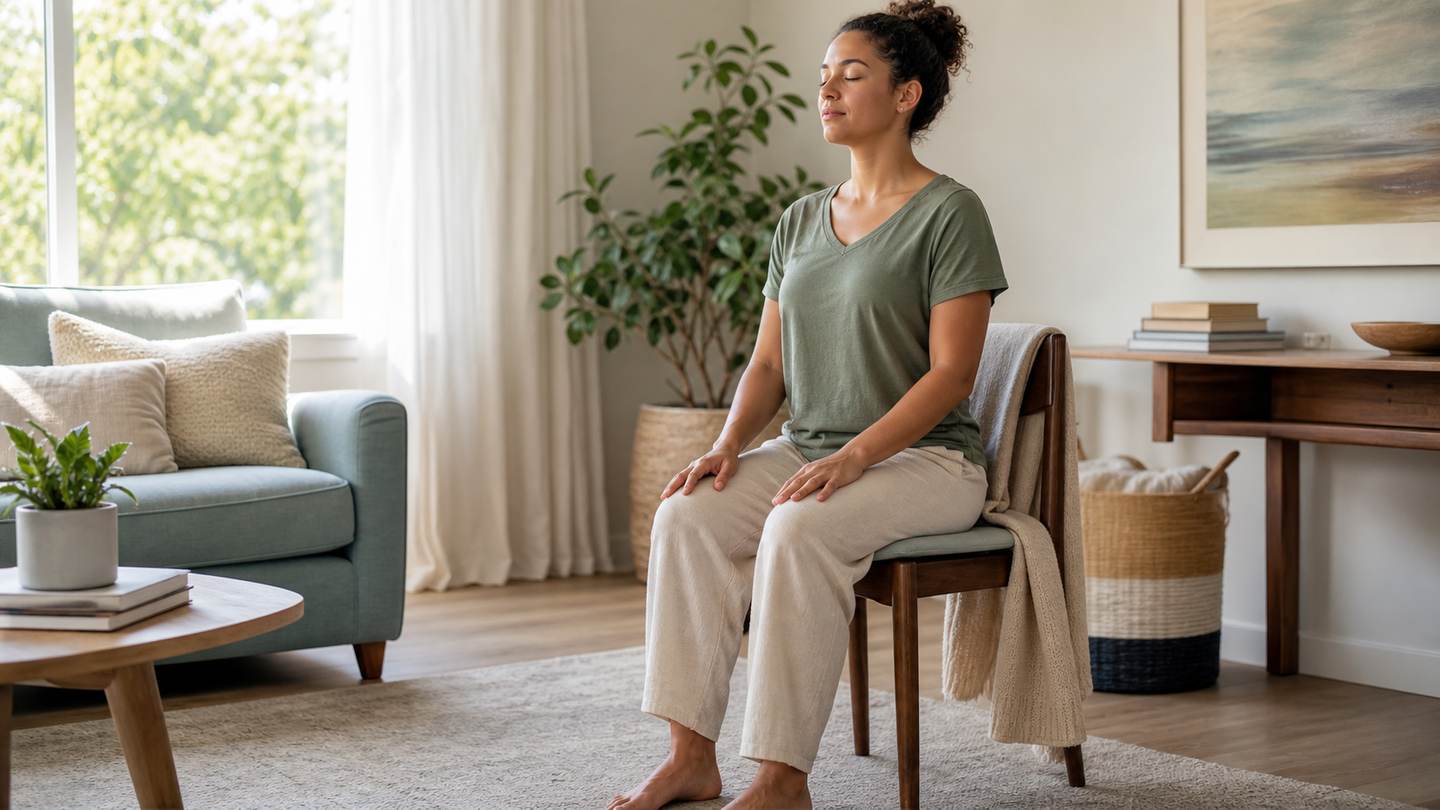
Choose a place where you can be reasonably undisturbed. Sit on a chair, cushion, or bed in a position that feels stable. You may keep your eyes open with a soft gaze if closing them feels uncomfortable.
Notice contact points: feet on the floor, your body on the chair, and your hands resting.
Feel one location where breathing is clear, such as the nostrils, chest, or abdomen.
When thoughts, sounds, or sensations pull attention away, silently note “thinking,” “hearing,” or “feeling.”
Bring attention back to breathing without trying to force a different breathing pattern.
Notice the whole body and the room, then choose the next action in your day.
Ask what you noticed, not whether you became perfectly calm.
Mindfulness for Beginners: Common Problems and Adjustments
| Experience | What it may mean | Beginner adjustment |
|---|---|---|
| “I cannot stop thinking.” | Thinking is normal; stopping every thought is not the task. | Label the distraction briefly and return to one physical sensation. |
| Restlessness | Sitting still may not fit the moment. | Try mindful walking or a shorter practice with eyes open. |
| Sleepiness | You may be tired or too comfortable. | Sit upright, practice earlier, or stand in a safe place. |
| Frustration | You may be expecting immediate calm. | Measure success by noticing and returning, not by mood. |
| Strong emotions | Quiet attention can make difficult feelings more noticeable. | Open your eyes, orient to the room, stop if needed, and seek support. |

How to Practice Mindfulness in Daily Life
Mindful walking
Walk at a safe, natural pace. Notice the shift of weight, contact with the ground, movement of the legs, and changing sounds. Keep enough awareness of traffic, surfaces, other people, and personal safety.
A one-minute transition
Before opening email, entering a meeting, or starting the car, pause for three natural breaths. Notice tension and decide what matters in the next activity. Do not practice with closed eyes while driving.
Mindful eating
For the first few bites, notice aroma, texture, temperature, and taste. This is not a weight-loss rule and should not replace individualized care for an eating disorder.
Mindful listening
During a conversation, notice the urge to plan your response. Return attention to the speaker and allow a brief pause before answering. Mindfulness does not require tolerating disrespect or ignoring boundaries.
Technology can support a reminder, but an app is optional. Our digital wellness guide offers additional ways to shape healthier attention habits.
A Seven-Day Mindfulness Plan for Beginners
- Day 1: two minutes noticing contact points and breathing.
- Day 2: repeat the practice at the same time.
- Day 3: add one minute of mindful walking.
- Day 4: notice sounds for three minutes without naming their source repeatedly.
- Day 5: practice five mindful bites during one meal.
- Day 6: choose the practice that felt most workable.
- Day 7: review what helped, what felt difficult, and what you want to repeat.
Link the practice to an existing cue, such as after brushing your teeth or before lunch. The routine ideas in our healthy morning routines guide can help you choose a realistic anchor.
What Does the Evidence Say About Mindfulness?
NCCIH reports that meditation and mindfulness have been studied for stress, anxiety, depression, pain, and sleep. Some reviews suggest small to moderate improvements for certain symptoms or groups. However, results vary by program, comparison group, population, study quality, and follow-up period.
A widely cited systematic review of 47 randomized trials with 3,515 participants found moderate evidence of improvements in anxiety, depression, and pain from mindfulness meditation programs. It did not find evidence that meditation was better than active treatments such as medication, exercise, or other behavioral therapies.
Research on structured programs such as mindfulness-based stress reduction cannot automatically be applied to every app, video, or informal breathing exercise. Benefits are not guaranteed, and a short beginner practice should not be presented as treatment for a diagnosed mental health condition.
Evidence in context
Mindfulness may be a useful complementary skill for some people. It is not a replacement for psychotherapy, medication, medical assessment, sleep treatment, crisis support, or other evidence-based care.
Is Mindfulness Safe for Everyone?
Mindfulness is often described as low risk, but safety research is less developed than benefit research. NCCIH notes that some participants report unwanted experiences, including increased anxiety or depressed mood. Long, intensive, or poorly supported practice is different from a brief grounding exercise.
If focusing on breathing is uncomfortable, keep your eyes open and use an external anchor such as colors in the room, sounds, or the feeling of your feet. Do not delay professional care because you believe mindfulness should solve the problem.
In the United States, call or text 988 for the Suicide & Crisis Lifeline if you or someone else is in emotional crisis. Call 911 for immediate danger or a medical emergency.
Frequently Asked Questions
How long should a beginner practice mindfulness?
Two to five minutes is a reasonable starting experiment. Longer is not automatically better; choose a duration you can repeat without significant distress.
Do I need to clear my mind to practice mindfulness?
No. Thoughts are expected. The practice is noticing where attention went and gently returning to the chosen anchor.
Can I practice mindfulness while walking?
Yes. Notice steps, body movement, sounds, and surroundings while maintaining awareness of traffic, terrain, and other safety needs.
Can mindfulness make anxiety feel worse?
It can for some people. Stop, open your eyes, orient to the room, or switch to an external grounding activity. Persistent or severe symptoms warrant professional support.
Is mindfulness the same as therapy?
No. Some therapies include mindfulness skills, but a self-guided practice is not equivalent to assessment and treatment from a licensed mental health professional.
Bottom Line
Mindfulness for beginners works best as a small, repeatable attention practice—not a demand to feel calm or think positively. Begin with a few minutes, choose a comfortable anchor, and treat distraction as part of learning. Adjust or stop if the practice increases distress, and use qualified mental health care when symptoms interfere with daily life.
References
- National Center for Complementary and Integrative Health: Meditation and Mindfulness—Effectiveness and Safety
- National Center for Complementary and Integrative Health: Stress
- NCCIH: Stress, Anxiety, and Sleep Problems—Considering Complementary Approaches
- JAMA Internal Medicine: Meditation Programs for Psychological Stress and Well-Being—Systematic Review and Meta-analysis
- PLOS Medicine: Mindfulness-Based Programs for Mental Health Promotion in Nonclinical Settings
- Centers for Disease Control and Prevention: Managing Stress
- 988 Suicide & Crisis Lifeline
Medical disclaimer: This article is for general educational purposes and does not replace professional medical advice, diagnosis, or treatment.