

Waking up during the night is common, and a brief awakening is not automatically a sleep disorder. Sleep naturally becomes lighter several times as the brain moves through cycles. The problem begins when awakenings are frequent, last long enough to cause frustration, or leave you tired and impaired the next day.
This guide explains why nighttime awakenings happen, what you can do in the moment, and when the pattern deserves medical attention. It also separates practical sleep strategies from popular myths. The goal is not to force perfectly uninterrupted sleep, but to reduce avoidable disruption and make it easier to return to sleep.
Is Waking Up During the Night Normal?
Most adults briefly surface from sleep between cycles, often without remembering it. A normal night includes changes among lighter sleep, deeper slow-wave sleep, and rapid eye movement sleep. Awakenings are more noticeable toward morning, when lighter sleep and REM sleep become more common.
What matters is the pattern and its daytime impact. An occasional awakening after noise, stress, a late drink, or an unfamiliar environment is usually temporary. Repeated difficulty returning to sleep—especially when it occurs at least several nights a week and persists—can be a form of sleep-maintenance insomnia.
Common Reasons for Waking Up During the Night
Night awakenings rarely have only one cause. A combination of environment, behavior, physiology, and health conditions is more typical. Keeping a short sleep diary can reveal patterns that memory misses.
- Stress and hyperarousal: worry can keep the brain alert after a normal brief awakening.
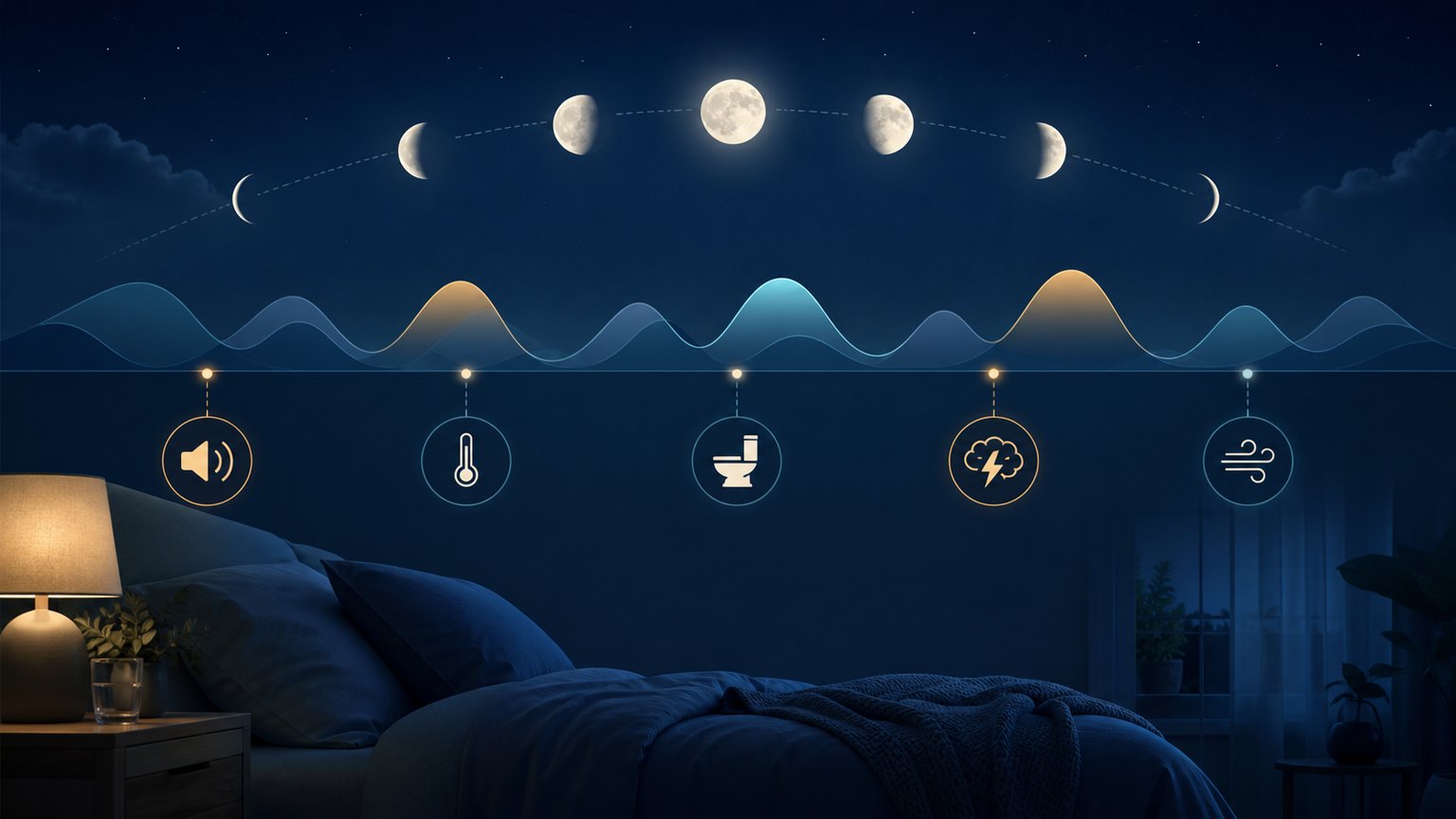
- Noise, light, or temperature: traffic, a partner, pets, bright devices, or an overly warm room can fragment sleep.
- Alcohol: it may shorten sleep onset but often produces lighter, more disrupted sleep later in the night.
- Caffeine and nicotine: effects can last for hours and vary greatly among individuals.
- Late fluids or urinary symptoms: bathroom trips may reflect timing, medications, pregnancy, prostate problems, diabetes, or other conditions.
- Pain, reflux, breathing symptoms, or hot flashes: symptoms often become more noticeable when lying down or during hormonal transitions.
- Medicines: stimulants, decongestants, some antidepressants, corticosteroids, diuretics, and other drugs may affect sleep.
- Sleep disorders: obstructive sleep apnea, restless legs syndrome, periodic limb movements, circadian disorders, and parasomnias can cause repeated awakenings.
Why Waking Up During the Night Can Become a Habit
After several bad nights, the bed can become associated with monitoring, effort, and frustration. Checking the clock, calculating remaining sleep, searching symptoms on a phone, or trying hard to “make” sleep happen increases alertness. This learned arousal can keep the cycle going even after the original trigger improves.
Cognitive behavioral therapy for insomnia (CBT-I) targets this process. It combines sleep education with strategies such as stimulus control, a carefully managed sleep schedule, relaxation, and cognitive skills. The National Heart, Lung, and Blood Institute describes CBT-I as the usual first treatment for long-term insomnia, and the American Academy of Sleep Medicine strongly recommends it for chronic insomnia in adults.
What to Do When You Wake Up at Night
Start by removing the sense of emergency. A single difficult night is uncomfortable, not dangerous. Keep the environment dark and quiet, avoid clock-watching, and give the body a chance to settle. Slow breathing, progressive muscle relaxation, or a neutral mental image may help reduce arousal.
If you remain clearly awake and frustrated, stimulus-control guidance often recommends leaving the bed for a quiet, low-light activity. Read something calm on paper, listen to gentle audio at low volume, or sit comfortably without scrolling. Return to bed when sleepiness returns. The purpose is to reconnect the bed with sleep rather than wakeful struggle.
Avoid driving, cooking, alcohol, nicotine, bright overhead lighting, or taking an extra dose of a sleep product without medical instructions. Next-day safety matters: if you are too sleepy to drive or operate equipment, adjust plans.
Stop Checking the Clock
Clock-watching turns an awakening into a performance test. Seeing the time can trigger mental arithmetic—“I have only four hours left”—followed by a stress response that makes sleep less likely. Turn the display away, cover bright digits, and keep the phone out of reach.
You do not need to know the exact minute to use a calm response. Judge by how you feel: if you are relaxed and drowsy, stay in bed; if you are alert and increasingly frustrated, take a brief low-stimulation break.
Daytime Steps That Reduce Night Awakenings
A stable wake time anchors the sleep-wake rhythm more reliably than chasing an early bedtime after a poor night. Get daylight during the day—especially in the morning—stay physically active, and avoid long or late naps. These behaviors help build sleep pressure and support circadian timing.
Review caffeine timing honestly. Some people still feel the effects many hours later. Finish strenuous exercise and large meals with enough time to wind down. If you are managing stress, schedule a short “worry period” in the early evening: write concerns and the next practical step, then close the notebook before bedtime.
Our guides to morning sunlight and circadian rhythm and nighttime routines for better sleep provide structured routines.
Alcohol, Caffeine, Food, and Fluids
Alcohol is a frequent culprit because its early sedating effect can hide later sleep fragmentation. Reducing amount, moving it earlier, or avoiding it for a trial period may clarify whether it contributes. Do not use alcohol as a sleep treatment.
Caffeine is present in coffee, tea, energy drinks, chocolate, some medications, and supplements. Sensitivity differs, so a fixed cutoff does not work for everyone. A one- to two-week experiment with an earlier cutoff can provide useful evidence.
Large, spicy, or high-fat meals may worsen reflux in susceptible people. On the other hand, going to bed very hungry can also be disruptive. Limit excessive fluids close to bedtime while maintaining adequate hydration earlier in the day. Frequent nighttime urination should be assessed if it is new, worsening, painful, or accompanied by excessive thirst.
Could Sleep Apnea Be Causing the Awakenings?
Obstructive sleep apnea can cause repeated brief arousals when breathing narrows or stops. Clues include loud habitual snoring, witnessed pauses, gasping, morning headache, dry mouth, high blood pressure, and significant daytime sleepiness. Not everyone with sleep apnea has obesity, and some people report insomnia rather than obvious sleepiness.
A consumer sleep tracker cannot rule sleep apnea in or out. If breathing symptoms are present, a clinician may recommend a home sleep apnea test or an overnight sleep study. Treating the breathing problem is more important than simply adding a sedative.
Restless Legs, Pain, Reflux, and Hormonal Changes
An urge to move the legs, uncomfortable sensations at rest, or repeated kicking may point to restless legs syndrome or periodic limb movements. Iron status, pregnancy, kidney disease, and certain medicines can be relevant, so self-treating with iron without testing is not appropriate.
Pain, asthma, reflux, menopause-related hot flashes, pregnancy, thyroid disorders, mood conditions, and urinary problems can all fragment sleep. Improvement often depends on treating the underlying condition. A detailed symptom and medication review is more useful than assuming every awakening is “just stress.”
Should You Take Melatonin or Other Sleep Aids?
Melatonin mainly signals circadian timing; it is not a universal fix for sleep-maintenance insomnia. Evidence and safety differ by product, dose, timing, age, and condition. Over-the-counter antihistamine sleep aids can cause next-day sedation, confusion, dry mouth, constipation, urinary retention, and tolerance, particularly in older adults.
Prescription sleep medicines may be appropriate in selected cases, usually after evaluation and often as a temporary adjunct. Never combine sedating medicines, supplements, alcohol, or cannabis without professional guidance. Read our evidence-based overview of sleep supplements before considering a product.
Track Waking Up During the Night With a Sleep Diary
For one to two weeks, record bedtime, estimated time to fall asleep, number and approximate duration of awakenings, final wake time, naps, caffeine, alcohol, exercise, medicines, and next-day alertness. Estimate rather than repeatedly checking the clock during the night.
A diary helps distinguish isolated bad nights from a persistent pattern and gives a clinician useful information. Wearables may add trends, but they estimate sleep from movement and signals; they do not replace a clinical assessment or sleep study.
When to Contact a Health Professional
Arrange an evaluation when awakenings persist for weeks, happen frequently, or impair mood, concentration, work, driving, or quality of life. Seek assessment sooner for loud snoring with gasping, severe daytime sleepiness, unusual movements or behaviors during sleep, significant pain, worsening reflux, new urinary symptoms, or symptoms of depression or mania.
Urgent help is appropriate for chest pain, severe shortness of breath, fainting, thoughts of self-harm, or a dangerous level of sleepiness while driving. Do not wait for a routine sleep appointment in an emergency.
A Seven-Night Reset Plan
- Choose one consistent wake time and keep it daily.
- Get morning light and daytime movement.
- Move caffeine earlier and avoid alcohol as a sleep aid.
- Keep the bedroom cool, dark, and quiet.
- Turn the clock away and keep the phone out of reach.
- Use a calm low-light activity if prolonged wakefulness becomes frustrating.
- Record patterns in a sleep diary and review the results.
This is an experiment, not a test of willpower. If the pattern continues, CBT-I or medical evaluation is a more evidence-based next step than endlessly adding sleep hacks.
Frequently Asked Questions About Waking Up During the Night
Why do I wake up at 3 a.m. every night?
The clock time alone does not identify a cause. Lighter sleep, stress, alcohol, temperature, bathroom needs, pain, hormonal symptoms, circadian timing, or a sleep disorder may contribute. Look for repeatable triggers and daytime effects.
How long is too long to be awake?
There is no perfect stopwatch rule. Focus on whether you are becoming alert and frustrated. If so, a brief quiet activity outside bed can help preserve the bed-sleep association.
Does waking up mean I did not get deep sleep?
Not necessarily. Sleep stages alternate through the night, and brief awakenings can occur between cycles. A consumer tracker cannot precisely determine why you woke or diagnose a disorder.
Can menopause cause waking up during the night?
Yes. Hot flashes, temperature changes, mood symptoms, and other menopause-related factors can disrupt sleep. Discuss persistent symptoms with a clinician because effective treatment depends on individual risks and priorities.
Sources
- National Heart, Lung, and Blood Institute: Insomnia Treatment.
- National Heart, Lung, and Blood Institute: Insomnia Diagnosis.
- National Heart, Lung, and Blood Institute: Insomnia Causes and Risk Factors.
- American Academy of Sleep Medicine: Behavioral and Psychological Treatments for Insomnia.
- AASM Patient Guide: Behavioral and Psychological Treatments for Chronic Insomnia.
Medical disclaimer: This article provides general education and does not diagnose, treat, or replace personalized care from a qualified health professional.
