High-Fiber Foods: evidence-based nutrition guide
High-fiber foods include beans, lentils, whole grains, vegetables, fruits, nuts, and seeds. Building meals around several of these foods can support regular bowel habits and overall diet quality without relying on powders, “detox” products, or extreme eating plans.
This practical guide explains how much fiber adults may need, how to read a Nutrition Facts label, and how to increase fiber gradually. It also offers 25 flexible food choices and a realistic one-day meal pattern.
Key Takeaway
Fiber works best as part of a varied eating pattern. Add beans or lentils, replace some refined grains with whole grains, and include fruits or vegetables at multiple meals. Increase gradually and drink enough fluid for your individual needs.
How Much Fiber Do Adults Need?
The FDA Daily Value for dietary fiber is 28 grams on a 2,000-calorie diet. This number is designed for food labeling, not as a personalized prescription. NIDDK notes that adult needs commonly range from about 22 to 34 grams per day depending on age and sex.
On packaged foods, 5% Daily Value or less per serving is considered low, while 20% Daily Value or more is considered high. Compare the listed serving size with the amount you actually eat. A package can look fiber-rich because of marketing on the front while providing relatively little fiber per serving.
High-Fiber Foods and Types of Dietary Fiber
Dietary fiber is the portion of plant food that is not fully digested in the small intestine. Different fibers behave differently. Some dissolve or form gels, some add bulk, and some are fermented by gut microbes. A food can contain more than one type.
Instead of trying to classify every bite as soluble or insoluble fiber, most adults can focus on variety. Oats, barley, beans, lentils, fruit, vegetables, nuts, seeds, and intact whole grains create a broader mix than repeatedly using one supplement.
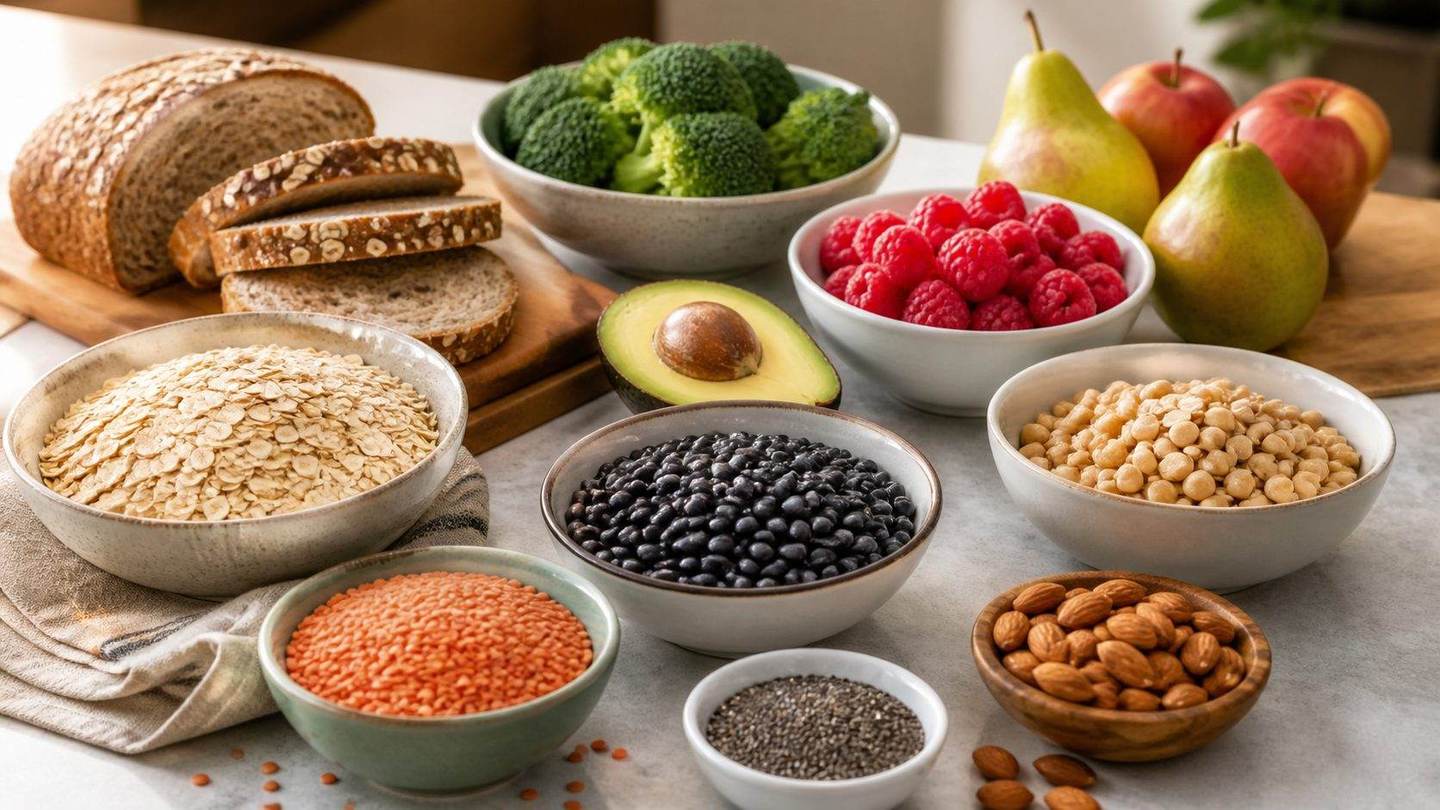
25 High-Fiber Foods to Build Meals Around
| Food group | High-fiber choices | Easy way to use them |
|---|---|---|
| Beans and lentils | 1. Lentils 2. Black beans 3. Chickpeas 4. Kidney beans 5. Split peas |
Add to soups, grain bowls, salads, tacos, or pasta sauce. Rinse canned beans to reduce sodium. |
| Whole grains | 6. Oats 7. Barley 8. Quinoa 9. Brown rice 10. Whole-wheat bread |
Use oats at breakfast; barley in soup; quinoa in salads; and bread labeled “100% whole wheat.” |
| Fruit | 11. Raspberries 12. Pears 13. Apples 14. Oranges 15. Avocado |
Choose whole fruit more often than juice. Keep edible skins when appropriate and washed. |
| Vegetables | 16. Green peas 17. Broccoli 18. Brussels sprouts 19. Sweet potatoes 20. Collard greens |
Use fresh, frozen, or no-salt-added canned options. Add a vegetable to lunch and dinner. |
| Nuts and seeds | 21. Chia seeds 22. Ground flaxseed 23. Almonds 24. Pistachios 25. Pumpkin seeds |
Stir seeds into oats or yogurt and use a modest handful of nuts as a snack. |
Fiber content varies by portion, variety, preparation, and brand. Use the Nutrition Facts label for packaged products and USDA FoodData Central when an exact value matters. A food does not need to meet the FDA definition of “high” in a single serving to contribute meaningfully across the day.
High-Fiber Foods by Meal
Breakfast
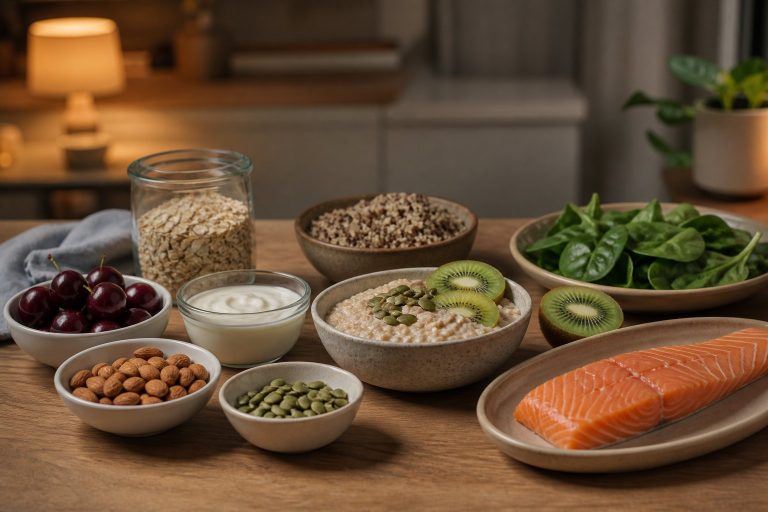
Cook oats with milk or fortified soy milk, then add berries and chia seeds. Another option is whole-grain toast with avocado and a side of fruit. If you also want a protein anchor, use the balanced combinations in our high-protein breakfasts guide.
Lunch
Build a grain bowl with quinoa or brown rice, chickpeas, leafy greens, chopped vegetables, and a simple olive-oil dressing. A lentil soup with whole-grain bread is another practical choice.
Dinner
Replace part of the meat in tacos, chili, or pasta sauce with beans or lentils. Add roasted broccoli, Brussels sprouts, or sweet potato. This increases fiber while keeping the meal familiar.
Snacks
Pair an apple or pear with nuts, use vegetables with hummus, or choose air-popped popcorn with minimal added salt. Portion awareness still matters because nuts, seeds, and some toppings are energy-dense.

A Simple Day Built With High-Fiber Foods
This example is a flexible pattern rather than a calorie plan or medical diet:
- Breakfast: oatmeal with raspberries, chia seeds, and plain yogurt or fortified soy yogurt.
- Lunch: lentil-vegetable soup with whole-grain bread and fruit.
- Snack: an apple with almonds.
- Dinner: a quinoa and chickpea bowl with leafy greens, broccoli, tomatoes, and avocado.
Portions should reflect appetite, energy needs, medical conditions, and the rest of the day. People with diabetes may also need to consider total carbohydrate and medication timing rather than focusing on fiber alone.
How to Shop for High-Fiber Foods
- Read the serving size first. The fiber amount applies to that listed portion.
- Check grams and %DV. The FDA Daily Value is 28 grams; 20% DV or more per serving is considered high.
- Confirm whole grains. Look for a whole grain, such as whole wheat or oats, near the beginning of the ingredient list.
- Watch the full nutrition profile. A high-fiber cereal or bar may still contain substantial added sugar or sodium.
- Use convenient options. Frozen vegetables, canned beans, microwavable brown rice, and plain oats can make fiber easier without sacrificing nutrition.
How to Increase High-Fiber Foods Safely
A sudden jump can cause gas, bloating, cramps, or changes in stool frequency. Add one meaningful source at a time—for example, oats at breakfast for several days before also doubling beans and adding a fiber powder. This makes tolerance easier to judge.
NIDDK recommends drinking plenty of water and other liquids when increasing fiber. There is no single fluid amount that fits everyone; needs change with body size, activity, climate, pregnancy, and medical conditions. People with heart failure, kidney disease, or a prescribed fluid limit should follow their clinician’s plan.
Fiber supplements can be useful in selected situations, but they are not automatically better than food. Psyllium and other products can affect medication timing and may be unsafe if swallowed without enough liquid. Our digestive health supplements guide explains targeted uses and cautions.
Frequently Asked Questions
What food is highest in fiber?
There is no single best choice. Beans, lentils, split peas, berries, some whole grains, nuts, and seeds are concentrated sources, but portions and preparation affect the amount.
How can I get more fiber at breakfast?
Combine oats or whole-grain toast with berries, pear, apple, avocado, chia, or ground flaxseed. Increase portions gradually if your current intake is low.
Can too much fiber cause problems?
Yes. A rapid increase may cause gas, bloating, cramps, diarrhea, or constipation. Very high intake can be inappropriate with certain gastrointestinal conditions or prescribed diets.
Are fiber supplements as good as high-fiber foods?
Supplements can provide a specific fiber, but foods also supply vitamins, minerals, and other plant compounds. A supplement should target a clear need and be reviewed for medication timing and safety.
Does blending fruit remove the fiber?
Blending generally retains fiber if the whole edible fruit remains in the drink. Juicing removes much of the fibrous material, and large smoothies can be easier to consume quickly than whole fruit.
Bottom Line
High-fiber foods are most useful as a varied group, not a competition for the highest number. Use beans and lentils regularly, choose whole grains, eat whole fruits and vegetables, and add nuts or seeds where they fit. Increase fiber gradually, pay attention to symptoms, and seek personalized advice when a gastrointestinal or medical condition changes what is safe.
Sources
- FDA: How to Understand and Use the Nutrition Facts Label
- FDA: Daily Value on the Nutrition and Supplement Facts Labels
- NIDDK: Eating, Diet & Nutrition for Constipation
- NIDDK: Treatment for Constipation
- USDA MyPlate: Vegetable Group
- USDA MyPlate: Fruit Group
- USDA MyPlate: Grains Group
- Dietary Guidelines for Americans, 2020–2025
This article is for general educational purposes and does not replace professional medical advice, diagnosis, or treatment.