High-Protein Breakfasts: evidence-based guide
High-protein breakfasts can make the first meal of the day more satisfying while helping adults distribute protein across their meals. The best options do more than increase one nutrient: they combine protein with fiber-rich carbohydrates, produce, and mostly unsaturated fats.
This evidence-based guide offers practical breakfast ideas for busy U.S. adults, explains what the research can—and cannot—promise, and shows how to adapt meals for plant-based diets, aging, weight goals, and common medical concerns.
How Much Protein Should Breakfast Provide?
The U.S. adult Recommended Dietary Allowance for protein is 0.8 grams per kilogram of body weight per day. That is a minimum population-level target for generally healthy adults, not an individualized prescription or an ideal amount for every goal. Needs may differ with age, body size, pregnancy, training, illness, calorie intake, or recovery.
Many practical breakfasts in this guide provide roughly 20–35 grams of protein, but smaller or larger amounts can be appropriate. Instead of forcing every person toward the same number, consider your total day and ask a registered dietitian or clinician for personalized guidance when necessary.
High-Protein Breakfasts: What the Evidence Says
Protein is generally more satiating than an equivalent amount of some other macronutrients, yet breakfast research is mixed. A 2024 randomized crossover study in young women with overweight or obesity found that a dairy-based protein-rich breakfast increased fullness for several hours compared with a lower-protein breakfast or no breakfast. It did not reduce total daily energy intake. The study examined a specific population and short-term responses, so it does not prove that the same breakfast produces weight loss.
In a randomized crossover trial of 48 healthy adults, egg-based breakfasts containing 20–30 grams of protein produced greater satiety or reduced intake at a later meal compared with a lower-protein cereal breakfast. Other small trials have found little or no difference in later energy intake. Meal composition, sleep, the comparison meal, and individual appetite can all influence results.
Breakfast itself is optional for many healthy adults. If you are not hungry in the morning, you do not need to eat solely because breakfast is marketed as mandatory. People taking glucose-lowering medicine, pregnant adults, athletes, and those with medical nutrition plans may need more specific timing advice.
Build a Balanced High-Protein Breakfast
Use this four-part structure rather than building the entire meal around eggs, meat, or protein powder:
- Choose a protein anchor: eggs, plain Greek yogurt, cottage cheese, tofu, tempeh, beans, lentils, milk, fortified soy milk, or leftover fish or poultry.
- Add fiber-rich carbohydrates: oats, whole-grain bread, beans, fruit, vegetables, or a whole-grain tortilla.
- Include produce: berries, citrus, banana, leafy greens, tomatoes, peppers, mushrooms, or salsa.
- Use fats thoughtfully: nuts, seeds, avocado, or nut butter can add flavor and unsaturated fat, but portions still matter.
USDA MyPlate encourages variety across fruits, vegetables, grains, protein foods, and dairy or fortified soy alternatives. A protein-rich breakfast can follow that broader pattern without becoming a low-carbohydrate diet.
12 High-Protein Breakfast Ideas
1. Vegetable omelet with whole-grain toast
Fill two eggs with spinach, peppers, mushrooms, and tomatoes. Add whole-grain toast and fruit. Egg whites can increase protein without adding more saturated fat, but whole eggs can still fit a balanced diet.
2. Greek yogurt, berries, and seeds
Choose plain Greek yogurt and add berries, chia or ground flaxseed, plus a small portion of nuts. Compare labels because protein and added sugar vary widely.
3. Protein-packed overnight oats
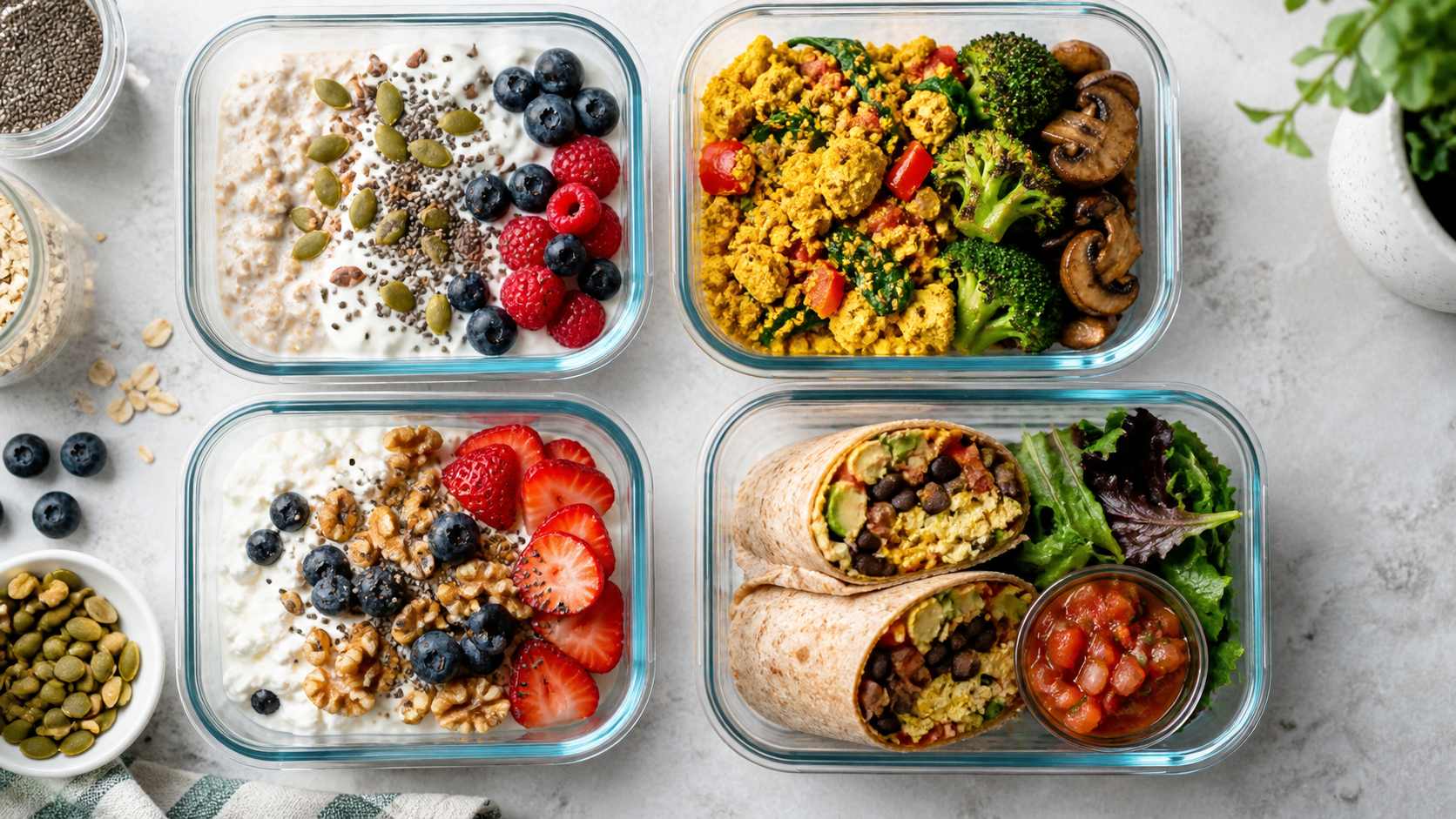
Combine rolled oats with plain Greek yogurt or fortified soy milk, chia seeds, and fruit. This pairs protein with whole grains and fiber rather than relying on powder alone.
4. Tofu scramble with vegetables
Crumble calcium-set tofu with turmeric, pepper, spinach, tomatoes, and mushrooms. Serve with whole-grain toast or roasted potatoes for a balanced plant-based meal.
5. Cottage cheese breakfast bowl
Top lower-sodium cottage cheese with berries, sliced pear, walnuts, and cinnamon. Sodium varies by brand, so read the Nutrition Facts label.
6. Egg and black bean breakfast wrap
Fill a whole-grain tortilla with scrambled egg, black beans, salsa, greens, and avocado. Beans contribute both protein and fiber.
7. Savory oatmeal with egg and edamame
Cook oats with minimal-sodium broth, then add an egg, shelled edamame, spinach, and scallions. Savory oats are a useful alternative to heavily sweetened breakfast bowls.
8. Smoked salmon and avocado toast
Use whole-grain toast, avocado, tomato, and a modest amount of smoked salmon. Because smoked fish can be high in sodium, balance it with lower-sodium foods and check pregnancy food-safety guidance.
9. Lentil breakfast bowl
Warm lentils with roasted vegetables, greens, and an egg or tofu. Breakfast does not need to use traditional morning foods.
10. Kefir or soy smoothie
Blend plain kefir or fortified soy milk with berries, spinach, oats, and nut butter. Whole foods add fiber and texture; avoid turning smoothies into oversized liquid meals.
11. Turkey and vegetable breakfast skillet
Combine leftover unprocessed turkey or chicken with potatoes, onions, peppers, and greens. Choose poultry more often than bacon or sausage to limit processed meat, sodium, and saturated fat.
12. Protein-packed acai bowl
Blend unsweetened acai with berries and a protein source such as Greek yogurt or silken tofu. Use nuts and seeds as toppings while keeping sweetened granola and syrups modest. See our full protein-packed acai bowl guide for a balanced formula.
High-Protein Breakfasts for Meal Prep
Prepare two or three components instead of twelve complete meals. Cook a batch of eggs or tofu scramble, portion overnight oats, wash fruit, and chop vegetables. Refrigerate perishable foods promptly and use shallow containers when cooling cooked food.
A simple weekly rotation might include overnight oats on two days, an egg-and-bean wrap on two days, Greek yogurt on two days, and leftovers on the final day. This keeps decisions manageable without requiring the same meal every morning. Pair the plan with the light, hydration, and movement habits in our healthy morning routines guide.
How to Choose Foods for High-Protein Breakfasts
Protein quantity does not cancel out the rest of a food’s nutrition profile. Bacon, sausage, sweetened yogurt, and oversized cheese portions can add sodium, saturated fat, or added sugar. Compare Nutrition Facts labels and choose beans, soy foods, seafood, nuts, seeds, low-fat dairy, eggs, and lean unprocessed meats more often.
Plant proteins can absolutely build a high-protein breakfast. Soy foods, beans, lentils, nuts, seeds, and whole grains contribute useful protein. Eating varied protein foods across the day supplies the essential amino acids the body needs.
High-Protein Breakfasts: Safety and Who Should Be Careful
Pregnant and breastfeeding adults should follow food-safety advice for eggs, dairy, seafood, sprouts, and refrigerated smoked fish. Use pasteurized products and cook eggs to a safe temperature unless a clinician provides different instructions.
Protein powders are optional. Supplements can contain allergens, added stimulants, sweeteners, or ingredients that interact with medicines. Whole foods usually provide more nutritional context, including fiber, vitamins, and minerals.
Dietary supplements are not intended to diagnose, treat, cure, or prevent any disease. Always consult a qualified healthcare professional before starting a new supplement, especially if you are pregnant, breastfeeding, take prescription medications, or have a medical condition.
Frequently Asked Questions
How many grams of protein make a breakfast high-protein?
There is no universal legal or clinical definition for a complete breakfast. Many practical meals provide about 20–35 grams, but the right amount depends on total daily needs.
Are high-protein breakfasts good for weight loss?
They may improve fullness for some people, but studies do not show guaranteed weight loss. Total calorie intake, diet quality, sleep, activity, and individual health still matter.
Can a vegan breakfast provide enough protein?
Yes. Tofu, tempeh, beans, lentils, fortified soy milk, nuts, seeds, and whole grains can be combined into a protein-rich plant-based breakfast.
Do I need protein powder at breakfast?
No. Eggs, dairy, soy foods, beans, nuts, seeds, fish, or poultry can supply protein. Powder is a convenience product, not a requirement.
Is it unhealthy to skip breakfast?
Not necessarily for a generally healthy adult. Meal timing should fit personal preferences and medical needs. People using glucose-lowering medication or following a treatment plan need individualized advice.
The Bottom Line
High-protein breakfasts work best as balanced meals, not protein contests. Choose a quality protein source, add fiber-rich plants and whole grains, and keep sodium, saturated fat, and added sugar in perspective. The approach may support fullness and convenient meal planning, but it cannot guarantee weight loss or better health by itself.
Sources
- Dietary Guidelines for Americans
- USDA MyPlate: Protein Foods Group
- USDA MyPlate: What Is MyPlate?
- American Heart Association: Protein and Heart Health
- Dairy-Based Protein-Rich Breakfast, Satiety, and Concentration: Randomized Crossover Study
- Egg, Protein, Fiber, Appetite, and Glycemic Response: Randomized Crossover Trial
- Breakfast Protein and Fiber, Appetite, and Energy Intake: Randomized Crossover Study
- High-Protein Breakfast, Sleep Curtailment, and Appetite: Randomized Crossover Study
This article is for general educational purposes and does not replace professional medical advice, diagnosis, or treatment.