
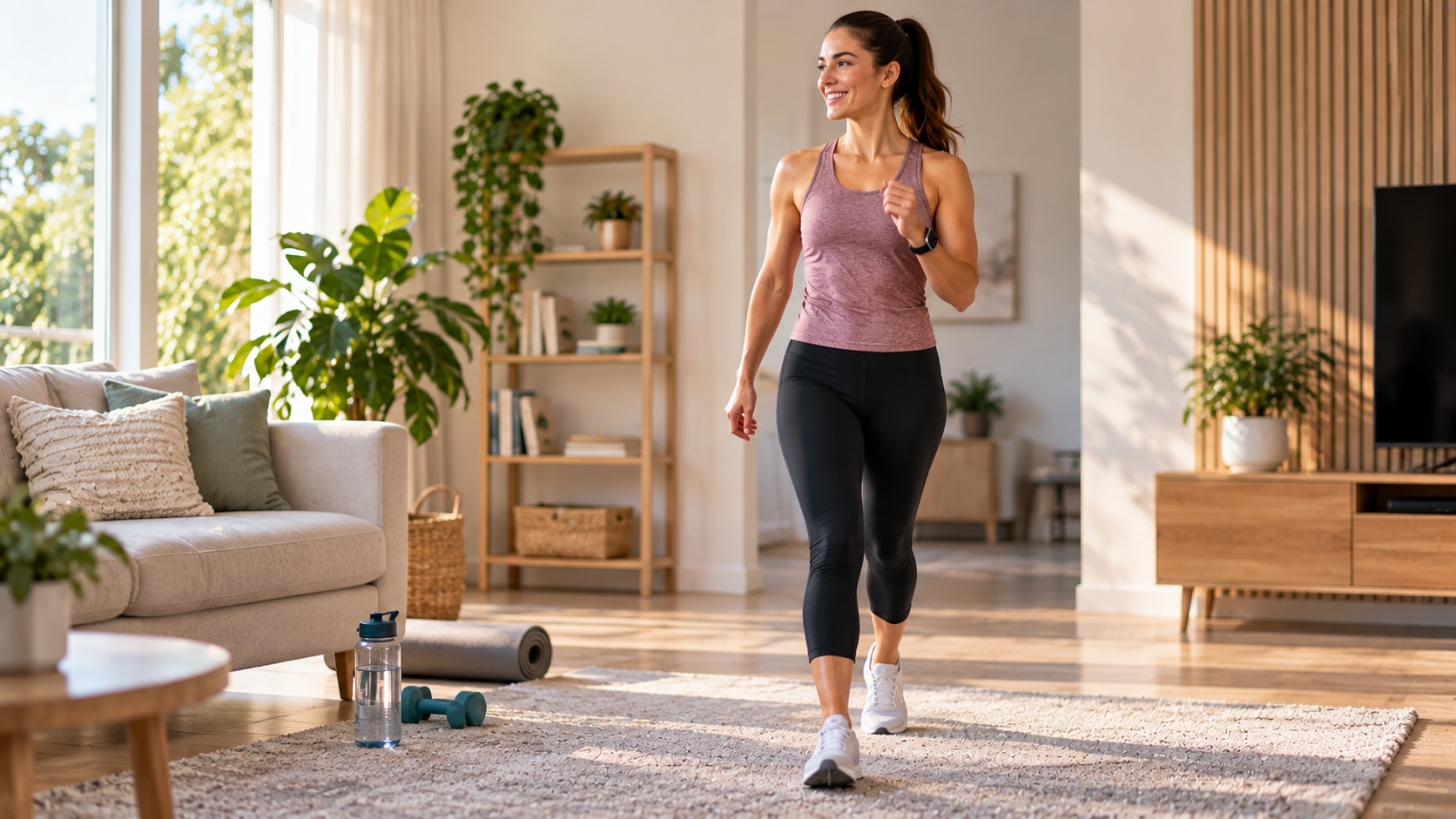
A walking routine at home can include walking laps through available rooms, marching in place, hallway walking, side steps, and short brisk intervals. Beginners can start with 5 to 10 minutes and gradually add time as the routine becomes easier. Home walking can contribute toward the weekly aerobic activity guideline, but it does not replace muscle-strengthening exercise. Keep the walking area clear, choose a pace that matches your ability, and build consistency before adding intensity.
Key Takeaways
- Indoor walking can contribute meaningful aerobic activity even when you cannot walk outside.
- Beginners can start with short sessions and gradually increase duration, pace, or frequency.
- Adults should work toward at least 150 minutes of moderate-intensity aerobic activity each week.
- Smaller bouts of activity count, so you do not need one continuous 30-minute workout.
- Muscle-strengthening exercise on at least two days per week belongs alongside walking.
- A clear floor, good lighting, stable footwear, and a route free of trip hazards make home walking safer.
Can Walking at Home Count as Exercise?
Yes. Physical activity does not need to happen on a trail, treadmill, or outdoor sidewalk to count. Walking through your home, marching in place, climbing stairs when appropriate, and performing other continuous stepping movements can increase activity.
Intensity determines whether a session counts as light, moderate, or vigorous activity. CDC describes moderate-intensity activity as movement that noticeably raises breathing and heart rate while still allowing you to carry on a conversation.
That means a comfortable stroll around the kitchen may provide light activity, while quicker indoor walking or purposeful marching may reach moderate intensity for some people.
Use your own effort as the guide: the same indoor walking speed can feel easy to one person and challenging to another.
How Much Walking Should You Aim For?
Current CDC guidance recommends that adults work toward at least 150 minutes of moderate-intensity aerobic activity each week. One common example is 30 minutes on five days, but that is not the only way to reach the total.
Activity can be spread across the week and broken into smaller chunks. Five minutes here and 10 minutes there can contribute to the total.
Someone who is currently inactive does not need to begin with 150 minutes. Start with an amount that feels manageable and build progressively.
The guideline is a destination, not a starting requirement. Even a short walking routine is more useful than remaining inactive because the full weekly target feels too large.
Simple Ways to Walk Indoors
- Room-to-room walking: create a repeatable route through several rooms or a hallway.
- Marching in place: useful when floor space is limited.
- Side stepping: adds variety while continuing to move.
- Forward and backward steps: use only when you have enough clear space and good balance.
- Stair walking: adds intensity when stairs are safe and appropriate for you.
- Walking during television breaks: converts otherwise sedentary time into short movement sessions.
You can combine several styles within one session. The goal is continuous, comfortable movement rather than copying a complicated choreography.
A 10-Minute Walking Routine at Home
| Time | Activity |
|---|---|
| Minutes 0–2 | Walk or march at an easy pace |
| Minutes 2–4 | Increase to a purposeful walking pace |
| Minutes 4–5 | Alternate easy side steps with forward walking |
| Minutes 5–8 | Return to brisk indoor walking or marching |
| Minutes 8–10 | Gradually slow to a comfortable finish |
This example is a general beginner template rather than a medical prescription. Keep the entire session easy if you are returning after inactivity, illness, or injury.
A 20-Minute Indoor Walking Routine
| Segment | Movement |
|---|---|
| First 3 minutes | Comfortable walking or marching |
| Next 5 minutes | Purposeful walking at a moderate effort |
| Next 2 minutes | Easy side steps and relaxed walking |
| Next 5 minutes | Brisk indoor walking or marching with natural arm movement |
| Next 2 minutes | Comfortable recovery walking |
| Final 3 minutes | Gradually reduce pace |
A Four-Week Beginner Progression
| Week | Home walking plan |
|---|---|
| Week 1 | 5–10 minutes on 4 days at a comfortable pace |
| Week 2 | 10–15 minutes on 4 days with brief purposeful sections |
| Week 3 | 15–20 minutes on 4–5 days when comfortable |
| Week 4 | 20–30 minutes on up to 5 days, or divide the total into shorter sessions |
There is no requirement to progress every week. Repeat a level until it feels manageable, and increase only one variable at a time when possible.
Progression rule: add time, pace, frequency, or more challenging movements gradually rather than increasing everything during the same week.
Short Walking Breaks Still Count
One advantage of walking at home is that you can add activity without changing clothes, driving somewhere, or waiting for good weather.
- Walk for five minutes after breakfast.
- Add several minutes after lunch.
- Walk during a work break.
- Move during television commercials or between episodes.
- Take a short indoor walk after prolonged sitting.
CDC emphasizes moving more and sitting less. Short activity breaks can therefore be useful even when they do not feel like a formal workout.
How to Make Indoor Walking More Challenging
Increase Your Pace
Walk or march more purposefully while keeping movements controlled. Use the talk test rather than chasing a particular step rate.
Add Brisk Intervals
Alternate easier walking with brief periods of quicker movement. Extend the brisk sections gradually as fitness improves.
Use Natural Arm Movement
Allow your arms to swing naturally or use a slightly more purposeful arm action if it feels comfortable. Avoid exaggerated movements that affect balance.
Add Safe Direction Changes
Side steps or wider indoor routes can add variety. Keep turns controlled and avoid rapid direction changes when balance is uncertain.
Use Stairs Carefully
Stairs can increase intensity quickly. Use a handrail and skip this option if pain, dizziness, poor balance, or mobility limitations make it unsafe.
Walking at Home Does Not Replace Strength Training
Walking provides aerobic activity, but federal guidelines also recommend muscle-strengthening activity on at least two days each week.
Home strength training can be simple and may use body weight, resistance bands, handheld weights, or household equipment when appropriate.
- Sit-to-stand or squat variations
- Wall or counter push-ups
- Resistance-band rows
- Hip-hinge movements appropriate to your ability
- Carrying or core exercises that can be performed safely at home
Walking and strength training complement each other rather than competing for the same role.
How to Make Your Home Walking Area Safer
- Remove loose rugs, cords, clutter, and other trip hazards from the route.
- Use adequate lighting, especially in hallways and near stairs.
- Keep wet or slippery floors out of the walking route.
- Wear comfortable footwear when it improves traction and stability.
- Keep pets and movable objects away from the route during faster sessions when possible.
- Use a stable support nearby when balance is limited.
A short clear route is usually safer than trying to weave rapidly around furniture in a small space.
Common Home Walking Mistakes
Starting With Too Much
Going from little activity to long daily sessions can create unnecessary soreness or irritation. Start below your maximum and build gradually.
Making Every Session Hard
Easy movement still counts. Mix comfortable sessions with more purposeful walking rather than turning every indoor walk into a high-intensity workout.
Adding Complicated Choreography
You do not need dance-like combinations for indoor walking to be useful. Simple repetitive movements may be easier to sustain and safer.
Chasing a Step Count Instead of Activity
A step counter can motivate some people, but you do not need an arbitrary number before indoor walking becomes worthwhile. Weekly activity and consistency provide a more flexible framework.
Skipping Strength Training
Walking covers aerobic activity but does not fully address the muscle-strengthening portion of the federal guidelines.
When to Get Individual Exercise Guidance
Moderate physical activity is safe for most people, but health conditions and symptoms can change the appropriate starting point.
- You have heart disease, significant arthritis, diabetes, lung disease, or another chronic condition that affects activity.
- You are returning to exercise after surgery, hospitalization, or a major injury.
- You have recurrent falls, substantial dizziness, or significant balance problems.
- Pain consistently increases during or after walking.
- You use a mobility aid and are unsure how to adapt an indoor routine.
- You develop chest discomfort, fainting, unusual severe shortness of breath, or a major decline in exercise tolerance.
A healthcare professional, physical therapist, or qualified exercise professional can help adapt the routine to your health and mobility.
Frequently Asked Questions
Related reading
The Bottom Line
A walking routine at home can provide a simple way to become more active when weather, schedule, transportation, or personal preference makes outdoor walking inconvenient. Start with short sessions, use room-to-room walking or marching in place, and gradually increase time or pace as your fitness improves.
Work toward the weekly aerobic activity guideline without treating 30 continuous minutes as mandatory. Smaller sessions count. Keep the walking route clear and well lit, combine walking with muscle-strengthening exercise, and adapt the routine when pain, balance problems, chronic conditions, or other health concerns affect movement.
Medical disclaimer
Medical disclaimer: This content is for educational and informational purposes only and is not a substitute for professional medical advice, diagnosis, or treatment. Dietary needs and supplement suitability vary by individual.
Sources
- Centers for Disease Control and Prevention. What You Can Do to Meet Physical Activity Recommendations. Updated December 4, 2025.
- Centers for Disease Control and Prevention. Adding Physical Activity as an Adult. Updated December 4, 2025.
- Centers for Disease Control and Prevention. Adult Activity: An Overview. Accessed September 2026.
- Centers for Disease Control and Prevention. What Counts as Physical Activity for Adults. Accessed September 2026.
- Centers for Disease Control and Prevention. Moving Matters for My Health. Updated December 17, 2025.
- National Institute on Aging. Exercise and Physical Activity. Accessed September 2026.
