
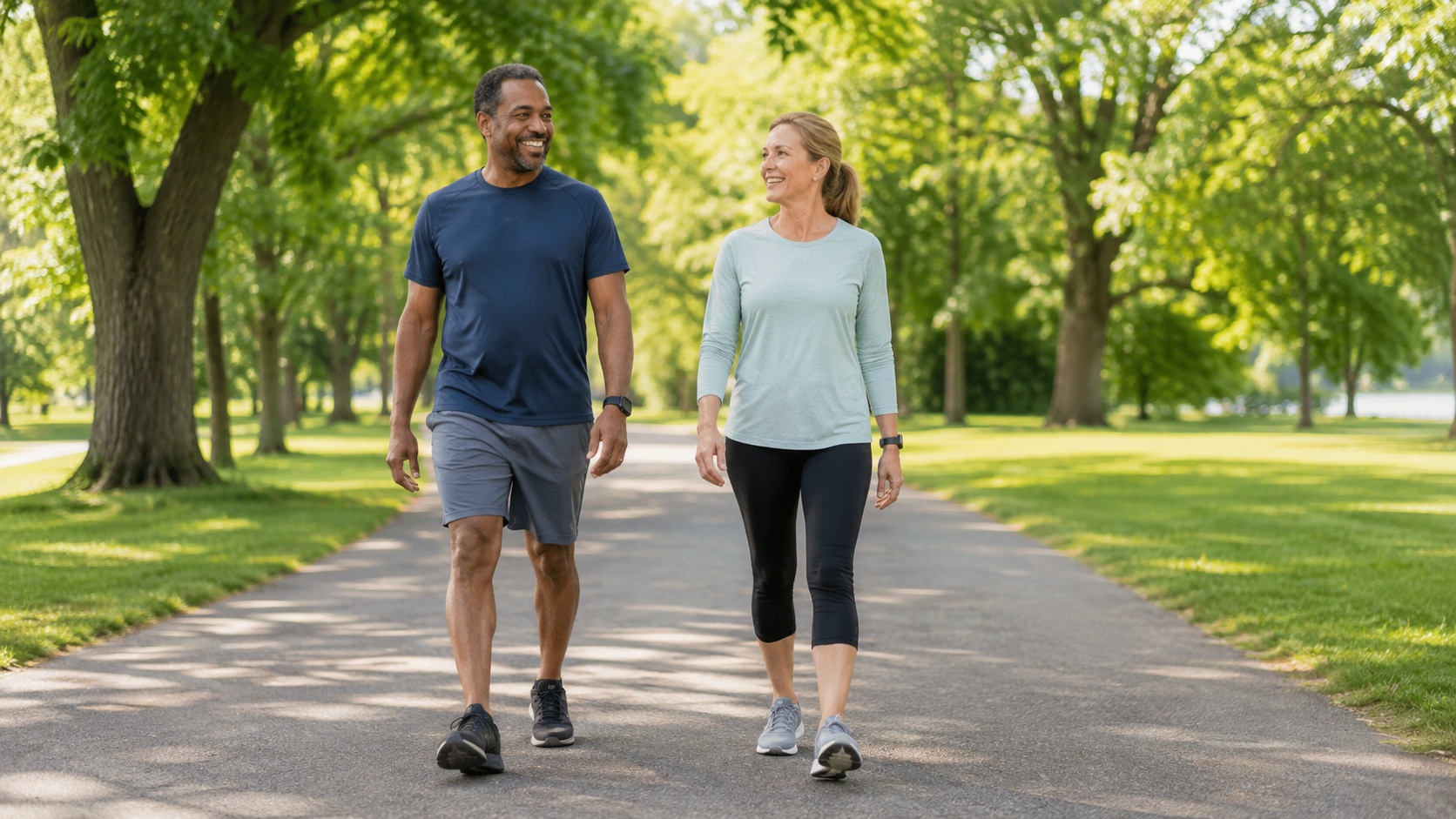
A walking routine for beginners should start with a pace and duration that feel manageable, then become gradually more challenging. You do not need to walk 30 minutes on day one. Beginning with 10 to 15 minutes several times per week can help establish the habit. Over four weeks, you can slowly add time and brisker walking while keeping recovery days and personal comfort in mind.
Key Takeaways
- Start with short walks that match your current fitness level rather than forcing yourself to reach a large step or mileage goal immediately.
- Build duration first, then gradually introduce a brisker pace or hills as your fitness improves.
- Moderate-intensity walking usually means breathing faster while still being able to hold a conversation.
- Adults can eventually work toward 150 minutes of moderate-intensity activity each week, but smaller amounts still provide benefits.
- Walking is valuable aerobic exercise, but adding strength training improves the overall fitness routine.
Why Walking Is a Good Place to Start
Walking requires little equipment, works in many environments, and allows you to adjust the pace immediately. These features make it one of the most accessible ways to begin exercising.
Regular physical activity supports cardiovascular fitness, physical function, and mental health. CDC guidance emphasizes that some activity is better than none, so beginners can benefit before reaching the full weekly exercise recommendation.
Walking also makes progression easy to control. You can increase time, pace, frequency, hills, or distance separately instead of changing everything at once.
Begin where you are: a 10-minute walk performed consistently can be a better starting point than an ambitious 45-minute routine that leaves you too sore or discouraged to repeat it.
Your 4-Week Beginner Walking Routine
This plan assumes that you can already walk comfortably for about 10 minutes. Treat the times as flexible targets rather than mandatory numbers. If a week feels too difficult, repeat it before progressing.
| Week | Walking days | Typical walk | Main goal |
|---|---|---|---|
| Week 1 | 4 days | 10–15 minutes | Build the habit |
| Week 2 | 4–5 days | 15–20 minutes | Add comfortable duration |
| Week 3 | 5 days | 20–25 minutes | Include short brisk periods |
| Week 4 | 5 days | 25–30 minutes | Develop a sustainable routine |
Rest days do not have to mean complete inactivity. Easy household movement, gentle mobility work, or a short relaxed stroll can be fine if you feel comfortable.
Week 1: Make Walking Easy to Repeat
The first week is about consistency rather than fitness testing. Walk for 10 to 15 minutes on four days at a comfortable pace.
You should finish feeling as though you could have continued for a little longer. Mild awareness of your legs is normal, but the routine should not produce severe soreness or exhaustion.
Focus on building a predictable cue. Walking after breakfast, during a lunch break, or after dinner can make the behavior easier to remember.
Week 2: Add a Little More Time
During week two, increase most walks to roughly 15 to 20 minutes. Four days may still be enough, although you can add a fifth easy walk if recovery feels good.
Keep your usual comfortable pace. Duration is the main variable changing this week, so you do not need to simultaneously walk faster and tackle steep hills.
If 20 continuous minutes feels difficult, split the activity into shorter walks. CDC guidance allows weekly physical activity to be accumulated in smaller chunks rather than completed in one session.
Week 3: Introduce Brisk Walking
By week three, aim for around 20 to 25 minutes on five days if the previous weeks have felt comfortable. You can now introduce small sections of purposeful brisk walking.
For example, walk comfortably for several minutes, pick up your pace for one or two minutes, and then return to an easier pace. Repeat that pattern a few times rather than trying to maintain your fastest pace for the entire walk.
Your breathing should become noticeably faster during brisk sections, but you should still retain control. Moderate intensity should feel purposeful, not like an all-out effort.
Week 4: Build Toward 30 Minutes
During week four, work toward five walks lasting roughly 25 to 30 minutes. Some can stay easy, while others can include longer brisk sections.
Five 30-minute moderate walks would total 150 minutes, matching the general weekly aerobic recommendation for adults. Reaching that number in exactly four weeks is not required.
If your current fitness level requires six, eight, or twelve weeks to reach that amount comfortably, gradual progress is still progress. National Institute on Aging guidance specifically recommends increasing activity steadily over weeks to months.
Progress at your pace: the four-week structure is a template, not a deadline. Repeat any week that still feels challenging before adding more.
How Fast Should a Beginner Walk?
There is no universal beginner walking speed. Height, age, fitness, terrain, mobility, weather, and health conditions can all affect a comfortable pace.
Instead of chasing a treadmill number, pay attention to effort. An easy walk should allow relaxed conversation. During moderate or brisk walking, you should breathe faster but still be able to speak in sentences.
Speed will often increase naturally as fitness improves. A route that initially takes 25 minutes may eventually feel easier without deliberately forcing the pace.
Do You Need 10,000 Steps a Day?
No official physical activity guideline requires beginners to reach 10,000 steps every day. Step counts can be useful for tracking movement, but they are not the only meaningful measure of activity.
Someone starting from a low activity level may benefit substantially from adding a modest daily walk even if the final step count remains far below 10,000. Setting a goal relative to your own baseline is often more practical.
Use steps if they motivate you. If they create unnecessary pressure, track minutes walked or the number of completed sessions instead.
Warm Up Before Your Walk
A walking warm-up can be simple. Begin with several minutes of easy walking before increasing your pace.
This gradual start allows heart rate and breathing to rise rather than jumping immediately from rest into harder exercise. National Institute on Aging guidance also recommends warming up before activity and cooling down afterward.
At the end, slow down for a few minutes instead of stopping suddenly after a brisk section. Complicated stretching routines are not necessary before every ordinary walk.
What Shoes Do You Need?
You do not need expensive specialized equipment to begin walking. Choose shoes that feel comfortable, fit securely, and provide stable footing on the surfaces you use.
National Institute on Aging safety guidance recommends sturdy, appropriate footwear. Replace shoes when they become damaged or noticeably uncomfortable rather than relying on a universal mileage rule.
Socks that reduce rubbing can also help. If recurring blisters, foot pain, or numbness develops, address the cause rather than simply walking through it.
How to Progress After the First Month
Once 25 to 30 minutes feels comfortable, you have several ways to progress. You do not need to use all of them at once.
- Add five minutes to one or two weekly walks.
- Extend the brisk portions of your existing walks.
- Add gentle hills to one route.
- Increase your weekly walking frequency if you currently walk only a few days.
- Keep one longer walk while leaving other sessions shorter and easier.
Changing one variable at a time makes it easier to judge how your body responds. More is not always better if the extra volume causes persistent pain or leaves you unable to recover.
Walking and Strength Training
Walking is excellent aerobic activity, but it does not fully replace resistance training. Current federal recommendations also encourage adults to perform muscle-strengthening activity on at least two days each week.
Beginners can start with simple movements such as chair squats, wall push-ups, resistance-band rows, supported step-ups, or other exercises appropriate for their ability.
You can walk and strength train on the same day or separate them. The best schedule is one you can recover from and repeat consistently.
Simple weekly goal: build toward regular walking while gradually adding two short full-body strength sessions. You do not need to perfect both routines during your first week.
How to Stay Consistent
Consistency becomes easier when the routine fits normal life rather than requiring perfect motivation. National Institute on Aging guidance recommends specific, realistic goals instead of vague intentions to “exercise more.”
- Schedule the walk at a repeatable time.
- Keep shoes and weather-appropriate clothing easy to access.
- Use a short indoor route when weather prevents outdoor walking.
- Walk with a friend if social accountability helps.
- Track completed walks rather than obsessing over calories burned.
- After illness, travel, or a long break, return gradually instead of immediately resuming your highest volume.
Walking Safety for Beginners
Choose routes that match your current balance and mobility. Sidewalks, walking paths, parks, indoor tracks, and shopping centers can all work depending on weather and local conditions.
Stay visible around traffic, pay attention to uneven surfaces, and keep headphone volume low enough to remain aware of your surroundings. In very hot, humid, cold, or windy conditions, moving the session indoors may be safer.
Ordinary effort and mild fatigue are different from warning symptoms. Stop exercising and seek appropriate medical attention for concerning symptoms such as chest pain or pressure, severe dizziness, fainting, or unusual shortness of breath.
When to Get Medical Guidance Before Progressing
Many healthy adults can begin with light activity and increase gradually without a medical appointment. Individual circumstances can change that recommendation.
Talk with a healthcare professional or qualified exercise professional if a chronic condition, recent surgery, significant joint problem, balance difficulty, cardiovascular concern, or other medical issue makes you uncertain about safe exercise intensity.
The goal is not to avoid activity unnecessarily. Appropriate guidance can help adapt the routine so you can remain as active as your health and abilities allow.
Common Beginner Walking Mistakes
Starting With Too Much
Going from very little activity to long daily walks can create unnecessary soreness and fatigue. Start below your maximum capacity and build gradually.
Trying to Walk Fast Every Day
Not every session needs to be challenging. Easier walks can help maintain activity while allowing you to recover from harder sessions.
Chasing Calories Burned
Wearable calorie estimates are not precise enough to make them the main purpose of your routine. Fitness, health, consistency, enjoyment, and daily movement are more useful targets.
Ignoring Persistent Pain
Muscles may feel mildly tired as your activity increases, but persistent or worsening joint, foot, or bone pain deserves attention. Reduce the aggravating activity and seek appropriate evaluation when necessary.
Thinking a Missed Day Ruins the Plan
One missed walk does not erase progress. Resume the routine at the next reasonable opportunity rather than trying to compensate with an unusually long session.
Frequently Asked Questions
The Bottom Line
A good walking routine for beginners starts small enough to repeat. Begin with manageable 10- to 15-minute walks, gradually add time, and introduce a brisker pace only after the basic routine feels comfortable. You can eventually work toward the general goal of 150 minutes of moderate activity per week without treating that number as a first-week requirement.
Walking becomes even more useful when it is part of a broader routine that includes strength training and regular daily movement. Prioritize consistency, comfortable progression, safe routes, and recovery rather than speed, step-count challenges, or calorie targets.
Medical disclaimer
Medical disclaimer: This content is for educational and informational purposes only and is not a substitute for professional medical advice, diagnosis, or treatment. Dietary needs and supplement suitability vary by individual.
Sources
- Centers for Disease Control and Prevention. Adult Activity: An Overview. Accessed September 2026.
- Centers for Disease Control and Prevention. What You Can Do to Meet Physical Activity Recommendations. Accessed September 2026.
- Centers for Disease Control and Prevention. Adding Physical Activity as an Adult. Updated December 2025.
- National Institute on Aging. Tips for Getting and Staying Active as You Age. Accessed September 2026.
- National Institute on Aging. Three Types of Exercise Can Improve Your Health and Physical Ability. Reviewed January 2025.
- National Institute on Aging. Exercising Outdoors: Safety Tips for Older Adults. Accessed September 2026.
