
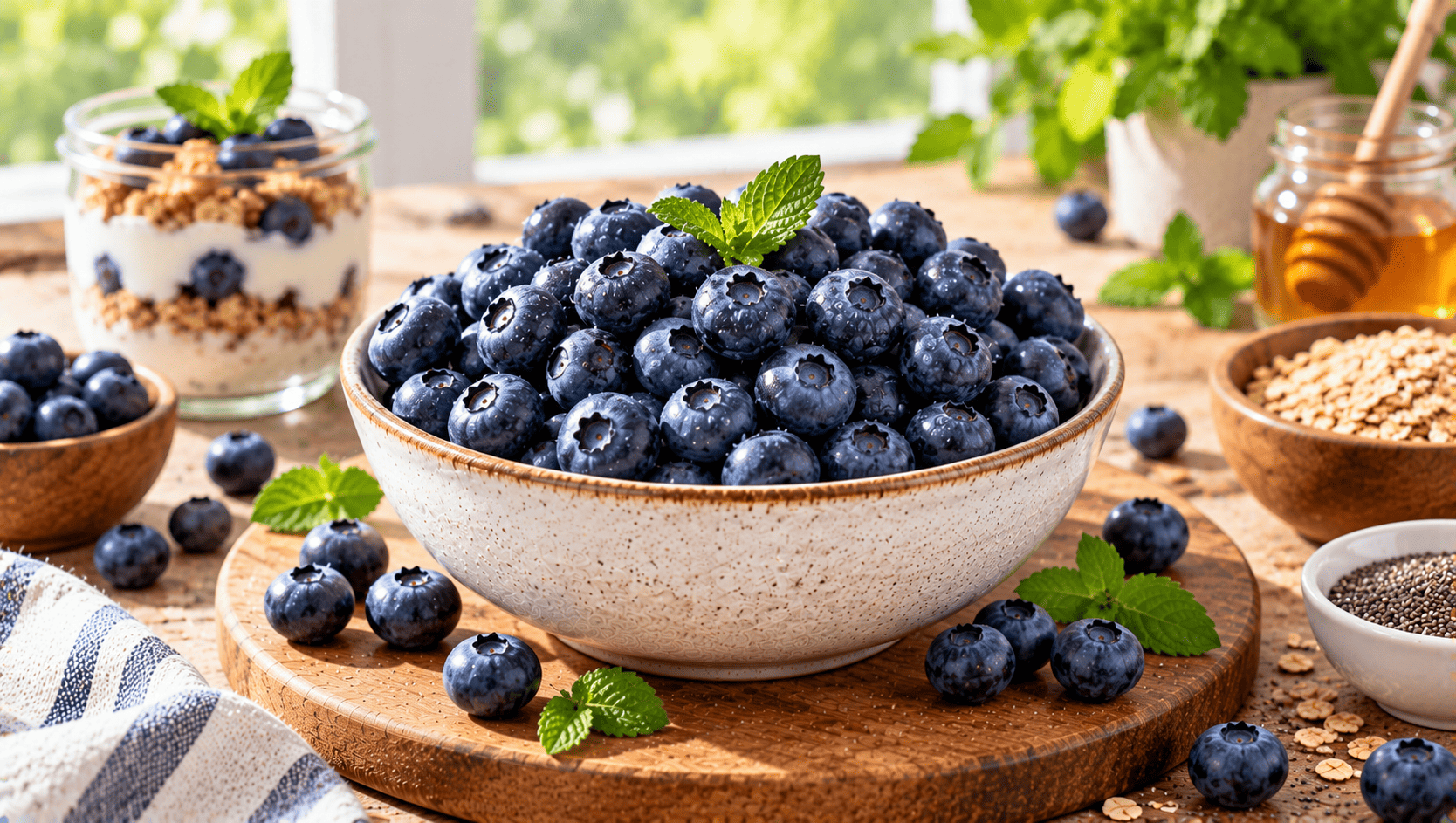
Blueberries are a nutrient-dense fruit that provides fiber, vitamin C, vitamin K, and colorful plant compounds called anthocyanins. One cup of raw blueberries contains about 84 calories. Regularly eating berries can fit well into a heart-healthy dietary pattern, and research continues to explore possible vascular and cognitive benefits. Blueberries are nutritious, but they should not be treated as a cure for memory problems, diabetes, high blood pressure, or heart disease.
Key Takeaways
- One cup of raw blueberries provides about 84 calories, 22 grams of carbohydrate, 4 grams of fiber, and 15 grams of naturally occurring sugar.
- Blueberries provide vitamin C, vitamin K, and anthocyanins along with several other nutrients and plant compounds.
- Recent randomized-trial evidence suggests blueberries may improve some measures of blood-vessel function, although blood-pressure effects are not consistent.
- Research on memory and cognition is interesting but mixed, with stronger signals in some people who already have mild cognitive decline.
- Fresh and unsweetened frozen blueberries can both be practical choices, but consumers should always follow active FDA food-recall notices.
Blueberries Nutrition
Blueberries provide natural sweetness without being especially calorie-dense. USDA nutrition information lists a one-cup portion of raw blueberries, about 148 grams, at roughly 84 calories.
| Nutrient | Approximate amount per 1 cup |
|---|---|
| Calories | 84 |
| Carbohydrate | 22 g |
| Fiber | 4 g |
| Total sugars | 15 g |
| Protein | About 1 g |
| Vitamin C | About 16 mg |
Nutrient values can vary slightly with variety, ripeness, growing conditions, and serving size. The overall pattern is more useful than any single number: blueberries provide fruit, fiber, and micronutrients for relatively few calories.
Fiber in Blueberries
A cup of blueberries provides about 4 grams of dietary fiber. That is less than the amount found in the same volume of raspberries or blackberries, but it still makes a useful contribution to daily intake.
Fiber supports normal bowel function and helps add fullness to meals. Pairing blueberries with oatmeal, chia seeds, nuts, yogurt, or other fiber- and protein-rich foods can create a more satisfying breakfast or snack.
For overall digestive and metabolic health, variety matters. Beans, lentils, vegetables, whole grains, nuts, seeds, and other fruits provide additional types of fiber that blueberries do not supply in large amounts.
Vitamin C and Vitamin K
Blueberries provide vitamin C, which the body uses for collagen production, normal immune function, and absorption of iron from plant foods. A one-cup serving provides about 16 milligrams.
They also contribute vitamin K. NIH food-composition data list about 14 micrograms of vitamin K in a half-cup of raw blueberries.
People taking warfarin or another vitamin K-sensitive anticoagulant should follow their clinician’s advice about keeping vitamin K intake consistent. This does not usually mean avoiding blueberries entirely.
What Are Anthocyanins?
Anthocyanins are plant pigments that produce blue, purple, red, and dark colors in many fruits and vegetables. Blueberries are one of the best-known dietary sources.
Researchers study these compounds because they may affect blood-vessel function, cell signaling, inflammation, and other pathways related to cardiovascular and brain health. Human trials use whole blueberries, powders, juices, and concentrated products, so results do not always translate directly to a normal serving of fresh fruit.
The word “antioxidant” also does not mean a food can reverse aging or neutralize every health risk. Blueberries remain most useful as a nutritious component of an overall dietary pattern.
Are Blueberries Good for Heart Health?
Blueberries fit comfortably within a heart-healthy diet. They contain virtually no saturated fat, provide fiber, and add fruit without large amounts of sodium or calories.
A 2026 systematic review and meta-analysis of 14 randomized controlled trials involving 632 healthy participants found that blueberry consumption improved flow-mediated dilation, a measure of blood-vessel function. The analysis did not find significant reductions in systolic or diastolic blood pressure.
That makes the evidence interesting but not a reason to describe blueberries as blood-pressure medicine. Cardiovascular risk depends on the entire diet, physical activity, smoking, sleep, genetics, medications, and other health factors.
Best interpretation: blueberries can support a heart-healthy eating pattern, and research suggests possible vascular benefits, but they should not replace proven blood-pressure or cardiovascular treatment.
Blueberries and Brain Health
Blueberries are often promoted as a “brain food,” but the evidence needs careful interpretation. Studies have measured memory, attention, processing speed, executive function, mood, and other outcomes with varying results.
A 2026 meta-analysis in healthy individuals did not find significant overall improvements in executive function or mood. Differences in study dose, blueberry form, intervention length, and participant age may partly explain why findings vary.
A separate 2025 meta-analysis focused on older adults with mild cognitive impairment or subjective cognitive decline. Across nine randomized trials with 513 participants, blueberry interventions produced a small improvement in episodic memory and a smaller signal for language memory in participants with mild cognitive impairment. Several other cognitive measures did not significantly improve.
What this means: blueberry research on cognition is promising in selected groups, but blueberries have not been shown to prevent dementia or treat Alzheimer’s disease.
Blueberries and Blood Sugar
One cup of raw blueberries contains about 22 grams of carbohydrate, including approximately 15 grams of naturally occurring sugar and 4 grams of fiber.
Whole blueberries can often fit into an eating plan for diabetes because portion size, fiber, and the rest of the meal all influence glucose response. Combining berries with plain yogurt, nuts, seeds, cottage cheese, or another protein source may also create a more balanced snack.
However, blueberries are not a substitute for diabetes medication or individualized nutrition care. Smoothies, dried blueberries, sweetened berry products, and large servings can provide considerably more carbohydrate than a modest portion of whole fresh berries.
Are Blueberries Good for Weight Management?
A cup of blueberries provides a generous volume of fruit for about 84 calories. This can make them useful when someone wants sweetness without the calorie density of pastries, candy, or many packaged desserts.
Replacing a higher-calorie food with berries may lower the overall energy density of a meal or snack. Adding blueberries on top of an already large meal does not automatically create the same effect.
No evidence shows that blueberries selectively burn abdominal fat. Long-term weight change depends on total energy intake, activity, sleep, medications, health conditions, and other factors.
Fresh vs Frozen Blueberries
Fresh and frozen unsweetened blueberries can both be practical fruit choices. Frozen berries keep longer and work well in oatmeal, yogurt, sauces, baked dishes, and smoothies.
Freezing does not make berries free from food-safety risks. Viruses and some bacteria can survive freezing, which is why product-recall notices matter for frozen fruit as well as fresh produce.
September 2026 safety note: FDA and CDC are investigating an E. coli O145:H28 outbreak linked to specific recalled organic frozen blueberry products. Consumers should check current FDA recall information before eating affected GreenWise frozen blueberries, GreenWise mixed berries, or the specifically identified Great Value Organic Triple Berry Blend lot. This alert is product-specific and does not mean all blueberries are unsafe.
What About Dried Blueberries?
Dried blueberries are much more concentrated because most of their water has been removed. A small handful can therefore provide considerably more calories and carbohydrate per bite than fresh berries.
Many commercial dried blueberry products also contain added sugar. Check the ingredient list and Nutrition Facts panel rather than assuming every dried berry product is simply dehydrated fruit.
Dried fruit can still fit a healthy diet. Smaller portions work well in oatmeal, trail mix, salads, or yogurt when you want concentrated flavor.
How Much Should You Eat?
There is no requirement to eat blueberries every day. A half-cup to one-cup serving fits comfortably into many meals and snacks.
People managing carbohydrate intake may prefer a smaller serving, while someone with higher energy needs may comfortably eat more. The entire meal matters more than an arbitrary berry limit.
Fruit variety remains valuable. Rotate blueberries with raspberries, strawberries, blackberries, citrus, kiwi, apples, pears, and other fruits to broaden nutrient and plant-compound intake.
Healthy Ways to Eat Blueberries
- Add fresh or frozen blueberries to oatmeal or overnight oats.
- Pair them with plain Greek yogurt, cottage cheese, nuts, or seeds.
- Mix them into whole-grain cereal without adding extra sugar.
- Use frozen berries in smoothies with a protein source rather than sweetened juice.
- Add blueberries to salads with leafy greens and nuts.
- Serve them with yogurt or a small amount of dark chocolate for a simple dessert.
How to Choose and Store Blueberries
Choose blueberries that look firm and plump without obvious mold, leaking juice, or extensive crushing. A pale, dusty-looking coating on intact blueberries can be their natural waxy bloom rather than mold.
Refrigerate fresh berries promptly and keep them relatively dry during storage. Excess moisture encourages faster spoilage.
Discard fruit that is clearly rotten or moldy. If you buy frozen berries, keep the original packaging until use so you can check lot codes if a recall occurs.
How to Wash Blueberries
FDA recommends washing fresh produce thoroughly under running water before eating or preparing it. Wash your hands first, then rinse the berries gently and remove damaged or spoiled fruit.
Do not use soap, detergent, bleach, or commercial produce wash. FDA advises plain running water because produce can absorb cleaning-product residues.
Washing can reduce surface contamination but cannot eliminate every microorganism. It also cannot make a recalled product safe to eat.
Who May Need to Be Careful?
Most people can safely eat blueberries as part of a normal diet. Individual medical needs can still affect serving size or suitability.
- Food allergy: blueberry allergy is uncommon but possible.
- Warfarin use: blueberries contain vitamin K, so consistent intake may matter for people using vitamin K-sensitive anticoagulants.
- Diabetes: berries still contain carbohydrate, so portions should fit an individualized meal plan when needed.
- Food recalls: never eat a product included in an active FDA recall even if it looks or smells normal.
Common Blueberry Myths
“Blueberries Prevent Dementia”
Research has found possible memory benefits in some older adults with cognitive decline, but clinical trials have not established blueberries as a way to prevent dementia or Alzheimer’s disease.
“Blueberries Lower Blood Pressure”
A recent meta-analysis found better blood-vessel function but no significant overall reduction in systolic or diastolic blood pressure. Blueberries should not replace prescribed treatment.
“People With Diabetes Cannot Eat Blueberries”
Whole blueberries contain natural sugar and carbohydrate, but they also provide fiber. Many people with diabetes can include them within an individualized eating plan.
“Frozen Blueberries Are Always Safer”
Freezing preserves food but does not reliably eliminate all disease-causing microorganisms. Consumers should follow recall notices for frozen berries just as they would for other foods.
Frequently Asked Questions
Related reading
The Bottom Line
Blueberries provide fiber, vitamin C, vitamin K, and anthocyanin-rich plant compounds for relatively few calories. Fresh or unsweetened frozen berries can make it easier to add fruit to oatmeal, yogurt, snacks, salads, and desserts.
Research suggests potential benefits for blood-vessel function and selected memory outcomes, but the evidence does not support calling blueberries a treatment for cardiovascular disease, high blood pressure, diabetes, or dementia. Enjoy them as one nutritious part of a varied eating pattern, and follow active FDA recall notices when buying frozen berry products.
Medical disclaimer
Medical disclaimer: This content is for educational and informational purposes only and is not a substitute for professional medical advice, diagnosis, or treatment. Dietary needs and supplement suitability vary by individual.
Sources
- U.S. Department of Agriculture, SNAP-Ed. Blueberries: Nutrition Information. Accessed September 2026.
- National Institutes of Health, Office of Dietary Supplements. Vitamin K: Health Professional Fact Sheet. Accessed September 2026.
- National Institutes of Health, Office of Dietary Supplements. Vitamin C: Health Professional Fact Sheet. Accessed September 2026.
- U.S. Food and Drug Administration. Selecting and Serving Produce Safely. Accessed September 2026.
- U.S. Food and Drug Administration. Outbreak Investigation of E. coli O145:H28: Frozen Blueberries. Updated September 3, 2026.
- Blueberry consumption enhances vascular function but not cognitive abilities in healthy individuals: a systematic review and meta-analysis. Nutrition Research. 2026.
- Nardelli da Silva AB, de Oliveira GM, Gallo Ruelas M, et al. Blueberries for brainpower: A systematic review and meta-analysis with Bayesian post hoc analysis of RCTs exploring cognitive function in the elderly with prior cognitive decline. Biogerontology. 2025;26(5):171.
- The Potential Effect of Blueberry on Cognitive Health and Mood State Based on Human Intervention Studies: Systematic Review and Mini Meta-Analysis. Accessed September 2026.
