
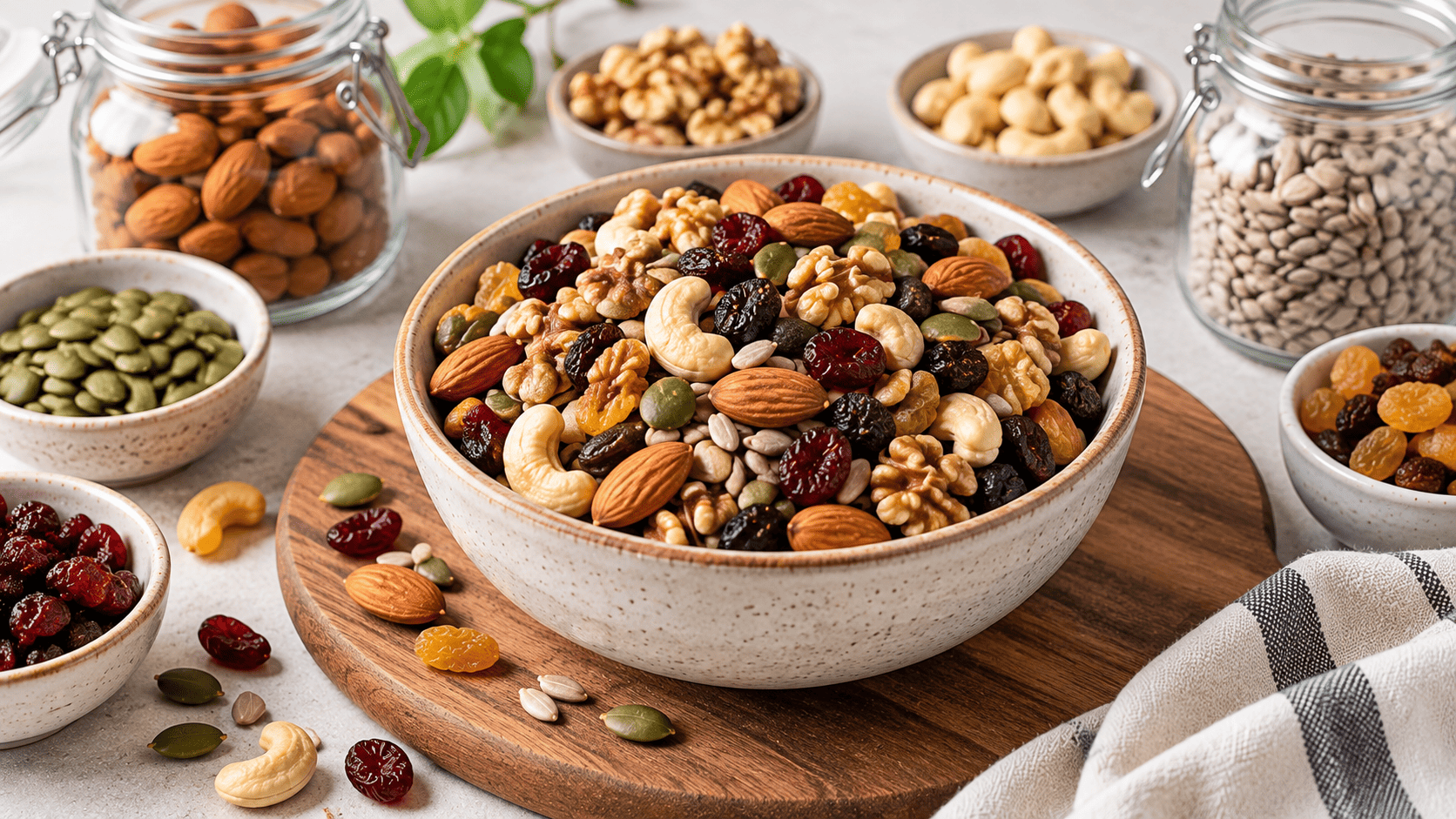
Homemade trail mix is an easy snack you can customize with nuts, seeds, dried fruit, whole-grain cereal, popcorn, and small amounts of optional extras such as chocolate chips. Making it yourself lets you adjust sweetness, saltiness, texture, and ingredients to your preferences. For a practical everyday mix, emphasize nutrient-dense ingredients and pay attention to portions, food allergies, and the labels on packaged add-ins.
Key Takeaways
- USDA MyPlate specifically suggests making trail mix with unsalted nuts plus ingredients such as seeds, dried fruit, plain popcorn, or a small amount of chocolate chips.
- Nuts and seeds contribute protein, unsaturated fats, fiber, vitamins, and minerals, while dried fruit can add sweetness and fruit variety.
- Trail mix is concentrated and easy to eat quickly, so pre-portioning it can be useful for grab-and-go snacking.
- Peanuts and tree nuts are major food allergens in the United States, and sesame is also a major allergen, making label checks especially important when preparing a mix for other people.
- Shelf-stable ingredients such as nuts and dried fruit make trail mix convenient for work, travel, hiking, and other situations where refrigeration is not practical.
What Is Homemade Trail Mix?
Trail mix is a combination of shelf-stable snack ingredients that can be eaten without cooking. Traditional versions often combine nuts and dried fruit, but homemade versions can also include seeds, cereal, popcorn, pretzels, toasted grains, coconut, or chocolate.
The advantage of making trail mix at home is flexibility. You can emphasize savory or sweet flavors, choose unsalted or lightly salted ingredients, adjust the amount of dried fruit or chocolate, and avoid ingredients that do not fit your dietary preferences.
USDA MyPlate idea: Federal healthy-snacking guidance suggests building your own trail mix with unsalted nuts and add-ins such as seeds, dried fruit, plain popcorn, or a sprinkle of chocolate chips.
Easy Homemade Trail Mix Recipe
This flexible recipe is designed as a starting point rather than a rigid formula. Adjust the ingredients according to taste, allergies, dietary needs, and what you already have available.
Ingredients
- 2 cups unsalted or lightly salted nuts, such as almonds, walnuts, peanuts, cashews, or pistachios.
- 1 cup seeds, such as pumpkin or sunflower seeds.
- 1 cup dried fruit, such as raisins, cranberries, cherries, apricots, or chopped dates.
- 1 cup whole-grain cereal or plain popcorn for additional crunch and volume.
- Optional: a small amount of dark chocolate chips, coconut flakes, cinnamon, or another preferred add-in.
How to Make It
- Add the nuts, seeds, dried fruit, and cereal or popcorn to a large clean bowl.
- Add any optional chocolate, coconut, or seasoning.
- Toss until the ingredients are evenly distributed.
- Transfer the mix to a tightly covered container.
- For convenient snacks, divide some of the mix into smaller reusable containers or bags ahead of time.
No exact formula required: Prefer more crunch? Add extra nuts, seeds, cereal, or popcorn. Prefer more sweetness? Increase the dried fruit slightly. Homemade trail mix works best when it is a combination you actually enjoy eating.
How to Build a Better Trail Mix
Start With Nuts
Almonds, walnuts, pistachios, peanuts, pecans, and cashews can provide a substantial base. Using unsalted or lightly salted varieties gives you more control over the overall saltiness of the finished mix.
Mixing two or three types can also make the snack more interesting without requiring specialty ingredients.
Add Seeds
Pumpkin and sunflower seeds are convenient choices for trail mix because they add crunch and combine easily with nuts and dried fruit. Seeds can also be especially useful when you want more ingredient variety.
Sesame can appear in some seed mixes and flavored ingredients. Because sesame is one of the nine major food allergens recognized under U.S. federal law, check labels carefully when allergies are relevant.
Use Dried Fruit for Sweetness
Raisins, dried cherries, cranberries, apricots, blueberries, mango, and chopped dates can all work. Different products vary in sweetness and added ingredients, so compare labels if added sugar is something you want to limit.
Dried fruit is compact, which is part of what makes it convenient in trail mix. It is also easy to eat quickly, so combining it with nuts, seeds, and other ingredients can create a more varied snack than using dried fruit alone.
Add Crunch and Volume
Plain popcorn or a whole-grain cereal can make the mix feel more substantial without relying entirely on nuts and dried fruit. USDA MyPlate specifically includes plain popcorn among suggested homemade trail-mix additions.
Keep Extras Optional
Chocolate chips, yogurt-style pieces, sweetened coconut, candy, and flavored pretzels can make a trail mix more dessert-like. That is not automatically a problem, but these ingredients can quickly become the dominant part of the mix.
A practical approach is to treat sweeter extras as accents while letting nuts, seeds, dried fruit, cereal, or popcorn make up most of the mixture.
Easy Trail Mix Flavor Combinations
| Style | Base ingredients | Optional extra |
|---|---|---|
| Classic | Almonds, peanuts, raisins, whole-grain cereal | Dark chocolate chips |
| Cranberry-Pumpkin | Walnuts, pumpkin seeds, dried cranberries, cereal | Cinnamon |
| Tropical | Cashews, pumpkin seeds, dried mango, dried pineapple | Unsweetened coconut flakes |
| Popcorn Crunch | Plain popcorn, almonds, sunflower seeds, raisins | A small amount of chocolate |
| Nut-Free Style | Pumpkin seeds, sunflower seeds, dried fruit, approved cereal or popcorn | Cinnamon or coconut if appropriate |
For anyone with a diagnosed food allergy, a recipe being “nut-free” based on its visible ingredients is not enough to establish that it is safe. Packaged ingredients may have allergen statements or cross-contact considerations that need to be reviewed individually.
Is Homemade Trail Mix a Healthy Snack?
Trail mix can fit into a nutrient-dense eating pattern, but its nutritional profile depends entirely on what goes into it. A mixture built mostly from nuts, seeds, dried fruit, and whole-grain ingredients is different from one made predominantly from candy, sweetened coatings, and salty snack foods.
Nuts and seeds can contribute protein, unsaturated fats, fiber, and several micronutrients. Dried fruit provides fruit in a shelf-stable form, while whole-grain cereal can add grain variety. The goal does not need to be creating a nutritionally perfect snack; it can simply be making a satisfying combination from mostly nutrient-rich ingredients.
Think in proportions, not perfection: A few chocolate chips do not erase the nutritional value of nuts, seeds, or fruit. The overall mix and your broader eating pattern matter more than labeling one ingredient as “good” or “bad.”
Portioning Trail Mix
Trail mix is compact, portable, and easy to eat directly from a large bag or container. That convenience can make it difficult to notice how much you have eaten, particularly while driving, hiking, working, or watching television.
USDA MyPlate recommends preparing snacks ahead and portioning foods into reusable containers for grab-and-go convenience. That approach can work especially well for trail mix.
- Prepare one large batch for the week.
- Divide some into small reusable containers rather than repeatedly eating from the main jar.
- Adjust the amount to your hunger, activity level, and the rest of your meal or snack.
- Pair trail mix with fresh fruit or another food when you want a larger snack rather than automatically making the trail-mix portion much larger.
Trail Mix for Hiking and Travel
Trail mix earned its reputation as a practical outdoor snack for a reason. USDA food-safety guidance lists nuts, dried fruit, and trail mix among foods that do not normally require refrigeration, making them convenient when carrying a cooler is impractical.
For hiking or travel, choose ingredients that hold up well at the expected temperature. Chocolate and certain coatings may melt in hot conditions even when the underlying mix remains shelf-stable.
Avoid adding perishable ingredients merely because they taste good at home. Fresh dairy products, cut foods that require refrigeration, or homemade ingredients containing other perishables change the food-safety considerations.
Food Allergy Considerations
Trail mix commonly contains ingredients associated with food allergies. Under U.S. federal law, the nine major food allergens are milk, egg, fish, Crustacean shellfish, tree nuts, peanuts, wheat, soybeans, and sesame.
FDA requires major allergens used as ingredients in most packaged foods it regulates to be declared on the label. A “Contains” statement, when present, identifies major allergens used as ingredients. Advisory language such as “may contain” is different and is voluntary.
If food allergies are involved: Check every packaged ingredient rather than assuming a homemade mix is safe because you assembled it yourself. FDA advises reading labels each time because formulations can change. When preparing food for someone with a diagnosed allergy, follow their established avoidance and cross-contact precautions.
How to Store Homemade Trail Mix
Store trail mix in a clean, tightly closed container in a cool, dry location and follow the storage instructions on the individual packaged ingredients. Heat, moisture, and prolonged exposure to air can reduce quality, particularly for nuts and seeds because their fats can develop off flavors over time.
If you use ingredients that normally require refrigeration, the finished mix should not automatically be treated as shelf-stable. Storage recommendations depend on the most perishable ingredient included.
Do not rely only on appearance when a food has been stored under questionable conditions. When ingredient packaging provides specific storage or use-by guidance, follow those instructions.
A Practical Trail Mix Checklist
- Choose one or more nuts as the base if appropriate for your household.
- Add pumpkin, sunflower, or other seeds for texture and variety.
- Use dried fruit for sweetness and contrast.
- Add whole-grain cereal or plain popcorn when you want additional crunch and volume.
- Treat chocolate and candy-style ingredients as optional accents rather than mandatory components.
- Check packaged-food labels for allergens and other ingredients that matter to you.
- Store the finished mix in a clean, tightly covered container.
- Pre-portion some of the batch when convenient grab-and-go snacks are the goal.
Frequently Asked Questions
Related reading
The Bottom Line
Homemade trail mix is a flexible snack that works especially well when you want something portable and easy to prepare ahead. Nuts, seeds, dried fruit, whole-grain cereal, and plain popcorn provide a practical foundation, while chocolate, coconut, and other extras can be used according to taste.
The biggest advantage of making your own is control over the mix. Choose ingredients that fit your preferences, review packaged-food labels when salt, added sugar, or allergens matter, and pre-portion the finished mixture when that makes snacking more convenient. People with food allergies should pay particular attention to ingredient labels and cross-contact considerations.
Medical disclaimer
Medical disclaimer: This content is for educational and informational purposes only and is not a substitute for professional medical advice, diagnosis, or treatment. Dietary needs and supplement suitability vary by individual.
Sources
- U.S. Department of Agriculture, MyPlate, Healthy Snacking With MyPlate, March 2022.
- U.S. Department of Agriculture, Food Safety and Inspection Service, Food Safety While Hiking, Camping & Boating, accessed September 2026.
- U.S. Food and Drug Administration, Have Food Allergies? Read the Label, accessed September 2026.
