
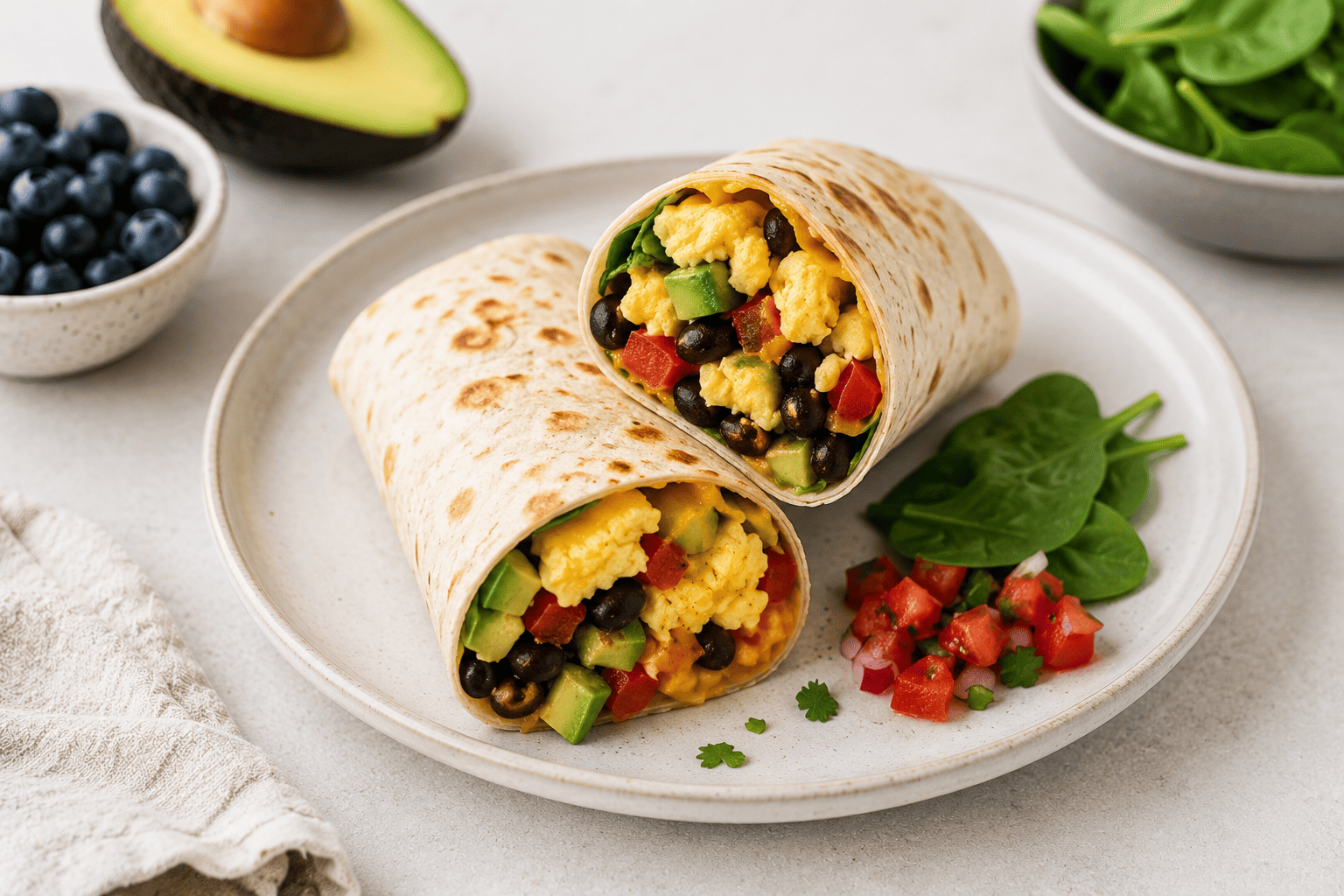
Healthy breakfast burritos can combine eggs, beans, vegetables, avocado, cheese, and other minimally processed ingredients in one convenient meal. Choosing a whole-grain tortilla when available and emphasizing protein-rich fillings and vegetables can make the burrito more substantial. They can also be prepared ahead, refrigerated or frozen, and reheated for busy mornings when handled safely.
Key Takeaways
- Build breakfast burritos around protein-rich foods such as eggs, beans, dairy, or other suitable options.
- Vegetables such as peppers, onions, spinach, mushrooms, and tomatoes add flavor, color, and nutritional variety.
- Whole-grain tortillas can be a useful option when available and consistent with your preferences.
- Avocado, salsa, herbs, and spices can add flavor without requiring heavily processed sauces.
- For meal prep, cool and refrigerate burritos promptly and follow safe storage and reheating practices.
What Makes a Breakfast Burrito a Balanced Choice?
A breakfast burrito is flexible enough to contain several food groups in one portable meal. The tortilla provides the wrap, while eggs, beans, cheese, vegetables, avocado, and other fillings can contribute different nutrients and textures.
Current U.S. dietary guidance emphasizes nutrient-dense protein foods, vegetables and fruits, whole grains, and minimally processed foods. That framework works well for breakfast burritos because the fillings can be adjusted without changing the basic recipe.
Simple formula: Start with a tortilla, choose a protein-rich filling, add vegetables, include a flavorful topping or healthy fat if desired, and keep portions appropriate for your appetite and overall dietary needs.
Best Ingredients for Healthy Breakfast Burritos
Eggs
Scrambled eggs are a classic breakfast burrito filling because they provide protein and pair easily with vegetables, beans, cheese, salsa, and herbs. See our high-protein egg recipes for more breakfast ideas. For food safety, cook eggs thoroughly rather than leaving them runny when preparing burritos for storage.
Beans
Black beans, pinto beans, or other cooked beans make an easy plant-based addition. Beans can be used alongside eggs or as the main filling in an egg-free burrito. If using canned beans, draining and rinsing them can also improve texture for wrapping.
Vegetables
Bell peppers, onions, spinach, mushrooms, tomatoes, zucchini, and other vegetables can fit easily into a breakfast burrito. Cooking watery vegetables before assembly helps reduce excess moisture that could make the tortilla soggy.
Avocado
Avocado provides a creamy texture and can replace or complement richer sauces. Our avocado toast nutrition guide explores another way to use it at breakfast. It works especially well in burritos that will be eaten immediately. For freezer burritos, many people prefer adding fresh avocado after reheating for better texture.
Cheese or Plain Yogurt
A modest amount of cheese can add protein, flavor, and richness. Plain Greek-style yogurt can also work as a creamy topping when the burrito is served immediately. Nutrition profiles differ among products, so labels are useful when sodium, protein, or other values matter.
Whole-Grain Tortillas
Current U.S. guidance encourages fiber-rich whole grains. When shopping for tortillas, compare ingredient lists and Nutrition Facts labels because products marketed with similar wording can have different ingredients, fiber, sodium, and serving sizes.
Easy Breakfast Burrito Combinations
| Burrito idea | Main fillings | Optional finish |
|---|---|---|
| Classic Egg & Veggie | Eggs, peppers, onions, spinach | Salsa or avocado |
| Egg & Black Bean | Eggs, black beans, peppers | Cheese and salsa |
| Bean & Veggie | Beans, spinach, mushrooms, peppers | Avocado and cilantro |
| Egg & Avocado | Eggs, tomato, spinach | Fresh avocado |
| Southwest-Style | Eggs, beans, corn, peppers | Salsa, herbs, or avocado |
How to Make a Healthy Breakfast Burrito
Breakfast burritos are easier to assemble when each filling is prepared before wrapping. The following approach works for both individual breakfasts and larger meal-prep batches.
- Prepare the vegetables: Chop and sauté vegetables until tender and allow excess moisture to cook away.
- Cook the protein: Scramble eggs thoroughly or warm cooked beans or another chosen filling.
- Warm the tortilla: A slightly warm tortilla is generally easier to fold without tearing.
- Add the fillings: Keep them near the center and avoid overfilling.
- Fold the burrito: Fold the sides inward and roll firmly from the bottom.
- Serve or store safely: Eat promptly or cool and refrigerate according to safe food-handling guidance.
How to Keep Breakfast Burritos From Getting Soggy
Moisture is the main challenge with make-ahead burritos. Tomatoes, salsa, mushrooms, cooked spinach, and other ingredients can release liquid during storage and reheating.
- Cook vegetables until excess moisture has evaporated.
- Drain cooked beans well before adding them.
- Avoid adding excessive salsa before freezing.
- Divide hot fillings into shallow containers and refrigerate promptly; do not leave them on the counter to cool completely before storage.
- Consider adding avocado, yogurt, fresh salsa, or other cool toppings after reheating.
How to Make Breakfast Burritos More Filling
A small tortilla with only a little egg may not provide the same eating experience as a burrito containing several substantial ingredients. When breakfast needs to carry you through a busy morning, consider the overall composition rather than focusing on a single nutrient.
- Include protein-rich foods: eggs, beans, dairy, or other suitable protein foods can form the core of the filling.
- Add vegetables: they increase volume, flavor, and variety.
- Consider whole grains: choose a whole-grain tortilla when it suits your preferences and is available.
- Add flavorful whole-food ingredients: avocado, nuts or seeds in suitable recipes, herbs, and spices can contribute additional flavor and texture.
Vegetarian Breakfast Burrito Ideas
Breakfast burritos do not require meat. Eggs, beans, dairy foods, and plant-based protein ingredients offer many possibilities depending on the type of vegetarian eating pattern you follow.
- Egg + bean: scrambled eggs, black beans, spinach, peppers, and salsa.
- Bean + avocado: beans, sautéed vegetables, avocado, cilantro, and salsa.
- Egg + vegetable: eggs, mushrooms, spinach, onions, tomatoes, and a little cheese.
- Southwest-style: beans, corn, peppers, onions, tomato, and avocado.
Make-Ahead Breakfast Burrito Food Safety
Food safety deserves extra attention when breakfast burritos contain eggs, dairy, cooked vegetables, meat, or other perishable ingredients. USDA FSIS recommends cooking egg mixtures and dishes containing eggs to 160°F (71.1°C). Cooked egg dishes should be refrigerated promptly when they are not served immediately.
For refrigerated burritos: Keep the refrigerator at 40°F or below. Refrigerate leftovers within two hours, or within one hour when the surrounding temperature is above 90°F.
Storage: USDA guidance recommends using properly refrigerated cooked egg dishes and leftovers within three to four days. Freeze burritos when you need longer storage.
Reheat refrigerated or frozen burritos to an internal temperature of 165°F (74°C), measured with a food thermometer. Check the center and several spots because dense fillings can heat unevenly, especially in a microwave. Follow microwave standing-time instructions and never put foil in a microwave.
Frequently Asked Questions
The Bottom Line
Healthy breakfast burritos are highly customizable. A combination of protein-rich foods, vegetables, and a suitable tortilla can create a practical breakfast, while avocado, salsa, herbs, and spices provide additional flavor and variety.
They are also well suited to meal prep. Prepare fillings thoughtfully, control excess moisture, refrigerate cooked burritos promptly, and freeze extras when you need longer storage. The result is a convenient breakfast that can be adapted to different tastes and dietary needs.
Medical disclaimer
This content is for educational and informational purposes only and is not a substitute for professional medical advice, diagnosis, or treatment. Dietary needs and supplement suitability vary by individual.
Sources
- U.S. Department of Agriculture and U.S. Department of Health and Human Services, Dietary Guidelines for Americans, 2025–2030, accessed September 2026.
- USDA Food Safety and Inspection Service, How Do You Handle and Store Eggs Safely?, updated November 2024.
- USDA Food Safety and Inspection Service, How Do You Know When Recipes Containing Eggs Are Safe?, updated December 2024.
- USDA Food Safety and Inspection Service, How Do I Handle Leftovers Safely?, updated December 2024.
- USDA Food Safety and Inspection Service, Leftovers and Food Safety, accessed September 2026.
