
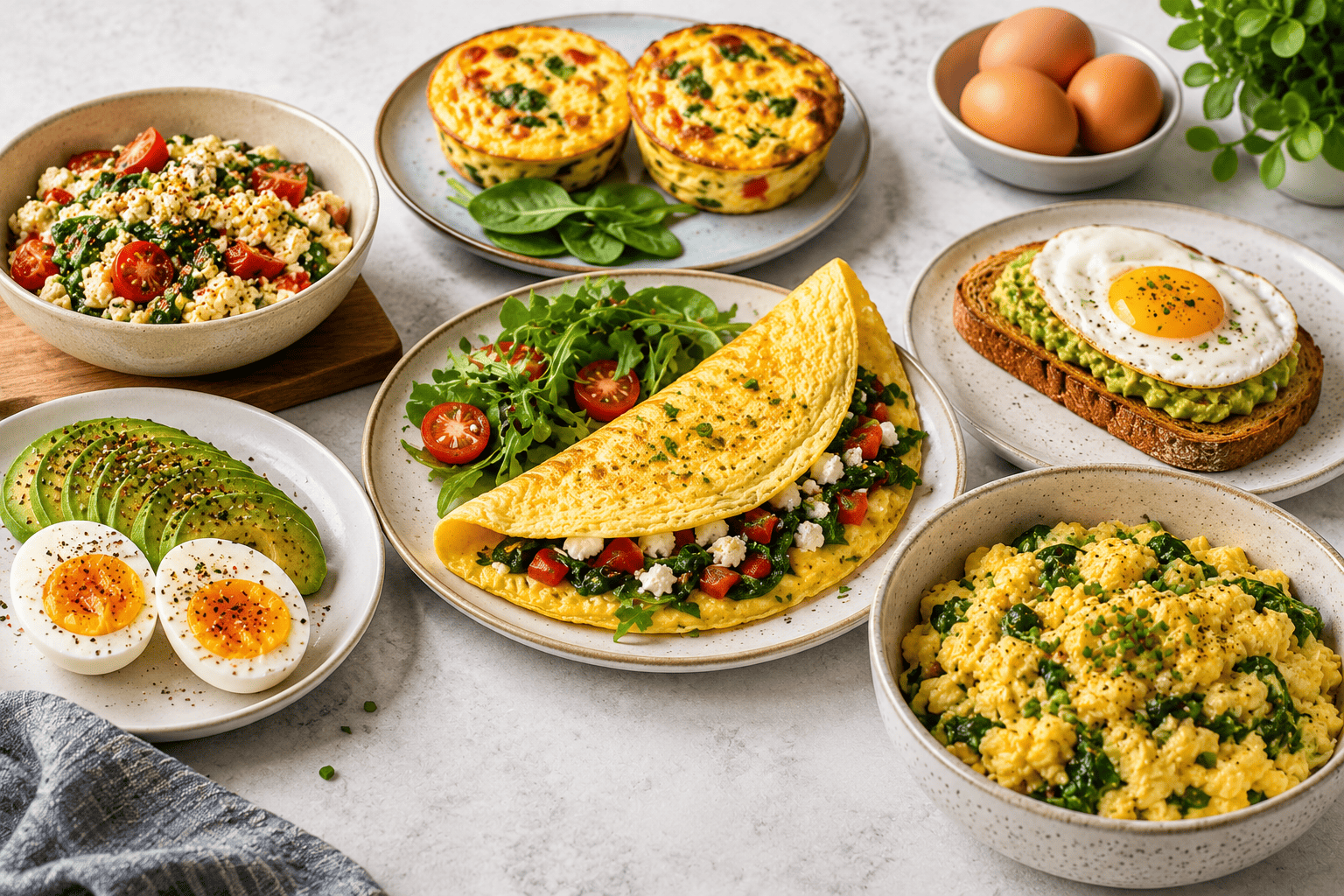
High-protein egg recipes can turn eggs into more substantial breakfasts by pairing them with foods such as cottage cheese, Greek-style yogurt, beans, lean poultry, tofu, vegetables, or whole grains. Egg muffins, breakfast bowls, scrambles, wraps, and baked egg dishes can also work well for meal prep. Exact protein content varies with the ingredients and portions used.
Key Takeaways
- Eggs belong to the protein foods group and can be combined with other protein-containing foods to build a more substantial meal.
- Egg muffins, scrambles, breakfast bowls, wraps, and casseroles can all be adapted with vegetables, grains, beans, dairy foods, soy foods, or lean meats.
- “High protein” depends on the complete recipe and serving size; adding more eggs is not the only way to increase protein.
- USDA advises cooking casseroles and other egg-containing dishes to an internal temperature of 160°F.
- Cooked egg dishes prepared for later use should be cooled promptly, refrigerated, and generally used within three to four days.
What Makes an Egg Recipe Higher in Protein?
Eggs are part of the USDA protein foods group, along with foods such as meat, poultry, seafood, beans, peas, lentils, nuts, seeds, and soy products. A higher-protein egg meal can therefore use eggs as the starting point rather than relying on eggs as the only source of protein.
Pairing eggs with cottage cheese, Greek-style yogurt, beans, tofu, lean poultry, cheese, or other protein-containing foods can change the protein content substantially. The exact amount depends on the recipe, brand, portion, and ingredient choices, so Nutrition Facts labels and verified food-composition information are more useful than assuming every egg breakfast provides the same amount.
| Recipe style | Protein-containing additions | Other useful additions |
|---|---|---|
| Egg muffins | Cottage cheese, turkey, tofu, cheese | Spinach, peppers, mushrooms, herbs |
| Breakfast bowl | Eggs, beans, Greek-style yogurt, tofu | Potatoes, whole grains, salsa, vegetables |
| Breakfast wrap | Eggs, beans, chicken, cheese | Whole-grain tortilla, peppers, tomatoes, greens |
| Scramble | Eggs, cottage cheese, tofu, leftover poultry | Vegetables, herbs, avocado, whole-grain toast |
High-Protein Egg Recipe Ideas
Egg and Cottage Cheese Breakfast Muffins
Whisk eggs with cottage cheese, chopped spinach, diced bell pepper, herbs, and black pepper. Divide the mixture among prepared muffin cups and bake until the centers are fully cooked. Cottage cheese adds another protein-containing ingredient while also contributing moisture to the mixture.
- Pair with: fruit, whole-grain toast, or roasted potatoes.
- Variation: add mushrooms, tomatoes, or finely chopped broccoli.
- Meal-prep note: refrigerate cooked portions promptly in shallow containers; do not wait for them to cool completely on the counter.
Egg, Black Bean, and Vegetable Breakfast Bowl
Build a bowl with fully cooked eggs, black beans, sautéed peppers and onions, and a grain or potato base if desired. Finish with salsa, herbs, avocado, or a spoonful of plain Greek-style yogurt.
Beans provide another protein-food option while also adding fiber. This combination can be adapted easily for different tastes by changing the vegetables, seasonings, or grain base.
Spinach, Egg, and Turkey Scramble
Cook spinach and other vegetables until tender, then add eggs and cooked turkey. Stir over the heat until the eggs are fully cooked rather than runny. Herbs, pepper, paprika, or another preferred seasoning can add flavor without requiring a complicated sauce.
Processed breakfast meats can vary considerably in sodium and saturated fat, so cooked poultry or another minimally processed protein food can be an alternative when that better fits your eating pattern.
Egg and Tofu Vegetable Scramble
Crumble firm tofu into a skillet with vegetables and seasonings, then add beaten eggs and cook until the eggs are done. Combining eggs and tofu creates a flexible option for people who enjoy both animal- and plant-based protein foods.
- Try spinach, mushrooms, scallions, or bell peppers.
- Serve with whole-grain toast or fruit for a larger breakfast. Our avocado toast nutrition guide offers another pairing idea.
- Check packaged tofu labels if sodium, calcium, or another nutrient is important to your individual eating plan.
Freezer-Friendly Egg and Bean Wraps
Fill a tortilla with cooked scrambled eggs, beans, sautéed vegetables, and a modest amount of cheese if desired. Let hot components cool appropriately, assemble the wraps, and package individual portions for refrigeration or freezing according to safe-storage practices.
For additional filling combinations, see our healthy breakfast burrito ideas. Wet ingredients can make stored wraps soggy, so salsa or other moist toppings may be better added after reheating.
Savory Egg and Greek-Style Yogurt Toast
Spread a seasoned mixture of plain Greek-style yogurt and herbs on whole-grain toast, then top it with a fully cooked egg and sliced tomato or cucumber. This combines eggs with another protein-containing food while keeping preparation relatively simple.
Vegetable Egg Bake with Beans
Combine beaten eggs with cooked beans, chopped vegetables, herbs, and optional cheese in a baking dish. Bake until the center reaches a safe internal temperature. Once cooled and refrigerated safely, the bake can be divided into portions for several breakfasts.
Food-safety check: USDA advises cooking casseroles and other dishes containing eggs to an internal temperature of 160°F. A food thermometer is the most reliable way to confirm the center has reached that temperature.
Ways to Add Protein Without Simply Adding More Eggs
A recipe does not need an unusually large number of eggs to become more protein-focused. Combining several foods can provide greater variety and may fit more comfortably into an overall eating pattern.
- Cottage cheese: blends easily into scrambled eggs or baked egg mixtures.
- Greek-style yogurt: works as a topping for bowls or savory toast.
- Beans or lentils: pair well with eggs in bowls, wraps, and baked dishes.
- Tofu: can be crumbled into a scramble or mixed into a vegetable bowl.
- Lean poultry: can be added to scrambles, wraps, or breakfast bowls.
- Nuts and seeds: can complement egg dishes when they fit the flavor and texture of the meal.
Make-Ahead Tips for Egg Recipes
Egg dishes are useful for meal prep because many baked and fully cooked recipes can be portioned after cooking. Food safety becomes especially important when they will be stored and reheated later.
- Wash utensils, equipment, and work surfaces with hot, soapy water before and after contact with raw eggs.
- Cook egg dishes thoroughly rather than relying on appearance alone for casseroles and similar mixed dishes.
- Serve cooked eggs promptly or place portions in shallow containers for quicker cooling when saving them for later.
- USDA advises refrigerating cooked egg dishes promptly and using refrigerated portions within three to four days.
- Refrigerate within two hours, or one hour above 90°F (32°C), and keep the refrigerator at 40°F (4°C) or below. Reheat leftovers to 165°F (74°C), checked with a food thermometer. Follow more restrictive storage instructions when another ingredient in the recipe requires them.
Egg Safety Matters
Raw shell eggs can carry bacteria, including Salmonella. USDA advises against eating raw or undercooked shell eggs and recommends cooking eggs until the whites and yolks are firm. Scrambled eggs should not remain runny.
For recipes that normally use raw or undercooked eggs, pasteurized eggs or pasteurized egg products can reduce risks associated with uncooked shell eggs. This is particularly relevant for people at greater risk from foodborne illness, including young children, pregnant people, older adults, and people with weakened immune systems.
For higher-risk households: food-safety precautions may need extra attention. Follow current USDA guidance and any individualized instructions from a qualified clinician when pregnancy, immune suppression, advanced age, or another medical circumstance materially changes food-safety risk.
How to Choose the Right Recipe for You
Protein needs are not identical for every person. Age, body size, activity level, pregnancy, medical conditions, total food intake, and other factors can affect individual needs. A recipe described as high protein is therefore not automatically the right serving size or meal for everyone.
Instead of focusing only on a protein number, consider how the meal fits your overall eating pattern. Vegetables, fruit, whole grains, and other nutrient-dense foods can complement protein foods and make breakfast more varied.
- Choose a portion that fits your appetite and individual needs.
- Vary protein foods rather than relying on one ingredient every day.
- Add vegetables, fruit, or whole grains when they fit the meal.
- Compare Nutrition Facts labels when choosing packaged cheese, yogurt, tortillas, poultry products, or other ingredients.
- Follow individualized nutrition guidance if you have kidney disease, food allergies, swallowing difficulties, or another condition requiring a medically directed diet.
Frequently Asked Questions
The Bottom Line
High-protein egg recipes can be as simple as pairing eggs with cottage cheese, beans, tofu, yogurt, poultry, or another protein-containing food. Breakfast muffins, bowls, wraps, scrambles, and baked egg dishes make it easy to vary vegetables, grains, seasonings, and protein sources without relying on the same meal every morning.
The right amount of protein varies from person to person, and a “high-protein” label does not automatically make a recipe healthier or more appropriate for an individual’s needs. Prioritize a varied eating pattern, prepare eggs safely, cook mixed egg dishes thoroughly, and follow individualized nutrition guidance when a medical condition affects protein intake.
Medical disclaimer
This content is for educational and informational purposes only and is not a substitute for professional medical advice, diagnosis, or treatment. Dietary needs and supplement suitability vary by individual.
Sources
- U.S. Department of Agriculture, Food Safety and Inspection Service, How Do You Know When Recipes Containing Eggs Are Safe?, updated December 2024, accessed September 2026.
- U.S. Department of Agriculture, Food Safety and Inspection Service, How Do You Handle and Store Eggs Safely?, updated November 2024, accessed September 2026.
- 2025 Dietary Guidelines Advisory Committee, Scientific Report: Part D, Chapter 10, Food Group and Subgroup Analyses, 2024.
- USDA Food Safety and Inspection Service, Leftovers and Food Safety, accessed September 2026.
