
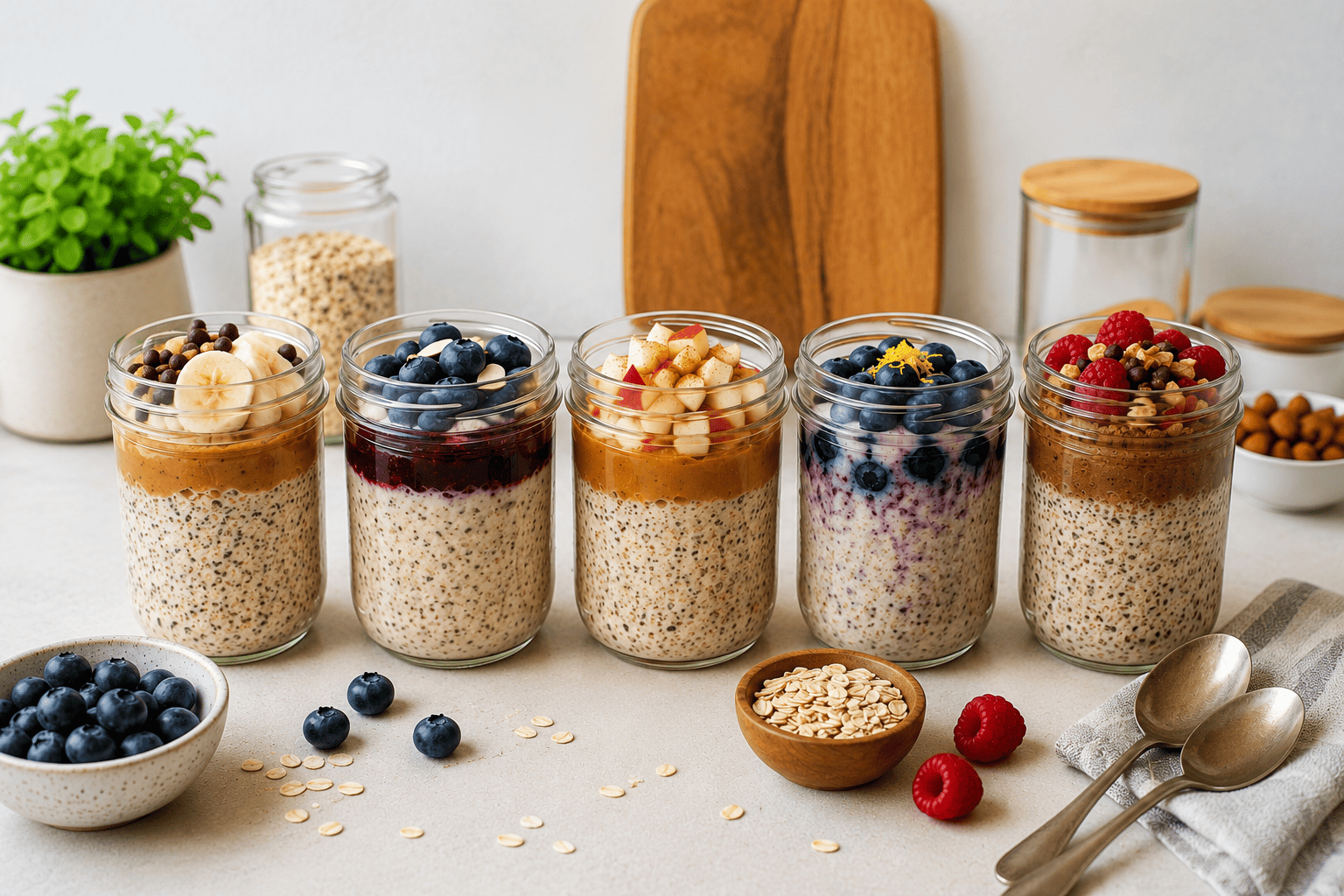
Overnight oats are a convenient breakfast made by combining oats with milk, yogurt, or another suitable liquid and refrigerating the mixture until the oats soften. Fruit, nuts, seeds, spices, and nut or seed butters can add flavor, texture, and variety. Preparing them ahead can simplify mornings, but perishable ingredients should remain properly refrigerated.
Key Takeaways
- Overnight oats can be assembled ahead of time, making them useful for busy mornings.
- Oats are a whole-grain option, and USDA MyPlate encourages choosing whole grains as part of an overall varied eating pattern.
- Fruit, yogurt, milk or fortified soy beverages, nuts, seeds, and nut or seed butters can help build a more substantial breakfast.
- Texture is adjustable: more liquid generally produces softer oats, while crunchy toppings are best added shortly before eating.
- Keep overnight oats refrigerated at 40°F or below when they contain perishable ingredients.
What Are Overnight Oats?
Overnight oats are oats that soften while soaking in liquid under refrigeration rather than being prepared as traditional hot oatmeal immediately before serving. Rolled oats are commonly used because they soften while generally retaining some texture.
For a warm alternative, see our protein oatmeal ideas. The basic idea is highly adaptable. The oats provide the grain base, while milk, yogurt, fruit, seeds, nuts, spices, and other ingredients can be adjusted for taste, dietary preferences, allergies, budget, and nutritional needs.
How to Make Overnight Oats
Start with oats
Choose oats whose package directions permit soaking or no-cook preparation; soaking is not a cooking or sanitizing step. Place rolled oats in a clean container with a secure lid. A jar is convenient, but any food-safe refrigerator container that allows enough room for stirring will work.
Add your liquid
Milk, lactose-free milk, or a plant-based beverage can provide the moisture needed to soften the oats. Yogurt can also be mixed in for a thicker texture. If using a plant-based beverage as a dairy alternative, nutrition varies by product; USDA MyPlate specifically recognizes fortified soy versions alongside dairy in its food-group guidance.
Add flavor and texture
- Fresh or frozen berries
- Banana or chopped apple
- Cinnamon or other spices
- Chia seeds or ground flaxseed
- Peanut, almond, or another nut or seed butter
- Nuts, seeds, or granola added shortly before serving for crunch
Refrigerate until softened
Cover the container and keep it refrigerated while the oats absorb liquid. Before eating, stir the mixture and adjust the texture if needed. Additional liquid can loosen a mixture that has become thicker than you prefer.
How to Build a More Balanced Bowl
Overnight oats can range from a light snack to a substantial breakfast depending on what goes into the container. USDA MyPlate emphasizes eating a variety of fruits, vegetables, grains, protein foods, and dairy or fortified soy alternatives rather than relying on a single food group.
| Ingredient role | Examples | Practical purpose |
|---|---|---|
| Whole-grain base | Rolled oats | Provides the main body of the breakfast |
| Protein-containing addition | Yogurt, milk, fortified soy beverage, nuts, seeds, nut or seed butter | Can make the meal more substantial |
| Fruit | Berries, banana, apple, peaches | Adds flavor, texture, and dietary variety |
| Flavor and crunch | Cinnamon, nuts, seeds, granola | Changes flavor and texture without changing the basic preparation method |
There is no single combination that is right for everyone. Someone who wants a larger breakfast may add yogurt, nuts, seeds, or additional fruit, while someone with a smaller morning appetite may prefer a simpler portion. Medical conditions, allergies, digestive tolerance, and clinician-directed eating plans can also affect ingredient choices.
Easy Flavor Combinations
Berry and yogurt
Combine oats with milk or another suitable beverage, yogurt, and berries. Add nuts or seeds shortly before eating if you prefer a crunchy contrast.
Banana and peanut butter
Banana, peanut butter, and cinnamon make a simple combination. People with peanut allergies can choose an appropriate alternative that fits their allergy-management plan.
Apple and cinnamon
Chopped apple and cinnamon pair easily with oats. Nuts or seeds can be added for texture, while yogurt can make the mixture creamier.
Peach and vanilla
Fresh, frozen, or appropriately stored canned peaches can add sweetness and fruit flavor. Vanilla and yogurt pair well with this combination.
Storage and Food Safety
Because overnight oats commonly contain milk, yogurt, cut fruit, or other perishable ingredients, refrigeration matters. USDA food-safety guidance recommends maintaining a refrigerator temperature of 40°F or below.
- Prepare overnight oats with clean hands, utensils, and containers.
- Keep jars covered and refrigerated at 40°F or below.
- Discard perishable overnight oats left at room temperature for more than two hours, or one hour above 90°F (32°C).
- Follow storage instructions and use-by guidance for individual packaged ingredients when those directions are more restrictive.
Our make-ahead breakfast guide offers more planning options. Texture and quality may change during storage even when food has been kept appropriately cold. Fruit can release moisture, oats continue absorbing liquid, and crunchy ingredients soften. For that reason, some toppings are better stored separately and added just before serving.
Common Overnight Oats Mistakes
Using too little liquid
Oats absorb moisture as they rest. If the mixture seems dry or overly dense, adding a little more liquid before eating can improve the texture.
Adding every topping in advance
Nuts, seeds, granola, and other crunchy foods can soften when left in a wet mixture. Keeping them separate preserves more texture.
Assuming every jar has the same nutritional profile
An oat-and-water mixture differs considerably from oats made with yogurt, fruit, nuts, or seeds. The ingredients, portions, and products used determine the final nutrient profile.
Ignoring food allergies or individual dietary needs
Common overnight-oat ingredients can include milk, nuts, peanuts, and other allergens. People with diagnosed food allergies, celiac disease, medically directed diets, or other dietary restrictions should choose products and preparation methods appropriate to their individual needs.
A Practical Prep Checklist
- Choose oats and a liquid you enjoy.
- Add fruit or another flavor component.
- Consider a protein-containing ingredient such as yogurt, milk, fortified soy beverage, nuts, seeds, or nut or seed butter.
- Keep crunchy toppings separate until serving.
- Cover the container and refrigerate promptly.
- Adjust the consistency before eating if the oats have absorbed more liquid than expected.
Frequently Asked Questions
The Bottom Line
Overnight oats are a flexible make-ahead breakfast built around a whole-grain food. Their biggest practical advantage is convenience: a few minutes of preparation can leave breakfast ready in the refrigerator for a busy morning.
Choose toppings and liquids according to your preferences and dietary needs, keep perishable ingredients properly refrigerated, and add crunchy ingredients at serving time when texture matters. The nutritional profile ultimately depends on the complete combination rather than oats alone.
Medical disclaimer
This content is for educational and informational purposes only and is not a substitute for professional medical advice, diagnosis, or treatment. Dietary needs and supplement suitability vary by individual.
Sources
- U.S. Department of Agriculture, MyPlate, Make Half Your Grains Whole Grains, accessed September 2026.
- U.S. Department of Agriculture, MyPlate, Start Simple with MyPlate, accessed September 2026.
- U.S. Department of Agriculture, Food Safety and Inspection Service, How Do I Keep My Foods Safe to Eat?, updated October 2024, accessed September 2026.
- U.S. Food and Drug Administration, Are You Storing Food Safely?, accessed September 2026.
