
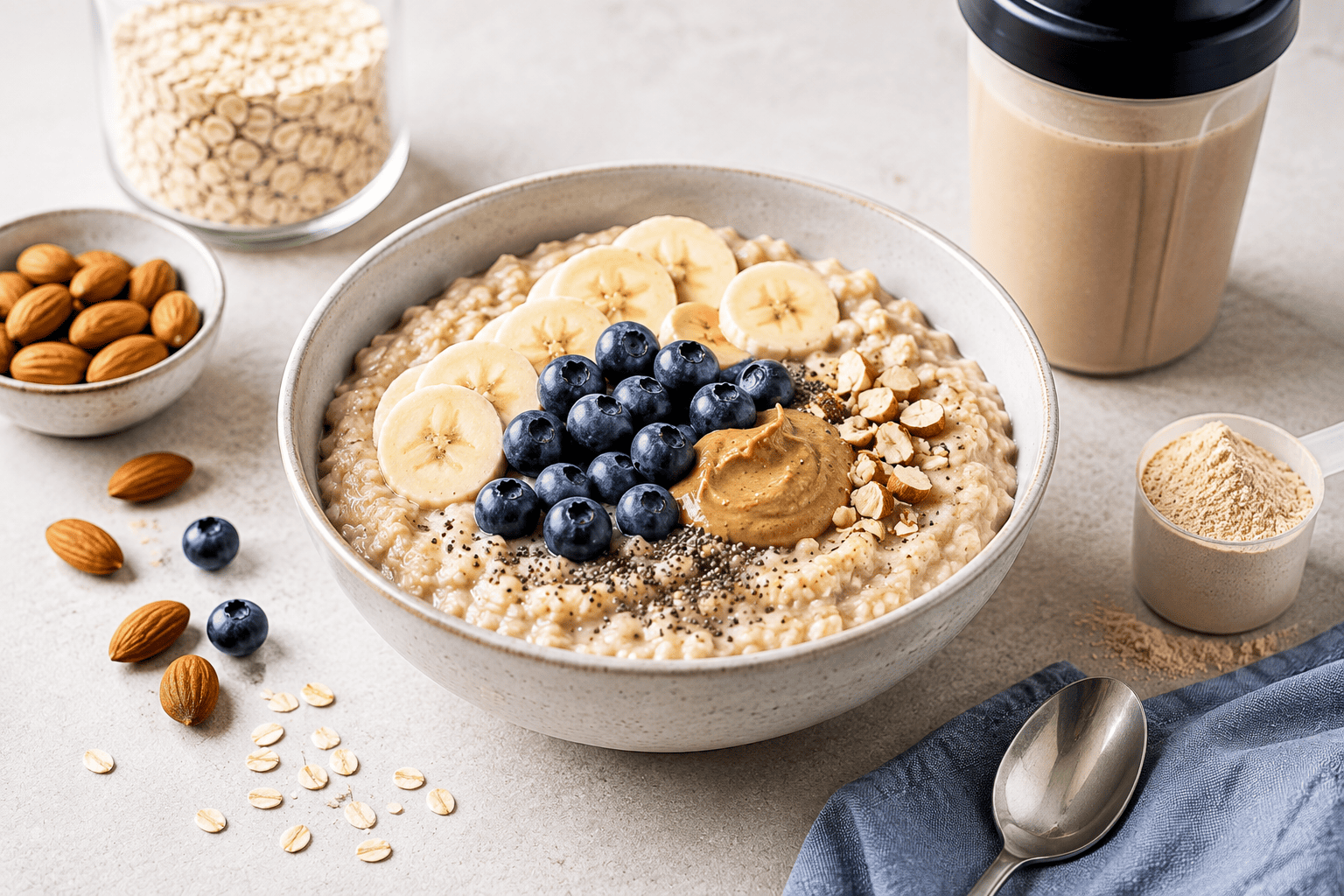
Protein oatmeal combines oats with one or more protein-containing ingredients to create a more substantial breakfast. Milk, Greek-style yogurt, cottage cheese, nuts, seeds, nut or seed butter, eggs, and protein powder are possible additions. The best combination depends on your dietary needs, preferences, allergies, and overall eating pattern.
Key Takeaways
- Protein oatmeal starts with oats and adds foods that contribute protein, such as milk, yogurt, nuts, seeds, cottage cheese, or eggs.
- Protein powder is optional and is not necessary for every bowl.
- Fruit, nuts, seeds, and spices can add flavor and nutritional variety without requiring large amounts of added sweetener.
- Packaged ingredients vary, so check labels when exact protein, added sugar, sodium, or calorie amounts matter.
- Oatmeal containing perishable ingredients should be handled and refrigerated safely if prepared ahead.
What Is Protein Oatmeal?
Protein oatmeal is simply oatmeal prepared or served with additional protein-containing foods. Instead of relying only on oats and water, you might cook oats with milk, stir in yogurt after cooking, add nuts and seeds, or combine several of these ingredients.
For another breakfast option, see our protein smoothie ideas. The concept is flexible. A warm bowl can be sweet, lightly sweetened, or savory. It can also be adjusted for different dietary preferences by changing the liquid, toppings, and protein source.
Useful distinction: “Protein oatmeal” does not have one standardized recipe or nutrition profile. The amount of protein and other nutrients depends on the type and quantity of every ingredient used.
Easy Ways to Add Protein to Oatmeal
Cook Oats With Milk
Replacing some or all of the cooking water with dairy milk is one of the simplest approaches. Fortified soy milk can also be used. Other plant-based beverages vary considerably in protein and micronutrients, so compare Nutrition Facts labels if protein content is important to you.
Add Greek-Style Yogurt
Plain Greek-style yogurt can give cooked oatmeal a creamy texture while contributing protein. Let very hot oatmeal cool slightly before stirring in yogurt if you want to preserve a thicker texture.
Stir In Cottage Cheese
Cottage cheese can work in both sweet and savory oatmeal. It adds creaminess and protein, although sodium and other nutrition values vary among products. Choose pasteurized dairy products and check the label for details.
Use Nuts, Seeds, or Nut Butter
Peanuts, almonds, walnuts, chia seeds, pumpkin seeds, ground flaxseed, and nut or seed butters can complement oatmeal. They contribute different combinations of protein, fat, minerals, and other nutrients while also changing texture and flavor.
Add an Egg to Savory Oatmeal
Savory oatmeal can be topped with a fully cooked egg or combined with egg during cooking. Our high-protein egg recipes offer more egg-based breakfast ideas. Vegetables, herbs, and spices can turn the bowl into a breakfast that feels more like a savory grain dish.
Use Protein Powder if It Fits Your Needs
Protein powder offers convenience but is not essential. If you use one, follow the product directions and consider its ingredients, allergens, sweeteners, serving size, and overall place in your diet.
Protein Oatmeal Ingredient Ideas
| Component | Examples | What It Adds |
|---|---|---|
| Oat base | Rolled oats, quick oats, steel-cut oats | Whole-grain foundation and texture |
| Protein addition | Milk, yogurt, cottage cheese, eggs | Additional protein and different textures |
| Plant additions | Nuts, seeds, nut butter, seed butter | Protein, fats, texture, and flavor |
| Fruit | Berries, banana, apples, peaches | Sweetness, flavor, color, and nutrient variety |
| Flavor | Cinnamon, vanilla, unsweetened cocoa, ginger | Flavor without requiring large amounts of added sweetener |
Easy Protein Oatmeal Combinations
Berry Yogurt Oatmeal
Prepare oats with milk or water, then top with plain Greek-style yogurt and fresh or frozen berries. Add chia seeds, walnuts, or another preferred topping for extra texture.
Banana Peanut Butter Oatmeal
Cook oats with milk, then add sliced or mashed banana, peanut butter, and cinnamon. Mashed ripe banana can provide sweetness, while peanut butter contributes richness and some protein.
Apple Cinnamon Protein Oatmeal
Combine oatmeal with chopped apple, cinnamon, plain yogurt, and chopped nuts or seeds. Cooking the apple with the oats produces a softer texture, while adding it afterward keeps more crunch.
Chocolate Banana Oatmeal
Stir unsweetened cocoa into cooked oats and add banana plus a protein-containing ingredient such as yogurt, milk, or nut butter. Packaged chocolate-flavored protein products are another option, but their added sugars and ingredients vary.
Savory Egg Oatmeal
Cook oats without sweetener, then add a fully cooked egg, vegetables, herbs, and black pepper. This approach works especially well for people who prefer savory breakfasts over fruit-based oatmeal.
Do You Need Protein Powder in Oatmeal?
Protein powder is one way to increase the protein content of oatmeal, but it is not the only way. Conventional foods such as milk, yogurt, cottage cheese, eggs, nuts, and seeds can serve the same general purpose while contributing their own mix of nutrients.
Protein powders may be sold as conventional foods or dietary supplements. FDA does not approve dietary supplements for safety and effectiveness before sale. Check with a qualified health professional before using a supplement if you take medicines, are pregnant or breastfeeding, have a medical condition, or are choosing one for a child; added ingredients may introduce additional risks.
If using protein powder, texture is worth considering. Some powders thicken oatmeal significantly. Stirring the powder in after cooking and adding extra liquid as needed can make it easier to achieve your preferred consistency.
Label tip: Protein powders and flavored protein products differ substantially. Review the serving size, protein amount, ingredients, allergens, added sugars, and other label information instead of assuming products are interchangeable.
How to Build a More Balanced Bowl
Protein is useful, but it is not the only consideration when building breakfast. A practical oatmeal bowl can combine whole-grain oats with a protein-containing food, fruit, and optional nuts or seeds.
- Start with oats: choose the type that fits your preferred texture and preparation time.
- Add protein: use milk, yogurt, cottage cheese, eggs, nuts, seeds, or another suitable option.
- Add fruit: berries, apples, bananas, peaches, and other fruits can provide flavor and variety.
- Consider nuts or seeds: use them for texture, flavor, and additional nutrients.
- Flavor thoughtfully: cinnamon, cocoa, vanilla, ginger, or fruit can reduce the need to rely heavily on added sweeteners.
Meal Prep and Food Safety
Plain dry oats are pantry-friendly, but prepared oatmeal may contain perishable ingredients such as milk, yogurt, or eggs. Those ingredients change how the finished meal should be handled.
Keep perishable oatmeal cold: FDA guidance recommends keeping refrigerators at or below 40°F (4°C) and refrigerating perishable prepared foods promptly.
Perishable foods should generally not remain at room temperature for more than two hours, or one hour when the surrounding temperature is above 90°F (32°C).
Use clean containers for make-ahead oatmeal and follow storage directions on packaged ingredients. Dairy products should be pasteurized, particularly for people at higher risk of foodborne illness.
For cooked oatmeal leftovers, refrigerate promptly in shallow containers and use within three to four days, or freeze. If reheating, reach 165°F (74°C) throughout and stir to distribute heat. Follow any shorter storage instructions for the ingredients used.
Frequently Asked Questions
The Bottom Line
Protein oatmeal is a flexible way to turn a basic bowl of oats into a more substantial breakfast. Milk, yogurt, cottage cheese, eggs, nuts, seeds, nut butter, and optional protein powder provide many ways to customize the bowl.
Rather than focusing on protein alone, consider the entire meal. Oats, fruit, protein-containing foods, nuts or seeds, portion size, and added sweeteners all influence the final nutritional profile.
Medical disclaimer
This content is for educational and informational purposes only and is not a substitute for professional medical advice, diagnosis, or treatment. Dietary needs and supplement suitability vary by individual.
Sources
- U.S. Food and Drug Administration, Are You Storing Food Safely?, accessed September 2026.
- U.S. Food and Drug Administration, Safe Food Handling, accessed September 2026.
- U.S. Food and Drug Administration, Dairy and Eggs: Food Safety, accessed September 2026.
- USDA Food Safety and Inspection Service, Leftovers and Food Safety, accessed September 2026.
- U.S. Food and Drug Administration, FDA 101: Dietary Supplements, accessed September 2026.
