
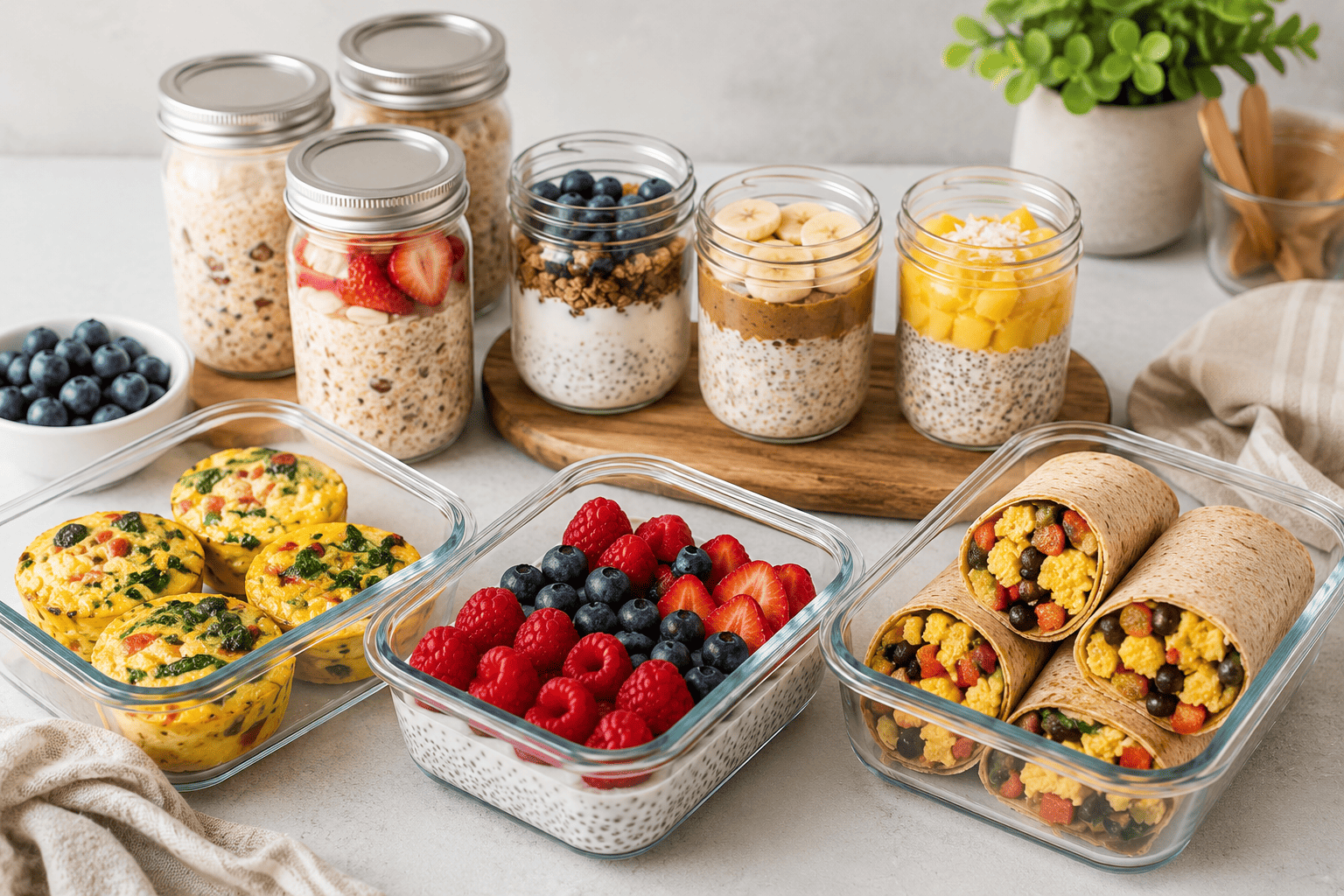
Make-ahead breakfasts can turn a rushed morning into a simple grab-and-go routine. Oats, yogurt cups, egg-based dishes, whole-grain muffins, breakfast wraps, and pre-portioned smoothie ingredients can all be prepared partly or completely in advance. The best approach combines foods you enjoy with practical portions, safe storage, and enough variety that breakfast remains convenient without becoming repetitive.
Key Takeaways
- A useful make-ahead breakfast can combine a protein food with fruit or vegetables and a grain or other satisfying carbohydrate, depending on your needs and preferences.
- Batch preparation does not have to mean eating the same meal every day. Preparing versatile components makes it easier to mix and match.
- Oats, yogurt, eggs, whole grains, fruit, nut or seed butters, beans, and vegetables can form the basis of convenient breakfasts.
- Perishable prepared foods should be refrigerated promptly. USDA advises using most properly refrigerated leftovers within three to four days.
- Freezing portions can be a practical option when preparing breakfasts farther in advance.
What Makes a Good Make-Ahead Breakfast?
A make-ahead breakfast is simply a morning meal that is prepared completely or partially before you need it. That might mean assembling overnight oats the evening before, baking and freezing breakfast muffins on the weekend, portioning yogurt and toppings into containers, or preparing ingredients that can be combined quickly in the morning.
Convenience matters, but so does flexibility. Breakfast does not need to follow one nutritional formula. Appetite, activity level, dietary preferences, culture, budget, medical needs, and the length of time until your next meal can all influence what works well.
A simple mix-and-match framework
Instead of searching for a perfect breakfast, choose ingredients from a few useful categories. USDA meal-planning materials similarly encourage mixing and matching foods such as protein foods, whole grains, fruits, vegetables, and dairy or fortified soy alternatives.
| Component | Make-ahead options | Easy variations |
|---|---|---|
| Protein foods | Eggs, yogurt, cottage cheese, tofu, beans, nut or seed butter | Change the protein from day to day |
| Grains and other starches | Oats, whole-grain bread, tortillas, quinoa, potatoes | Use sweet or savory seasonings |
| Produce | Berries, bananas, apples, peaches, spinach, peppers, tomatoes | Fresh, frozen, or appropriate canned options can add variety |
| Flavor and texture | Cinnamon, herbs, seeds, nuts, nut or seed butter | Keep crunchy toppings separate until serving |
Make-Ahead Breakfast Ideas
Overnight oats
Combine oats with milk, a fortified plant beverage, or yogurt and refrigerate in a covered container. See our overnight oats guide for preparation tips. Fruit, cinnamon, seeds, or nut butter can provide different flavors. If you prefer crunchy nuts or granola, adding them just before eating helps preserve their texture.
Yogurt and fruit cups
Portion yogurt into containers and pair it with berries, chopped fruit, oats, nuts, or seeds. Store dry toppings separately if texture matters. Plain yogurt also makes it easy to adjust sweetness with fruit rather than relying on a heavily sweetened base.
Egg and vegetable muffins
Whisk eggs with chopped vegetables and other desired ingredients, divide the mixture among muffin cups, and bake until safely cooked. These portions can be paired with fruit, toast, or another breakfast side when serving. Explore our high-protein egg recipe ideas for variations.
Egg safety: USDA recommends cooking casseroles and other egg-containing dishes to a safe minimum internal temperature of 160°F. Cooked egg dishes intended for later use should be cooled and refrigerated promptly.
Freezer breakfast wraps
Fill tortillas with combinations such as cooked eggs, beans, vegetables, and cheese. Divide hot fillings into shallow containers and refrigerate promptly for rapid cooling; do not wait for them to cool completely on the counter. Wrapping portions individually makes it easier to remove only what you need.
Baked oatmeal
Baked oatmeal works well for people who like oats but prefer a firmer texture. Fruit and spices can change the flavor from batch to batch. After baking, divide the oatmeal into individual portions so breakfast is ready to refrigerate or freeze.
Whole-grain breakfast muffins
Homemade muffins can be prepared in batches and frozen. Ingredients such as oats, whole-grain flour, fruit, vegetables, nuts, or seeds can create different combinations. Pairing a muffin with yogurt, an egg, nut or seed butter, or another protein food can make it a more substantial meal when desired.
Smoothie freezer packs
Place portioned frozen fruit and other freezer-suitable ingredients into containers or bags. In the morning, transfer a portion to the blender and add your chosen liquid and other ingredients. This provides much of the convenience of a fully prepared breakfast while allowing the smoothie to be blended fresh.
How to Meal-Prep Without Eating the Same Breakfast Every Day
The most flexible strategy is often to prepare components instead of seven identical meals. A batch of cooked oats, washed fruit, cooked eggs, roasted vegetables, or portioned toppings can be recombined in several ways.
For example: one batch of oats could become different breakfasts by changing the toppings.
- Oats with berries and yogurt
- Oats with banana, cinnamon, and nut or seed butter
- Oats with chopped apple, nuts, and cinnamon
This approach can also reduce food waste because ingredients can be used across several meals. USDA MyPlate meal-planning materials encourage preparing versatile foods in advance and repurposing ingredients and leftovers throughout the week.
Food Safety and Storage
Meal prep is only convenient when food is stored safely. Perishable foods such as cooked eggs, dairy products, cooked meats, and many prepared dishes need appropriate refrigeration.
- USDA advises refrigerating perishable leftovers within two hours, or within one hour when exposed to temperatures above 90°F.
- Keep refrigerated leftovers at 40°F or below.
- Shallow containers help hot leftovers cool rapidly in the refrigerator. Reheat cooked breakfast leftovers to 165°F (74°C), checked with a food thermometer.
- USDA advises using refrigerated leftovers within three to four days or freezing them for longer storage.
- Follow any more restrictive storage instructions that apply to a particular ingredient or packaged product.
If you are preparing an entire workweek of breakfasts at once, freezing later-week portions can therefore be more appropriate than keeping every perishable portion refrigerated for the full week.
A Practical Breakfast-Prep Checklist
- Choose a few breakfasts you actually like. A nutritionally thoughtful plan is not useful if the food routinely goes uneaten.
- Look for ingredient overlap. Berries, yogurt, oats, eggs, vegetables, and whole-grain breads can often work in multiple meals.
- Prepare the time-consuming parts. Cooking grains, chopping suitable produce, baking muffins, or portioning ingredients can remove much of the morning work.
- Use individual containers when convenient. Portioning can make it easier to grab breakfast without repacking it each morning.
- Keep texture in mind. Store crunchy toppings separately and add them shortly before eating.
- Label refrigerated and frozen foods. Recording what you prepared and when can make it easier to manage storage time and reduce forgotten food.
Frequently Asked Questions
The Bottom Line
Make-ahead breakfasts are less about finding one ideal recipe and more about removing barriers between waking up and eating a satisfying morning meal. Oats, eggs, yogurt, fruit, whole grains, vegetables, beans, nuts, seeds, and other familiar foods can be prepared in combinations that fit different tastes, budgets, and dietary patterns.
Prepare only as far ahead as food safety and quality allow, refrigerate perishable foods promptly, and freeze portions that need longer storage. A small amount of advance preparation can make breakfast easier without requiring a rigid menu or complicated meal-prep routine.
Medical disclaimer
This content is for educational and informational purposes only and is not a substitute for professional medical advice, diagnosis, or treatment. Dietary needs and supplement suitability vary by individual.
Sources
- U.S. Department of Agriculture, MyPlate, Planning for Savings: Leftovers Edition, accessed September 2026.
- U.S. Department of Agriculture, Food Safety and Inspection Service, How Long Can You Keep Leftovers in the Refrigerator?, updated September 2025, accessed September 2026.
- U.S. Department of Agriculture, Food Safety and Inspection Service, How Do You Handle and Store Eggs Safely?, updated November 2024, accessed September 2026.
- USDA Food Safety and Inspection Service, Leftovers and Food Safety, accessed September 2026.
