How to Read Protein Powder Labels: A Practical Guide
Protein powder labels can look simple at first glance, but the details behind serving size, protein source, ingredient order, sweeteners, allergens, and added nutrients can make a meaningful difference when you compare products. Learning how to read the label helps you choose a powder that fits your dietary needs without relying on front-of-package marketing claims.
Why Protein Powder Labels Deserve a Closer Look
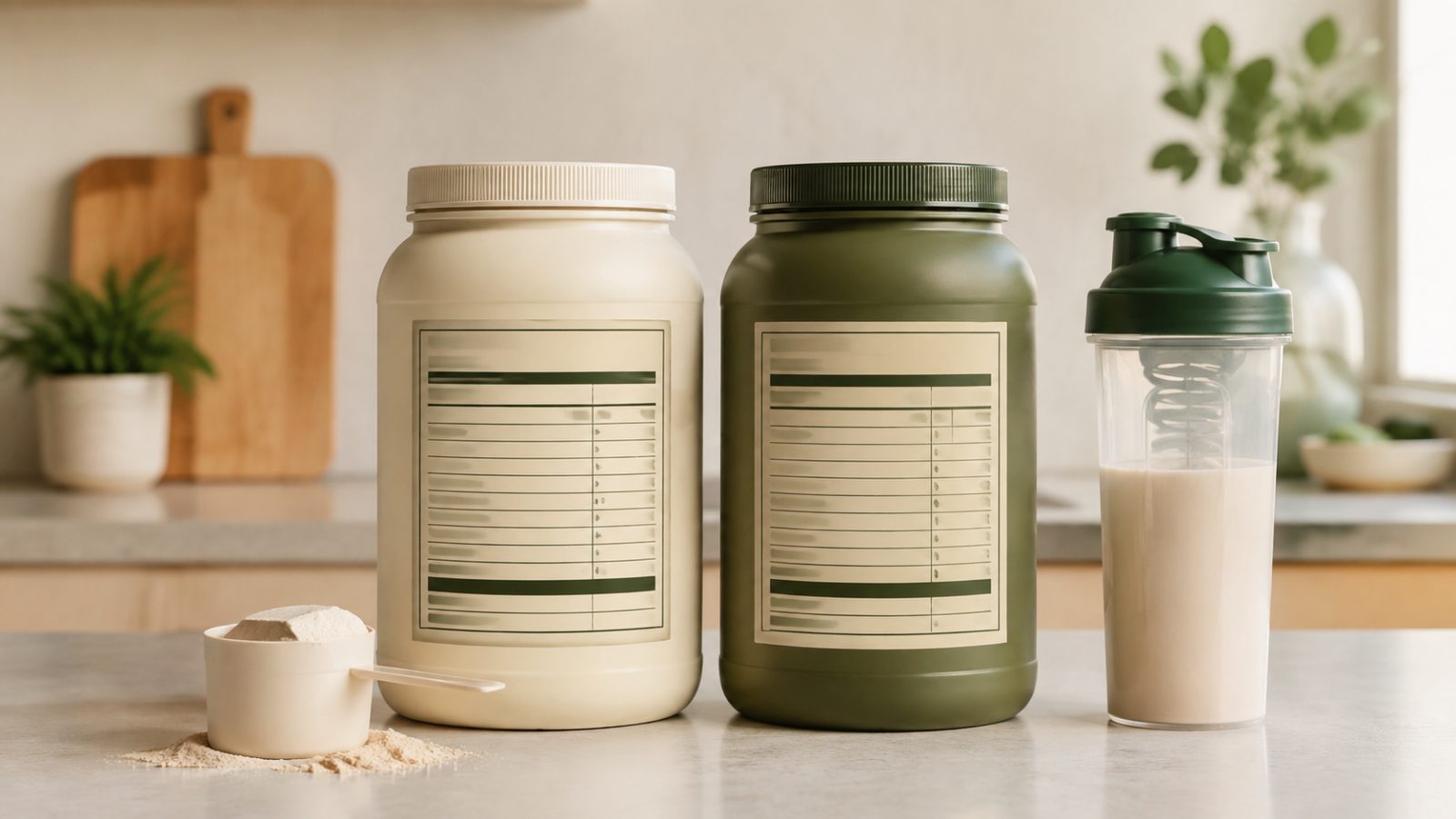
Two protein powders can advertise similar amounts of protein while differing substantially in serving size, calories, sweeteners, sodium, allergens, and added ingredients. That is why comparing only the large number on the front of the package can be misleading.
In the United States, protein powders may be marketed as conventional foods or as dietary supplements. The exact label format depends on how the product is classified. Dietary supplements generally use a Supplement Facts panel, while conventional foods use a Nutrition Facts panel. The FDA requires dietary supplement labels to disclose specific information, including serving size, servings per container, dietary ingredients, and other ingredients that are not listed in the Supplement Facts panel.
1. Start With Serving Size
The serving size is the foundation for everything else on protein powder labels. Calories, protein, carbohydrate, fat, sodium, and other listed nutrients are tied to that stated serving. If one brand lists 25 grams of protein in a 32-gram serving and another lists 25 grams in a 45-gram serving, the products are not directly comparable without considering the full serving.
FDA consumer guidance also emphasizes that serving size is not automatically a recommendation for how much you should consume. It is a labeling reference. Your individual protein needs depend on factors such as total diet, body size, age, activity level, training goals, and medical considerations.
2. Check the Amount of Protein Per Serving
Next, look at how many grams of protein a serving provides. A higher number is not always better. What matters is whether the product fits your overall diet and the amount you intend to use.
Also compare protein relative to the total serving weight. A powder containing 24 grams of protein in a 30-gram serving has a different composition from one supplying 24 grams in a 50-gram serving. The larger serving may contain more carbohydrate, fat, flavoring agents, fiber, or other added ingredients.
Protein
Check grams per serving and compare them with the total serving weight.
Calories
Useful for comparing products with similar protein amounts but different overall formulas.
Other Macros
Review carbohydrate and fat based on your dietary preferences and total daily intake.
3. Identify the Protein Source
The ingredient list tells you where the protein comes from. Common options include whey protein concentrate, whey protein isolate, casein, milk protein, soy protein, pea protein, rice protein, egg white protein, and blends of multiple sources.
No single source is automatically best for everyone. Whey and casein are milk-derived and may not suit people avoiding dairy. Soy is a common plant protein but is also a major food allergen. Pea, rice, and other plant proteins may work well for vegan diets, but blends can differ in texture, taste, amino acid profile, and digestibility.
4. Read the Ingredient List in Order
Do not stop after finding the protein source. Read the entire ingredient list. FDA labeling rules require ingredients that are not declared as dietary ingredients in the Supplement Facts panel—such as certain binders, fillers, flavors, or other food ingredients—to appear in the ingredient statement where applicable.
Protein powders often contain flavorings, cocoa, gums, lecithin, salt, high-intensity sweeteners, sugar alcohols, enzymes, or other formulation ingredients. Their presence does not automatically make a product good or bad, but the list helps you decide whether the formula matches your preferences and tolerances.
5. Check Sugars, Sweeteners, Carbohydrates, and Fat
Flavored protein powders can vary widely in carbohydrate and sweetness. Some contain added sugars, while others use stevia, monk fruit extracts, sucralose, acesulfame potassium, or sugar alcohols. If you are sensitive to a particular sweetener or experience gastrointestinal discomfort from sugar alcohols, the ingredient list is especially important.
Fat content can also differ by protein source and processing method. Whey concentrate, for example, may contain more non-protein components than a more highly processed isolate. Plant-based blends may include fats or carbohydrates from their raw ingredients or from flavor systems. Compare the actual label rather than assuming a category always has the same nutritional profile.
6. Review Sodium and Added Micronutrients
Sodium can range significantly among flavored powders. This may matter to people who are monitoring total sodium intake. Some products also add calcium, iron, vitamin D, magnesium, electrolytes, or other micronutrients.
The percent Daily Value can help put listed vitamins and minerals into context. FDA explains that %DV shows how much a nutrient in one serving contributes to the daily reference amount. A product with multiple added nutrients should still be evaluated in the context of the rest of your food and supplement intake.
7. Watch for Allergens
Protein powder labels are especially important for people with food allergies. Milk, soy, and egg are common protein sources and are among the major food allergens recognized under U.S. labeling law. Products can also contain ingredients derived from tree nuts, peanuts, sesame, wheat, or other allergenic foods depending on the formula.
Read the ingredient list and allergen information every time you purchase a product, even if you have used the brand before. Formulas and manufacturing arrangements can change. People with a diagnosed food allergy should follow the guidance of their healthcare professional and avoid relying on assumptions based on product names or marketing descriptions.
8. Be Careful With Proprietary Blends and Extra Ingredients
Some protein powders include creatine, caffeine, enzymes, botanical extracts, amino acids, or other ingredients beyond protein. These additions can change how the product should be evaluated.
FDA rules allow certain dietary ingredients to be grouped in a proprietary blend, with the total weight of the blend declared while individual amounts within that blend may not always be listed. If knowing the exact amount of a particular ingredient matters to you, a fully disclosed formula may be easier to evaluate.
Extra ingredients also create more opportunities for medication interactions, side effects, or duplication with other supplements. This is particularly relevant for people who take medications, are pregnant or breastfeeding, have chronic health conditions, or use several supplements at the same time.
9. Understand Marketing Claims on the Front
Terms such as “clean,” “premium,” “advanced,” or “performance” can sound meaningful without telling you how the product actually differs nutritionally. The facts panel and ingredient list are more useful for direct comparison.
Health-related claims also deserve caution. FTC guidance states that advertising for health-related products must be truthful, not misleading, and appropriately substantiated. A protein powder should not be assumed to diagnose, treat, cure, or prevent a disease because of promotional language, testimonials, influencer content, or packaging design.
Do Not Treat a Protein Powder Label as Medical Advice
Protein powders can be convenient foods or dietary supplements, but they are not substitutes for professional evaluation of medical conditions. Anyone with kidney disease, significant food allergies, gastrointestinal disorders, pregnancy, breastfeeding, or medication concerns should discuss supplement use with an appropriate healthcare professional.
10. What About Third-Party Testing?
Independent certification can add another layer of information, particularly for athletes concerned about banned substances or consumers who want additional manufacturing and identity checks. However, a certification mark does not mean every claim on a product has been clinically proven, nor does it guarantee that a supplement is appropriate for every person.
When third-party testing matters to you, verify the certification through the certifying organization’s own database rather than relying only on a logo printed in online marketing. Testing programs differ in scope, standards, frequency, and what they evaluate.
How to Compare Two Protein Powder Labels
| Label Item | What to Compare | Why It Matters |
|---|---|---|
| Serving size | Grams or scoops per serving | All listed nutrient amounts are based on this quantity. |
| Protein | Grams per serving | Shows how much protein the stated serving supplies. |
| Calories | Calories for the same protein amount | Helps compare products with different carbohydrate and fat content. |
| Protein source | Whey, casein, soy, pea, rice, egg, or blend | Relevant to dietary preferences, allergens, and tolerability. |
| Ingredients | Sweeteners, flavors, gums, oils, enzymes, added actives | Shows what is included beyond the protein source. |
| Allergens | Declared major allergens and ingredient sources | Critical for people with diagnosed food allergies. |
| Added nutrients | Vitamins, minerals, amino acids, botanicals | Can affect total intake and potential interactions. |
- Compare serving sizes before comparing protein grams.
- Identify the primary protein source.
- Read the complete ingredient list.
- Check calories, carbohydrate, fat, sugars, and sodium.
- Review allergen information carefully.
- Look for added vitamins, minerals, stimulants, botanicals, or performance ingredients.
- Verify third-party certifications when they matter to your goals.
- Be skeptical of absolute health or performance promises.
The Bottom Line
Reading protein powder labels is less about finding a universally “best” product and more about understanding what each serving contains. Start with serving size and protein grams, then evaluate the protein source, ingredient list, macronutrients, sodium, allergens, and any added nutrients or active ingredients.
The front of the package may help you identify a product category, but the detailed label is where meaningful comparison happens. Choose a formula that fits your overall diet, tolerances, preferences, and health needs, and seek professional guidance when medical conditions, medications, allergies, pregnancy, or other safety considerations are involved.
Frequently Asked Questions About Protein Powder Labels
What should I look for first on a protein powder label?
Start with serving size and grams of protein per serving. Then review the protein source, calories, carbohydrate, fat, sodium, ingredient list, allergens, and any additional active ingredients.
Is a higher protein percentage always better?
No. A higher protein concentration can be useful for some goals, but the best choice depends on your total diet, calorie needs, tolerability, ingredients, allergies, and personal preferences.
What is the difference between Supplement Facts and Nutrition Facts on protein powder?
The format depends on how the product is marketed and regulated. Dietary supplements generally use Supplement Facts, while conventional foods use Nutrition Facts. Both provide serving-based information, but the regulatory requirements are not identical.
Do protein powder labels have to list every ingredient?
Ingredients must be declared according to applicable FDA labeling rules. For dietary supplements, ingredients not listed as dietary ingredients in the Supplement Facts panel generally appear in the Other Ingredients statement. Proprietary blends can have different quantity-disclosure rules.
Does third-party tested mean a protein powder is proven safe and effective?
No. Independent testing may provide useful information about areas such as identity, contaminants, manufacturing standards, or banned substances depending on the program, but it does not prove that every marketing claim is true or that a product is appropriate for everyone.
References
- U.S. Food and Drug Administration. Questions and Answers on Dietary Supplements. FDA.
- U.S. Food and Drug Administration. Dietary Supplement Labeling Guide: Chapter IV. Nutrition Labeling. FDA.
- U.S. Food and Drug Administration. How to Understand and Use the Nutrition Facts Label. FDA.
- U.S. Food and Drug Administration. Daily Value on the Nutrition and Supplement Facts Labels. FDA.
- Federal Trade Commission. Health Products Compliance Guidance. FTC.