
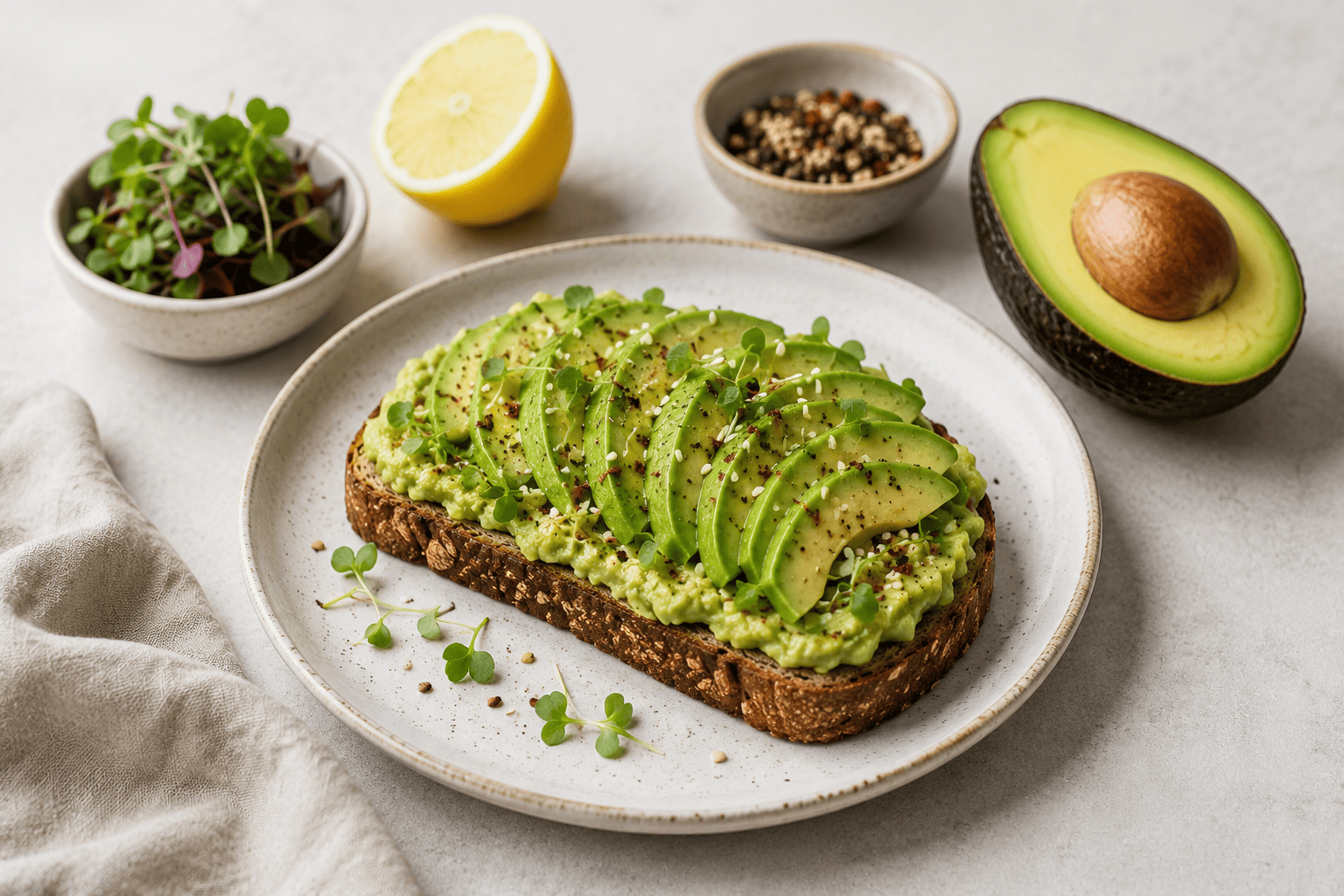
Avocado toast can be a nutritious choice as part of a varied eating pattern. It provides carbohydrate from bread, fat and micronutrients from avocado, and additional protein or other nutrients when topped with foods such as eggs, beans, yogurt, or seeds. Its calorie and nutrient content varies substantially with the amount of avocado, bread size and type, spreads, seasonings, and toppings, so there is no single nutrition profile for every serving.
Key Takeaways
- Avocado toast nutrition depends on both the avocado and the bread, plus any added eggs, cheese, seeds, sauces, or other toppings.
- Current USDA FoodData Central data for raw Hass avocado show that it contains considerably more fat than protein or carbohydrate by weight.
- Avocado also provides potassium, folate, magnesium, and other micronutrients, although amounts vary with portion size.
- Whole-grain bread can add whole grains and additional nutrients to the meal; bread products vary widely in serving size and formulation.
- Adding a protein-containing food can make avocado toast a more substantial meal when that fits your appetite and dietary needs.
What Is in Avocado Toast?
At its simplest, avocado toast consists of bread topped with mashed or sliced avocado. That makes its nutritional profile a combination of two foods rather than a standardized recipe.
The bread typically contributes much of the carbohydrate and some protein, while avocado contributes most of the fat in a basic version. The final totals depend on slice size, bread formulation, avocado portion, and additional ingredients.
A thick restaurant slice topped generously with avocado, eggs, cheese, seeds, and oil can therefore have a very different nutrient profile from a smaller slice of whole-grain bread with a modest avocado portion.
Avocado Nutrition
USDA FoodData Central lists Hass avocado as a Foundation Food. In the current entry, 100 grams of raw, peeled Hass avocado provides approximately 223 calories, 20.3 grams of total fat, 8.3 grams of carbohydrate, and 1.8 grams of protein. The same amount provides about 576 milligrams of potassium, 129 micrograms of folate, and 33 milligrams of magnesium.
Portion matters: The USDA values above are given per 100 grams for comparison. They are not a recommendation to use 100 grams on each slice of toast, and an actual avocado portion may weigh more or less.
Food-composition databases are useful reference tools, but the exact nutrient content of an individual avocado can vary. Variety, growing conditions, ripeness, edible portion, and laboratory measurement can all contribute to differences between foods and database entries.
The Bread Changes the Nutrition Too
Bread is not nutritionally interchangeable from one product to another. Slice weight, flour type, whole-grain content, seeds, added sugars, sodium, and protein can differ substantially among products.
USDA MyPlate encourages choosing whole grains and specifically notes that sliced breads are available in whole-grain versions. Checking the ingredient list and Nutrition Facts label is useful when comparing packaged breads rather than relying only on color or marketing terms on the front of the package.
| Component | What it can contribute | What changes the amount |
|---|---|---|
| Avocado | Fat, carbohydrate, potassium, folate, magnesium, and smaller amounts of protein | Portion size and avocado composition |
| Bread | Carbohydrate, some protein, and nutrients that vary by grain and formulation | Slice weight, whole-grain content, recipe, and brand |
| Protein toppings | Additional protein and other nutrients | Food choice and portion |
| Sauces and seasonings | Flavor plus varying amounts of sodium, fat, sugar, or other nutrients | Product formulation and amount added |
Is Avocado Toast High in Protein?
Basic avocado toast is not necessarily a high-protein meal. Current USDA data list only about 1.8 grams of protein per 100 grams of Hass avocado, while the bread contributes an amount that varies with the product.
If a more protein-focused breakfast fits your needs, avocado toast can be paired with a protein-containing food rather than simply increasing the avocado portion.
- Cooked eggs
- Beans or lentils
- Cottage cheese
- Plain Greek-style yogurt served alongside or incorporated into a topping
- Tofu or tempeh
- Seeds or nuts, when appropriate for the recipe and individual allergy considerations
Individual protein needs differ by age, body size, activity, pregnancy, overall food intake, medical conditions, and other factors. A higher-protein version is therefore an option rather than a requirement for everyone.
How Toppings Change Avocado Toast
Eggs
Adding an egg contributes protein and other nutrients and makes the meal more substantial. The final nutrition depends on the number of eggs and preparation method.
Beans
Mashed or whole beans can add plant-based protein and create a heartier savory toast. Canned products vary in sodium, so the Nutrition Facts label can help with comparisons when sodium intake is a concern.
Seeds and nuts
Seeds or chopped nuts can add texture and additional fat, protein, and micronutrients. Because they also contribute energy, the total changes with the quantity used.
Cheese
Cheese can increase protein and calcium while also changing total fat, saturated fat, and sodium. These values vary considerably among cheeses and serving sizes.
Oil and sauces
A drizzle of oil increases total fat and calories, while sauces may add sodium, sugar, fat, or several of these depending on their ingredients. Small additions can be easy to overlook when estimating a restaurant or homemade meal.
Simple Avocado Toast Combinations
Whole-Grain Avocado Toast with Egg
Toast whole-grain bread, top it with mashed avocado, and add a fully cooked egg. For more ideas, explore our high-protein egg recipes. Tomato, herbs, black pepper, or red pepper flakes can provide additional flavor.
Avocado and White Bean Toast
Mash avocado with rinsed beans, lemon juice, herbs, and pepper, then spread the mixture over toasted bread. This provides a plant-based alternative to egg or cheese toppings. Our guide to high-protein vegan foods offers other plant-based options.
Avocado Toast with Tomato and Seeds
Layer sliced tomato over mashed avocado and finish with a small amount of seeds. Fresh herbs, lemon, or lime can add flavor without requiring a prepared sauce.
Is Avocado Toast a Balanced Breakfast?
It can be part of a balanced breakfast, but “balanced” depends on the rest of the meal and the individual. Avocado toast already combines a grain food with avocado, while fruit, vegetables, dairy or fortified soy foods, and protein foods can be added according to appetite and dietary needs.
Someone who becomes hungry soon after plain avocado toast might prefer adding an egg, beans, tofu, yogurt, or another protein-containing food. Someone with a smaller appetite may find a simpler serving sufficient.
Useful perspective: There is no single avocado-to-bread ratio that makes the meal healthy for everyone. Portion needs vary, and the overall eating pattern matters more than trying to optimize one breakfast in isolation.
What to Watch When Comparing Avocado Toast
- Serving size: A restaurant portion may contain substantially more bread and avocado than a homemade slice.
- Bread formulation: Compare whole-grain content, sodium, added sugars, and other label information when those factors matter to you.
- Added fats: Butter, oil, mayonnaise, and creamy sauces can increase the meal’s total fat and energy content.
- Sodium: Bread, cheese, cured meats, seasoning blends, and sauces can all contribute.
- Protein: Plain avocado toast may contain less protein than versions topped with eggs, beans, dairy foods, soy foods, or other protein sources.
People managing diabetes, kidney disease, food allergies, gastrointestinal conditions, or another condition requiring individualized nutrition guidance may need to consider factors beyond the general nutrient profile described here.
A Practical Checklist
- Choose a bread portion that fits your appetite and dietary needs.
- Consider a whole-grain bread when you enjoy it and it fits your eating pattern.
- Use enough avocado for the flavor and texture you want rather than assuming one standard portion applies to everyone.
- Add a protein-containing topping if you want a more substantial breakfast.
- Use vegetables, herbs, citrus, or spices to add flavor and variety.
- When precise nutrient intake matters, calculate the actual bread, avocado, and toppings rather than relying on a generic “avocado toast” estimate.
Frequently Asked Questions
The Bottom Line
Avocado toast combines the nutrients in avocado with those in bread, so its nutrition cannot be described accurately with one universal calorie, carbohydrate, fat, or protein number. Avocado contributes substantial total fat along with potassium, folate, magnesium, and other nutrients, while bread contributes much of the carbohydrate and an amount of protein that varies by product.
Whole-grain bread and protein-containing toppings can help create a more varied meal when they fit your preferences and needs. For precise nutrition tracking, measure the ingredients you actually use and rely on current food-composition data or the Nutrition Facts labels for packaged products rather than a generic avocado-toast estimate.
Medical disclaimer
This content is for educational and informational purposes only and is not a substitute for professional medical advice, diagnosis, or treatment. Dietary needs and supplement suitability vary by individual.
