
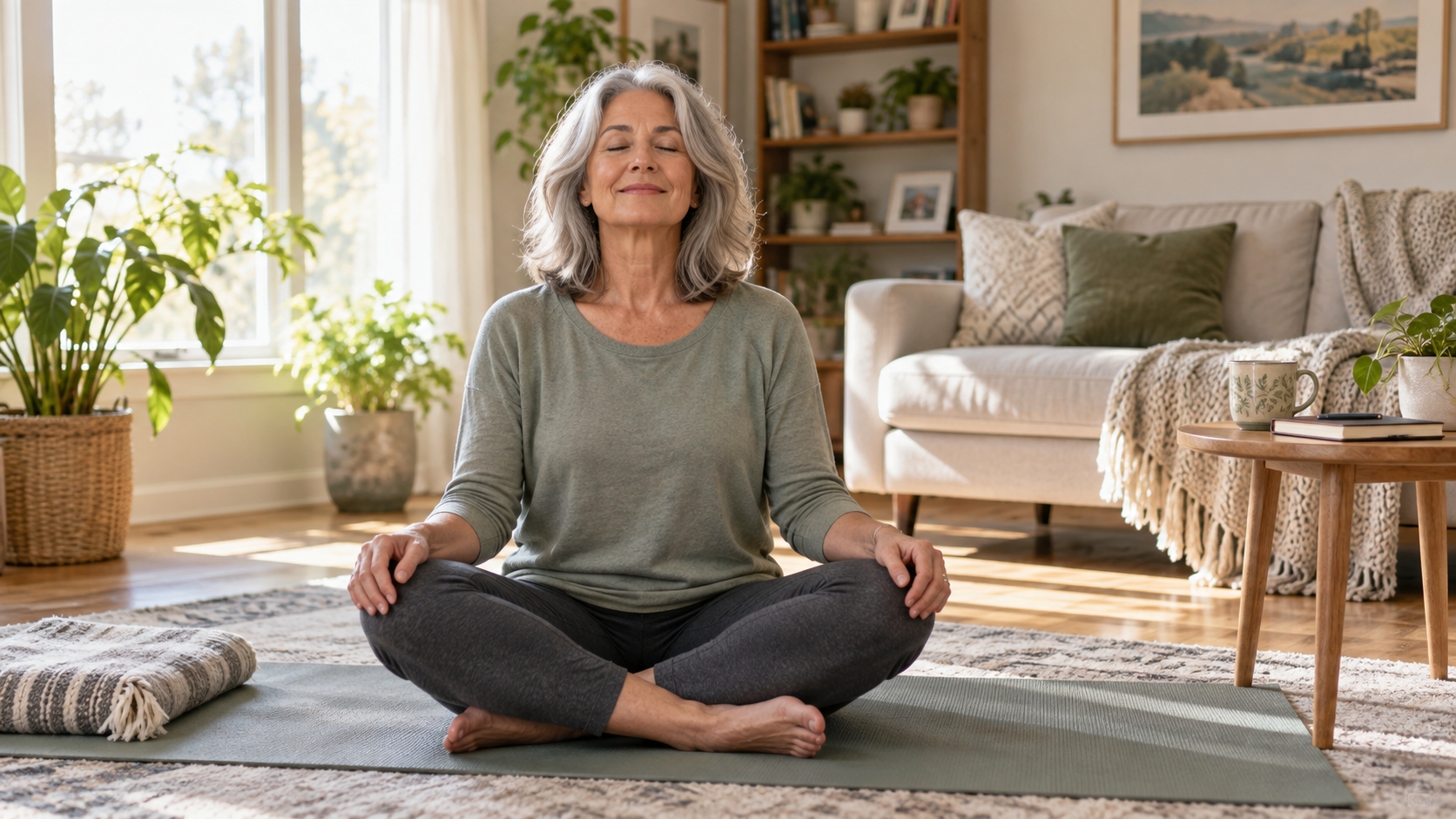
A stress relief routine for adults over 50 can stay simple: use a brief breathing or relaxation practice, move your body regularly, protect sleep, set realistic priorities, and maintain supportive relationships. Stress cannot always be removed, so the goal is to improve recovery and coping rather than eliminate every stressful feeling. Start with one or two habits you can repeat, then adjust the routine to your health, responsibilities, energy, and personal preferences.
Key Takeaways
- Brief breathing and relaxation practices can help some adults reduce feelings of stress and anxiety.
- Regular physical activity supports both physical and mental health and can fit into a stress-management plan.
- Sleep, nutrition, social connection, and realistic priorities can influence how manageable stress feels.
- You do not need a long meditation session or complicated wellness ritual to build a useful routine.
- Stress-management practices work best as complements to appropriate medical or mental-health care, not substitutes for it.
- Persistent anxiety, depression, sleep disruption, substance misuse, or difficulty functioning deserves professional support.
Why Stress Management Can Matter After 50
Life after 50 can include changing work demands, caregiving, retirement planning, financial concerns, relationship changes, health appointments, loss, sleep problems, and shifts in physical ability. None of these experiences affect everyone in the same way, but they can add layers of ongoing stress.
Occasional stress is a normal response to challenges. Problems are more likely when stress remains intense for long periods, repeatedly interferes with sleep or daily functioning, or leads to coping habits that create additional health problems.
A routine cannot control every stressor. It can, however, create reliable opportunities to recover, organize priorities, move, connect with other people, and notice when more support is needed.
Useful perspective: stress management is less about staying calm every moment and more about building reliable ways to recover when pressure rises.
Habit 1: Use a Brief Breathing Practice
Slow, controlled breathing is one of the simplest relaxation techniques to practice almost anywhere. NCCIH includes breathing exercises among approaches designed to encourage the body’s relaxation response.
A 2025 systematic review of 19 studies found that breathing interventions frequently improved anxiety and stress outcomes in adults, although the authors noted that larger randomized trials are still needed. The evidence supports breathing as a practical option rather than a guaranteed treatment.
A simple approach:
- Sit or stand in a comfortable position.
- Let your shoulders relax.
- Breathe in slowly and comfortably through your nose if possible.
- Exhale slowly without forcing the breath.
- Continue for several minutes while keeping the pace comfortable.
Stop if breathing exercises make you dizzy, uncomfortable, or more anxious. You do not need dramatic breath holds or rapid breathing patterns to practice relaxation.
Habit 2: Add Regular Movement
Physical activity can support mental health while also benefiting cardiovascular health, strength, mobility, and overall function. CDC recommends that adults work toward at least 150 minutes of moderate-intensity aerobic activity each week plus muscle-strengthening activity on at least two days.
You do not need to complete the full weekly amount before activity becomes worthwhile. CDC emphasizes that any amount of physical activity can provide some health benefits.
- Take a brisk or comfortable walk.
- Do a short home strength session.
- Garden or perform active household tasks.
- Try cycling, swimming, dancing, or another enjoyable activity.
- Break up long periods of sitting with brief movement.
Adults age 65 and older should also include activities that improve balance. Choose movement that matches your abilities and medical conditions.
Habit 3: Set Fewer, Clearer Priorities
Mental overload can increase when every task feels equally urgent. NIMH recommends setting goals and priorities, deciding what needs attention now, and recognizing what can wait.
A short daily planning habit can make a busy day feel more manageable. Instead of creating a long list, identify a small number of priorities and leave space for unexpected demands.
Three-question reset: What truly needs attention today? What can wait? What can someone else help with?
Learning to decline additional obligations can also be part of stress management. Saying no to a new task does not require a complicated explanation when your schedule is already full.
Habit 4: Protect Sleep
Stress and sleep can influence each other. A stressful day may make sleep harder, while poor sleep can make ordinary problems feel more difficult to manage the next day.
NIMH recommends making sleep a priority and keeping a consistent schedule. A calmer evening routine may include quieter activities, reduced work, and less stimulating screen use close to bedtime.
- Keep bedtime and wake time reasonably consistent.
- Create a short wind-down period before bed.
- Notice whether late caffeine affects sleep.
- Avoid using alcohol as a regular sleep strategy.
- Seek help when insomnia becomes persistent.
Long-term insomnia may need more than relaxation advice. Cognitive behavioral therapy for insomnia has stronger evidence than many complementary sleep approaches.
Habit 5: Stay Connected With Other People
Supportive relationships can make stressful periods easier to navigate. CDC notes that meaningful social connections are associated with less stress, better sleep, and improved well-being.
Connection does not have to mean attending large social events. A phone call, walk with a friend, shared meal, hobby group, volunteer activity, faith community, exercise class, or regular check-in can all provide opportunities for support.
Try to maintain more than one source of connection when possible. A broader support network can help when one person is unavailable or facing difficulties of their own.
Low-effort option: send one message or make one short call to someone you value instead of waiting until you have enough time for a long conversation.
Habit 6: Keep Relaxing Activities in Your Schedule
NIMH recommends making regular time for activities that feel relaxing or enjoyable. Examples can include music, reading, time in nature, hobbies, meditation, breathing exercises, or progressive muscle relaxation.
NCCIH describes progressive relaxation as gradually tensing and releasing different muscle groups. Guided imagery, slow breathing, and other relaxation techniques aim for a similar shift away from the body’s stress response.
Choose a method you actually like. A technique that feels irritating or difficult is unlikely to become a sustainable part of your routine.
Habit 7: Review Caffeine and Alcohol
NIMH recommends paying attention to how caffeine and alcohol affect mood and well-being. Some people find that reducing either one helps them feel less tense or improves sleep.
Caffeine can increase alertness, but larger amounts may also contribute to jitteriness, palpitations, anxiety, or sleep disruption in sensitive people. The effect varies widely.
Alcohol may temporarily feel relaxing, but it is not a reliable treatment for chronic stress, anxiety, or insomnia. If drinking has become a primary coping strategy, professional support can help identify safer approaches.
A Simple 10-Minute Stress Relief Routine
| Time | Action |
|---|---|
| Minutes 0–2 | Sit comfortably and slow your breathing without forcing it |
| Minutes 2–6 | Walk, stretch comfortably, or perform another easy movement |
| Minutes 6–8 | Write down the most important task and one thing that can wait |
| Minutes 8–10 | Send a message to someone supportive or spend two quiet minutes with music, reading, or another calming activity |
This is a flexible example rather than a clinical treatment protocol. Change the order or replace any activity that does not suit you.
A Routine for a High-Stress Day
Some days require a smaller plan. When responsibilities pile up, reduce the routine to a few actions that support basic functioning rather than trying to complete an ideal wellness schedule.
- Take several slow, comfortable breaths before responding to a stressful message or decision.
- Eat a regular meal and drink according to your needs.
- Take a short walk or movement break.
- Choose the next necessary task rather than thinking about the entire list at once.
- Ask for practical help when you need it.
- Protect your usual bedtime as much as possible.
On demanding days: maintaining a few basic habits is often more realistic than adding more self-improvement tasks.
Can Yoga, Tai Chi, or Meditation Help?
Meditation, yoga, tai chi, and similar mind-body practices may help some people with relaxation and stress management. NCCIH notes that these approaches are commonly used by older adults and that evidence suggests benefits for certain health and well-being outcomes.
Tai chi can also provide balance-related benefits, which may become particularly relevant after age 65. Yoga can combine movement, breathing, and focused attention, although poses should be adapted when arthritis, osteoporosis, balance problems, or other conditions affect movement.
You do not need any of these practices specifically. A walk, breathing exercise, music, social time, gardening, or another personally relaxing activity may be easier to maintain.
Common Stress-Relief Mistakes After 50
Trying to Remove Every Stressor
Many responsibilities cannot be eliminated immediately. Focus on what you can change, what you can postpone, and how you recover after difficult periods.
Waiting Until Stress Becomes Overwhelming
Brief daily practices may be easier to use than trying to learn a relaxation technique for the first time during a crisis.
Using Alcohol as the Main Relaxation Tool
Alcohol may temporarily change how stress feels but can create problems with sleep, medications, mood, balance, and overall health. It should not become the primary strategy for coping.
Sacrificing Sleep to Get More Done
Extending the day by repeatedly shortening sleep can make coping harder. Protecting sleep may be more useful than adding another productivity technique.
Turning Stress Relief Into Another Performance Goal
You do not need perfect meditation streaks, exact breathing counts, or an hour-long morning routine. Stress management should reduce pressure rather than add another source of it.
Delaying Professional Help
Self-care cannot replace treatment when anxiety, depression, trauma, insomnia, grief, substance use, or another mental-health concern is significantly affecting daily life.
When to Seek More Support
Consider talking with a healthcare or mental-health professional when stress remains difficult to manage despite reasonable self-care or begins affecting important parts of your life.
- Anxiety, sadness, irritability, or worry persists and interferes with daily functioning.
- Sleep problems continue for weeks or repeatedly affect daytime functioning.
- You withdraw from people or activities you usually value.
- Alcohol or other substances have become an important way of coping.
- Stress makes it difficult to work, manage responsibilities, eat regularly, or care for yourself.
- You experience thoughts of self-harm, suicide, or feeling unsafe.
Urgent safety concerns require immediate help through local emergency services or an appropriate crisis service. Routine relaxation exercises are not an adequate response to an immediate mental-health crisis.
Frequently Asked Questions
Related reading
The Bottom Line
A stress relief routine for adults over 50 does not need to be complicated. Slow breathing, regular movement, realistic priorities, sufficient sleep, relaxing activities, and supportive relationships can create a practical foundation for coping with demanding days.
Choose a few habits you can repeat rather than trying to eliminate every source of stress. Pay attention to caffeine, alcohol, sleep, and social isolation when they make coping harder. Most importantly, use self-care alongside appropriate professional treatment when stress, anxiety, depression, insomnia, or other symptoms begin interfering with daily life.
Medical disclaimer
Medical disclaimer: This content is for educational and informational purposes only and is not a substitute for professional medical advice, diagnosis, or treatment. Dietary needs and supplement suitability vary by individual.
Sources
- National Institute of Mental Health. Caring for Your Mental Health. Accessed September 2026.
- National Center for Complementary and Integrative Health. 5 Things To Know About Relaxation Techniques for Stress. Accessed September 2026.
- National Center for Complementary and Integrative Health. Relaxation Techniques: What You Need To Know. Accessed September 2026.
- National Center for Complementary and Integrative Health. Psychological and Physical Practices for Older Adults. May 2024.
- Centers for Disease Control and Prevention. Adding Physical Activity as an Adult. December 4, 2025.
- Centers for Disease Control and Prevention. Improving Social Connectedness. May 15, 2024.
- Morgan SP, Lengacher CA, Seo Y. A Systematic Review of Breathing Exercise Interventions: An Integrative Complementary Approach for Anxiety and Stress in Adult Populations. Journal of Holistic Nursing. 2025;43(4):354–376.
