
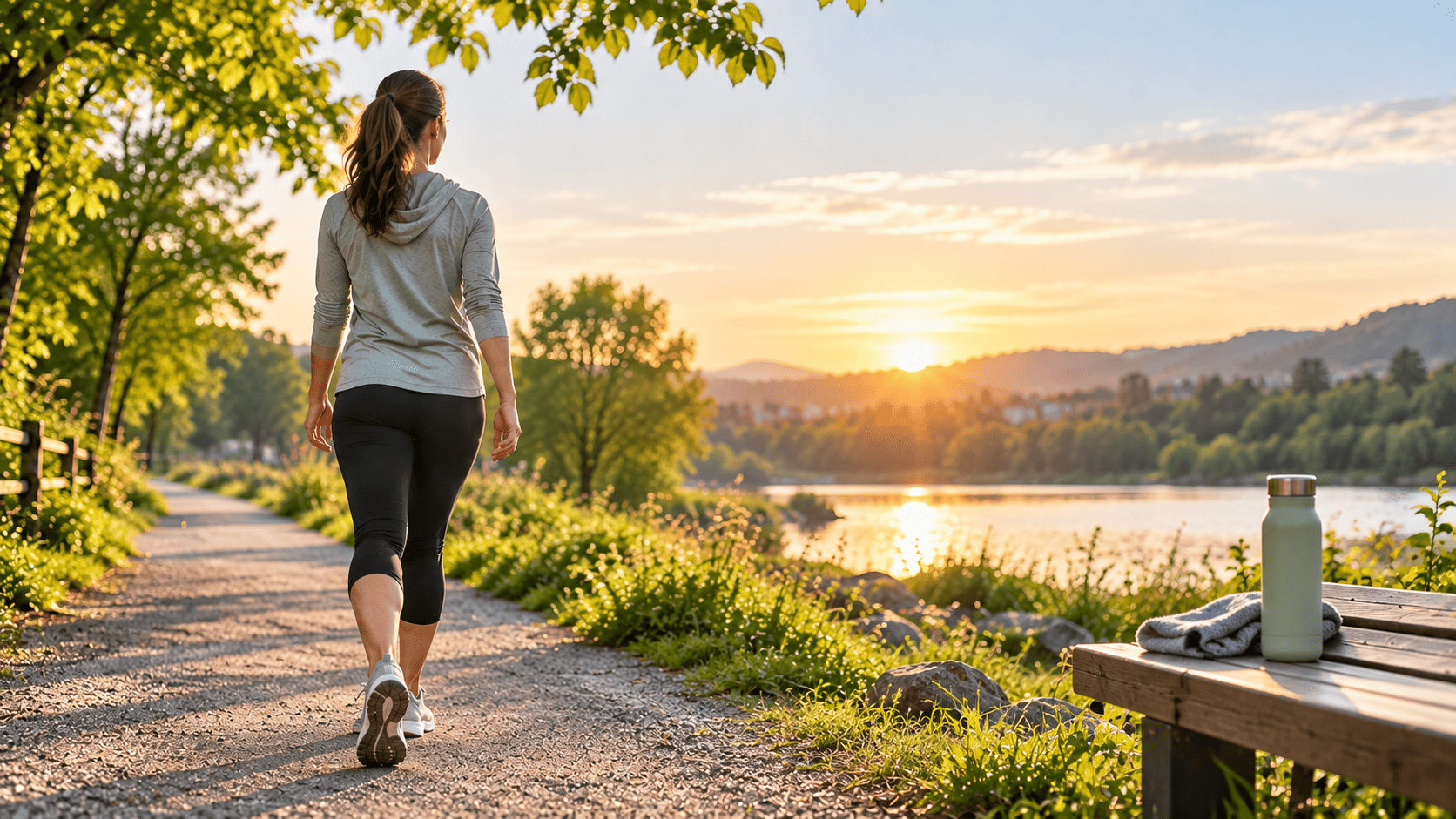
Walking can be a practical part of stress management and everyday mental wellness. Physical activity can reduce short-term feelings of anxiety, support mood, and improve sleep, while regular walking also benefits physical health. You do not need an intense workout or a rigid step target to begin. Short, comfortable walks can count, and a routine can gradually become longer or more brisk as your fitness and confidence improve.
Key Takeaways
- A single session of moderate-to-vigorous physical activity can reduce short-term feelings of anxiety.
- Regular physical activity can support mood, sleep, brain health, and overall mental wellness.
- Walking does not have to be long or intense to be worthwhile; small amounts of activity add up.
- Adults are encouraged to work toward at least 150 minutes of moderate-intensity aerobic activity per week, with brisk walking as one option.
- Walking can complement stress management, but persistent or severe anxiety, depression, or overwhelming stress may require professional support.
Can Walking Really Help With Stress?
Walking cannot remove every source of stress, but it can be one useful way to support how you respond to it. Stress is a normal physical and emotional reaction to challenges. When stress becomes prolonged, however, it can contribute to symptoms such as sleep problems, headaches, digestive complaints, muscle tension, and emotional distress.
Physical activity is one of the lifestyle strategies recommended by the National Institute of Mental Health for coping with stress and anxiety. CDC also reports that a single session of moderate-to-vigorous physical activity can reduce short-term feelings of anxiety.
This does not mean everyone will feel dramatically calmer after every walk. Responses vary with stress level, sleep, physical fitness, environment, health conditions, and personal preferences. The evidence supports walking as a wellness tool rather than a guaranteed instant stress cure.
Practical perspective: A walk does not need to eliminate stress to be useful. Creating a predictable period for movement, a change of environment, and a temporary break from stressful tasks can still support daily wellness.
How Walking Supports Mental Wellness
It Can Reduce Short-Term Anxiety
CDC identifies reduced short-term feelings of anxiety as an immediate benefit of moderate-to-vigorous physical activity. Brisk walking can qualify as moderate-intensity activity when it increases breathing and heart rate while still allowing you to carry on a conversation.
An easier walk may still be worthwhile, especially if you are inactive, tired, or looking for gentle movement. You do not need to turn every stress-relief walk into a fitness test.
It Supports Mood Over Time
Regular physical activity is associated with better mental health and a lower risk of depression and anxiety. Walking is one accessible way to increase physical activity without needing specialized equipment or a gym membership.
Walking with a friend, family member, or group can also create social connection, which may add another dimension to a wellness routine.
It Can Support Sleep
Better sleep quality is another recognized benefit of regular physical activity. Because inadequate or disrupted sleep can make stressful days feel even harder, a consistent walking routine may indirectly support stress management through healthier sleep.
Walking is not a treatment for chronic insomnia, sleep apnea, or another sleep disorder. Persistent sleep problems deserve appropriate evaluation rather than relying on exercise alone.
It Gives Your Day a Structured Pause
Stress often feels continuous when work, caregiving, notifications, and unfinished tasks run together. A scheduled walk creates a defined transition. Even when the stressor remains afterward, the walk can provide temporary physical and mental distance from it.
How Long Should You Walk for Stress Relief?
There is no evidence-based rule saying that a stress-relief walk must last a particular number of minutes. NIMH notes that small amounts of exercise add up, and CDC emphasizes that some physical activity is better than none.
If you have only a few minutes available, a brief walk is still legitimate. If you have more time and feel comfortable, you can continue longer. For broader health benefits, adults are encouraged to work toward at least 150 minutes of moderate-intensity aerobic activity each week.
| Situation | Practical walking approach | Main purpose |
|---|---|---|
| Busy workday | Take a short walk between tasks or during a break | Create a mental and physical transition |
| Feeling restless | Walk at a comfortable or brisk pace depending on fitness | Channel energy into movement |
| Building fitness | Gradually extend brisk walking across the week | Work toward moderate-intensity activity goals |
| Social stress relief | Walk with someone supportive | Combine movement with social connection |
Does the Walking Pace Matter?
Your walking pace can depend on the purpose of the walk. If you are trying to accumulate moderate-intensity aerobic activity, brisk walking is appropriate when it makes you breathe harder and your heart beat faster while conversation remains possible.
If your goal at that moment is simply to get outside, clear your head, or move after prolonged sitting, an easier pace can also be useful. Mental wellness does not require turning every walk into a performance metric.
Use effort as a guide: A brisk pace may support fitness goals, while a slower walk may be more appropriate when you are fatigued, recovering, or simply looking for gentle movement.
Mindful Walking vs. Regular Walking
A walk does not have to include mindfulness practice to be beneficial. Regular physical activity already has documented mental and physical health benefits.
Some people enjoy using part of a walk for present-moment awareness. That might mean noticing the sensation of your feet contacting the ground, your breathing, sounds in the environment, or what you can see around you rather than repeatedly checking messages or replaying stressful thoughts.
NIMH includes mindfulness and relaxation exercises among possible coping strategies for stress. However, these practices are optional. If paying close attention to internal sensations makes you more anxious or uncomfortable, an ordinary walk with music, conversation, or attention directed outward may suit you better.
Walking Outdoors vs. Indoors
The best location is one that is safe, accessible, and realistic enough for you to use consistently. Outdoor walks may provide a change of scenery and time away from indoor environments, while indoor walking can be more practical during extreme weather, darkness, poor air quality, or when outdoor routes are unsafe.
- A neighborhood route can make walking easy to start from home.
- A park or trail may provide a quieter environment when available.
- A treadmill allows control over speed and incline.
- An indoor mall or large building can provide a weather-protected option.
- Brief walking breaks around a workplace or home still contribute movement.
A Simple Stress-Supportive Walking Routine
A useful routine does not need to be complicated. Choose a time when walking is realistic and pair it with something that already happens in your day.
- Morning: Take a brief walk after waking or breakfast if it helps you begin the day with movement.
- Workday: Use a short walking break after a demanding task or prolonged period of sitting.
- Afternoon: Walk instead of automatically reaching for another period of screen time when you need a break.
- Evening: Consider an easy walk after dinner if it fits comfortably into your routine.
- High-stress days: Reduce the goal if necessary. A short walk is still more achievable than abandoning movement because you cannot complete your usual session.
How to Make the Habit Easier to Maintain
Lower the Starting Barrier
A routine becomes easier when the first step is simple. Keep comfortable shoes accessible, identify a reliable route, and allow yourself to begin with a short walk rather than requiring a full workout every time.
Schedule the Walk
If walking is repeatedly postponed until you “find time,” give it a predictable place in the day. A lunch-break walk or after-dinner walk is easier to remember than an unspecified plan to exercise sometime later.
Use Social Support
Walking with someone can make the activity feel less like another obligation. It can also provide an opportunity for supportive conversation and social connection.
Track Consistency, Not Perfection
A simple calendar checkmark or activity log can show how often you walked without turning the routine into a competition. Missing a day does not erase the value of the walks you already completed.
How Walking Fits Into a Broader Wellness Plan
Walking is only one part of stress wellness. NIMH also recommends strategies such as maintaining regular meals, getting adequate sleep, identifying stress triggers, staying connected with supportive people, and trying relaxation or mindfulness practices when they are helpful.
For physical health, walking also does not replace every form of exercise. Current U.S. guidance recommends that adults combine aerobic activity with muscle-strengthening activities on at least two days each week.
Build a toolkit: Walking, sleep, social support, balanced meals, relaxation practices, enjoyable activities, and professional care when needed can work together rather than competing as separate solutions.
When Walking Is Not Enough
Stress is common, but symptoms should not automatically be managed only with lifestyle changes. NIMH advises paying attention to how symptoms affect daily life. Stress or anxiety that feels constantly present, causes avoidance, or interferes with everyday functioning may warrant professional support.
Similarly, persistent sadness, significant loss of interest, worsening anxiety, major sleep disruption, or difficulty completing normal responsibilities deserves attention. Walking can complement appropriate mental healthcare, but it is not a substitute for diagnosis or treatment when a mental health condition is present.
Seek support when needed: If stress, anxiety, or low mood is persistent, worsening, or interfering with work, relationships, sleep, self-care, or everyday activities, consider discussing your symptoms with a qualified healthcare or mental health professional.
Frequently Asked Questions
Related reading
The Bottom Line
Walking for stress relief is a simple, flexible wellness strategy with benefits that extend beyond stress alone. Physical activity can reduce short-term anxiety, support mood and sleep, and contribute to cardiovascular and overall health. Short walks count, and you can gradually build toward brisk walking and recommended weekly activity levels.
Use walking as one part of a broader approach that includes adequate sleep, supportive relationships, regular meals, enjoyable activities, and other coping strategies that work for you. When stress, anxiety, or low mood becomes persistent or begins interfering with daily life, professional support may be more appropriate than relying on lifestyle habits alone.
Medical disclaimer
Medical disclaimer: This content is for educational and informational purposes only and is not a substitute for professional medical advice, diagnosis, or treatment. Dietary needs and supplement suitability vary by individual.
Sources
- Centers for Disease Control and Prevention, Health Benefits of Physical Activity for Adults, March 10, 2026.
- Centers for Disease Control and Prevention, Benefits of Physical Activity, December 4, 2025.
- Centers for Disease Control and Prevention, Adult Activity: An Overview, accessed September 2026.
- Centers for Disease Control and Prevention, Moving Matters for My Health, December 17, 2025.
- National Institute of Mental Health, I’m So Stressed Out! Fact Sheet, accessed September 2026.
- National Institute of Mental Health, Caring for Your Mental Health, accessed September 2026.
- National Center for Complementary and Integrative Health, Stress, accessed September 2026.
