
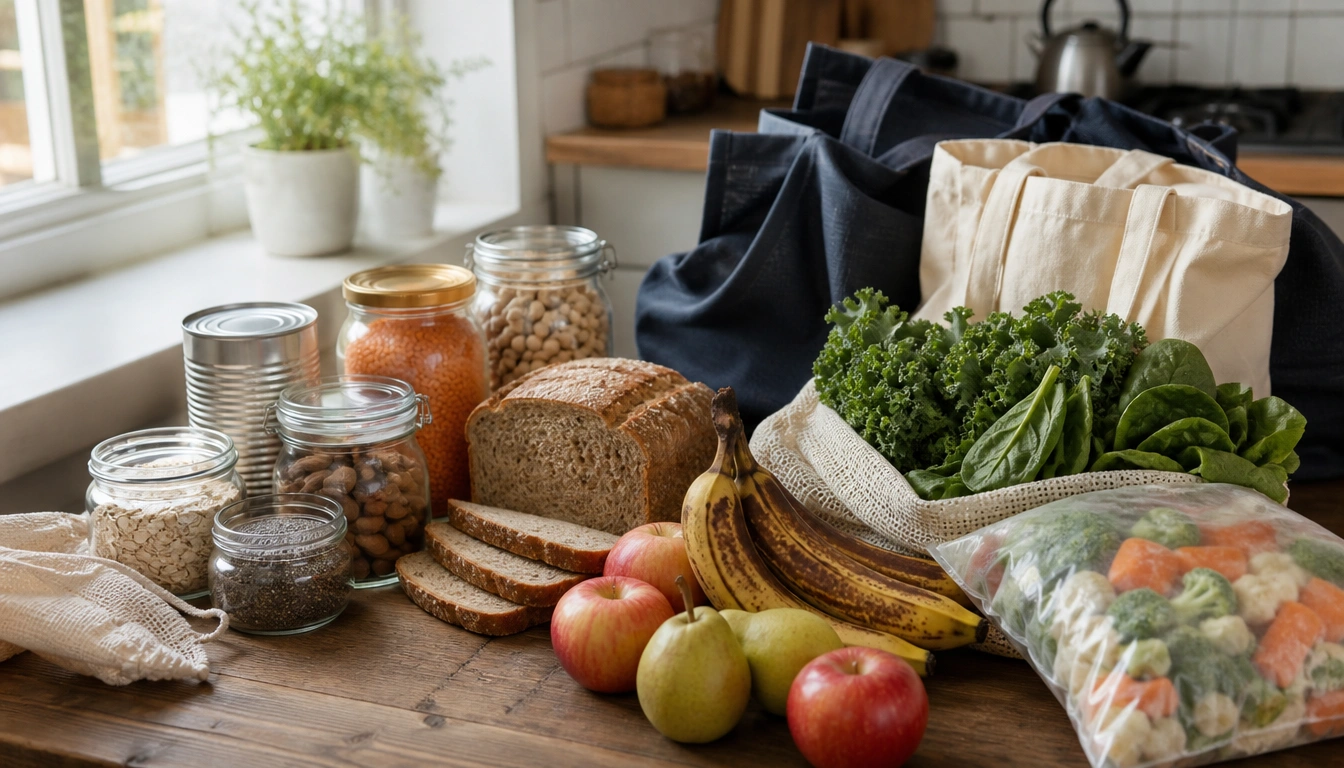
To make a vegetarian diet high in fiber without feeling overwhelmed, focus your grocery cart on beans, lentils, peas, oats, whole-grain bread and tortillas, vegetables, whole fruit, nuts, and seeds. Start with canned beans, frozen vegetables, and easy grains, then increase fiber gradually while drinking enough fluid. That approach gives you more fiber, more satiety, and less bloating than jumping straight to a very high-fiber menu.
Key Takeaways
- Refined vegetarian foods can still be low in fiber, so buy whole or minimally processed plant foods first.
- Canned beans, frozen vegetables, whole fruit, and cooked-and-cooled starches make high-fiber eating easier and cheaper.
- Increase fiber slowly and pair it with fluids to reduce bloating, cramping, and constipation.
- Choose 100% whole-grain breads, tortillas, and cereals by reading ingredient lists and fiber counts.
- If you have active digestive disease, a stricture, obstruction, or recent bowel surgery, high-fiber advice may need to be modified.
Why a vegetarian diet can still be low in fiber
Many people assume that eating vegetarian automatically means eating plenty of fiber, but that is only true if the food choices are built around whole plant foods. A pattern that leans on white bread, white pasta, sweetened cereal, refined snack foods, and heavily processed meat alternatives can be surprisingly low in fiber, even though it contains no meat. The easiest fix is to shop with a simple rule: make beans, whole grains, vegetables, fruit, nuts, and seeds the backbone of the cart, and treat refined vegetarian convenience foods as occasional add-ons.
Fiber is the part of plant food your small intestine does not digest. Some fiber helps with regularity and stool bulk, some slows digestion and supports steadier blood sugar, and some feeds gut bacteria. The high-fiber grocery list for vegetarian beginners should therefore aim for variety, not just one “superfood.” A mix of legumes, intact grains, produce, and small amounts of seeds gives you different fiber types along with protein, vitamins, and minerals.
If you are new to higher-fiber eating, start with a cart that feels realistic rather than perfect. A beginner who reliably buys oats, canned beans, frozen broccoli, apples, and whole-grain bread will usually do much better than someone who buys complicated ingredients but never cooks them. According to the U.S. Dietary Guidelines, fiber intake should come from food patterns that emphasize whole grains, vegetables, fruits, and legumes.
Pulses first: the easiest high-fiber protein foods
Pulses—beans, lentils, chickpeas, split peas, and similar foods—are the most efficient way to raise fiber in a vegetarian diet without spending much money. They also bring protein, which helps meals feel satisfying. For beginners, the easiest entry point is usually canned beans or lentils because they require little prep. Rinse them well before eating to remove some sodium and to improve taste.
Lentils are especially beginner-friendly because they cook quickly and soften well in soups, stews, and grain bowls. Chickpeas work in salads, wraps, curries, and roasted snack mixes. Black beans, pinto beans, kidney beans, and cannellini beans each bring a slightly different texture, so choosing more than one type keeps meals from feeling repetitive. Split pea soup is another practical option if you want a high-fiber meal that is easy to portion and reheat.
When you are building a grocery list, think in terms of “always buy” pulse foods. A shelf-stable can of beans, a bag of dry lentils, and a carton of split peas can carry several meals. If you tolerate them well, try adding a small portion to breakfast or lunch rather than making dinner the only fiber-heavy meal. That spreads out the load on your digestive system.
Whole grains that actually help
Whole grains can raise fiber only when they are truly whole or minimally refined. Oats are one of the easiest places to start because they are familiar, inexpensive, and versatile. Bulgur is another strong option for beginners because it cooks quickly and works in grain bowls, salads, and pilafs. Quinoa is useful if you want a naturally gluten-free grain-like staple, though it is usually lower in fiber than beans and oats.
For bread and tortillas, label reading matters. Look for “100% whole wheat,” “100% whole grain,” or another whole grain named as the first ingredient. If the front of the package says multigrain, wheat, or made with grains, that does not automatically mean it is high in fiber. Compare brands and choose the one with a higher fiber number per serving and a whole grain ingredient first on the list.
Popcorn is a useful snack because it is a whole grain in a form many beginners already enjoy. Air-popped or lightly seasoned popcorn can add fiber without requiring a big recipe change. Cooked whole grains also pair well with beans, so a bowl of bulgur with chickpeas or quinoa with black beans can become a steady, simple meal pattern rather than a one-off healthy choice.
Vegetables and fruit that give the most fiber for the effort
Vegetables are essential, but some are more beginner-friendly than others. Frozen vegetables are often just as useful as fresh because they are picked at peak ripeness and are easy to keep on hand. Broccoli, Brussels sprouts, green peas, carrots, and spinach are all practical choices. If you buy fresh vegetables, keep the skin on when appropriate, because the skin often carries extra fiber. That matters for potatoes, sweet potatoes, cucumbers, and some squash.
Two food-form habits make a big difference. First, choose cooked or roasted vegetables when raw salads feel too heavy. Second, use canned or frozen vegetables when that helps you eat them more consistently. A microwave bag of frozen broccoli is a better high-fiber grocery choice than a fresh vegetable that sits unused until it spoils.
For fruit, buy whole fruit instead of juice. Juicing removes most of the fiber, which is the opposite of what a high-fiber cart should do. Apples, pears, bananas, berries, and avocados are especially useful for beginners. Apples and pears are portable, berries work well with oats or yogurt alternatives, bananas are easy on the go, and avocado adds fiber plus creaminess to toast, bowls, or wraps.
If you want a low-effort rule, aim for one fruit that travels well, one that is freezer-friendly, and one that can be added to breakfast. Frozen berries, pears, apples, and bananas can rotate through that role. This makes it easier to increase fiber without having to prepare a different snack every day.
Nuts and seeds that boost fiber without taking over the meal
Nuts and seeds are not the highest-fiber foods by volume, but they are efficient add-ins because you only need a small amount. Chia seeds and ground flaxseed are especially useful in a beginner vegetarian kitchen. Stir chia into oats, yogurt alternatives, or overnight pudding-style breakfasts. Add ground flax to cereal, smoothies, or baked goods. Almonds and pumpkin seeds are helpful as snacks or toppings for salads and grain bowls.
These foods work best when you treat them as boosters rather than the main event. A tablespoon or two can noticeably improve the fiber content of breakfast or a snack without making the meal bulky. They also add healthy fats, which can improve satisfaction. If your goal is to build a grocery list that is easy to use, keep one seed and one nut on hand rather than buying a large variety at first.
Be mindful that seeds and nuts are calorie-dense, so they are best used intentionally. A small scoop over oatmeal, a sprinkle on vegetables, or a handful with fruit is usually enough. For beginners, that kind of “small amount, repeated often” strategy is more realistic than trying to rely on nuts and seeds for most of the day’s fiber.
How to build the cart on a budget and avoid discomfort
A budget-friendly high-fiber vegetarian cart usually starts with store-brand oats, rice, whole-grain bread, canned beans, dry lentils, frozen vegetables, and seasonal fruit. Bulk bins can help with oats, lentils, chia, and some nuts, but only if you will use the food before it loses freshness. If your grocery budget is tight, prioritize the foods that can anchor multiple meals rather than specialty snacks or pricey mock meats.
High-fiber eating does not have to be expensive. Canned beans are often less costly than pre-cooked refrigerated options, and frozen vegetables can be cheaper than out-of-season produce. Cooked-and-cooled potatoes, rice, or grains can also contribute resistant starch, which is another useful form of plant carbohydrate. That means leftovers are not just convenient; they can also be a practical part of a fiber-rich pattern.
To reduce bloating, increase fiber in steps instead of all at once. A gradual ramp lets your gut adjust. Spread fiber through the day rather than stacking most of it at one meal. Pair beans, grains, or seeds with enough fluid, since fiber absorbs water and works best when you are well hydrated. If you suddenly add large amounts of fiber without enough liquid, constipation can actually get worse.
A useful shopping habit is to add one new high-fiber item at a time. For example, keep your usual meals but switch white bread to whole grain, then add canned beans to lunch, then add frozen vegetables to dinner. Small changes are easier to tolerate and easier to sustain.
When high-fiber advice needs caution
High-fiber eating is not appropriate for everyone in every situation. People with active inflammatory bowel disease, acute diverticulitis, bowel strictures, bowel obstruction, or recent bowel surgery are often told to limit fiber temporarily or follow a low-residue pattern. In those cases, “more fiber” may be the wrong short-term goal, even if it is helpful later. Follow the plan given by your clinician or dietitian rather than forcing a generic grocery list.
You should also seek medical guidance if you develop persistent abdominal pain, rectal bleeding, unexplained changes in bowel habits, vomiting, or severe bloating after making diet changes. Those symptoms are not just a sign to “push through.” They may signal a condition that needs evaluation. If you have a history of digestive disease, it is reasonable to ask for individualized guidance before making major changes to fiber intake.
For mineral absorption concerns, the practical answer is not to avoid legumes and whole grains. These foods remain highly valuable. Soaking, sprouting, fermenting, and cooking can improve digestibility and may help reduce some mineral-binding compounds. The larger picture still matters: a varied vegetarian diet usually provides many opportunities for iron, zinc, and calcium across the day.
Simple meal formulas using your grocery list
Once your cart is stocked, the easiest way to use it is with repeatable meal formulas. For breakfast, think oats plus fruit plus a seed. For lunch, think grain plus beans plus vegetables. For dinner, think a whole grain or potato plus a pulse plus cooked vegetables. For snacks, think fruit plus nuts, popcorn, or a simple bean-based spread. These combinations work because they are flexible, filling, and easy to scale up or down.
Examples can stay very basic. A bowl of oats with berries and chia is a strong breakfast. A wrap made with a whole-wheat tortilla, hummus or beans, and greens works for lunch. Dinner might be quinoa with roasted vegetables and chickpeas, or bulgur with lentils and broccoli. Snacks can be an apple with almonds, popcorn, or carrots with bean dip.
If you are trying to eat more fiber without upsetting your stomach, keep portions moderate and repeat foods that agree with you. You do not need to make every meal high fiber on day one. The goal is a stable grocery pattern that gradually shifts your routine toward more whole plant foods and fewer refined replacements.
Frequently Asked Questions
Which vegetarian foods are highest in fiber per serving?
Beans, lentils, split peas, chia seeds, raspberries, artichokes, and some whole grains are among the most fiber-rich choices per serving. For beginners, pulses are usually the most practical because they add both fiber and protein.
How can a beginner increase fiber gradually without bloating or constipation?
Increase fiber in small steps, not all at once. Add one higher-fiber food at a time, spread it across meals, and drink enough fluids. That gives your gut time to adjust and lowers the chance of discomfort.
What should I look for on labels when buying high-fiber grains and breads?
Choose products with a whole grain named first on the ingredient list, such as whole wheat or whole oats. Compare fiber grams per serving, and do not assume terms like multigrain or wheat mean the food is truly high fiber.
Are canned beans and frozen vegetables good high-fiber choices for beginners?
Yes. Canned beans and frozen vegetables are convenient, budget-friendly, and still very useful for building a high-fiber vegetarian diet. Rinsing canned beans can reduce sodium, and frozen vegetables can be just as practical as fresh ones.
What if I have a digestive condition that requires limiting fiber?
If you have active inflammatory bowel disease, diverticulitis, a stricture, obstruction, or recent bowel surgery, you may need less fiber temporarily. Follow medical guidance rather than a general high-fiber plan, and ask for personalized advice if symptoms change.
The Bottom Line
A high-fiber vegetarian grocery list does not need to be complicated. Build it around beans, lentils, oats, whole grains, vegetables, whole fruit, nuts, and seeds, and use canned, frozen, and store-brand options to keep it practical.
If you are new to fiber, go slowly and drink enough fluids. That helps you get the digestive benefits of a plant-forward diet without the bloating, cramping, or constipation that can happen when fiber rises too fast.
Medical disclaimer
Medical disclaimer: This content is for educational and informational purposes only and is not a substitute for professional medical advice, diagnosis, or treatment. Dietary needs and supplement suitability vary by individual.
Sources
- National Health Service (NHS) — esht.nhs.uk. Accessed October 2026.
- National Health Service (NHS) — stgeorges.nhs.uk. Accessed October 2026.
- U.S. Government / Health Authority — dietaryguidelines.gov. Accessed October 2026.
- Mayo Clinic — mayoclinic.org. Accessed October 2026.
