
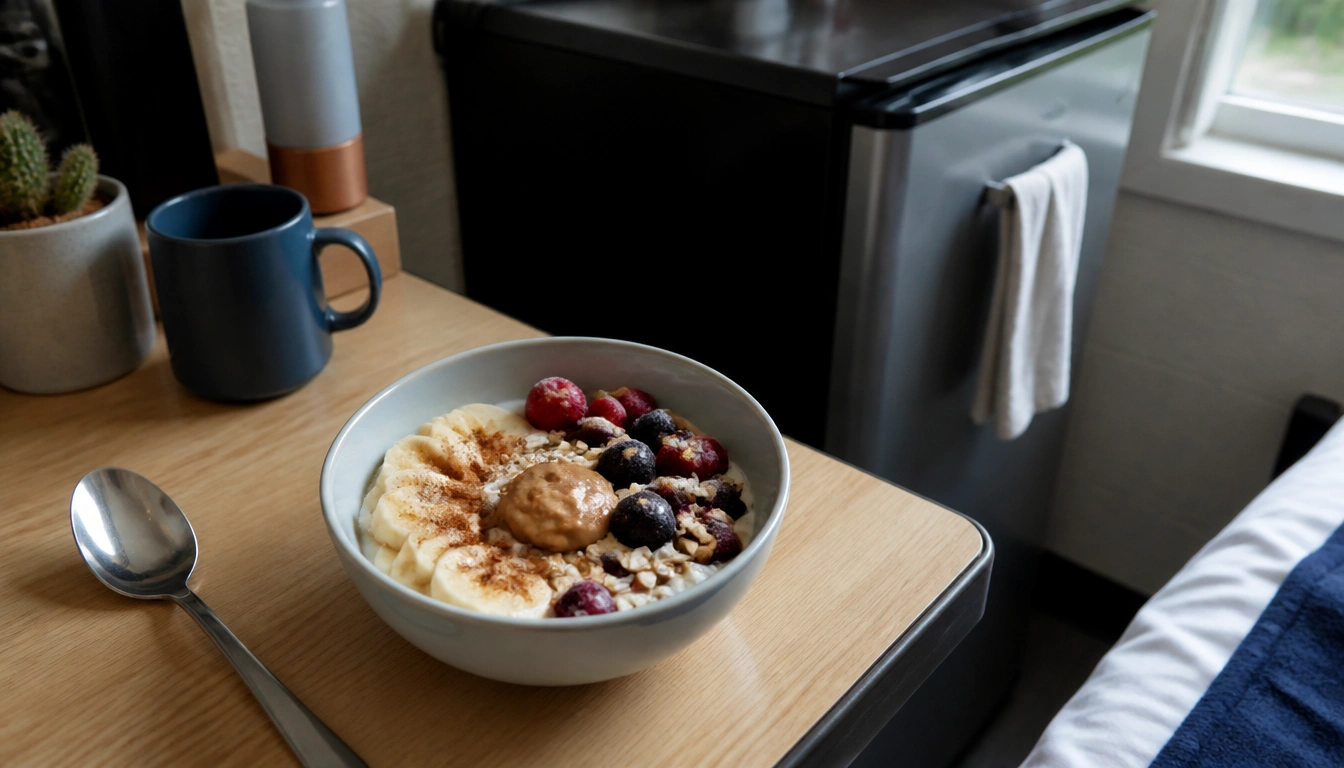
The easiest, cheapest, and most filling yogurt bowls for college students start with plain Greek, Icelandic, or regular yogurt and use low-cost add-ins such as bananas, frozen berries, oats, peanut butter, cinnamon, and seeds. That combination gives you protein, fiber, and healthy fat with very little prep, which makes it especially useful for dorm mornings, small kitchens, and tight budgets.
Key Takeaways
- Start with plain yogurt when you can; it gives you more control over sweetness and usually costs less than flavored cups.
- For better fullness, pair yogurt with at least one protein-friendly topping, one fiber source, and one fat source.
- Frozen fruit, oats, peanut butter, and cinnamon are budget staples that make yogurt bowls taste better without specialty ingredients.
- Greek and Icelandic yogurts usually feel more filling because they tend to be higher in protein than regular yogurt.
- Plant-based yogurts can work too, but many are lower in protein unless you add soy, nuts, seeds, or another protein-rich topping.
Why yogurt bowls work especially well in college
For students who need breakfast or a late-night snack fast, a yogurt bowl fits dorm life better than most cooked meals. You can build one with one bowl, one spoon, and ingredients that keep well in a mini-fridge or freezer. That means less cleanup, fewer dishes to wash in a shared sink, and less dependence on a full kitchen.
Yogurt also gives you a useful nutrition base. It can provide protein, calcium, and live active cultures, and it becomes more satisfying when you pair it with foods that digest more slowly, such as oats, seeds, nuts, and fruit. That mix can help you stay fuller through a morning class block than a sugary pastry or a plain cereal bar.
It helps to think of yogurt bowls as a formula rather than a recipe. If you can keep a few reliable ingredients on hand, you can put together breakfast in two minutes, even on the mornings when you are running late.
How to build a balanced yogurt bowl
A strong yogurt bowl usually has six parts: a yogurt base, a protein boost, a fiber source, fruit, crunch, and flavor. You do not need all six every time, but the more boxes you check, the more filling the bowl tends to be.
Base: plain Greek yogurt, Icelandic yogurt, regular yogurt, or a plant-based yogurt if dairy is not an option. Plain versions make sugar control easier.
Protein: Greek or Icelandic yogurt is often the simplest option. If you use regular or plant-based yogurt, add peanut butter, hemp seeds, chia seeds, soy yogurt, or another protein-supporting topping.
Fiber: oats, berries, chia seeds, flaxseed, apples, or pears help slow digestion and make the bowl more lasting.
Fruit: fresh bananas and apples are easy; frozen berries are often cheaper and last longer.
Crunch: chopped nuts, seeds, or a small handful of low-sugar granola add texture. You can also use crushed whole-grain cereal if that is what you already have.
Flavor: cinnamon, cocoa powder, vanilla extract, or a small drizzle of honey can make a plain bowl taste better without relying on a heavily sweetened yogurt cup.
If you want a quick rule for satiety, combine protein plus fiber plus fat. That trio tends to be more satisfying than yogurt alone, and it is one reason these bowls work so well for students heading into long classes or labs.
Budget-smart ingredient swaps that stretch a college food budget
You do not need special toppings to make a yogurt bowl feel complete. In fact, some of the best add-ins are inexpensive staples that also serve double duty in other meals.
Frozen fruit instead of fresh berries: frozen mixed berries, peaches, or mango are often cheaper, reduce waste, and thaw quickly in a bowl. They are especially useful when your fridge space is tight.
Oats instead of pricey granola: rolled oats or quick oats can add fiber and bulk for far less money than branded toppings. If you prefer more crunch, toast them in a dry pan only if you have access to one, or use them raw for a softer texture.
Peanut butter instead of dessert toppings: a spoonful gives richness, flavor, and staying power. It works especially well with banana, apple, or cocoa.
Seeds and pantry nuts: chia, flax, sunflower seeds, peanuts, or walnuts often cost less per serving than specialty mixes.
Seasoning for flavor: cinnamon, pumpkin pie spice, cocoa powder, and even a pinch of salt can make a simple bowl taste more interesting without extra sugar.
For students who shop weekly, it helps to keep one “fridge” item and three shelf-stable items on hand. For example: yogurt, bananas or frozen fruit, oats, and peanut butter. That small set already covers a lot of breakfast and snack combinations.
Three practical recipe blueprints with exact mix-and-match topping combinations
These bowls are designed for dorms, apartments, and shared kitchens. They use simple ingredient pairs that are easy to repeat without getting bored.
Nutty banana bowl
Use plain Greek yogurt, half a sliced banana, one spoonful of peanut butter, and a pinch of cinnamon. If you want more crunch, add a small handful of chopped peanuts or sunflower seeds. This is a good choice on days when you need something that feels hearty and tastes a little like dessert.
Freezer berry oat bowl
Use plain Greek or Icelandic yogurt, a handful of thawed frozen berries, and two to three spoonfuls of oats. Add chia seeds if you want more thickness and staying power. This version works well when you want something cool, not too sweet, and easy to prep with freezer staples.
Apple pie bowl
Use plain yogurt, chopped apple, cinnamon, and a small amount of honey if needed. Add walnuts, almonds, or pumpkin seeds for crunch. If apples are too hard to slice in your dorm, use pre-cut apple slices from the store or switch to pears or bananas.
These bowls are flexible on purpose. You can swap banana for apple, oats for granola, peanut butter for almond butter, or berries for any fruit you already have. The goal is not perfection; it is building something affordable and filling enough that you will actually eat it before class.
How to choose between Greek, Icelandic, regular, and plant-based yogurt for your goals
Different yogurts can work for different students, and the best choice often depends on protein needs, taste, price, and whether you need dairy-free options.
| Type of yogurt | Why students choose it | Best fit for |
|---|---|---|
| Greek yogurt | Usually thicker and higher in protein than regular yogurt | Students who want a filling breakfast with simple toppings |
| Icelandic yogurt | Often thick, tangy, and protein-forward | People who want a very creamy bowl with a substantial texture |
| Regular yogurt | Often cheaper and easier to find | Budget shoppers who are adding nuts, seeds, or oats anyway |
| Plant-based yogurt | Useful for dairy-free or vegan diets | Students who need a non-dairy base and can add protein-rich toppings |
If your main goal is satiety, Greek or Icelandic yogurt usually makes the easiest starting point. If you are buying regular yogurt, the bowl still works well; it just helps to add more protein and fiber elsewhere. With plant-based yogurt, check the label carefully because some varieties are low in protein. Soy-based yogurts often make the easiest protein-friendly dairy-free base, while coconut or almond versions may need extra help from seeds, nut butter, or soy milk on the side.
According to the NHS, yogurt can be part of a healthy diet, and dairy foods are useful sources of calcium and protein. The form you choose should match your taste, budget, and how much fullness you need between meals.
How to keep yogurt bowls lower in added sugar without making them boring
One of the easiest ways to keep a yogurt bowl balanced is to start with plain yogurt and build sweetness yourself. That gives you more control than buying a flavored cup, which may already contain more added sugar than you want for an everyday breakfast.
Fruit should do most of the sweetening. Bananas, berries, apples, pears, and peaches all bring natural sweetness, especially when paired with cinnamon or vanilla. A small drizzle of honey or maple syrup can work too, but it is best used as a finishing touch rather than the main flavor.
If you like your yogurt dessert-like, try adding cocoa powder, cinnamon, or a few chopped nuts. These ingredients add interest without relying on sugar-heavy syrups or candy-like toppings. Texture helps too: crunchy nuts or seeds can make a simple bowl feel more satisfying even when it is not very sweet.
Another practical trick is to mix fruit with the yogurt first, then add just one sweet accent. For example, use banana and peanut butter, or berries and cinnamon, or apple and walnuts with a little honey. That keeps the bowl flavorful without drifting into dessert territory every morning.
Dorm storage and food-safety tips for mini-fridges and shared spaces
Dorm food safety matters because mini-fridges can be crowded, overfilled, or set a little too warm. Keep yogurt in the coldest part of the fridge, not in the door, and check that it stays refrigerated promptly after you bring it home. The NHS advises keeping chilled food cold and avoiding long periods at room temperature, which is especially relevant when you are packing breakfast before an early lecture.
Shared living spaces also make clean-scoop habits important. If you are using a larger tub of yogurt, use a clean spoon every time instead of double-dipping with a spoon that has already touched fruit, granola, or your mouth. That lowers the chance of introducing bacteria and helps the yogurt stay fresh longer.
Try not to let toppings sit in the bowl for hours. If you make a bowl and then get distracted, eat it soon or refrigerate it again quickly. For students with unpredictable schedules, single-serve yogurt cups can be more practical than a large container, even if the cost per serving is a little higher.
If your mini-fridge is unreliable, buy smaller amounts more often, choose shelf-stable toppings, and keep frozen fruit in the freezer compartment if you have one. When in doubt, follow the food label and discard yogurt that smells off, looks separated in a strange way, or has been left out too long.
Easy add-ons for different goals: more protein, more energy, more fiber, or more dessert-like flavor
Once you know the base formula, you can tailor the bowl to the kind of morning you are having.
For more protein: choose Greek or Icelandic yogurt, then add chia seeds, hemp seeds, peanut butter, soy yogurt, or a few nuts. This is useful when you will not get another meal for several hours.
For more energy: add banana, oats, or a little honey. That can be helpful before a workout, a long commute, or a morning full of labs and classes.
For more fiber: use berries, apples, pears, oats, chia, or flaxseed. Fiber can make the bowl more filling and help stretch it into a better snack or mini-meal.
For a more dessert-like bowl: use vanilla yogurt if you prefer it, or keep plain yogurt and add cinnamon, cocoa powder, peanut butter, and fruit. You get a sweeter taste without needing a heavily sweetened packaged cup.
If dairy is not an option, plant-based yogurt can still support a good bowl. The easiest upgrade is to add soy milk, soy yogurt, hemp seeds, nut butter, or oats so the bowl has enough structure and staying power. The exact combination does not need to be fancy. It just needs to be affordable, easy to repeat, and realistic for your dorm routine.
Frequently Asked Questions
What toppings make a yogurt bowl more filling for class mornings?
The most filling toppings usually combine protein, fiber, and fat. Good options include peanut butter, chia seeds, oats, hemp seeds, nuts, and fruit like berries or banana. That mix tends to feel more substantial than fruit alone or sweet toppings without much texture.
How can college students keep yogurt bowls low in added sugar?
Start with plain yogurt and sweeten it with fruit, cinnamon, or a small drizzle of honey if needed. Frozen berries, banana, and apple add natural sweetness, while cocoa powder and vanilla can improve flavor without much sugar. Try to make flavored yogurt the exception, not the default.
What’s the best type of yogurt for protein and satiety?
Greek and Icelandic yogurts are usually the easiest choices if you want more protein and a thicker bowl. Regular yogurt can still work well if you add protein-rich toppings. For plant-based options, soy-based yogurt is often the most useful starting point.
Can you make yogurt bowls if you’re lactose intolerant or vegan?
Yes. Plant-based yogurts made from soy, almond, coconut, or oats can work, especially if you add protein-supporting toppings such as soy products, hemp seeds, chia seeds, or nut butter. If you are lactose intolerant, choose a yogurt that fits your tolerance and check labels carefully.
How do you store yogurt safely in a dorm mini-fridge?
Keep yogurt cold, store it in the coldest part of the mini-fridge, and return it to the fridge promptly after use. Use a clean spoon each time if you are scooping from a shared tub, and do not leave the bowl at room temperature for long. If your fridge runs warm, buy smaller amounts more often.
The Bottom Line
Yogurt bowls are one of the simplest dorm-friendly breakfasts because they are fast, flexible, and easy to make with a tiny kitchen setup. If you start with plain yogurt and add fruit, oats, nuts, or seeds, you can build a bowl that is cheap, filling, and easy to repeat.
The most practical versions for college life use ingredients that are already useful elsewhere: bananas, frozen berries, peanut butter, cinnamon, and oats. That keeps shopping simple and helps you avoid expensive specialty toppings while still making breakfast feel satisfying.
Medical disclaimer
Medical disclaimer: This content is for educational and informational purposes only and is not a substitute for professional medical advice, diagnosis, or treatment. Dietary needs and supplement suitability vary by individual.
Sources
- National Health Service (NHS) — www.nhs.uk. Accessed October 2026.
- National Health Service (NHS) — wchc.nhs.uk. Accessed October 2026.
