
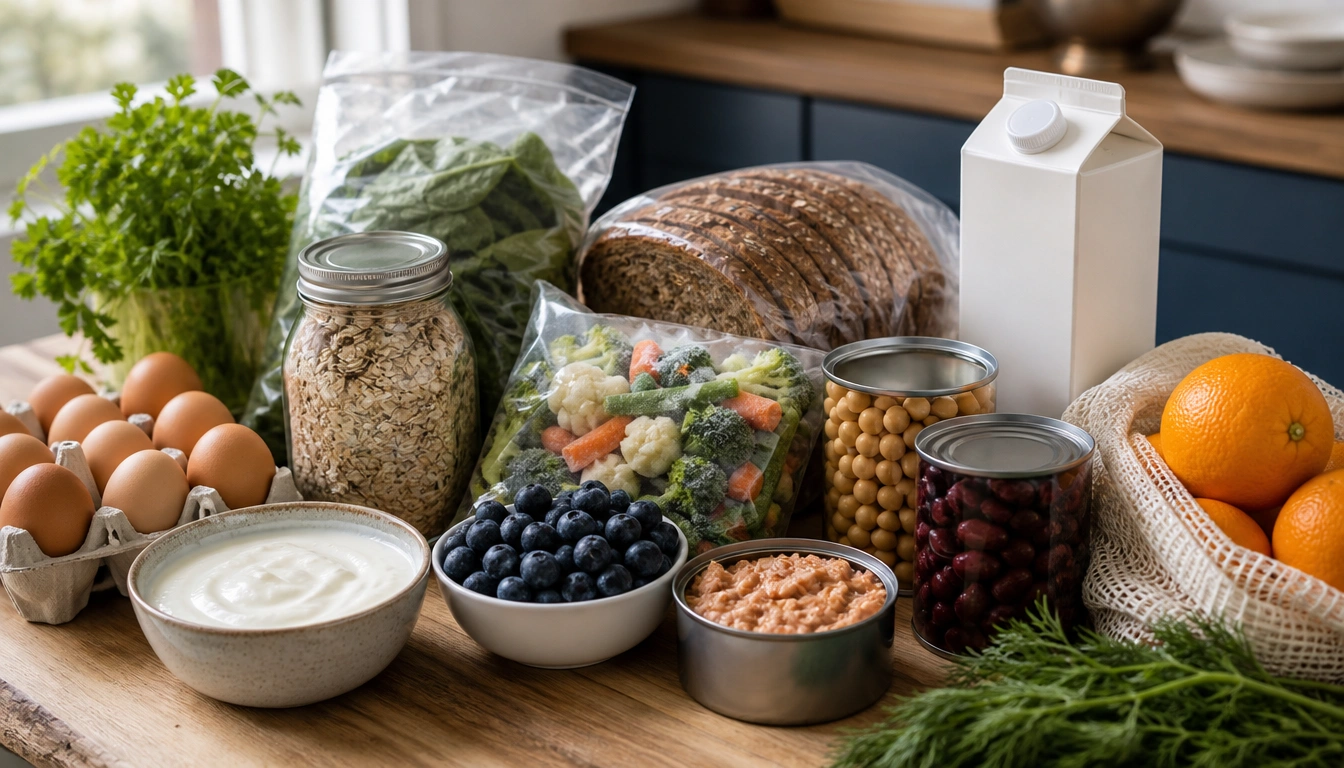
If you’re over 50, the simplest grocery routine is to shop from a short, repeatable list built around protein, produce, fiber-rich staples, and a few calcium- and vitamin D-rich foods. Focus on nutrient-dense items rather than more food overall, and use frozen, canned, pre-cut, and shelf-stable options to keep the routine realistic. Food-first choices are the default; supplements are best reserved for diagnosed needs or clinician guidance.
Key Takeaways
- Build each trip around four anchors: produce, protein, grains or pantry staples, and dairy or fortified alternatives.
- Protein matters more with age because maintaining muscle gets harder, so include it at most meals.
- Frozen and canned foods can be just as practical as fresh choices and often reduce waste and prep time.
- Fiber-rich beans, oats, whole grains, fruit, and vegetables support digestion, blood sugar, and heart health.
- Calcium, vitamin D, and vitamin B12 deserve extra attention, but food and fortified foods usually come before supplements.
- If you have diabetes, high blood pressure, kidney disease, swallowing trouble, or medication-food interactions, your grocery routine should be personalized.
Why grocery shopping needs to change after 50
A beginner grocery routine for adults over 50 works best when it matches the reality of aging: calorie needs often go down, but needs for protein, fiber, calcium, vitamin D, and vitamin B12 become more important. That means the old habit of “buy less of everything” is not enough. The goal is to buy fewer empty calories and more foods that do useful work for your body.
Public guidance from the USDA and related older-adult food models points to a simple pattern: make each shopping trip start with a few repeatable categories. Think produce, protein, grains or pantry staples, and dairy or fortified alternatives. That structure is easy to remember, flexible across budgets, and practical for people who do not want to plan an elaborate menu.
A repeatable routine also helps when appetite is smaller or energy is lower. If you shop the same basic framework each week, you are less likely to rely on snacks or convenience foods that fill you up without supplying enough nutrients.
Build the cart around protein first
Older adults need enough protein spread across the day to help preserve muscle. Because aging bodies become less efficient at using protein for muscle building, it helps to think in terms of a protein base at breakfast, lunch, and dinner rather than one large serving at night.
Good grocery options include eggs, Greek yogurt, milk, cottage cheese, chicken, turkey, fish, tofu, edamame, lentils, beans, and canned tuna or salmon. Shelf-stable foods are especially helpful if shopping is hard or you do not cook every day. Canned beans, canned fish, tofu, and nut butters can all live in the pantry and still support a balanced routine.
For a simple weekly plan, try to choose a few “default proteins” you actually like and can rotate. For example, eggs for breakfast, yogurt or cottage cheese for snacks, beans for soups or salads, and fish or chicken for dinner. This keeps protein from becoming an afterthought.
If chewing is difficult, softer proteins are often easier to manage: scrambled eggs, yogurt, tender fish, tofu, hummus, beans cooked until soft, and minced or shredded meats. The best protein is the one you can eat consistently.
Choose produce that fits real life
Fresh fruits and vegetables are valuable, but they are not the only good choice. Frozen and canned produce can make the routine easier and reduce spoilage. Frozen berries, broccoli, spinach, green beans, cauliflower, and mixed vegetables are often practical because they are already washed, cut, and ready to cook.
Canned vegetables and fruit can also fit well if you choose versions packed in water or 100% juice and look for low-sodium or no-salt-added vegetables when possible. Rinsing canned beans and vegetables helps lower sodium. This is useful when you want convenience without giving up nutrition.
Pre-cut produce can be a smart buy if chopping vegetables is tiring or painful. Bagged salad greens, pre-cut squash, baby carrots, and pre-sliced fruit can lower the barrier to eating more produce. The key is not perfection; it is having enough accessible produce in the house that you actually use it before it spoils.
If your appetite is small, keep produce simple. A banana, a handful of berries, a microwavable bag of vegetables, or a small salad can be easier to finish than a large, ambitious pile of produce that goes bad.
Prioritize fiber-rich staples
Fiber becomes more important with age because digestion can slow, and fiber helps with bowel regularity, cholesterol, and blood sugar control. A grocery routine after 50 should include a few reliable fiber staples rather than hoping you will “make up for it” later.
Beans, lentils, oats, whole-grain bread, brown rice, whole-wheat pasta, fruit, vegetables, nuts, and seeds are all helpful. The best strategy is to combine fiber with convenience. For example, oatmeal at breakfast, beans in soup or chili, whole-grain toast with eggs, or fruit with yogurt can steadily build intake without complicated cooking.
When reading labels, choose grains where “whole” appears near the top of the ingredient list. If you buy cereal, compare options and look for lower sugar choices that still provide fiber. For people with diabetes, fiber-rich foods are especially useful because they can support steadier blood sugar when paired with appropriate portions and a balanced meal pattern.
Fiber works best when you also drink enough fluid. If your fluid intake is low, adding more fiber too quickly can be uncomfortable, so increase gradually and keep meals simple.
Add bone- and muscle-supportive basics
After 50, your grocery list should give extra attention to calcium, vitamin D, and vitamin B12. These nutrients support bone health, muscle function, and overall resilience. Food-first is the usual starting point, with fortified foods used when they fit your routine and supplements reserved for diagnosed deficiencies or clinical advice.
Calcium-rich foods include milk, yogurt, cheese, calcium-fortified soy beverages, and some fortified plant milks. Vitamin D is harder to get from food alone, so fortified dairy or fortified alternatives can be useful. Fatty fish such as salmon can help as well. Vitamin B12 is found in animal foods and in fortified foods such as some breakfast cereals and plant milks.
Practical label checks matter here. Look for “fortified with vitamin D” or “fortified with vitamin B12” on packages if you use non-dairy alternatives. For yogurt and milk, plain versions are often a better everyday choice than sugary ones. For cereal, a fortified option can be useful, but choose one that does not rely on added sugar as the main selling point.
If you follow a mostly plant-based pattern, fortified foods become even more important. A food-first routine can still work well, but it should be deliberate about these nutrients rather than accidental.
Flavor without overdoing salt
Older taste buds can make food seem bland, which is one reason people drift toward the salt shaker. A better routine is to stock flavor builders that make healthy food enjoyable without leaning on excess sodium.
Keep herbs, spices, garlic, onion, citrus, vinegar, mustard, pepper, and salt-free seasoning blends in the cart or pantry. These can make beans, vegetables, chicken, fish, eggs, and grains taste much better with very little effort. Olive oil or canola oil can also help with texture and satisfaction.
One easy habit is to season food in layers. Add herbs or spices while cooking, then finish with lemon juice, vinegar, or a small amount of sauce at the end. That usually gives more flavor than adding more salt after the meal is plated.
If you are trying to support heart health or blood pressure, flavoring food this way is especially useful. It keeps meals pleasant without making sodium the default source of taste.
Adapt the routine for common barriers
The best grocery routine is the one you can actually repeat. Budget, fatigue, mobility limits, low appetite, and dental issues all change how the list should look.
For budget shopping, center the cart on eggs, oats, beans, lentils, frozen vegetables, canned fish, yogurt, and store-brand whole grains. These foods often give more nutrition per dollar than convenience snacks or highly processed ready-made meals. Buying a few basics and reusing them in different meals is usually cheaper than building a long list of specialty foods.
If cooking energy is low, choose items that need little prep: rotisserie chicken, bagged salad, microwavable rice, canned soup with lower sodium, frozen vegetables, hummus, yogurt, and pre-cooked or pre-cut proteins. A short list is not a failure; it is a strategy.
For chewing or dental problems, shift toward softer textures. Think oatmeal, soups, stews, yogurt, cottage cheese, mashed beans, soft fruit, cooked vegetables, scrambled eggs, flaky fish, and tender pasta. If a food is nutritious but too hard to eat comfortably, it will not help much sitting in the fridge.
When appetite is low, smaller packages can be helpful because they reduce waste and pressure. Individual yogurts, single-serve cottage cheese, frozen fruit, and small containers of soup or hummus are often easier to finish than bulk sizes.
When this routine should change
General grocery advice should be adjusted for chronic conditions and medication interactions. If you have diabetes, the routine may need more careful carbohydrate planning and portion balance. If you have high blood pressure, sodium becomes a bigger issue and highly processed foods deserve less space in the cart. If you have chronic kidney disease, potassium, phosphorus, sodium, and protein may all need individualized guidance from a clinician or renal dietitian.
Some medications also interact with foods. Grapefruit is a common example, and some blood thinners require consistent vitamin K intake rather than sudden changes in leafy greens. Because the risk depends on the exact medication, it is worth asking your pharmacist or prescriber before making major diet changes.
There are also signs that grocery changes are not enough and medical review is needed. Unintended weight loss, swallowing difficulty, ongoing loss of appetite, or sudden bowel changes should not be written off as normal aging. In those cases, a clinician can help identify the cause and adjust the food plan safely.
The safest approach is to keep the basic shopping framework, then personalize it when health conditions or medications demand it.
Use a repeatable weekly shopping routine
A simple weekly routine can look like this: pick one or two proteins, three or four produce items, two fiber staples, and one or two dairy or fortified options. Add flavor items and a backup shelf-stable food or two. That small structure gives you enough variety without turning every store trip into a project.
For example, your cart might include eggs, yogurt, canned beans, frozen vegetables, berries, oatmeal, whole-grain bread, and a citrus fruit or herb blend. That list can become breakfast, lunch, dinner, and snacks with very little extra planning.
Over time, the routine becomes less about “healthy shopping” in the abstract and more about keeping the fridge and pantry stocked with foods you can use easily. That is what makes the habit sustainable.
Use this simple test before checkout: do you have protein, produce, fiber, and a calcium- or vitamin D-rich option for the week? If yes, you probably have the core of a solid grocery routine.
Frequently Asked Questions
What are the most important foods to prioritize after age 50?
Start with protein foods, fiber-rich staples, fruits and vegetables, and calcium- or vitamin D-rich foods. That usually means eggs, yogurt, fish, beans, lentils, oats, whole grains, and a mix of fresh, frozen, or canned produce.
How much protein and fiber should older adults aim for?
General reference targets are about 46 grams of protein per day for many women and 56 grams for many men, with higher needs sometimes appropriate. Fiber targets are commonly at least 21 grams daily for women and 30 grams for men, though individual needs can differ.
Which grocery items are best for bone health and muscle maintenance?
For bones, look for milk, yogurt, cheese, fortified plant milks, and other calcium- and vitamin D-fortified foods. For muscle maintenance, prioritize eggs, dairy, fish, poultry, tofu, beans, lentils, and other protein-rich foods that are easy to eat regularly.
How can I shop cheaply and avoid food waste with a limited routine?
Buy a short list of repeatable basics, such as oats, eggs, beans, frozen vegetables, canned fish, yogurt, and whole-grain bread. Frozen and canned foods last longer, and pre-cut produce can be worth it if it helps you actually use what you buy.
What foods or shopping choices should I adjust if I have diabetes, high blood pressure, or a medication interaction risk?
If you have diabetes, focus on balanced meals and fiber-rich carbs. If you have high blood pressure, limit highly processed, salty foods. If you take medicines that interact with grapefruit or vitamin K-rich foods, ask your pharmacist or clinician before changing your routine.
The Bottom Line
A good grocery routine after 50 does not need to be complicated. Build around protein, produce, fiber, and a few calcium- and vitamin D-rich foods, then repeat that pattern each week.
Frozen, canned, pre-cut, and shelf-stable items can make healthy eating easier, cheaper, and less wasteful. If chewing, appetite, energy, or mobility are issues, adjust texture and package size instead of abandoning the routine.
If you have diabetes, high blood pressure, kidney disease, swallowing trouble, unintended weight loss, or medication-food interactions, personal guidance matters more than generic advice. The basic framework still helps, but it should be tailored.
Medical disclaimer
Medical disclaimer: This content is for educational and informational purposes only and is not a substitute for professional medical advice, diagnosis, or treatment. Dietary needs and supplement suitability vary by individual.
Sources
- U.S. Government / Health Authority — dietaryguidelines.gov. Accessed October 2026.
- U.S. Government / Health Authority — usda.gov. Accessed October 2026.
- National Institutes of Health (NIH) — nih.gov. Accessed October 2026.
- National Institutes of Health (NIH) — nih.gov. Accessed October 2026.
- Academic Research Institution — tufts.edu. Accessed October 2026.
- Academic Research Institution — okstate.edu. Accessed October 2026.
