
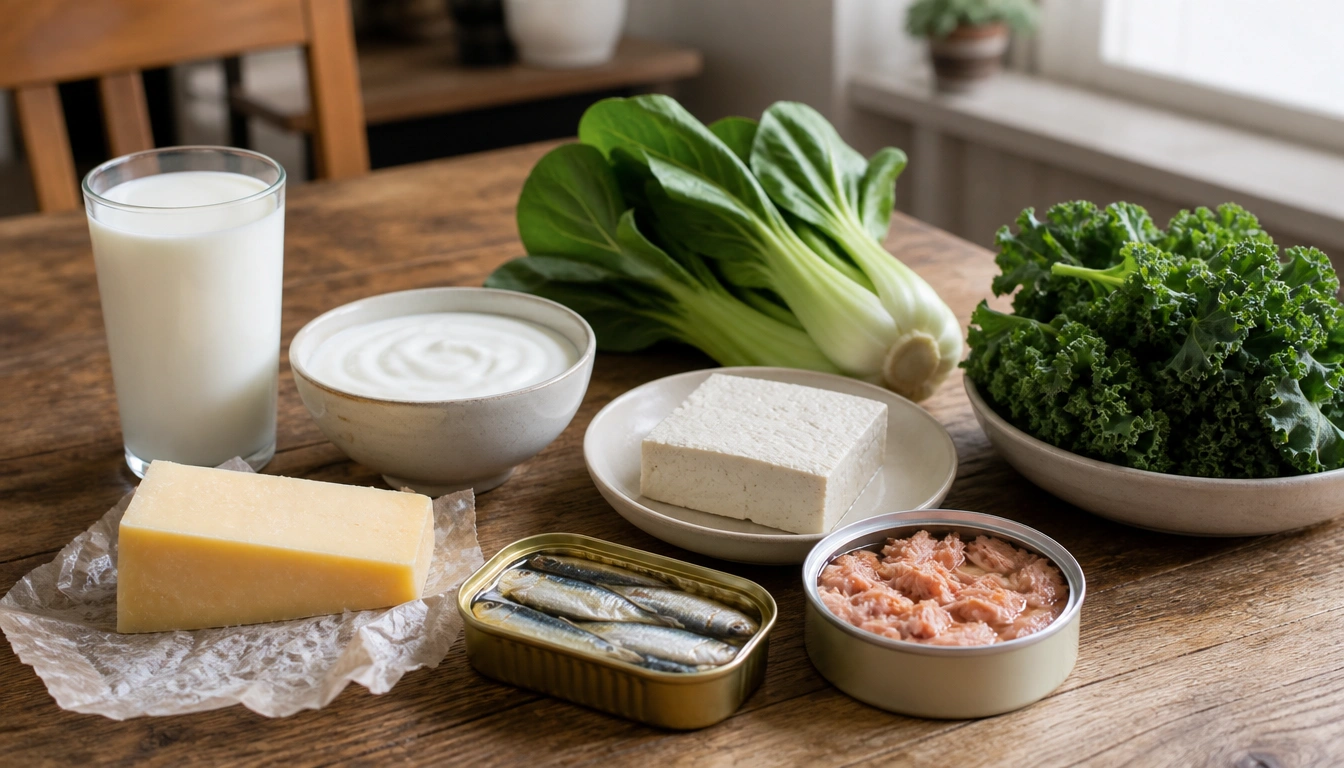
Cheap calcium-rich foods without supplements can absolutely help you meet your needs. The best budget options are usually milk, yogurt, block cheese, dry milk powder, canned sardines or salmon with bones, calcium-set tofu, fortified plant milks, and low-oxalate greens like kale and bok choy. For many people, one or two of these foods a day can make a meaningful dent in calcium goals without raising grocery costs much.
Key Takeaways
- Calcium needs change by age, so one budget serving may cover a small child’s needs but only part of an adult’s goal.
- Milk, yogurt, block cheese, and dry milk powder are often the most reliable low-cost calcium staples.
- Canned sardines and salmon with soft bones add calcium plus protein, and the bones can be eaten when mashed well.
- Kale and bok choy are better calcium choices than spinach because their calcium is absorbed more efficiently.
- Fortified plant milks and calcium-set tofu can be useful budget options, especially for people who avoid dairy.
- Food-only calcium toxicity is uncommon, but kidney stones, kidney disease, and endocrine disorders need personalized advice.
Why calcium matters when you are trying to stay on budget
Calcium is not just a bone mineral. According to the National Institutes of Health, it also helps muscles contract, nerves communicate, blood vessels work normally, and hormones get released. Your body keeps blood calcium tightly controlled, so if your diet is short, it will pull some calcium from bone to keep those systems running.
That is why steady intake matters more than occasional large servings. For budget shoppers, the goal is not to find the fanciest food. It is to choose foods that deliver useful calcium for the lowest practical cost.
Recommended calcium needs vary by age, according to the NIH Office of Dietary Supplements and U.S. Dietary Guidelines:
- Children 1–3 years: 700 mg per day
- Children 4–8 years: 1,000 mg per day
- Children and teens 9–18 years: 1,300 mg per day
- Adults 19–50 years: 1,000 mg per day
- Men 51–70 years: 1,000 mg per day; women 51–70 years: 1,200 mg per day
- Adults 71 and older: 1,200 mg per day
That context matters. A cup of milk or yogurt, a serving of calcium-fortified plant milk, or a can of sardines may not solve the whole day, but it can move you a long way toward the target. For a young child, that same serving may cover a large share of the day’s need.
The cheapest high-calcium foods that do the most work per dollar
When the grocery budget is tight, the best calcium foods are usually the ones that are affordable, easy to use, and consistently available. The strongest value often comes from foods that do not need special preparation and that fit into meals you already eat.
At the top of the list are plain milk, yogurt, block cheese, canned fish with bones, calcium-set tofu, fortified plant milks, and certain leafy greens. These foods are practical because they bring other nutrients too, especially protein. That makes them more useful than many isolated fortified products that add calcium but not much else.
Look for foods that can be used in more than one meal. A store-brand gallon of milk can become breakfast cereal, hot cocoa, oatmeal, or soup. A block of cheese can be grated over pasta, folded into scrambled eggs, or added to sandwiches. Canned sardines or salmon can become a spread, salad topper, or patty filling. The more ways you use a food, the easier it is to get value from it before it spoils.
Dairy staples that are usually the best value: milk, yogurt, block cheese, and dry milk powder
Dairy foods are often the simplest budget answer because they deliver calcium in a form the body absorbs well. The NIH notes that milk and yogurt are reliable calcium sources, and they are easy to build into meals without much cooking.
Milk is often the most flexible option. A glass with breakfast, a splash in coffee, or milk used in oatmeal all count. Plain yogurt can work for breakfast bowls, dips, or a quick snack. Unsweetened varieties are often better for daily use because they avoid extra sugar and still give the same calcium.
Block cheese is usually better value than pre-shredded or single-serve cheese snacks. Buying a block and grating or slicing it at home usually lowers the cost per serving. It also stretches farther in casseroles, omelets, toast, and bean dishes.
Dry milk powder is one of the most overlooked budget tools. It can be stirred into soups, oatmeal, mashed potatoes, pancake batter, baking recipes, or ground meat mixtures. That makes it especially useful for families who want to raise calcium intake without changing the overall meal pattern or shopping list much.
Canned fish with edible bones and budget plant options
Canned sardines and canned salmon with soft, edible bones are among the most calcium-dense foods that are still budget friendly. The bones are the point: they are soft enough to eat and contribute meaningful calcium along with protein. They are especially useful if you want shelf-stable foods that do not require much cooking.
A practical way to use them is to mash the bones into the fish mixture. That works well in salmon patties, sardine toast, pasta, rice bowls, or salad spreads. If the texture seems unfamiliar, mixing the fish with mustard, yogurt, lemon, or a little mayo can make it easier to use.
For plant-based shoppers, calcium-set tofu and fortified plant milks can be strong options. Tofu made with calcium sulfate can provide substantial calcium, and fortified soy milk often compares well with dairy for calcium content. The Dietary Guidelines for Americans treat fortified soy beverages as a dairy alternative because they can fill a similar role in the diet.
For budget use, check labels. Not all plant milks are fortified the same way, and plain rice or almond drinks may vary widely. If calcium is the goal, choose a fortified product and use it regularly instead of treating it as an occasional swap.
The greens question: which leafy vegetables are worth buying for calcium, and which are not
Leafy greens can be a good low-cost support food, but not all greens are equally useful for calcium. The difference is bioavailability, which means how much calcium your body can actually absorb and use.
Spinach is the classic example of a food that looks better on paper than it performs in practice. It contains calcium, but it is also very high in oxalates, which bind calcium and reduce absorption. That means spinach should not be treated as a top calcium strategy.
Low-oxalate greens such as kale, bok choy, collards, and turnip greens are better choices. They still fit a budget because they are often sold fresh, frozen, or bagged, and frozen greens can be especially practical. Cooked greens shrink a lot, so a low-cost bag can turn into several meals.
If you are choosing between spinach and bok choy for calcium, bok choy usually gives you more useful calcium for the meal. That does not mean spinach is worthless. It just means it is better thought of as a nutrient-rich green than a main calcium food.
How to build a low-cost day of eating that gets you closer to your calcium goal
A food-first calcium plan works best when it adds up across the day instead of trying to force one perfect meal. A child may need far less than an adult, while a teenager or older adult may need several solid calcium foods spread across meals.
One simple budget day might look like this: oatmeal made with milk or dry milk powder at breakfast, yogurt or cheese as a snack, a lunch sandwich with cheese or a tofu bowl, and dinner with sardines, salmon, or a side of bok choy or collards. Even two of those choices can significantly narrow the gap for many adults.
Another low-cost pattern is to anchor meals around one calcium-rich food and then repeat it in different forms. For example, milk can appear at breakfast and in baking, cheese can show up in lunch and dinner, and canned fish can be stretched into two meals when mixed with rice, pasta, or potatoes.
For children, smaller servings may go farther toward the daily target. For adults, especially teens and older adults, it may take two or three budget calcium foods in the same day to get close to the goal. That is normal, not a failure of the diet.
Money-saving shopping and prep strategies for calcium-rich foods
Good calcium shopping is mostly about buying the same nutrients for less money. Store brands usually work just as well as name brands for milk, yogurt, cheese, canned fish, and fortified plant milks. The label may change, but the nutrient profile is often very similar.
Buy larger formats when you can use them before they spoil. A block of cheese is often cheaper than shredded cheese. A gallon or half-gallon of milk can be cheaper per serving than smaller containers. Dry milk powder can be a smart backup because it stores well and can be mixed into many foods.
Choose canned fish strategically. Sardines and salmon with bones can be inexpensive pantry proteins, especially when bought in multi-packs or when store sales appear. If the bones bother you, mash them well so they disappear into the dish.
Frozen greens can also save money and reduce waste. They are already washed and chopped, and they cook quickly in soups, noodles, beans, and stir-fries. That makes them a practical option for people who do not want to prep fresh greens every week.
When food is enough and when to be cautious about calcium intake
For most healthy people, getting calcium from food is safe and effective. The National Institutes of Health notes that calcium from ordinary foods rarely causes toxicity on its own. Problems are more likely when people use high-dose supplements, stack multiple fortified products without noticing, or have a medical condition that changes how calcium is handled.
There are upper limits for calcium intake, and they matter most when supplements are involved. Adults should not assume that more is better. Very high calcium intake can contribute to problems such as kidney stones in some situations, especially when combined with other risk factors.
If you have kidney stones, chronic kidney disease, or an endocrine disorder that affects calcium balance, your needs may be different. In that situation, a personal plan from a healthcare professional is more useful than general advice. The same is true if you have been told to limit certain minerals for medical reasons.
Food-only planning is still a good starting point for most people. The safest approach is usually steady, moderate intake from a mix of affordable foods rather than relying on large supplement doses or extreme diets.
Frequently Asked Questions
How much calcium do adults and children need each day?
Needs vary by age. According to the NIH, children 1–3 years need 700 mg daily, children 4–8 need 1,000 mg, ages 9–18 need 1,300 mg, most adults 19–50 need 1,000 mg, women 51–70 need 1,200 mg, men 51–70 need 1,000 mg, and adults 71 and older need 1,200 mg.
Which budget foods have the most absorbable calcium?
Milk, yogurt, cheese, fortified soy milk, calcium-set tofu, and canned sardines or salmon with bones are some of the strongest budget options. Low-oxalate greens such as kale, bok choy, collards, and turnip greens also help because their calcium is more available than spinach’s calcium.
Is spinach a good calcium source compared with kale or bok choy?
Spinach contains calcium, but it also has a lot of oxalates, which limit absorption. Kale and bok choy are usually better calcium choices because their calcium is more bioavailable. Spinach is still nutritious, but it should not be your main calcium food if calcium is the goal.
How can I boost calcium intake on a tight grocery budget?
Use store-brand milk, yogurt, and cheese, add dry milk powder to soups or oatmeal, choose canned fish with bones, and keep frozen greens on hand. The best budget strategy is to spread calcium foods across meals so a few low-cost servings add up over the day.
Can I get too much calcium from food alone?
It is uncommon to get too much calcium from ordinary foods alone. Higher risk usually comes from supplements or medical conditions that affect calcium handling. If you have kidney stones, kidney disease, or an endocrine disorder, ask a healthcare professional for personalized guidance.
The Bottom Line
Cheap calcium-rich foods without supplements are widely available. The best value usually comes from dairy staples, canned fish with edible bones, calcium-set tofu, fortified plant milks, and low-oxalate greens that your body can actually absorb well.
If you are on a budget, focus on foods you can use often and in more than one meal. Store brands, bulk cheese, dry milk powder, and canned sardines or salmon can improve calcium intake without making shopping much more expensive.
For most healthy people, food-first calcium is safe. If you have kidney stones, kidney disease, or a condition that changes calcium balance, get individualized advice before making big changes.
Medical disclaimer
Medical disclaimer: This content is for educational and informational purposes only and is not a substitute for professional medical advice, diagnosis, or treatment. Dietary needs and supplement suitability vary by individual.
Sources
- National Institutes of Health (NIH) — nih.gov. Accessed October 2026.
- U.S. Government / Health Authority — medlineplus.gov. Accessed October 2026.
- National Institutes of Health (NIH) — nih.gov. Accessed October 2026.
- U.S. Government / Health Authority — dietaryguidelines.gov. Accessed October 2026.
- Academic Research Institution — oregonstate.edu. Accessed October 2026.
