
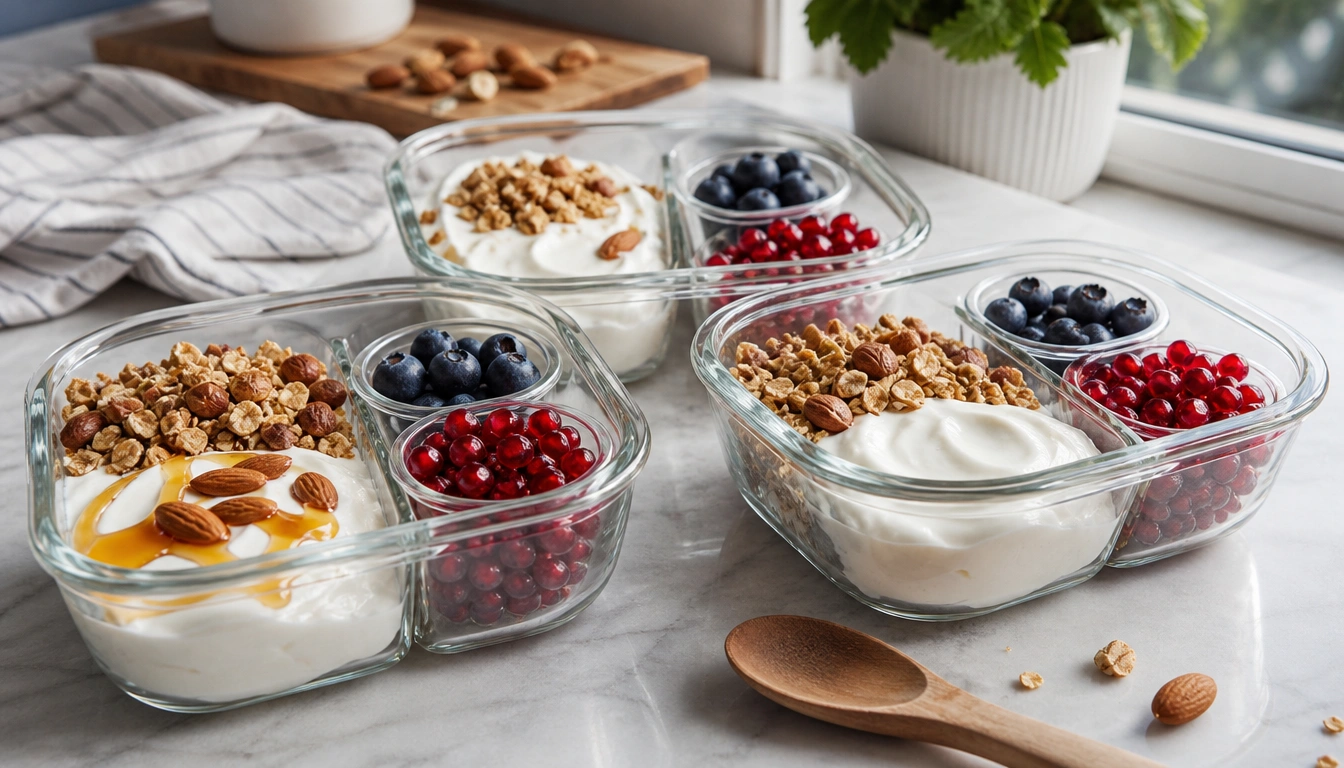
Meal-prep yogurt bowls stay best when you keep the crunchy toppings separate from the yogurt until eating time. Pack plain Greek yogurt or skyr as the base, store fruit and dry toppings in separate compartments, and use sturdy fruits that hold up well. For safety, keep refrigerated yogurt cold and eat pre-portioned bowls within 3 to 4 days.
Key Takeaways
- Moisture migration is what makes granola, nuts, and seeds soggy, so store them away from the yogurt until serving.
- Plain Greek yogurt or skyr gives you a higher-protein base; choose whole-milk for more richness or nonfat for fewer calories.
- Blueberries and pomegranate arils hold up better in prep containers, while bananas, peaches, and kiwi are better added fresh.
- For the best texture and safety, refrigerate prepared bowls promptly and plan to eat them within 3 to 4 days.
- Lactose-sensitive readers often tolerate Greek yogurt or skyr better than regular milk, and higher-protein plant-based options can work too.
Why yogurt bowls fail by day 3
The biggest challenge in simple yogurt bowl ideas for meal-prep beginners is not the yogurt itself. It is the way moisture moves through the bowl. Granola, nuts, seeds, and other crisp toppings start to soften as soon as they sit against wet yogurt or juicy fruit. Over time, they absorb water and lose their crunch.
That is why a bowl that tastes great on day one can seem dull or mushy by day three. The fix is not a complicated recipe. It is a smarter layout: keep the yogurt base, dry toppings, and fruit in separate zones until you are ready to eat. Think of the bowl as a set of parts, not one mixed container.
A useful beginner formula is simple: base + dry crunch + fruit + optional flavor add-in. The base is usually plain yogurt. Dry crunch can be granola, nuts, seeds, or coconut flakes. Fruit can be fresh or thawed frozen, depending on how well it holds texture. Flavor add-ins include cinnamon, vanilla, cocoa powder, honey, maple syrup, or nut butter.
Best yogurt types for beginners and the separation method
For a filling yogurt bowl, start with plain Greek yogurt or skyr. Both are strained styles, so they generally provide more protein per spoonful than regular yogurt. That makes them practical for people who want breakfast or a snack that feels more substantial without much prep.
If you are deciding between whole-milk and nonfat yogurt, match the choice to your goal. Whole-milk yogurt tends to feel richer and may be more satisfying for some people. Nonfat yogurt gives you a leaner base with less fat and usually more room for toppings. Neither is automatically “better”; the better option is the one that fits your appetite and overall eating pattern.
Check the label for added sugar, especially on flavored yogurts. A short ingredient list is usually the easiest place to start: milk, cultures, and sometimes cream. If you want sweetness, add it yourself with fruit, cinnamon, or a small drizzle of honey so you can control the flavor.
The separation method is what protects texture. Use a container with compartments, or pack the parts in separate small jars or cups. Put yogurt in the main container, then keep granola, nuts, seeds, and similar toppings dry until serving. If you want to mix in a thicker ingredient such as nut butter, swirl it into the yogurt base just before chilling, not days earlier.
Three beginner-friendly meal-prep formulas
These yogurt bowl meal prep combinations are designed to be easy, flexible, and realistic for 3-day prep.
Classic honey-nut bowl
Use plain Greek yogurt as the base. Stir in a little honey or maple syrup if you want the yogurt itself lightly sweetened. Pack granola in a separate compartment and add chopped walnuts or almonds on the side. Keep blueberries separate if you want them to stay firm and bright. This bowl works well when you want a familiar flavor with minimal effort.
Chocolate-peanut butter bowl
Whisk plain Greek yogurt with cocoa powder or a small amount of chocolate protein powder, then add a spoonful of natural peanut butter. Keep pumpkin seeds, cacao nibs, or coconut flakes separate so they stay crisp. This version is useful when you want a more dessert-like breakfast that still leans protein-forward.
Berry-almond bowl
Use plain whole-milk Greek yogurt or skyr for a creamy base. Add sliced almonds and hemp hearts in a separate topper cup, then pack raspberries or blueberries beside them. If you want extra sweetness, add a small spoon of jam or a drizzle of honey at the time of eating rather than soaking the fruit in advance.
These formulas are not strict recipes. They are templates you can repeat with whatever you already keep in the pantry. That is often the easiest way for beginners to stay consistent.
Fruits and toppings that hold up best
The best make-ahead fruit choices are the ones that stay firm and do not release too much juice. Blueberries and pomegranate arils are especially useful because they keep their shape well and do not quickly water down the yogurt. Strawberries can work too if you slice them close to serving time or pack them very dry.
Some fruits are better added right before eating. Bananas, peaches, and kiwi soften quickly, brown, or become watery. If you want to use them, keep them whole or cut them fresh when you are ready to eat. That small step makes a big difference in texture and appearance.
For toppings, think about what needs to stay crunchy. Granola, toasted nuts, pumpkin seeds, sunflower seeds, cacao nibs, and coconut flakes all hold up better when stored dry. Chia and flax can be helpful, but they absorb liquid, so use them intentionally. If you like a thicker spoonable texture, you can stir chia into the yogurt base ahead of time; if you want crunch, keep it separate.
Moist fruit toppings, jam swirls, and soft add-ins are best handled near serving time. That does not mean you cannot meal prep them. It just means they should not sit directly on the yogurt for several days.
Storage and food-safety basics
According to USDA food-safety guidance, refrigerated yogurt is generally safe unopened for about 1 to 2 weeks or through its use-by date if the refrigerator stays at or below 40°F. Once you portion yogurt into meal-prep containers, plan to eat it within 3 to 4 days for best freshness and safety.
Temperature matters just as much as timing. Keep yogurt and cut fruit cold, and return containers to the fridge quickly after assembly. Follow the 2-hour rule: do not leave dairy or cut fruit at room temperature for more than two hours, or one hour if the room is hot.
Use clean, dry utensils when portioning yogurt so you do not introduce extra moisture or contaminants. Avoid double-dipping into the same container. If a jar has been sitting out for a while in a backpack or lunch bag, err on the side of caution and do not keep it for another day.
If a bowl smells off, looks unusually watery, or develops mold, discard it. Texture is the goal, but food safety comes first.
Ways to customize protein, fiber, sweetness, and calories
Once you understand the basic formula, you can adjust the bowl to fit your appetite. If you want a more filling breakfast, start with Greek yogurt or skyr and add another protein-rich topping such as hemp hearts, nuts, or a little peanut butter. Higher protein meals are often more satisfying than lower protein ones, which can help you feel steadier between meals.
If you want more fiber, choose berries, add chia seeds, or use a higher-fiber granola in a small amount. If you want less sweetness, rely on plain yogurt and fruit instead of flavored yogurt. If you prefer a sweeter bowl, add a small drizzle of honey, maple syrup, or mashed banana just before eating.
Calorie needs can change the best yogurt choice. Whole-milk yogurt can make a bowl feel richer and more satisfying. Nonfat yogurt may work better if you want to keep the bowl lighter. The same base can serve different goals just by changing the toppings.
A good beginner habit is to build the bowl around one anchor flavor and one texture contrast. For example, creamy yogurt plus crunchy almonds, or tangy yogurt plus sweet berries. That keeps the bowl simple without making it boring.
Lactose-friendly swaps and dairy alternatives
Some readers who struggle with milk find that Greek yogurt or skyr feels easier to digest. Because these styles are strained, they contain less lactose than regular milk. That does not make them suitable for everyone, but they can be a useful first try for people with mild lactose sensitivity.
If you need a dairy-free option, look for plant-based Greek-style yogurts made from soy, almond, or coconut. The main thing to check is protein. Some dairy alternatives are creamy but much lower in protein than dairy yogurt, so read the label if your goal is a more filling bowl.
When using plant-based yogurt, the same storage and texture rules still apply. Keep crunchy toppings dry, add delicate fruit at the end, and refrigerate the bowl promptly. You may also want to add nuts, seeds, or nut butter to improve satiety if the base is lower in protein.
If you have severe digestive issues, a complicated medical condition, or a history of reacting poorly to fermented foods, it is sensible to check with a healthcare professional or dietitian before making yogurt a daily staple.
A 10-minute workflow for busy beginners
The easiest meal-prep routine is the one you can repeat without thinking. Start by setting out three or four containers, plus a few small cups or compartments for toppings. Spoon plain yogurt into each main container first.
Next, add any flavor to the yogurt base that you want to repeat for the week, such as cinnamon, cocoa powder, vanilla, or a small amount of honey. Mix only what belongs in the yogurt itself. Leave crunchy toppings out of the wet base.
Then divide the dry components into small containers: granola in one, nuts or seeds in another, and fruit in a third if needed. Put hardy fruit such as blueberries or pomegranate arils directly into a side cup or on top of the yogurt if your container seals well. Save bananas, peaches, and kiwi for the day you plan to eat the bowl.
Finally, label or group the containers by day. That small step makes weekday mornings easier because you do not have to decide what goes with what. If you want the fastest routine possible, prep the same base for every day and rotate the toppings. Repetition is often what makes meal prep stick.
For many beginners, the best system is not the most creative one. It is the one that keeps yogurt cold, toppings crisp, and breakfast ready with almost no effort.
Frequently Asked Questions
How long do yogurt bowls last in the fridge?
If the yogurt bowls are assembled ahead of time and kept refrigerated, plan to eat them within 3 to 4 days for best freshness and safety. Unopened yogurt itself can last longer in the fridge, but once portioned into meal-prep containers, the shorter window is the safer practical target.
What toppings should be kept separate from yogurt during meal prep?
Keep granola, nuts, seeds, coconut flakes, cacao nibs, and anything crunchy separate until serving. These ingredients absorb moisture quickly and lose texture when they sit directly on yogurt for too long. Soft fruit and juicy add-ins are also better packed separately if you want the best result.
Which type of yogurt is best for a high-protein yogurt bowl?
Plain Greek yogurt or skyr is usually the best starting point for a high-protein bowl. Both are strained and tend to be more protein-dense than regular yogurt. Choose whole-milk if you want a richer, more filling bowl, or nonfat if you want fewer calories.
Can lactose-intolerant people still eat yogurt bowls?
Many people with mild lactose sensitivity tolerate Greek yogurt or skyr better than regular milk because the straining process removes some lactose. Some also do well with high-protein plant-based yogurts. The best choice depends on your own tolerance, so start small and choose products that fit your needs.
What fruits hold up best in prepped yogurt bowls?
Blueberries and pomegranate arils are strong choices because they stay firm and do not release much liquid. Strawberries can also work if handled carefully. Bananas, peaches, and kiwi are better added right before eating because they soften, brown, or become watery more quickly.
The Bottom Line
Meal-prep yogurt bowls work best when you treat texture as the priority. Keep wet and dry ingredients separate, choose plain Greek yogurt or skyr for a more filling base, and add delicate fruit at the last minute if needed.
For safety, store bowls cold and aim to eat them within 3 to 4 days. If you keep the formula simple, you can rotate a few reliable combinations without getting bored or dealing with soggy granola.
Beginner-friendly prep usually comes down to a repeatable system: one yogurt base, one crunchy topping, one fruit choice, and one flavor accent. That structure is easy to batch and easy to adjust to your appetite.
Medical disclaimer
Medical disclaimer: This content is for educational and informational purposes only and is not a substitute for professional medical advice, diagnosis, or treatment. Dietary needs and supplement suitability vary by individual.
Sources
- U.S. Government / Health Authority — usda.gov. Accessed October 2026.
