
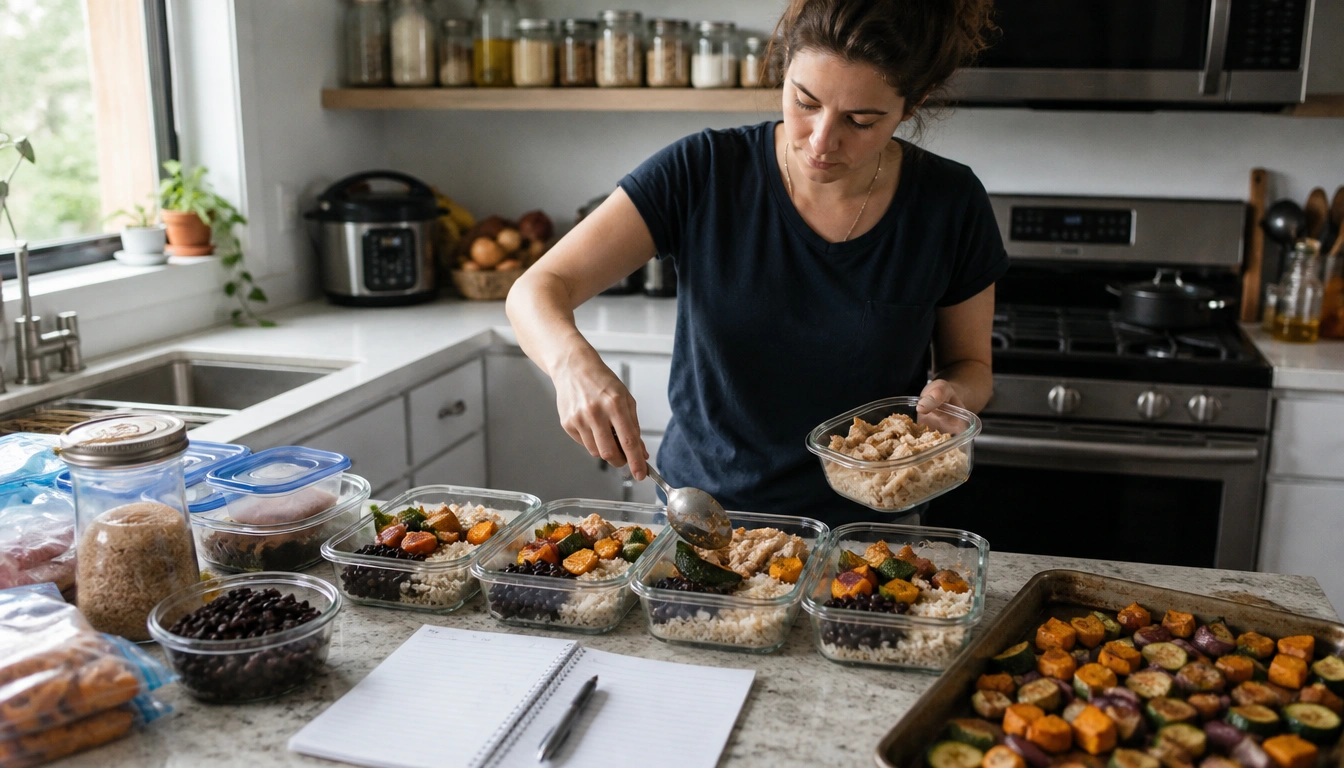
The most realistic way to meal prep on the weekend and save money is to plan your meals before shopping, cook a few flexible components, and store them safely so food gets used instead of thrown out. Start with what you already have, buy only what fills the gaps, and prep enough for the workweek without trying to cook five separate recipes.
Key Takeaways
- Weekend meal prep saves money best when it reduces impulse takeout, food waste, and extra store trips—not when it relies on special ingredients.
- Batch-cooked components like grains, beans, vegetables, and a protein can be mixed into different meals all week.
- Frozen and canned produce can be just as useful for budget meal prep as fresh, especially when freshness would lead to spoilage.
- A short prep session can still help: three lunches, breakfast components, or one base recipe is enough to start.
- Food safety matters for both health and cost; cooked foods usually keep about 3 to 4 days in the fridge, and later portions should be frozen.
- People with diabetes or other dietary needs can still meal prep, but they may need different carbs, portions, or ingredient choices.
Why weekend meal prep saves money and mental energy
Weekend meal prep on a budget works best when you think of it as a sequence: plan, purchase, prepare. That order matters because the biggest grocery leaks are usually not the main ingredients themselves. They are the forgotten produce, extra convenience foods bought under pressure, and takeout ordered when the day gets busy. Public guidance from the USDA and CDC supports the idea that planning ahead helps people make healthier choices and use food more efficiently.
A Saturday or Sunday routine can reduce spending in three ways. First, it lowers impulse purchases by giving you a clear list before you shop. Second, it keeps ingredients from spoiling in the fridge because you already know what each item is for. Third, it makes weekday meals easier to assemble, which can reduce the urge to buy prepared food just because you are tired.
The most useful mindset shift is this: budget meal prep is not about finding the cheapest food in the store. It is about using a small number of ingredients in a planned way so that they become several meals, not leftovers that fade in the back of the fridge.
A simple Saturday kitchen audit can make the rest of the week easier. Check the pantry, fridge, and freezer first. Use up items close to spoiling, note what proteins and grains you already have, and build a 5- to 7-day menu around those ingredients. Then shop only for what is missing.
Build meals from components, not separate recipes
Component-based prep is often the most budget-friendly approach because it avoids cooking a different full meal for every day. Instead, you prepare a few building blocks and combine them in different ways. A pot of rice or another whole grain, a tray of roasted vegetables, a pan of beans or shredded chicken, and a simple sauce can become bowls, wraps, salads, stir-fries, or breakfast plates.
This approach is useful for people who want variety without extra work. One component can appear in several meals without feeling repetitive if you change the flavor profile. For example, plain brown rice can work with beans and salsa one night, then with eggs and vegetables the next morning. Roasted vegetables can go into pasta, grain bowls, or omelets. A cooked protein can be paired with different sauces or seasonings to create a new meal without cooking from scratch again.
Budget staples that fit this model include beans, eggs, oats, rice, whole grains, frozen vegetables, canned fruit, and affordable proteins such as tofu, canned tuna or salmon, chicken thighs, and lentils. USDA-style budget planning also favors store brands and pantry-first meals because they often cost less than premium packaged items while still delivering useful nutrition.
Shopping strategically matters just as much as cooking strategically. Check unit pricing, compare package sizes, and look at what is already on hand before you buy. A can of beans, a bag of frozen vegetables, and a carton of eggs can stretch further than a cart full of convenience foods if they are matched to a plan.
A realistic Sunday meal prep flow for low-energy days
You do not need a marathon cooking session to make meal prep worthwhile. A focused 2-hour block is enough for many households, especially if the goal is simply to reduce weekday scrambling. Choose foods that share ingredients and cook well together.
A workable flow looks like this: wash and chop vegetables first, then start one grain, one protein, and one tray or pot of vegetables. While those cook, portion snacks or breakfast items, make one simple sauce, and clean as you go. If you only have enough energy for a smaller effort, prep one base recipe and a few add-ons rather than trying to finish an entire week of food.
For people with low energy, the habit can be scaled down even further. Prepping just three lunches, or just breakfast components like hard-cooked eggs, oats, and fruit, can still save money and reduce stress. A half-size routine is often more sustainable than an ambitious plan that leaves you exhausted and avoids cooking entirely the next week.
If you want to save more time, use overlapping ingredients. One batch of roasted vegetables can support lunch bowls, dinner sides, and omelets. One protein can be used in two or three meals with different seasonings. This is how weekend prep stays realistic instead of becoming a second job.
Food safety rules that protect your health and your budget
Meal prep only saves money if the food stays safe to eat. The CDC and USDA advise keeping cooked foods out of the temperature danger zone for too long. As a practical rule, do not leave cooked food at room temperature for more than two hours, or one hour if the room is very warm.
Once food is cooked, cool it promptly in shallow containers so it can move into the refrigerator quickly. Most cooked proteins, grains, and mixed dishes keep for about 3 to 4 days in the fridge when stored at or below 40°F. That is why a Sunday prep usually covers Monday through Wednesday or Thursday, depending on the item and your refrigerator. Meals you want to use later in the week should go into the freezer rather than waiting in the fridge.
Freezing is a money-saving tool, not just a backup plan. If you cook a large batch of chili, soup, lentils, or chicken, portion some into single servings right away and freeze them. That reduces spoilage and gives you an emergency meal for a hectic day. It also helps with food fatigue because you do not need to eat the same dish every day in a row.
Food safety and food quality are linked. If you store food too long, you risk both illness and waste. Planning the fridge and freezer schedule is part of the budget, not an extra step.
How to make the habit work in one-person households, families, and small kitchens
Single-person households often face the highest spoilage risk because a full package of produce can be hard to finish before it goes bad. For one person, it helps to buy fewer items, cook smaller batches, and freeze half of what you make on the same day. That way the food is preserved before boredom or spoilage sets in.
Families usually need more batching, but the same principles apply. Build meals around shared components and let people assemble bowls, wraps, or plates in different ways. This keeps costs down and reduces the need for separate recipes for every family member. If children are involved, simple “build your own” meals can make dinner easier without raising the grocery bill.
Small kitchens need a different storage strategy. Use stackable containers, label everything clearly, and choose ingredients that fit neatly in the fridge or freezer. Frozen vegetables, canned beans, and shelf-stable grains are especially useful when storage is tight because they are less likely to spoil before you use them.
For households that cannot keep many containers chilled at once, prioritize foods that hold well. Grains, roasted root vegetables, cooked beans, and hard-cooked eggs usually travel better through the week than fragile salads or delicate fresh produce.
Adapting budget meal prep for diabetes or other dietary needs
People with diabetes or other medical nutrition needs can still use meal prep, but the plan should fit the condition instead of forcing a generic template. The basic budget strategy still works: plan ahead, use affordable staples, and keep portions consistent. What changes is the mix of carbohydrates, protein, and fiber.
For diabetes, many people do better with meals that include higher-fiber carbs, vegetables, and a reliable protein source. That might mean using brown rice, beans, lentil-based pasta, or extra vegetables instead of relying only on refined starches. It also means watching portion size and pairing carbs with protein and fiber to help meals feel more balanced. A registered dietitian can help tailor those choices to blood glucose goals.
Other conditions may require even more personalization. Advanced kidney disease, for example, can involve limits on potassium, phosphorus, sodium, or protein. Some gastrointestinal disorders also make high-fiber legumes difficult to tolerate. If your condition changes what you can safely eat, use meal prep as a planning tool, but get individualized guidance before making large changes to your staple foods.
For many people, the best version of budget meal prep is not the cheapest possible menu. It is the menu you can repeat safely and comfortably.
Simple breakfast, lunch, and dinner combinations that use the same staples
Using the same ingredients in different combinations is one of the easiest ways to keep costs down. Breakfast can be as simple as oats with fruit and nuts, eggs with toast and vegetables, or yogurt with canned fruit. Lunch might be a grain bowl with beans, roasted vegetables, and a sauce. Dinner could use the same grain and vegetables with a different protein, seasoning, or side.
Some examples:
- Rice, black beans, salsa, and sautéed frozen peppers for lunch; then rice with eggs and vegetables for breakfast the next day.
- Roasted chicken thighs, carrots, and potatoes for dinner; then chicken added to wraps or grain bowls later in the week.
- Oatmeal with peanut butter and fruit for breakfast; then a bean-and-vegetable soup made from pantry staples for dinner.
- Lentils cooked with onions and frozen vegetables for a filling base that can become soup, a bowl, or a side dish.
Fresh, frozen, and canned produce all have a role. Fresh food is useful when you know you will use it quickly. Frozen vegetables and fruit are practical when you want lower spoilage risk and less prep work. Canned produce can also be budget-friendly and convenient, especially when you choose options without heavy syrup or excess sodium. The best choice is often the one that gets eaten instead of wasted.
When meal prep is not the right tool, and how to scale it down
Meal prep is helpful, but it is not the right answer for every season of life. If your schedule changes constantly, your appetite is unpredictable, or your kitchen is too limited to store multiple containers, a full prep routine may create more stress than it solves. In that case, scale down instead of quitting.
A smaller version might mean batch-cooking only one lunch item, making a double portion of dinner so the next day is covered, or prepping just the components that cause the most weekday problems. You might also rely more on frozen vegetables, canned beans, eggs, and other quick foods that require minimal assembly. These choices still support a budget-conscious pattern without demanding a full weekend reset.
If you notice that your prep food keeps getting wasted, the plan is probably too large or too repetitive. Reduce the batch size, shorten the menu, and move later portions to the freezer sooner. The goal is not perfection. The goal is a routine that lowers grocery costs, makes weekday eating easier, and fits your actual life.
Frequently Asked Questions
What are the cheapest foods to meal prep for a week?
The best budget staples are usually beans, lentils, oats, rice, eggs, frozen vegetables, canned fruit, and affordable proteins such as tofu, canned fish, or chicken thighs. These foods are versatile, filling, and easier to stretch across several meals when you plan them in advance.
How do I meal prep if I only have 1–2 hours on the weekend?
Keep it simple: choose one grain, one protein, and one or two vegetables, then cook them together. Focus on meals that share ingredients, and prep only the number of servings you realistically need. Even three lunches or a few breakfasts can make a difference.
How long do cooked meal prep foods last in the fridge or freezer?
Most cooked grains, proteins, and mixed dishes keep about 3 to 4 days in the refrigerator if stored properly. If you will not eat them within that window, freeze portions right away. Frozen meals should be thawed safely in the refrigerator before reheating.
How can I meal prep for one person without wasting food?
Buy smaller amounts, cook smaller batches, and freeze part of the food on day one. Choose ingredients that work in several meals, such as beans, grains, eggs, and frozen vegetables. That reduces spoilage and keeps you from getting bored with the same dish every day.
What budget meal prep ideas work for people with diabetes or other dietary restrictions?
Meals with vegetables, protein, and higher-fiber carbohydrates often work well, but the exact plan depends on the condition. People with diabetes may choose beans, brown rice, or lentil-based foods, while others may need different limits. A registered dietitian can help tailor the plan safely.
The Bottom Line
Weekend meal prep saves money when it is built around planning, using what you already have, and cooking a few flexible components instead of buying convenience food all week. A short, realistic routine can lower grocery bills and reduce weekday stress at the same time.
Keep food safety in the plan from the start. Cool food promptly, refrigerate it within the safe window, and freeze later portions before they spoil. If your schedule, energy, or medical needs make a full prep routine unrealistic, scale it down rather than abandoning the habit entirely.
Medical disclaimer
Medical disclaimer: This content is for educational and informational purposes only and is not a substitute for professional medical advice, diagnosis, or treatment. Dietary needs and supplement suitability vary by individual.
Sources
- Centers for Disease Control and Prevention (CDC) — cdc.gov. Accessed October 2026.
- U.S. Government / Health Authority — usda.gov. Accessed October 2026.
- Centers for Disease Control and Prevention (CDC) — cdc.gov. Accessed October 2026.
- U.S. Government / Health Authority — sd.gov. Accessed October 2026.
