
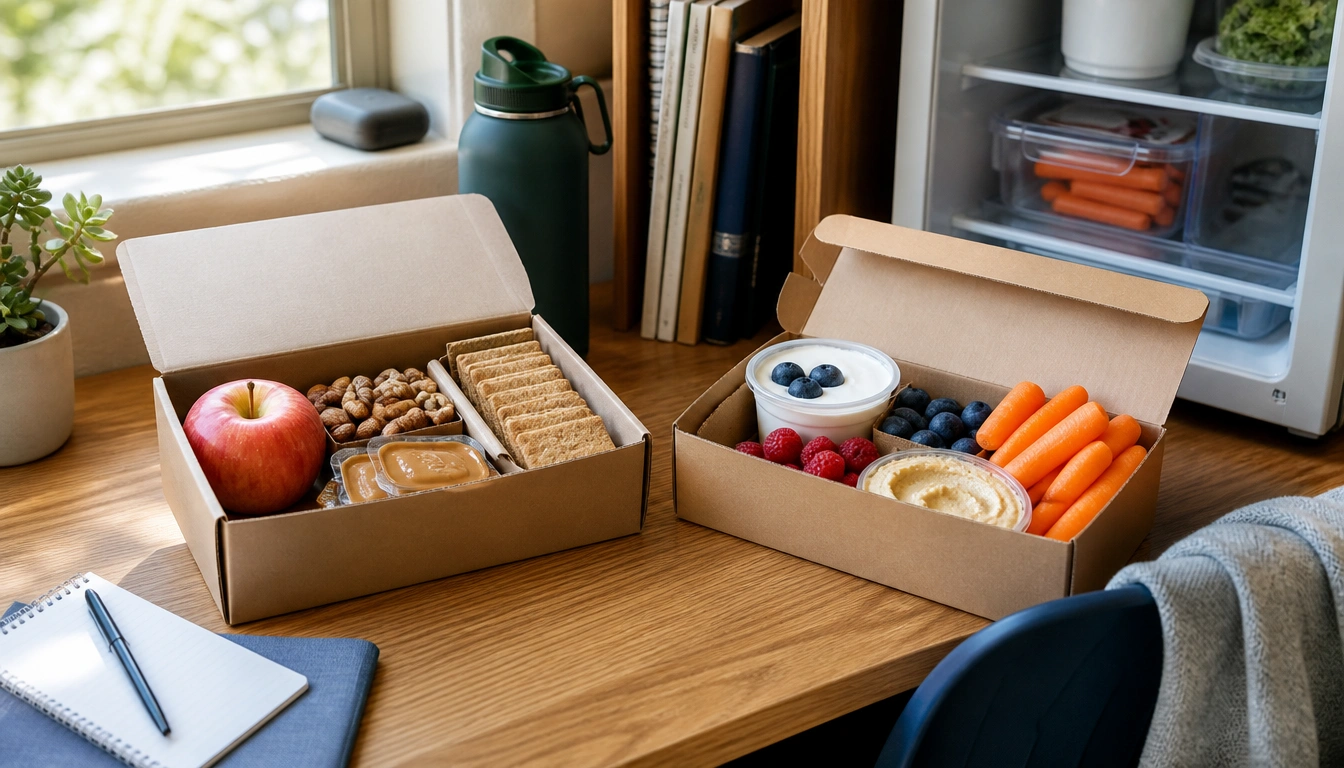
Yes—college snack boxes can be cheap, filling, and realistic if you build them around a fiber-rich carbohydrate plus protein or healthy fat. That pairing helps you stay fuller longer and avoid the quick energy crash that often comes from sugary snacks alone. The best options depend on your setup: shelf-stable foods for backpack days, or mini-fridge items for fresher grab-and-go boxes.
Key Takeaways
- Pair fruit, whole grains, or other fiber-rich carbs with nuts, yogurt, cheese, hummus, or beans for longer-lasting fullness.
- For packaged snacks, a simple shopping filter is at least 3 grams of fiber and less than 15 grams of sugar per serving.
- If you do not have a fridge, focus on shelf-stable combinations like nut butter packets, tuna pouches, whole-grain crackers, and fruit.
- If you have a mini-fridge, use produce, yogurt, cheese, hummus, and cut vegetables for easy, ready-to-eat snack boxes.
- Food safety matters in dorms: perishable foods should not sit at room temperature for more than two hours, and shared spaces raise cross-contamination concerns.
- Store brands, campus food pantries, and mix-and-match staples can stretch your budget without making snack boxes boring.
Dorm-life snack boxes make the class-and-study gap easier
A healthy snack box is useful because college hunger rarely follows a neat schedule. You may leave for a morning lecture, miss lunch, head to the library, and not see a real meal again for hours. A planned snack box gives you something better than a vending machine impulse purchase: a small, balanced option that is already in your bag, desk drawer, or fridge.
The goal is not to replace meals. It is to bridge the gap between them with foods that are satisfying enough to keep you focused. Campus dietitians and academic nutrition guidance generally support this food-first approach: when snacks are planned instead of improvised, students are less likely to reach for highly processed foods that disappear quickly and leave them hungry again soon after.
Snack boxes also make sense for routine. If you know what you tend to eat between classes, during late-night study sessions, or after practice, you can stock only a few versatile ingredients and rotate them through the week. That keeps shopping simpler and helps reduce waste.
The filling snack formula starts with fiber plus protein or healthy fat
The most reliable snack box formula is simple: combine a fiber-rich carbohydrate with protein or healthy fat. The carb provides quick fuel for your brain and muscles, while the protein or fat slows digestion and helps the snack feel more substantial. That combination is especially helpful when you have several hours until your next meal.
Good fiber-rich carbohydrates include fruit, whole-grain crackers, oats, popcorn, high-fiber cereal, and whole-grain bread or rice cakes. Easy protein or healthy fat choices include nuts, seeds, nut butter, string cheese, Greek yogurt, hummus, tuna packets, eggs, cottage cheese, and edamame.
Think in pairs rather than in individual foods. Apple plus peanut butter works. Crackers plus tuna works. Carrots plus hummus works. Yogurt plus berries works. This approach also makes it easier to swap ingredients based on what is on sale or what fits your kitchen setup.
If a snack is mostly refined starch or sugar without much protein or fiber, it may still taste good, but it often will not keep you satisfied for long. For students who need steadier energy during long study blocks, that matters more than chasing the lowest-calorie option.
Choose your snack box type based on your living setup
Your dorm situation should shape your shopping list. A backpack-friendly snack box has to survive class bags, library shelves, and warm walks across campus. A desk snack box can be a little more structured because it stays in one place. A mini-fridge snack box can include more fresh ingredients, but it still needs to be easy to grab in a hurry.
Backpack-friendly boxes are best when you do not have dependable refrigeration. Choose shelf-stable, sealed foods that travel well and do not need utensils if possible. Think fruit, nut butter packets, nut mixes, tuna pouches, roasted chickpeas, whole-grain crackers, and sturdy granola bars.
Desk snack boxes work well for late-night studying. Keep a few portioned items in a drawer or bin so you are not eating from a large bag while distracted. This setup can also help with mindful eating because you decide the portion before you start reading or scrolling.
Mini-fridge snack boxes are best if you have room for perishable items. They work well for yogurt, cheese, hummus, cut vegetables, fruit cups, cooked eggs, or leftovers in small containers. Keep the box visible and organized so healthy options are the easiest ones to reach.
Shelf-stable and mini-fridge snack box combinations that actually work
For days without refrigeration, focus on combinations that are sturdy, portable, and low-mess. One simple option is an apple, a packet of peanut butter, and a handful of almonds. Another is whole-grain crackers with tuna or chicken packets and a piece of fruit. Roasted chickpeas, popcorn, and a clementine also make a balanced light snack.
Other shelf-stable combinations include rice cakes with nut butter, high-fiber cereal in a small container with dried fruit and seeds, or Medjool dates stuffed with peanut butter for a sweeter option. These are useful when you need something quick before class or after the gym and do not have access to a fridge.
For mini-fridge snack boxes, keep foods that are ready to eat with very little prep. Try baby carrots and hummus, cucumbers and cottage cheese, berries with plain Greek yogurt, or whole-grain crackers with string cheese. Edamame is another practical option if you can keep it cold and portion it ahead of time.
If you like variety, mix one fruit or vegetable, one protein, and one crunchy item. That gives you texture, color, and balance without making the snack box complicated.
How to choose packaged snacks without falling for marketing
Packaged snacks can fit a healthy college routine, but the front label is not always a reliable guide. Terms like natural, whole grain, protein-packed, or wholesome do not automatically mean the snack will keep you full. A more practical approach is to read the nutrition facts and ingredient list.
A useful shopping shortcut is to look for snacks with at least 3 grams of fiber and less than 15 grams of sugar per serving. That does not make every higher-sugar snack off-limits, but it helps filter out options that are basically candy in disguise. Also look for some protein or healthy fat so the snack has staying power.
Ingredient lists matter too. If sugar or syrups are near the top of the list and the snack has little fiber, it may be more of a treat than a true study snack. If possible, choose items built from recognizable ingredients such as oats, nuts, seeds, dried fruit, whole grains, beans, or yogurt.
For college budgets, packaged snacks are most useful when they fill a specific gap: a portable breakfast replacement, a between-class bridge, or a post-workout refuel. They should support your meals, not replace every meal by default.
Portion snacks for study sessions, gaps between classes, and workouts
Portion size should match the moment. A short break between classes may only call for a small snack, while a long library session may need something more substantial. For most students, a snack is meant to carry you to the next meal, not become one.
For studying, a balanced portion might be fruit plus nuts, yogurt plus berries, or crackers plus hummus. If you tend to graze without noticing, divide the snack into a small bowl or container before you start working. That is often easier than trying to “be disciplined” around a full bag.
Before a workout, some students do better with a lighter snack that is easy to digest, such as banana plus peanut butter, a granola bar with decent fiber, or crackers with cheese. After a workout, a snack with more protein can be helpful, such as Greek yogurt and fruit or tuna with whole-grain crackers.
If you are very active or on a sports team, you may need larger portions or more frequent snacks than another student does. Your schedule and training load should guide the box size, not a one-size-fits-all idea of what a snack “should” be.
Keep dorm snacks safe with storage, cross-contamination, and timing rules
Food safety can be easy to overlook in a dorm room, especially when everyone shares counters, fridges, and common areas. The main rule for perishables is simple: do not leave them at room temperature for more than two hours. That includes yogurt, cheese, hummus, cut fruit, cut vegetables, eggs, meat, and other foods that need refrigeration.
Store perishable snacks in a clean mini-fridge and use sealed containers whenever possible. If you are packing snacks ahead of time, wash your hands and any utensils before handling food. In shared spaces, keep your items separate from roommates’ food to reduce cross-contamination, especially if someone has a food allergy.
Allergy awareness matters in dorms because nut, dairy, and gluten-containing foods are common snack ingredients. If your dorm or suite includes someone with a serious allergy, be respectful about storage, cleanup, and shared surfaces. Clear labeling on your own containers can also help avoid confusion.
When in doubt, throw questionable perishable food away. It is not worth risking foodborne illness over a snack that sat out too long.
Stretch your budget with store brands, campus help, and mix-and-match staples
Healthy snack boxes do not need specialty products. Store-brand oats, peanut butter, crackers, yogurt, canned tuna, frozen fruit, and nuts often cost less than name brands while offering the same basic nutrition. The savings add up when you shop for ingredients you can reuse all week.
Campus food pantries, student discounts, and local grocery promotions can also make a real difference. If your campus offers pantry access, use it without guilt. That resource exists to help students stay fed and focused.
Another budget strategy is to buy versatile staples that can be mixed and matched. A tub of plain Greek yogurt can become a snack with fruit, a dip base, or a breakfast bowl. A bag of carrots can be paired with hummus, peanut butter, or cheese. A box of whole-grain crackers can go with tuna, cottage cheese, or nut butter. That kind of flexibility cuts waste and keeps the snack box from getting boring.
Start small if you need to. Even three or four repeatable combinations can cover most of a busy college week.
Frequently Asked Questions
What should a healthy college snack box include to keep me full longer?
Aim for a fiber-rich carbohydrate plus a protein or healthy fat. Good examples are fruit with nuts, whole-grain crackers with tuna, or carrots with hummus. That combination tends to be more satisfying than a sugary snack by itself.
What are shelf-stable snack box ideas for students without a fridge?
Try apples or clementines with nut butter packets, whole-grain crackers with tuna or chicken packets, roasted chickpeas, nuts and dried fruit, or a high-fiber granola bar plus fruit. Choose sealed foods that travel well and do not need refrigeration.
What are good mini-fridge snack box ideas for dorms?
Mini-fridge snack boxes can include Greek yogurt, berries, string cheese, hummus, baby carrots, cucumber slices, cottage cheese, and cooked eggs. Keep them in sealed containers so they are easy to grab and safer in shared spaces.
How do I choose packaged snacks that are actually healthy?
Use the label, not the marketing. Look for at least 3 grams of fiber and less than 15 grams of sugar per serving, then check whether the snack also includes protein or healthy fat. Ingredient lists with whole foods near the top are usually a better sign.
How can students build healthy snack boxes on a budget?
Buy store brands, use campus pantry support if it is available, and stock a few versatile staples you can mix and match across the week. Oats, peanut butter, crackers, yogurt, fruit, and carrots can cover many snack combinations without much waste.
The Bottom Line
The easiest healthy college snack boxes are built from a simple pattern: one fiber-rich carb plus one protein or healthy fat. That formula works whether you are packing for class, studying late, or grabbing something quick before practice.
Match the snack box to your living setup. Shelf-stable foods are best for backpack days, while a mini-fridge opens the door to yogurt, hummus, cheese, and produce. Keep perishables cold, watch shared-space hygiene, and use store brands and campus resources to stay within budget.
Medical disclaimer
Medical disclaimer: This content is for educational and informational purposes only and is not a substitute for professional medical advice, diagnosis, or treatment. Dietary needs and supplement suitability vary by individual.
Sources
- Academic Research Institution — stjohns.edu. Accessed October 2026.
- Academic Research Institution — colostate.edu. Accessed October 2026.
- Academic Research Institution — liberty.edu. Accessed October 2026.
- Academic Research Institution — ucsd.edu. Accessed October 2026.
