
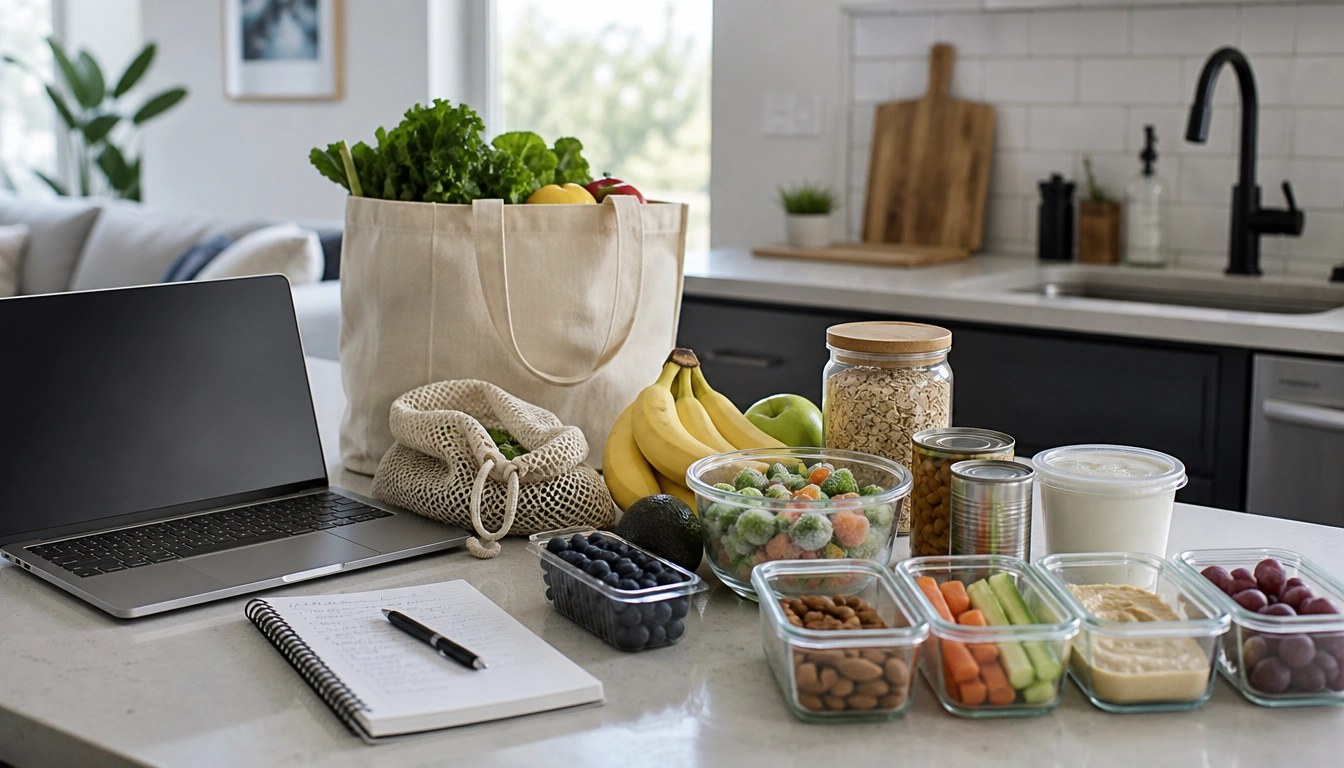
A healthy grocery planning routine for people working from home starts with a simple weekly list built around a few flexible foods: vegetables, fruit, a protein, a whole grain, and a healthy fat. Keep desk-friendly snacks and fast lunch ingredients on hand, rely on frozen and shelf-stable backups, and shop with label reading in mind. That makes healthy eating easier when your kitchen is always nearby and your schedule is full.
Key Takeaways
- Working from home changes eating cues, so planning groceries ahead of time is more effective than relying on willpower during the workday.
- Build your list around a repeatable formula: produce, protein, whole grain, and healthy fat, then fill in snacks and breakfast items.
- Keep two food lanes stocked: desk-adjacent snacks for busy moments and assembly-style meal ingredients for fast lunches.
- Frozen vegetables, frozen fruit, canned beans, and shelf-stable proteins can lower waste and help you eat well between grocery trips.
- People managing diabetes, hypertension, heart health, or other nutrition goals often need closer label checks for sodium, added sugar, saturated fat, and carbohydrate content.
- A healthy routine should reduce friction and stress, not become so rigid that it creates anxiety or limits flexibility.
Why working from home changes eating patterns
Healthy grocery planning for people working from home starts with the environment, not just the recipes. When your desk and kitchen are only a few steps apart, food becomes easier to reach and easier to think about during stressful or boring moments. That constant access can turn small breaks into repeated grazing, especially if the most visible foods are chips, sweets, or delivery apps. The goal is not to rely on more self-control. It is to make the easiest choice a better one.
That is why grocery planning matters so much. A planned cart shifts you from reacting to hunger, fatigue, and deadlines to choosing foods before the week starts. Public health guidance from the CDC and the Dietary Guidelines for Americans supports building meals around vegetables, fruits, whole grains, lean proteins, and healthy fats while limiting excess sodium, added sugars, and saturated fat. For remote workers, that structure can also help protect focus by reducing the blood sugar swings that often come with highly refined snacks.
A useful starting point is a simple weekly formula: choose a few produce items, one or two proteins, one or two whole grains, and one or two fats or flavor builders. That formula keeps the list from getting overwhelming and makes it easier to combine items into breakfasts, lunches, and snacks without planning every meal from scratch.
Build two food lanes: desk-adjacent snacks and assembly-style meals
One of the most practical grocery habits for remote work is to separate foods into two lanes. The first lane is for snacks that are close at hand when you are in the middle of meetings or deep work. The second lane is for meals that can be assembled quickly without cooking a full recipe.
Desk-adjacent snacks should be easy to portion and easy to finish in a few bites. Good examples include fruit, baby carrots, cherry tomatoes, plain yogurt, string cheese, unsalted nuts, hummus cups, or tuna and salmon pouches. If a snack takes too much effort, you are more likely to skip it and then overcorrect later with a larger convenience food choice.
Assembly-style meals should feel almost like building blocks. Stock items such as pre-washed greens, microwaveable brown rice or quinoa, canned beans, eggs, tofu, rotisserie chicken, plain Greek yogurt, and chopped vegetables. Those ingredients can become grain bowls, salads, wraps, or simple plates with very little prep. The point is not gourmet cooking. It is having enough structure that lunch does not automatically become delivery.
If you like routine, keep a short rotation of lunches you can repeat across the week. For example, a grain bowl, a sandwich with vegetables and fruit, and a salad with beans or chicken. Repetition lowers decision fatigue, which is often what pushes people toward vending-machine-style eating at home.
Stock the right store categories
A good work-from-home grocery list is easier to build when you shop by category instead of by mood. That usually means produce, proteins, whole grains, pantry staples, dairy or alternatives, and freezer backups. Organizing the list this way reduces impulse buying and makes it more likely that your cart contains meals, not just random snacks.
Produce: Choose a mix of long-lasting and quick-use items. Apples, oranges, carrots, cabbage, onions, potatoes, cucumbers, greens, berries, and tomatoes can all fit depending on how much you cook. Aim for foods you can eat raw, roast, or toss into salads and bowls.
Proteins: Eggs, Greek yogurt, cottage cheese, canned fish, chicken, tofu, tempeh, beans, lentils, and edamame all work well in a home office routine. Pick at least one or two that you will realistically use during a busy week.
Whole grains: Oats, whole-grain bread, brown rice, quinoa, whole-wheat pasta, and tortillas can support quick meals and steady energy. Choose options that fit your usual breakfast and lunch habits.
Pantry staples and dairy or alternatives: Olive oil, nut butter, nuts, seeds, canned tomatoes, beans, broth, shelf-stable milk, and unsweetened plant milks can fill gaps and add flavor without requiring extra shopping trips.
Freezer backups: Frozen vegetables, frozen fruit, and frozen cooked grains or proteins can keep the week on track when fresh food runs out early or schedules change suddenly.
Use frozen, canned, and shelf-stable foods to cut waste and save money
Fresh food is valuable, but it is not the only path to healthy eating. For many remote workers, the biggest grocery challenge is waste: produce spoils before it gets used, or a packed week leads to takeout while the groceries sit untouched. Frozen, canned, and shelf-stable foods solve that problem by staying ready until you need them.
Frozen vegetables and fruit are often just as useful as fresh versions for everyday meals. They are convenient, usually less expensive per serving, and less likely to spoil. Choose plain frozen vegetables without heavy sauces and plain frozen fruit without added sugar whenever possible. They work well in stir-fries, soups, smoothies, oatmeal, and grain bowls.
Canned beans and lentils are another strong backup. Rinsing them can help reduce sodium, and they can be added to salads, wraps, soups, and quick skillet meals. Shelf-stable proteins such as tuna, salmon, sardines, nut butters, and some vacuum-packed or pouch products can help when fresh meat or tofu is not on hand.
These foods are not a downgrade. They are practical tools for consistency. A well-stocked freezer and pantry can keep your routine steady when meetings run long, plans change, or you do not feel like shopping again midweek.
Read labels for sodium, added sugars, saturated fat, and fiber
For the average shopper, label reading can be a helpful habit. For people managing diabetes, hypertension, heart health, or other medical nutrition needs, it becomes even more important. The details on a Nutrition Facts panel can change whether a food fits your personal goals, even if the front label looks healthy.
Start with serving size, because package claims can be misleading if the real portion is larger than expected. Then look at sodium, added sugars, saturated fat, and fiber. Foods lower in sodium, added sugars, and saturated fat are generally easier to fit into heart-healthy patterns, while foods with more fiber often support fullness and steadier blood sugar responses.
That does not mean every packaged food is off limits. Many packaged items are useful in a WFH routine. The better question is whether a product helps you build a balanced meal or snack without pushing your intake too far in one direction. For example, plain yogurt often works better than sweetened yogurt, and lower-sodium canned beans may fit better than heavily seasoned versions.
If you are shopping for a specific condition, label reading becomes more individualized. Someone focusing on blood pressure may pay close attention to sodium, while someone managing carbohydrate intake may look more closely at total carbohydrate and added sugar. The American Heart Association and CDC both emphasize making these choices within the context of overall eating patterns, not one product at a time.
Follow a simple weekly grocery routine
A repeatable routine can make healthy grocery planning almost automatic. Start with a quick inventory of the refrigerator, freezer, and pantry. Look for produce that needs to be used soon, leftover grains, opened condiments, and proteins that can anchor meals. This step helps prevent duplicate purchases and food waste.
Next, write your list by category. If you know you will be busy, keep the list short and centered on a few reliable items rather than trying a new plan every week. Many people do well with one breakfast base, two snack options, two lunch options, and a few dinner components that overlap. That overlap is what keeps shopping manageable.
At the store, stay close to the list and use the store’s sections as a guide. Produce first, then protein, then grains and pantry items, then dairy or alternatives, and finally freezer items. This makes impulse purchases less likely, especially when you are shopping after work or while hungry.
When you get home, unpack with intention. Wash produce, portion snack foods into containers if that helps, and place the most useful items at eye level. Put the foods you want to use first where you can see them. Refill basics before they run out, especially breakfast items, lunch ingredients, and desk snacks. That small reset can prevent the “nothing to eat” feeling that often leads to delivery orders.
Adapt the routine for diabetes, hypertension, heart health, or other needs
If you are managing diabetes, hypertension, heart disease, kidney disease, food allergies, or another medical issue, grocery planning should be more specific than a general healthy eating pattern. The same shopping structure still helps, but your personal list may need closer attention to carbohydrate content, sodium limits, saturated fat, potassium, protein, or ingredient safety.
For diabetes or carbohydrate-aware eating, pay attention to portion size, total carbohydrate, fiber, and added sugars. Pairing carbohydrates with protein or healthy fat can make snacks and meals feel more balanced. For hypertension or heart health, choose lower-sodium versions of canned, packaged, and prepared foods when possible, and lean on herbs, citrus, vinegar, garlic, and spices for flavor.
If you have kidney disease or another condition with more complex nutrition limits, the best grocery plan may look different from standard healthy eating advice. In that case, a registered dietitian nutritionist or other clinician can help you personalize food choices instead of relying on general rules. The same applies if you have severe food allergies, unexplained weight changes, persistent digestive symptoms, or new medical instructions that conflict with your usual routine.
For most people, the aim is not perfection. It is to make the weekly cart fit your real health needs well enough that healthy meals become easier during a busy workday.
Keep the routine flexible and sustainable
A good work-from-home grocery routine should lower stress, not create a second set of rules to follow. If planning starts to feel rigid, expensive, or obsessive, the system may be working against you. Flexibility matters because work schedules change, appetites change, and some weeks simply do not go as planned.
One way to keep the routine flexible is to have backup choices instead of strict rules. For example, if your fresh produce is used up early, frozen fruit and vegetables can step in. If you miss your planned lunch, a bean salad or yogurt plus fruit may be enough to keep you going until dinner. If your schedule is chaotic, the goal may be “good enough” rather than ideal.
Flexible planning also supports a healthier relationship with food. A routine that allows variety, convenience, and occasional takeout is more likely to last than one built on all-or-nothing thinking. You do not need to shop perfectly to eat well while working from home. You need a system that makes the next decent choice easy to find.
That mindset is especially useful when boredom, stress, or isolation makes food feel more emotionally loaded than usual. A structured grocery plan can support health without turning every meal into a test of discipline.
Frequently Asked Questions
How do I build a weekly grocery list for work-from-home meals and snacks?
Start with an inventory of what you already have, then build your list around a few categories: produce, protein, whole grains, snacks, and backup freezer or pantry items. Keep the list short and repeat foods you know you will actually use during busy weeks.
What healthy snacks should I keep at my desk when working remotely?
Choose snacks that are easy to portion and do not require much prep, such as fruit, baby carrots, plain yogurt, nuts, hummus, cheese, or canned fish pouches. The best desk snacks are the ones you can eat quickly without turning them into a grazing session.
How can I plan quick lunches at home without cooking a full meal every day?
Use assembly-style lunches instead of full recipes. Combine a protein, a grain or bread, and produce. For example, beans with rice and greens, a sandwich with fruit, or yogurt with oats and berries can all work with minimal prep.
What frozen or shelf-stable foods work best for a healthy WFH grocery routine?
Frozen vegetables, frozen fruit, canned beans, canned fish, oats, nut butter, whole grains, broth, and shelf-stable milk or alternatives are especially useful. They help reduce food waste and give you backup options when fresh food runs out.
How do I read nutrition labels when shopping for heart-healthy or diabetes-friendly foods?
Check serving size first, then look closely at sodium, added sugars, saturated fat, fiber, and total carbohydrate. People with medical nutrition needs often need to compare labels more carefully than the average shopper, especially on packaged foods.
The Bottom Line
A healthy grocery planning routine for people working from home works best when it is simple, repeatable, and built around foods you will actually use. Plan for two needs at once: quick snacks that reduce grazing and fast meal ingredients that prevent last-minute delivery orders.
Frozen vegetables, fruit, canned beans, and shelf-stable proteins are not backups only for emergencies. They are useful parts of a normal routine that can save time, reduce waste, and make healthy eating easier on busy weeks. If you have diabetes, heart disease, high blood pressure, kidney disease, or another condition, tailor label reading and food choices to your care plan.
If your routine starts feeling rigid or stressful, scale it back. The most effective plan is the one that supports your health, fits your schedule, and still feels livable.
Medical disclaimer
Medical disclaimer: This content is for educational and informational purposes only and is not a substitute for professional medical advice, diagnosis, or treatment. Dietary needs and supplement suitability vary by individual.
Sources
- Centers for Disease Control and Prevention (CDC) — cdc.gov. Accessed October 2026.
- Centers for Disease Control and Prevention (CDC) — cdc.gov. Accessed October 2026.
- Centers for Disease Control and Prevention (CDC) — cdc.gov. Accessed October 2026.
- Centers for Disease Control and Prevention (CDC) — cdc.gov. Accessed October 2026.
- Academic / Medical Research Institution — heart.org. Accessed October 2026.
- Academic / Medical Research Institution — heart.org. Accessed October 2026.
