
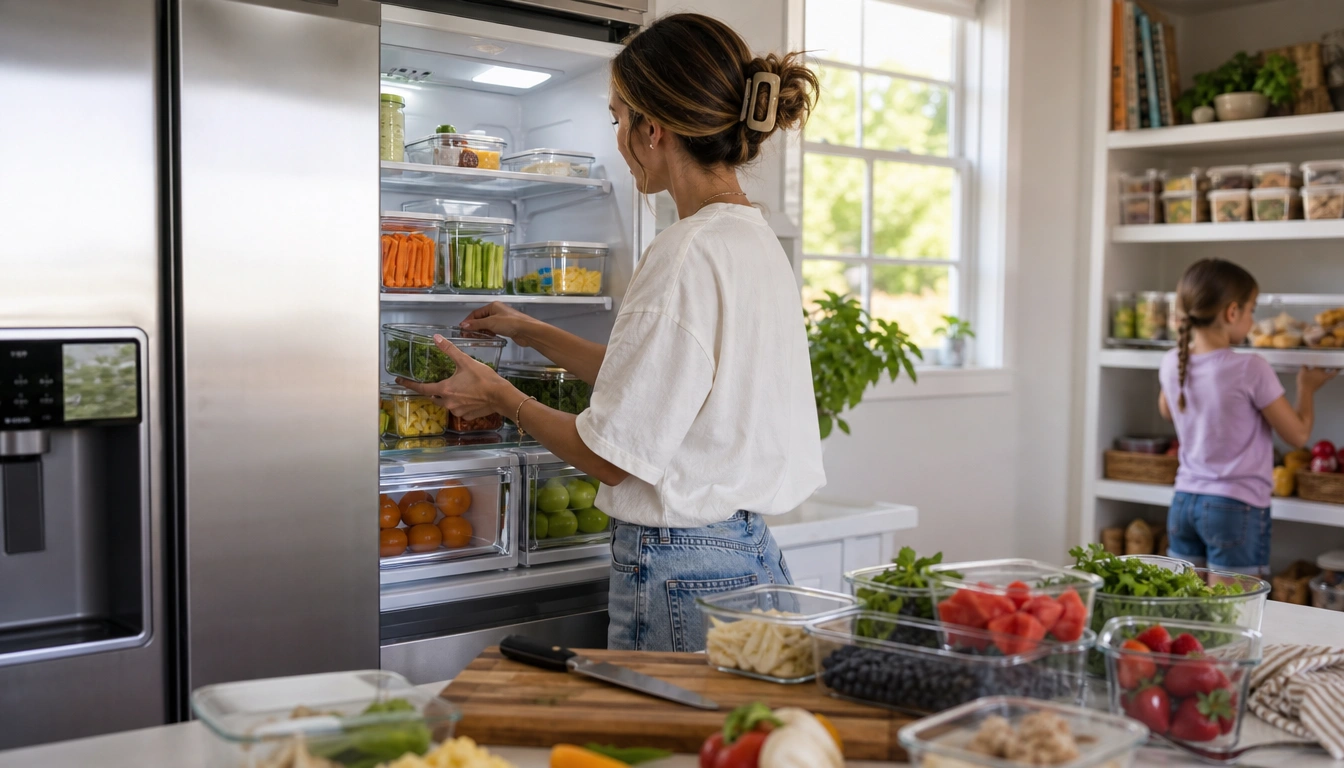
A weekly kitchen reset works best when it is short, repeatable, and focused on the foods your family will actually use. Start by clearing expired or questionable items, checking fridge temperature, cleaning food-contact surfaces, and organizing the fridge so healthier foods are easiest to reach. Then prep a few grab-and-go items, set up snack zones, and plan what needs to be used first during the week.
Key Takeaways
- A good reset reduces decision fatigue by making the healthiest foods the most visible and easiest to grab.
- Use a simple Clear, Zone, Prep, Plan routine so the task stays realistic for busy families.
- Keep food safety central: clean, separate, cook, and chill, with the fridge at or below 40°F and the freezer at or below 0°F.
- Families with toddlers, teens, or allergies need different storage zones, labels, and hygiene habits.
- Use older leftovers and delicate produce first so food gets eaten before it spoils and less ends up in the trash.
Why a weekly kitchen reset matters for busy families
A weekly kitchen reset helps because the kitchen shapes weekday choices. When the fridge is crowded, the pantry is scattered, and leftovers are hard to identify, busy parents are more likely to reach for whatever is fastest. That often means more packaged convenience foods and more food waste. A reset lowers the mental effort needed to decide what to eat. It also creates a cleaner path to healthier choices by putting ready-to-eat fruit, cut vegetables, yogurt, hummus, and other simple options where hungry family members can see them first.
This is less about being perfectly organized and more about making the week easier. A family kitchen usually works best when the layout matches real life: quick breakfasts, after-school snacks, mixed schedules, and limited time at the end of the day. A reset gives the kitchen a fresh start so meals, snacks, and lunch packing do not begin from clutter.
The 45-to-60-minute reset framework
A realistic kitchen reset does not require a full pantry overhaul. Use four steps: Clear, Zone, Prep, Plan. The whole routine can usually be done in about 45 to 60 minutes if you keep it focused.
Clear
Pull out expired items, loose leftovers, wilted produce, and containers you cannot identify. Put anything questionable aside and do not taste it to check. Wipe shelves and bins with hot soapy water or another food-safe cleaner, then dry surfaces well.
Zone
Group foods by use. Keep breakfast items together, lunch items together, and snack foods in one place. Put the foods you want used first at eye level, not hidden behind condiments or leftovers.
Prep
Wash produce under cool running water, dry it thoroughly, and portion a few ready-to-use items. You might wash grapes, cut carrots, portion berries, or cook a batch of chicken or beans for easy meals.
Plan
Look at what needs to be eaten soon, then build a simple plan around it. Make a short shopping list only for gaps. Leave the counters clear so Monday starts with less friction.
Kitchen safety basics during the reset
Food safety should be part of every reset, not an extra step. The USDA, CDC, and FoodSafety.gov emphasize four basics: clean, separate, cook, and chill. Wash hands with soap and water for at least 20 seconds before and after handling food. Clean counters, cutting boards, fridge shelves, and handles. Keep raw meat, poultry, seafood, and eggs away from ready-to-eat foods and produce. Use separate plates and utensils for raw and cooked foods.
Check temperatures too. The refrigerator should be at or below 40°F, and the freezer at or below 0°F. An appliance thermometer is the easiest way to verify this. Perishable food should be chilled promptly, and leftovers should not sit around too long. If something smells off, looks spoiled, has mold where it should not, or has been stored past a safe window, throw it out. The same goes for containers that are cracked, warped, or hard to clean.
When cooking part of the week’s food during the reset, use a food thermometer for meats and casseroles instead of guessing by color. The goal is a kitchen that saves time without lowering safety.
How to organize the fridge and pantry so healthy foods are the easiest choice
Healthy eating gets easier when the kitchen does some of the work. Put the foods your family should use more often in the most visible spots. In the fridge, that usually means a front shelf for washed produce, cut vegetables, yogurt, cheese sticks, boiled eggs, and leftovers that need attention soon. In the pantry, place snacks such as whole-grain crackers, unsweetened cereal, tuna packets, nuts if they are safe for your home, or shelf-stable fruit cups where kids can find them without digging.
Use clear containers when possible. Visibility matters because people are more likely to choose what they can see quickly. Label leftovers with the date and a short note like “use for lunch” or “dinner side.” Put older food in front and newer food behind it so the oldest item is the first one reached for.
Try to create simple zones instead of overlabeling every shelf. A breakfast bin, snack bin, lunch bin, and leftovers shelf are often enough. In the pantry, keep baking supplies, dinner staples, and snack items separate so mealtime is faster and less scattered.
What to prep first for the coming week
Start with foods that are most likely to spoil or be forgotten. Produce usually comes first, followed by cooked proteins and assembled lunch items. A few minutes of prep can turn random ingredients into practical weekday food.
Helpful first moves include washing and drying fruit, chopping vegetables for snacks, portioning salad greens, and cooking one or two proteins that can be used in different meals. Think chicken, beans, tofu, hard-boiled eggs, or baked fish if your family will eat it early in the week. If you make grains, cook just enough for two or three uses instead of filling the fridge with containers nobody touches.
After that, build grab-and-go items. For younger kids, that may mean small containers of fruit, yogurt, or sliced cucumber. For adults and older kids, it may mean lunch components that can be combined quickly. A few minutes spent repacking food into usable portions makes weekday eating smoother and reduces the chance that healthy food gets buried and forgotten.
Use the most perishable leftovers first. Cooked vegetables, opened dips, cut fruit, and prepared proteins usually need attention before packaged foods do. When in doubt, move that item to the front and make it part of the next meal.
How to adapt the reset for toddlers, school-age kids, and teens
Households with infants and toddlers need a stronger hygiene focus. Clean bottle-prep areas carefully, keep high-chair trays and feeding tools sanitized, and check low cabinets or lower shelves for spills and unsafe items. If a child is just learning to self-feed, keep age-appropriate foods in a very small, easy-to-clean zone so the setup stays manageable.
School-age kids can usually help more. Give them one drawer or shelf for approved snacks and lunch items, and keep it at a height they can reach safely. This supports independence without turning the whole kitchen into a free-for-all. If they pack part of their own lunch, keep the items together so they do not need to search through the kitchen.
Teens often do better with clear categories than with constant reminders. A labeled snack shelf, a lunch box bin, and a visible leftovers zone can help them grab food quickly before practice, homework, or late activities. For older kids, the reset should support autonomy while still keeping the household organized.
Special handling for food allergies and dietary restrictions
If your family manages nut, dairy, gluten, egg, or other allergies, the weekly reset needs stronger separation rules. Use dedicated cutting boards, utensils, storage containers, and sometimes a separate toaster or condiment supply if cross-contact is a concern. Keep allergen-free foods on a clearly labeled shelf or bin so they are not mixed with shared items.
Storage matters as much as cleaning. Place safe foods above or away from foods that could spill crumbs, powders, or residues. Label everything clearly, especially leftovers and meal prep containers. If the household includes one person with a dietary restriction and others without it, separate sauces, spreads, and snack bins so shared hands do not contaminate the restricted foods.
For severe allergies, your setup should follow the guidance of the family’s healthcare professional or allergist. The weekly reset can support that plan, but it should not replace individual medical advice. The safest kitchen is the one where everyone knows which zones are shared and which are off-limits.
Common mistakes that make the reset less effective
One common mistake is overbuying. If the fridge is already crowded, a full restock can bury useful food and make waste worse. Buy enough to support the week, not enough to fill every shelf. Another mistake is making the reset too complicated. If a system takes a long time to maintain, it will not last through a busy school week. A few clear zones work better than a perfect label on every shelf.
Unsafe storage habits also reduce the value of the reset. Do not put hot leftovers straight into a tightly sealed, overloaded fridge for too long; cool them safely and store them promptly. Do not keep raw meat above ready-to-eat foods. Do not assume that a tidy container is safe just because it looks clean. Date labels help, but temperature control and storage order matter just as much.
The last piece is consistency. A weekly reset does not have to be dramatic to work. If you repeat the same simple sequence each week, your family learns where to find food, what to eat first, and how to keep the kitchen usable even during the busiest days.
Weekly reset checklist: clear expired or questionable food; check fridge and freezer temperatures; clean shelves, bins, and handles; separate raw and ready-to-eat foods; wash and portion produce; move older leftovers to the front; create snack and lunch zones; label allergy-safe items; write a short meal plan; and make a tiny shopping list for only what is missing.
Frequently Asked Questions
What should I do first in a weekly kitchen reset if I only have 30 to 45 minutes?
Start with the foods that can spoil or cause clutter the fastest: expired items, questionable leftovers, and produce that needs to be used soon. Then wipe the main shelves, check temperatures, and set up one or two simple zones for snacks and lunches. A short reset is still useful if it focuses on safety and visibility.
How do I clean and organize the fridge safely without wasting usable food?
Take out one shelf or section at a time so you can sort as you go. Keep safe food on one counter area, discard anything spoiled or past a safe storage window, and move older items to the front. Clean with hot soapy water or another food-safe cleaner, and dry the surfaces before putting food back.
How can I set up the kitchen so kids can grab healthier snacks on their own?
Create one clearly labeled snack zone at a reachable height and fill it with foods you want them to choose first, such as fruit, yogurt, cut vegetables, cheese, or whole-grain snacks. Use clear containers when possible. Keep less helpful snacks out of the main sightline so the easiest option is also the better one.
What foods should be used first during the week to reduce waste?
Use highly perishable foods first: cut fruit, opened dips, washed greens, soft vegetables, cooked proteins, and leftovers that were made earlier in the week. Keep newer groceries behind older ones. If something is already close to the end of its safe storage time, make it part of the next meal plan.
How do I reset the kitchen if my family has food allergies or strict dietary restrictions?
Use dedicated tools, clearly labeled containers, and separate storage zones for allergen-free or restricted foods. Keep those foods away from shared crumbs, spills, and utensils. For severe allergies, follow the plan from your child’s allergist or healthcare professional and use the reset to make that plan easier to maintain.
The Bottom Line
A weekly kitchen reset is most effective when it is short, repeatable, and tied to how your family actually eats. Clear the unsafe or forgotten food, clean the spaces food touches, and reorganize the fridge so healthy items are the first thing people see and reach for.
The best version is not the most detailed one. It is the one you can do every week without dreading it. If you keep food safety, snack access, and simple prep in the same routine, weekday meals usually become easier, waste drops, and the kitchen feels more manageable.
For busy parents, the reset works because it removes friction before the week begins. A little structure on the weekend can save time, reduce last-minute takeout, and make healthier choices feel more automatic.
Medical disclaimer
Medical disclaimer: This content is for educational and informational purposes only and is not a substitute for professional medical advice, diagnosis, or treatment. Dietary needs and supplement suitability vary by individual.
Sources
- Centers for Disease Control and Prevention (CDC) — cdc.gov. Accessed October 2026.
- U.S. Government / Health Authority — usda.gov. Accessed October 2026.
- U.S. Government / Health Authority — foodsafety.gov. Accessed October 2026.
- Academic Research Institution — osu.edu. Accessed October 2026.
