
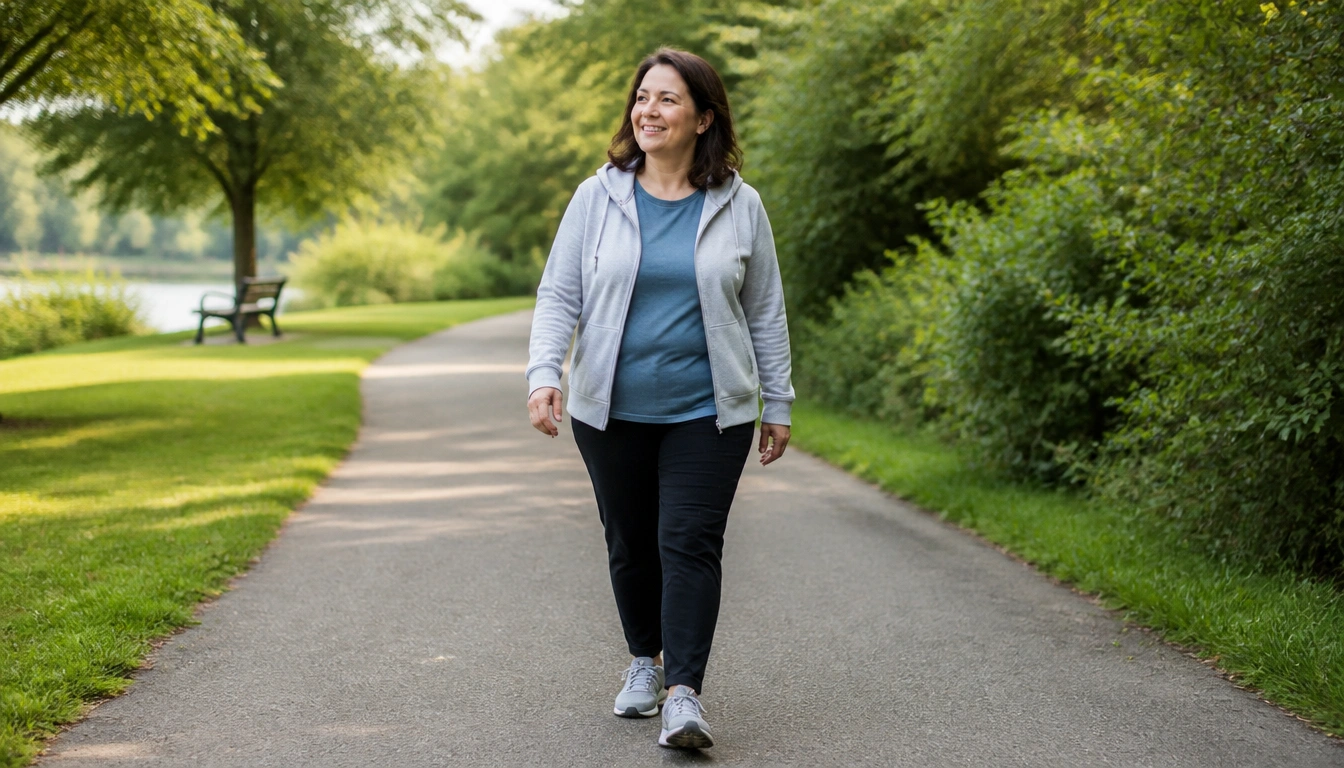
A weekend recovery walk should feel easier than a workout. For a complete beginner, that usually means a short walk at a pace where you can speak in full sentences, on a flat route, and with no pressure to “push through.” Start with 10 to 15 minutes if that feels manageable, then build slowly from there. The goal is to finish feeling looser, calmer, and more capable—not exhausted.
Key Takeaways
- Use the talk test: if you can speak in full sentences, your pace is probably right for an easy recovery walk.
- A short walk still counts. For beginners, 10 to 15 minutes can be a valid starting point.
- Choose flat, predictable routes first to reduce strain on knees, feet, and ankles.
- A recovery walk is about restoring energy, circulation, and mood, not proving endurance.
- Increase time gradually from week to week so soreness and dropout are less likely.
Why a weekend recovery walk feels different from a workout
A weekend recovery walk is not meant to leave you breathless or drained. Think of it as a reset after a sedentary week: enough movement to loosen stiffness, wake up circulation, and gently lift your mood, but not so much that you feel like you have trained hard. For absolute beginners, that difference matters. If you are already deconditioned, a workout-style pace can make walking feel discouraging; a recovery walk should feel doable and repeatable.
Public health guidance from the CDC and other major organizations makes room for this reality. Adults are encouraged to build toward regular moderate activity over time, but beginners do not need to hit a weekly target immediately. Starting with a short, comfortable walk is consistent with the idea of starting low and going slow. A small, successful session is more useful than an ambitious one that leaves you sore or reluctant to try again.
The recovery mindset also changes what you notice. You are not judging the walk by distance, calories, or speed. You are checking whether your body feels a little looser afterward, whether your breathing stayed easy, and whether the walk fit into your day without friction. That makes the habit more sustainable for people who are new to exercise.
Who this approach works for
This style of walking is a good fit for absolute beginners, adults who have been sedentary during the week, and people who feel deconditioned after a long stretch without regular exercise. It can also suit readers who want a low-pressure weekend routine rather than a formal training plan. If your main goal is to move more without feeling overwhelmed, recovery walking gives you a simple place to start.
It is especially useful for people who are worried about “doing it wrong.” You do not need special equipment, a gym membership, or a perfect fitness baseline. You do need a willingness to start with a small dose of movement and pay attention to how your body responds.
That said, some people should be more cautious. If you have diagnosed heart or lung disease, uncontrolled blood pressure, significant balance problems, or a history of exercise-related symptoms, it is wise to speak with a clinician before beginning a new routine. A recovery walk may still be appropriate, but the starting point may need to be individualized.
How to set the right intensity with simple self-checks
The easiest way to judge pace is the talk test. If you can speak in full sentences without gasping, you are probably moving at a comfortable intensity for a beginner recovery walk. If speaking becomes choppy or you feel you have to pause for breath after short phrases, slow down. That sign matters more than pace per mile, step count, or what anyone else is doing nearby.
You can also use a few other checks. Your breathing should be a little deeper than at rest, but not strained. Your shoulders should feel relatively relaxed. You should be able to notice your surroundings instead of focusing only on effort. If you are counting minutes until the walk is over, the pace may be too fast or the route too demanding.
For absolute beginners, “easy” often looks slower than expected. That is normal. A gentle pace is not laziness; it is the intensity that lets your body adapt without a big stress response. According to the CDC and NHS, physical activity builds best when it feels manageable enough to repeat regularly.
Choosing your first route, time, and walking cues
For a first weekend walk, keep the plan simple. Choose a route you can finish comfortably, such as a flat neighborhood loop, a paved park path, or even a short out-and-back route where turning around is easy. Flat, predictable terrain reduces the chance of knee, ankle, or foot irritation, which is especially helpful if you are deconditioned or unsure how your joints will respond.
Time matters more than distance. A 10- to 15-minute walk is a perfectly reasonable starting point for someone who is completely new to exercise. If that feels too long, begin with a shorter out-and-back walk and note how it feels. The point is to end with a little reserve left, not to test your limits.
Posture and breathing can make the walk feel more restorative. Stand tall without over-arching your back, let your arms swing naturally, and keep your steps relaxed rather than forceful. Breathe in a rhythm that feels smooth and unhurried. If you notice yourself tightening your jaw or hunching your shoulders, ease the pace. The walk should feel like a release from the week, not an extra chore.
Joint-friendly adjustments for sensitive knees, feet, or a larger body
If your knees, feet, hips, or ankles are sensitive, modify the walk before pain becomes a problem. Shorten the route, choose a flatter surface, and avoid steep hills, uneven trails, or hard cambered roads at first. A predictable surface gives your joints less to manage and can make the walk feel safer and more stable.
Supportive footwear matters, but it does not need to be fancy. A comfortable walking shoe that fits well, does not pinch the toes, and does not rub the heel is usually enough. If you have a higher body weight or have been inactive for a long time, you may benefit from keeping the first few outings especially short and easy while your tissues adapt.
If discomfort appears, pay attention to the pattern. Mild muscle effort or temporary stiffness can be normal. Sharp joint pain, limping, or pain that changes your gait is a signal to stop and reassess. If you regularly get joint pain with walking, a physical therapist or clinician can help you adjust the plan without guessing.
Weather, hydration, and environment tips that reduce strain
Weather can change how a walk feels more than many beginners expect. Heat can raise cardiovascular strain and make even easy walking feel harder. Cold can stiffen muscles and make breathing feel less comfortable. When conditions are extreme, shorten the walk, slow the pace, or choose an indoor location such as a mall or track if available.
Dressing in simple layers can help you adapt. In cooler weather, start slightly warm rather than fully bundled so you do not overheat later. In hotter weather, choose breathable clothing, seek shade when possible, and drink water before and after the walk. You do not need elaborate hydration strategies for a short beginner walk, but being underhydrated can make the outing feel more difficult than it needs to be.
Environment matters too. Quiet, green, or familiar spaces can lower stress and make the walk feel restorative. If traffic, noise, or crowded paths make you tense, pick a calmer route. The goal is to reduce friction so the walk becomes something you look forward to repeating.
How to build a weekend habit without overdoing it
The safest progression is small. If a 10- to 15-minute walk feels fine, add only a few minutes the following weekend rather than making a big jump. A modest increase helps your body adapt and lowers the chance of soreness that can make you skip the next walk. The exact increase can be simple and flexible: a little more time, one extra block, or one additional loop.
You do not need to walk hard enough to feel spent in order to make progress. For many beginners, consistency matters more than intensity. One steady weekend walk can become the base for a second short walk later in the week or a slightly longer weekend route once the first version feels routine. That gradual build fits public guidance from the CDC and NHS, which emphasizes building activity over time rather than forcing immediate targets.
A useful rule is to keep changes small enough that the next walk still feels easy to start. If you finish a walk feeling unusually tired, achy, or reluctant to repeat it, the last step up was probably too large. Back off a little, then rebuild slowly. Sustainable progress usually looks boring, not dramatic.
Warning signs that mean you should stop and get medical advice
Some discomfort is common when you are new to movement, but certain symptoms are not something to push through. Stop the walk right away if you develop chest pain or pressure, severe shortness of breath that feels out of proportion to the effort, faintness, sudden dizziness, or sharp joint or tendon pain. Those are not signs to “tough out.”
You should also stop if walking changes the way you move, such as causing limping or making you feel unstable. If symptoms do not settle quickly with rest, or if they recur each time you try to walk, speak with a healthcare professional. People with known cardiovascular disease, uncontrolled blood pressure, severe lung disease, or significant balance problems should get individualized advice before starting a new routine.
As a general rule, ordinary effort should feel manageable and recover quickly after the walk. If the walk leaves you wiped out for the rest of the day, the session was probably too demanding for where you are right now. That is useful information, not a failure; it simply means you need a smaller starting point.
Frequently Asked Questions
How long should a beginner recovery walk be?
For someone completely new to exercise, 10 to 15 minutes is a practical place to start if that feels comfortable. You can go shorter if needed. The best starting length is the one you can finish without feeling wiped out or overly sore afterward.
How fast should I walk if I want it to feel easy?
Use the talk test: you should be able to speak in full sentences without gasping. If you can only say a few words at a time, slow down. A recovery walk is meant to feel easy enough that you could keep going a little longer if you had to.
Can a weekend walk still help if I’m very sedentary during the week?
Yes. A short weekend walk can still support mood, circulation, and stiffness reduction even if your weekday activity is low. It is a useful entry point, not an all-or-nothing test. The benefit comes from building a repeatable habit.
What should I do if my knees, feet, or joints feel sensitive while walking?
Reduce the distance, choose flatter ground, and avoid uneven or hilly routes at first. Make sure your shoes fit well and do not pinch or rub. If pain is sharp, changes how you walk, or keeps returning, stop and get medical advice.
When is walking too hard and I should stop or get medical help?
Stop immediately for chest pain or pressure, severe shortness of breath, dizziness, faintness, or sharp pain in a joint or tendon. Seek medical advice if symptoms do not settle with rest or if walking consistently triggers them. Do not try to push through red-flag symptoms.
The Bottom Line
A weekend recovery walk is a low-pressure way to start moving if you are completely new to exercise. Keep the pace easy, choose a flat route, and use the talk test so the walk feels restorative rather than demanding.
Start small, then progress slowly. Ten to 15 minutes can be enough for a first outing, and small week-to-week increases are usually easier to sustain than big jumps. If your body responds with soreness or exhaustion, scale back and rebuild gradually.
Most importantly, treat the walk as a check-in with your body, not a test. If you finish feeling a little looser and more refreshed, you are probably on the right track. If you notice warning signs, stop and get medical advice.
Medical disclaimer
Medical disclaimer: This content is for educational and informational purposes only and is not a substitute for professional medical advice, diagnosis, or treatment. Dietary needs and supplement suitability vary by individual.
Sources
- Centers for Disease Control and Prevention (CDC) — cdc.gov. Accessed October 2026.
- National Health Service (NHS) — www.nhs.uk. Accessed October 2026.
- National Health Service (NHS) — southwestyorkshire.nhs.uk. Accessed October 2026.
- Academic Research Institution — harvard.edu. Accessed October 2026.
