
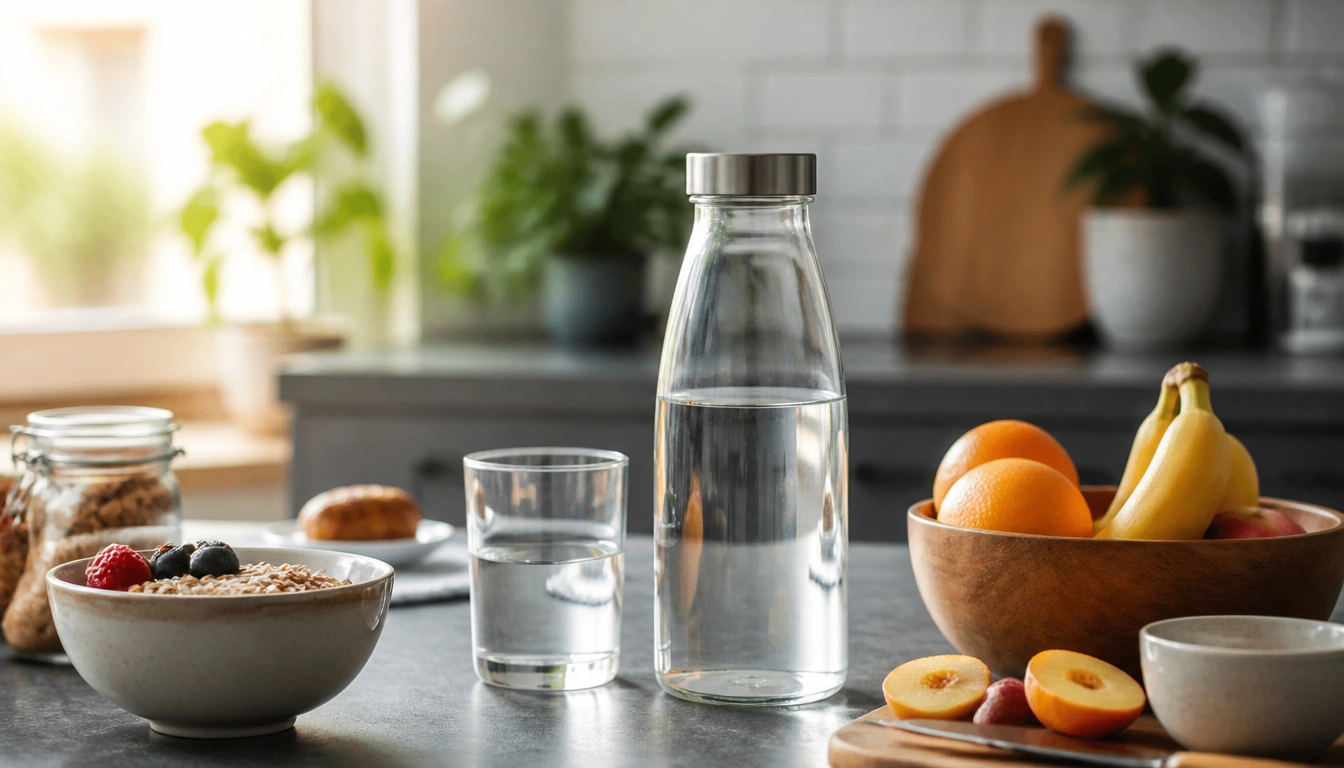
Most adults do well aiming for about 6 to 8 cups of fluid a day as a practical public-health target, while total needs vary with body size, food intake, activity, heat, altitude, pregnancy, and breastfeeding. The easiest safe approach is to build water into existing routines, use thirst and urine color as guides, and avoid forcing large amounts of water. Food and other beverages also count toward hydration.
Key Takeaways
- A steady water habit works better when it is linked to routines you already have, like waking up, meals, breaks, and leaving the house.
- You do not need to get all hydration from plain water; beverages and water-rich foods both contribute to total fluid intake.
- Thirst and urine color are more useful day-to-day signals than trying to hit a perfect number every day.
- Older adults may not feel thirst as strongly, while exercise, heat, altitude, pregnancy, and breastfeeding can raise fluid needs.
- Drinking too much water too quickly can be harmful, so more is not always better.
Why hydration belongs in a return-to-health routine
Hydration is one of the most useful habits to rebuild first because it supports many day-to-day functions at once. Water helps regulate body temperature, move nutrients, cushion joints, and carry waste out through urine. Even mild dehydration can leave people feeling tired, foggy, irritable, or less able to focus. That is one reason a hydration routine often pays off quickly when someone is trying to get back on track with energy and basic self-care.
Water also supports digestion and kidney function. The CDC and other public health sources note that proper fluid intake helps the body flush waste and maintain normal function. Replacing sugary drinks with water can also lower calorie intake without requiring a major diet overhaul. For adults returning to healthier habits, that makes hydration a high-value, low-complexity starting point.
How much water adults actually need
There is no single perfect number for everyone. Public health guidance commonly uses a simple target of 6 to 8 cups of fluid per day. That is a practical place to start for many adults because it is easy to remember and easy to build into routine.
Some professional reference values are higher when they look at total water from all sources. The National Academies of Sciences, Engineering, and Medicine estimate adequate total water intake of about 3.7 liters a day for men and 2.7 liters a day for women from all dietary sources combined. That total includes plain water, other drinks, and water contained in food. In practice, you do not need to measure every ounce; the point is that daily needs vary and a fixed rule does not fit everyone.
If a person eats plenty of soups, fruit, vegetables, yogurt, and other moisture-rich foods, they may need less plain water than someone who eats mostly dry foods. If they sweat a lot or spend time in heat, they may need more.
The simplest habit plan
The easiest way to build a water habit is to tie it to things you already do. Habit-first strategies work better than willpower alone because the cue is built into the day. Try pairing water with waking up, breakfast, lunch, dinner, afternoon breaks, and leaving the house. Those moments already happen, so they are reliable reminders.
A practical version looks like this: drink some water after waking, drink again with each meal, and keep a bottle nearby during work or errands. You do not need to sip constantly or catch up all at once. Regular, smaller drinks are easier to maintain and usually feel better than forcing large amounts late in the day.
If you struggle to remember, place water where you will see it: on the nightstand, kitchen counter, desk, or car cup holder. Visibility matters because the bottle becomes the reminder. If a routine already exists, attach the new habit to it instead of creating a brand-new system.
Food-first hydration strategies
Hydration does not come only from a glass. Many foods contain a lot of water and count toward your daily fluid intake. This is especially helpful if you do not like drinking plain water or if you want a gentler, less forced approach to hydration.
Water-rich foods include cucumbers, lettuce, tomatoes, celery, bell peppers, oranges, berries, melons, and strawberries. Soups, broths, smoothies, yogurt, and cooked vegetables also add fluid. Building meals around these foods can make hydration feel more natural because it happens through eating, not just drinking.
This approach works well for adults returning to healthy habits because it fits existing meals and snacks. A salad with vegetables, fruit with breakfast, or a bowl of soup at lunch can quietly support hydration without requiring extra tracking. Food-first hydration is especially useful on days when appetite is irregular or plain water feels hard to tolerate.
How to make water easier to stick with
Small changes can make water more appealing and easier to repeat. If tap water tastes flat or unpleasant, try chilling it, adding ice, using a filter, or adding a light flavor cue such as lemon, lime, cucumber, or mint. These changes are simple, but they can remove the friction that keeps people from drinking consistently.
The goal is not to make hydration perfect; it is to make it easy enough to repeat. A reusable bottle can help, especially if it stays in sight. Some people drink more when the bottle has a shape or size they like, or when it is easy to carry from home to work. Others do better with a glass at home and a bottle on the go.
If sugary drinks are part of your current routine, do not try to change everything at once. Start by replacing one daily sugary drink with water or sparkling water. That is often more sustainable than an all-or-nothing shift.
When to adjust upward
Certain situations increase fluid needs. Exercise, hot weather, high humidity, and high altitude all raise water losses. So do pregnancy and breastfeeding, which increase fluid demands for the body and, in breastfeeding, milk production. In these situations, a person may need more fluid than their usual routine provides.
Older adults deserve special attention because thirst can become less noticeable with age. That means someone may be getting behind on fluids without feeling especially thirsty. For older adults, routine matters more than waiting for thirst alone. Regular drinks with meals and throughout the day can help prevent accidental underhydration.
If you are active or going somewhere hot, it helps to drink earlier in the day instead of waiting until you feel dry or tired. The body often does better with steady intake than with large corrections after the fact.
Safety guardrails
Thirst is a useful signal, and urine color can be a practical check. Pale straw to light yellow urine usually suggests a reasonable fluid balance. Dark yellow or amber urine can be a sign that you need more fluid. These are not perfect medical tests, but they are useful everyday clues.
Underhydration can show up as dry mouth, headache, fatigue, dizziness, dark urine, or trouble concentrating. But more water is not always better. Drinking excessive amounts in a short time can be dangerous because it can dilute blood sodium levels, a condition known as hyponatremia. Warning signs can include headache, nausea, confusion, and in severe cases more serious neurologic symptoms.
That is why it is better to avoid forcing water just to hit a number. A steady routine guided by thirst, urine color, and common sense is safer than aggressive overdrinking, especially during long workouts or when someone is trying to “make up” for a missed day.
Who should get medical guidance before changing fluid intake
Some people should speak with a healthcare professional before making major changes to fluid intake. This is especially important for people with heart failure, advanced kidney disease, or severe liver disease, because they may need medically supervised fluid limits. In these situations, hydration advice should be individualized rather than based on a general habit plan.
Medical guidance is also wise if someone has swelling, shortness of breath, repeated dizziness, confusion, frequent vomiting, or a condition that affects fluid balance. If you are pregnant, breastfeeding, or managing a chronic illness, a clinician can help you decide whether your usual routine should change.
For most healthy adults, the safest approach is still simple: drink regularly, eat water-rich foods, notice your body’s signals, and avoid extremes.
Frequently Asked Questions
What counts toward daily hydration besides plain water?
Other beverages count, including milk, tea, coffee, soup, and many drinks without much added sugar. Water-rich foods also contribute, such as fruits, vegetables, yogurt, and soups. The total matters more than plain water alone.
How can I tell if I’m drinking enough water without tracking every ounce?
Use practical signals instead of perfect tracking. Thirst, urine color, energy level, and how often you are urinating can all help. Pale straw to light yellow urine is usually a reassuring sign.
When should I drink more water than the usual daily guideline?
You may need more during exercise, hot or humid weather, high altitude, pregnancy, and breastfeeding. Older adults may also need a more intentional routine because thirst can be less noticeable.
What are the warning signs of drinking too much water?
Drinking too much water too quickly can cause low blood sodium, or hyponatremia. Warning signs can include headache, nausea, confusion, and worsening symptoms during endurance exercise or heavy overhydration.
How can I make water drinking easier if I don’t like plain water?
Try chilled water, ice, a filter, or light flavor additions like lemon, lime, cucumber, or mint. You can also get more fluid through soups, fruit, vegetables, and other water-rich foods.
The Bottom Line
The easiest water habit is the one you can repeat without thinking too much about it. For most adults, a simple daily rhythm of drinking at waking and with meals is enough to create consistency, while food and other beverages also count toward hydration.
You do not need to force a fixed number every day. Use thirst, urine color, and your situation for the day as guides, and increase fluids when heat, exercise, pregnancy, breastfeeding, or altitude raise your needs. Avoid overdrinking, especially in a short period of time.
If you have heart failure, kidney disease, liver disease, or a fluid restriction, get medical guidance before changing your intake. For everyone else, start small, keep it practical, and let the routine do the work.
Medical disclaimer
Medical disclaimer: This content is for educational and informational purposes only and is not a substitute for professional medical advice, diagnosis, or treatment. Dietary needs and supplement suitability vary by individual.
Sources
- Centers for Disease Control and Prevention (CDC) — cdc.gov. Accessed October 2026.
- National Health Service (NHS) — sath.nhs.uk. Accessed October 2026.
- National Health Service (NHS) — www.nhs.uk. Accessed October 2026.
- National Health Service (NHS) — royalberkshire.nhs.uk. Accessed October 2026.
- Mayo Clinic — mayoclinic.org. Accessed October 2026.
