
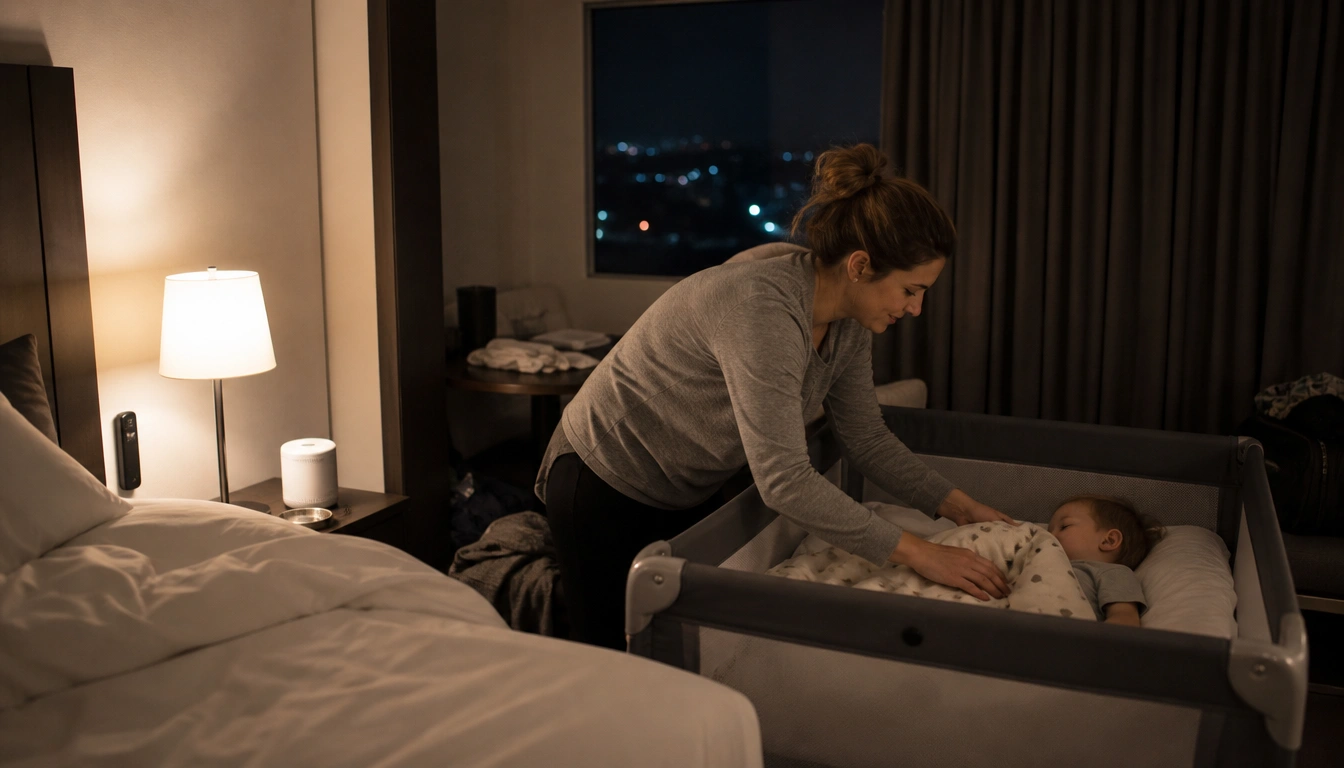
You can keep sleep on track while traveling by protecting a few core cues instead of trying to recreate home perfectly. Keep wake times fairly steady, use the same short wind-down routine, bring familiar comfort items, and make the sleep space darker, quieter, and safer. Allow temporary flexibility on vacation, especially when travel days, time zones, or late arrivals make a normal schedule unrealistic.
Key Takeaways
- Focus on consistent cues, not a perfect schedule. A short routine, familiar comfort item, and steady wake time often matter more than an exact bedtime.
- Travel can loosen sleep routines temporarily without causing long-term harm. That flexibility can reduce parental stress and make the trip easier.
- Sleep quantity and sleep quality are not the same. A child can get enough hours but still feel tired if noise, light, or discomfort keeps sleep fragmented.
- Infants and toddlers usually benefit most from portable sleep gear and safe sleep setups, while teens may need a later bedtime and a limited sleep-in window.
- Avoid melatonin or over-the-counter sleep medicines for children unless a pediatrician specifically directs their use.
- If poor sleep continues after travel or comes with snoring, breathing pauses, or major daytime issues, get medical advice.
Why travel disrupts sleep in parents and kids
Travel affects sleep in two main ways: it shifts the body clock and it disrupts the cues that normally tell the brain it is time to rest. Public health guidance from the CDC and NHS emphasizes that sleep depends not only on how long someone is in bed, but also on regular timing, light exposure, and a calm sleep environment. When those pieces change at once, children and adults may fall asleep later, wake more often, or wake too early.
That is why a child can technically spend enough hours in bed and still seem overtired. A noisy hallway, a bright window, a lumpy sofa bed, or a room that is too warm can fragment sleep and reduce how restorative it feels. Parents notice the effects quickly: more crankiness, more resistance at bedtime, and more difficulty settling after small interruptions.
It helps to think in terms of sleep quality as well as sleep quantity. Quantity is the total time asleep. Quality is whether sleep is consolidated enough to support mood, attention, and daytime energy. Travel often changes both, so the goal is not perfection. The goal is to keep the most helpful pieces of the routine intact.
Before you leave: the three-part travel sleep plan
A simple plan works better than a rigid one. Before departure, decide what you will preserve, what you will pack, and what you will let slide temporarily. That keeps everyone on the same page and lowers the chance that bedtime becomes a negotiation every night of the trip.
First, choose the routine you will keep. For many families, this means the same basic wind-down sequence: bathroom or diaper change, pajamas, brushing teeth, a book, a song, and lights out. A familiar order matters more than exact timing. If the trip is busy, keep the routine short enough that you can repeat it even when tired.
Second, pack the sleep supports you actually use. Do not bring every home item. Bring the ones that reliably signal sleep, such as a blanket, pillowcase, stuffed animal, or sound machine. If your child uses a special phrase, song, or story, keep that too.
Third, set realistic expectations. The vacation flexibility rule is useful here: routines can be temporarily loosened while traveling without implying long-term harm. That means you can accept a later bedtime, a shorter nap, or a cozier setup for a few nights if the trip needs it. The point is to prevent stress from becoming the bigger problem than the disrupted sleep itself.
What to pack to protect sleep on the road
The best travel sleep kit is small, familiar, and easy to use. It should reduce the amount of new sensory input at bedtime and help your child recognize that sleep is still the next step, even in a different room.
Useful items include:
- A favorite blanket, small stuffed item, or lovey that is already part of the bedtime routine.
- A pillowcase or sheet from home if your child is sensitive to smell or texture.
- A portable white noise machine or app to cover hallway noise, traffic, or thin hotel walls.
- Blackout options such as portable shades, clip-on curtains, or dark coverings that can be secured safely around windows.
- Backup pajamas, diapers, wipes, a sippy cup or water bottle, and anything needed for a middle-of-the-night reset.
Replicating sensory cues helps because the brain learns sleep through repeated associations. Familiar scent, touch, and sound all help reduce the “new place” alertness that often keeps children awake. If you cannot bring much, prioritize the one or two cues that your child responds to most strongly.
Darkness matters too. Hotel curtains often leave gaps, and early sunrise can wake children much earlier than usual. A dark room does not need to be perfect, but it should be dark enough that the room does not feel like daytime. For safety, avoid anything that blocks ventilation or creates a hazard near a crib or bed.
How to adjust bedtime and wake time on travel days
Travel days are rarely ideal sleep days. The schedule may be unpredictable, meals may happen late, and children may be overtired before they are actually in a place to sleep. Trying to force the usual bedtime can create more friction than it solves.
A better approach is to protect the wake time and be more flexible with bedtime. Public health sleep guidance generally favors regular wake times because they anchor the day, support appetite, and help reset the sleep drive. On travel days, that may mean letting bedtime slide a little later if necessary, then returning to a steadier morning the next day.
For younger children, an earlier wind-down may still help even if bedtime shifts. Keep the sequence familiar and make the evening low-stimulation: dim lights, fewer screens, and a calmer pace. If a child is melting down, a short reset is usually more useful than a prolonged struggle over the exact minute lights go out.
For older kids and adults, avoid expecting a perfect performance after a long drive or flight. Short naps can help if they are needed, but long daytime sleep late in the day can make it harder to settle at night. If a nap is necessary, keep it earlier and shorter when possible.
Destination setup: making a hotel room, rental, or relative’s house sleep-friendly
Once you arrive, spend a few minutes shaping the room before bedtime. The room does not need to look like home, but it should feel predictable. Start with the sleep space, then adjust light, noise, and temperature as best you can.
Try these steps:
- Set up the child’s bed, crib, or travel crib before the evening gets busy.
- Use the familiar blanket, pillowcase, or lovey right away so it is part of the first sleep attempt.
- Turn on white noise or another steady background sound before the room gets quiet enough to notice every hallway sound.
- Close curtains, secure darkening materials safely, and reduce screen light from phones, tablets, and TVs.
- Keep the room comfortably cool if possible, since hot rooms often make sleep more restless.
If you are staying with relatives, explain the sleep plan early. That can prevent well-meaning guests from turning on bright lights, offering late snacks, or extending the evening long after your child is ready for bed. A simple “We are keeping the same short routine and an earlier quiet time” is usually enough.
If the room setup is poor, focus on the most helpful one or two changes instead of trying to fix everything. A decent sleep environment is usually enough. Perfect blackout and silence are not required for one vacation to go well.
Age-specific travel sleep strategies
Infants and toddlers usually need the most environmental support. They depend heavily on familiar cues, safe sleep arrangements, and predictable routines. A travel crib or pack-and-play may help preserve the same sleep space every night. Keep the setup simple and safe, with a firm mattress and no loose bedding or soft items in the sleep area for infants. The more portable the routine, the easier it is to repeat in a hotel or rental.
School-age children often do best with clear but flexible expectations. They can usually understand that travel changes the routine, but they still benefit from a familiar order and a predictable end to the evening. A book, a few minutes of quiet talk, and the same sleep item from home can be enough. If they are worried about sleeping in a new place, tell them what will stay the same.
Teens are a special case because adolescence naturally shifts the body clock later. A teen on vacation may want to fall asleep later and sleep in more than they do at home. That is not necessarily a problem. Let them sleep later if the trip allows it, but keep the sleep-in window limited so the schedule does not drift too far. A consistent wake time is still useful, even if it is not the same as the school-day routine.
For all ages, remember that the goal is not identical sleep every night. It is to preserve enough routine and environmental stability that everyone can rest reasonably well and recover quickly once travel ends.
How to handle time-zone changes and late arrivals with the least disruption
Time-zone changes add another layer because the body clock does not adjust instantly. The CDC and NHS both emphasize that light exposure, regular timing, and steady habits help the body re-anchor after schedule changes. Parents can use that idea without making the first few days of a trip feel like a sleep project.
If you have crossed time zones, start with the local day rhythm as soon as practical. Morning light helps signal wakefulness, while keeping evenings calmer supports sleepiness at the new local bedtime. That said, do not force every part of the schedule at once. Younger children often adjust better when one anchor remains stable, such as a morning wake-up or a short bedtime routine.
Late arrivals need a different tactic. If you reach your destination close to bedtime, keep the evening short and quiet. Feed children if they are hungry, wash up, and move toward sleep without adding extra activities. If the evening has gone off schedule, do not turn bedtime into a second event. A calm reset is usually better than trying to “make up” for lost time.
If the shift is large, expect a few rough nights. That does not mean the trip is failing. It usually means the body clock is adjusting. Keep daytime light, avoid long late naps when possible, and aim for the next night to be closer to the new schedule rather than trying to recover everything in one day.
Safety rules and when not to improvise
Safety matters more than convenience, especially with infants. A hotel crib, travel crib, or temporary sleep space should meet the same basic standards you would want at home: a firm sleep surface, a fitted sheet, and no loose blankets, pillows, bumpers, or plush toys for infants. Public health and pediatric guidance remain clear on safe sleep even when the setting is temporary.
If an infant is used to a certain routine at home, keep the routine but not the unsafe parts. For example, a comfort song is fine; an extra pillow is not. If the only available option feels unsafe, it is worth changing the setup rather than improvising around it.
Temporary co-sleeping can happen on vacation when rooms are cramped or children feel unsettled. If that occurs, make it a deliberate short-term arrangement rather than a new habit you plan to continue without thought. Be explicit about returning to the usual sleep setup once you are home. For infants, follow safe sleep recommendations rather than assuming a temporary arrangement is harmless.
Be cautious with sleep aids. Melatonin and over-the-counter sleep medications should not be given to children unless a pediatrician specifically directs their use. Sleep aids are not a first-line fix for travel disruption, and they do not solve the underlying problems of light, noise, timing, or unfamiliar cues.
When to get medical advice after travel-related sleep disruption
Most travel sleep problems improve once the family is back in a familiar routine. Give the body a few days to resettle after a short trip, and a bit longer after major time-zone changes. What matters most is the pattern after travel ends.
Seek medical advice if sleep disruption lasts for weeks after returning home or if you notice more concerning signs such as loud snoring, breathing pauses, extreme daytime sleepiness, or marked behavior changes. Those symptoms can point to something more than a travel adjustment.
It is also worth speaking with a healthcare professional if your child seems unable to recover after repeated trips, if bedtime struggles become severe, or if you are unsure whether a sleep arrangement is safe for your child’s age. For infants, that conversation is especially important if you are considering any temporary change to the sleep setup.
Parents should also pay attention to their own sleep. A few short nights are expected on the road, but persistent exhaustion can affect driving safety, patience, and decision-making. If you are struggling to function well after travel, do not brush it off as normal without checking whether something else is going on.
The most useful approach is usually the simplest one: keep a few familiar cues, protect safety, allow reasonable vacation flexibility, and return to steadier routines when the trip ends. That combination is often enough to support good sleep without turning family travel into a battle.
Frequently Asked Questions
What should busy parents pack to preserve a child’s sleep routine on the road?
Pack the cues your child already associates with sleep: a blanket, stuffed item, pillowcase, portable white noise, pajamas, and any needed bedtime basics. If space is limited, prioritize the items that are most familiar and most calming rather than trying to bring the whole bedroom.
How do I handle bedtime when travel days, time zones, or late arrivals throw off the schedule?
Keep the wind-down routine short and familiar, but be flexible about exact bedtime if travel makes it unrealistic. Try to hold wake time steadier than bedtime, especially after a disrupted day, and return to the local routine gradually rather than forcing a perfect reset in one night.
What are the safest sleep arrangements for infants and toddlers in hotels or rentals?
Use a firm, safe sleep surface with a fitted sheet and no loose blankets, pillows, or soft items for infants. A travel crib or pack-and-play is often the best option. If you must adjust the setup, keep safety first and do not rely on improvised bedding or soft sleeping spaces.
How much can a child’s sleep schedule flex on vacation without causing problems?
A temporary shift is usually fine, especially if the child still has a recognizable bedtime routine and returns to a steadier schedule afterward. The goal is not a perfect match to home. A few loose nights on vacation are less concerning than making sleep a nightly battle.
What should I do if my teen naturally wants to sleep later while we are traveling?
That can be normal. Teens often have a later body clock, so a later bedtime and some sleep-in time may fit travel better than school-day rules. Let them sleep later if the trip allows it, but keep the wake-up window from drifting too far so it is easier to transition back home.
The Bottom Line
Travel sleep works best when parents focus on a few dependable cues instead of trying to duplicate home perfectly. A familiar routine, a comfort item, a darker room, and a quieter setup usually do more than a long list of rules.
Allow yourself vacation flexibility. A later bedtime, a different nap, or a temporary co-sleeping arrangement may be reasonable for a short trip, as long as safety stays first and the family returns to its normal setup afterward.
If poor sleep persists after travel or comes with snoring, breathing pauses, or major daytime problems, ask a healthcare professional for advice. For most families, though, a practical, flexible routine is enough to get through the trip well.
Medical disclaimer
Medical disclaimer: This content is for educational and informational purposes only and is not a substitute for professional medical advice, diagnosis, or treatment. Dietary needs and supplement suitability vary by individual.
Sources
- Centers for Disease Control and Prevention (CDC) — cdc.gov. Accessed October 2026.
- National Health Service (NHS) — kingstonandrichmond.nhs.uk. Accessed October 2026.
- National Health Service (NHS) — uhs.nhs.uk. Accessed October 2026.
- National Health Service (NHS) — newcastle-hospitals.nhs.uk. Accessed October 2026.
- National Health Service (NHS) — scot.nhs.uk. Accessed October 2026.
