
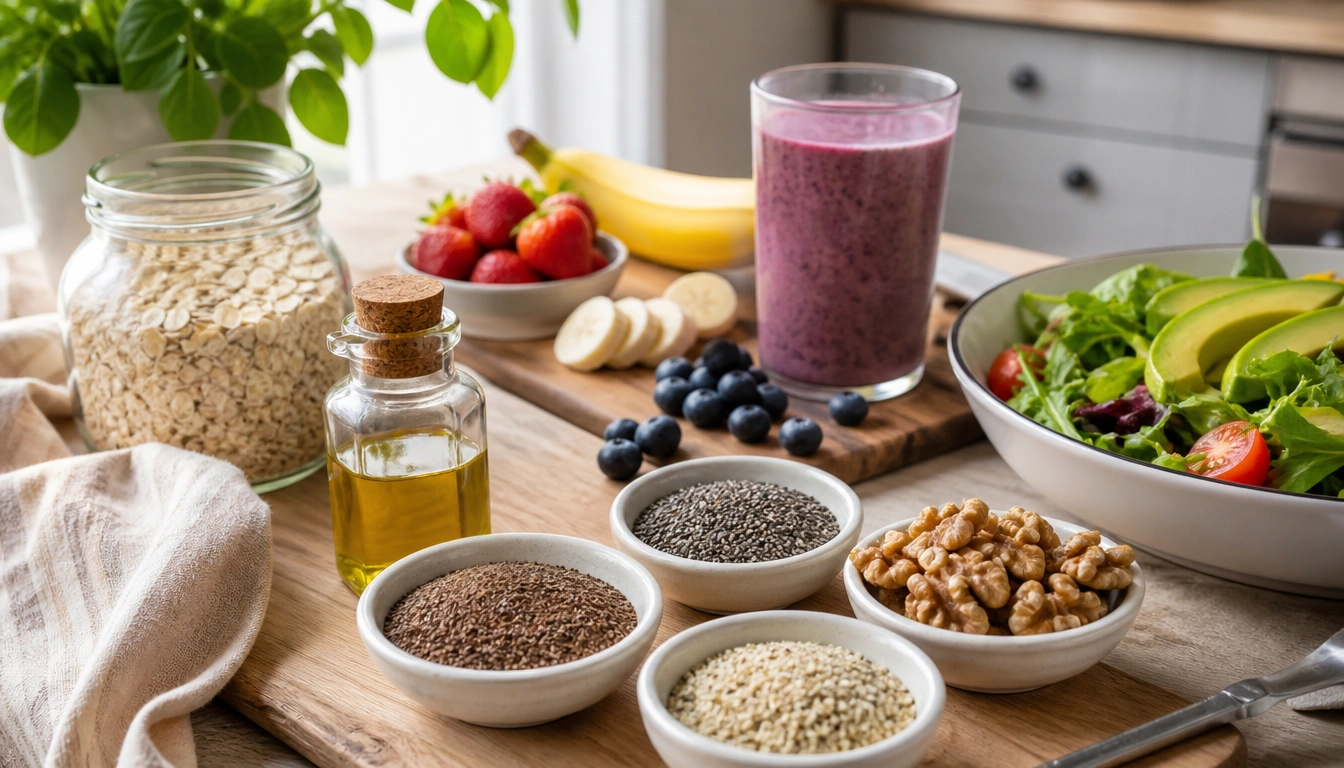
Vegetarian beginners can get most of their omega-3s from ALA-rich plant foods such as ground flaxseed, chia seeds, walnuts, hemp seeds, and certain oils. These foods can meet daily ALA needs, but they do not provide much preformed EPA or DHA. Because conversion from ALA is limited, some vegetarians—especially during pregnancy or breastfeeding—may want to discuss algae oil with a clinician.
Key Takeaways
- Ground flaxseed is one of the easiest high-omega-3 foods to use daily and works well in oatmeal, smoothies, yogurt, and baking.
- Chia seeds, walnuts, and hemp seeds add omega-3s without major meal planning and are beginner-friendly pantry staples.
- Whole flaxseed is less useful than ground flaxseed because the outer shell can pass through the body with less digestion.
- Oils matter too: frequent use of corn, sunflower, and safflower oils can make omega-3 conversion less efficient.
- Vegetarian diets can cover ALA well, but algae oil is the direct plant-based option for EPA and DHA when food alone is not enough.
- Pregnancy and breastfeeding increase the importance of DHA, so some vegetarians may want individualized guidance from a clinician.
Why omega-3 matters for vegetarians
For vegetarian beginners, omega-3 food ideas usually start with one important distinction: ALA is the plant omega-3 you can get from food, while EPA and DHA are the longer-chain forms the body uses in different tissues and pathways. According to the National Institutes of Health, ALA is essential, meaning you need it from food. The body can convert some ALA into EPA and DHA, but that conversion is limited, especially for DHA.
That is why vegetarian diets often focus on ALA-rich foods first. The most practical options are ground flaxseed, chia seeds, walnuts, hemp seeds, and a few plant oils. For most beginners, the goal is not to chase a perfect omega-3 ratio. It is to build a repeatable pattern that makes ALA easy to eat every day while keeping expectations realistic about EPA and DHA.
Practical ranking by ease: ground flaxseed, chia seeds, walnuts, hemp seeds, and then ALA-containing oils used in small amounts. This order reflects convenience, not a single “best” food for everyone.
How to hit your daily ALA goal with simple portions and meal add-ins
The NIH sets Adequate Intake targets for ALA at 1.6 grams per day for adult men and 1.1 grams per day for adult women, with slightly higher targets in pregnancy and lactation. For beginners, the easiest way to reach that range is to use one or two omega-3 foods each day instead of trying to track every gram.
A few simple add-ins do most of the work:
- 1 tablespoon ground flaxseed stirred into oatmeal, yogurt, smoothies, or pancake batter.
- Chia seeds mixed into pudding, overnight oats, or sprinkled over fruit.
- Walnuts as a snack, salad topper, or blended into pesto.
- Hemp seeds added to toast, soups, grain bowls, or breakfast bowls.
- Cold-use oils such as flaxseed oil or walnut oil in dressings, not for high heat.
A practical routine is usually easier than a strict formula. For example, you might use ground flaxseed at breakfast, walnuts as an afternoon snack, and hemp seeds at dinner. That pattern can cover ALA without major menu changes.
Ground flaxseed vs whole flaxseed: why form matters
Flaxseed is often the most efficient omega-3 food for vegetarians, but the form matters. Whole flaxseed can pass through the digestive tract with much of its fat still trapped inside the seed coat. Ground flaxseed, by contrast, is broken open and much easier to use as food.
That is why ground flaxseed is the better choice for beginners. It mixes into oatmeal, smoothies, soups, yogurt, and baking with very little effort. If you buy whole flaxseed, grind only what you need or store ground flaxseed in a cool, sealed container so the oils stay fresh.
There is also a practical texture advantage. Ground flaxseed disappears into food, so it is easier to use daily without changing your meals very much. That makes it one of the best entry points for a vegetarian who wants a food-first approach.
How to build omega-3 into breakfast, lunch, snacks, and dinner
The easiest way to stay consistent is to attach omega-3 foods to meals you already eat. A vegetarian beginner does not need a special diet plan; a few repeatable habits are enough.
Breakfast: Add ground flaxseed or chia seeds to oatmeal, muesli, yogurt, smoothies, or whole-grain toast toppings. Chia pudding is another simple make-ahead option.
Lunch: Sprinkle hemp seeds over grain bowls and salads, or add walnuts to lentil salads for crunch and extra fats.
Snacks: Keep walnuts, homemade trail mix, or chia-based snacks on hand. A small, consistent snack can be more useful than occasional large servings.
Dinner: Use flaxseed or walnut oil in cold dressings after cooking, and finish roasted vegetables or pasta bowls with seeds or chopped walnuts.
Omega-6 balance also matters. Many common cooking oils, including corn, sunflower, and safflower oils, are high in linoleic acid, an omega-6 fat. High intake of these oils can compete with ALA conversion. That does not mean you must avoid them completely. It does mean it helps to make room for ALA-rich foods and use a mix of fats, such as olive oil for everyday cooking and omega-3-rich seeds and nuts for regular add-ins.
Do vegetarians need algae oil?
Food alone can often cover ALA needs, and that is enough for many healthy vegetarian adults. But food and supplements do different jobs. Plant foods supply ALA; algae oil supplies the direct plant-based forms of EPA and DHA. If you want to bypass the body’s limited conversion from ALA, algae oil is the vegetarian option to discuss.
This does not mean every vegetarian needs a supplement. It does mean some people may choose one, especially if they want a direct source of DHA, are trying to simplify a busy routine, or have a clinician recommend it for a specific situation. Research reviews and academic guidance commonly note that vegetarians tend to have lower EPA and DHA levels than people who eat fish, even when overall diet quality is good.
If you prefer food-first eating, focus on ALA-rich foods first. If you want a direct EPA/DHA source without fish, algae oil is the plant-based alternative.
Special cases: pregnancy, breastfeeding, and other higher-need situations
Pregnancy and breastfeeding raise the importance of DHA because it supports fetal and infant development, especially for the brain and retina. The NIH sets higher ALA Adequate Intake targets in pregnancy and lactation, but food-based ALA still depends on conversion to reach DHA.
That is why pregnant or breastfeeding vegetarians may want to ask a clinician or registered dietitian whether algae oil makes sense, even if their daily seed and nut intake is solid. The question is not whether the diet is “good enough” in general. It is whether a direct DHA source would be a practical extra step during a higher-need life stage.
Other situations may also justify individualized advice, including malabsorption concerns, certain metabolic conditions, or a very low-fat diet. In those cases, a one-size-fits-all plan is less useful than tailored guidance.
Buying, storing, and using omega-3-rich plant foods safely
Plant omega-3 foods are easy to find, but they are also sensitive to heat, light, and air. For best quality, store ground flaxseed in a sealed container, ideally in the refrigerator or freezer if you buy it in larger amounts. Keep walnuts and other nuts in a cool, dry place, and use them before they taste stale or bitter.
Use delicate oils, such as flaxseed oil or walnut oil, cold only. Add them to dressings or finished dishes rather than frying or sautéing. High heat can damage polyunsaturated fats, which makes the oil less useful.
A second safety point is balance. More omega-3 is not automatically better, especially for supplements. The NIH and other medical sources advise caution with high-dose omega-3 products, particularly for people who take blood thinners or have surgery planned. Food-based omega-3s are generally the easiest and safest place to start.
Common vegetarian omega-3 sources compared
| Food or product | Ease for beginners | Best use | Main advantage |
|---|---|---|---|
| Ground flaxseed | Very easy | Oatmeal, smoothies, yogurt, baking | Highly concentrated ALA with minimal meal disruption |
| Chia seeds | Very easy | Pudding, overnight oats, toppings | Flexible, no grinding needed |
| Walnuts | Easy | Snacks, salads, pesto | Convenient whole-food option |
| Hemp seeds | Easy | Bowls, toast, soups | Simple sprinkle-and-eat format |
| Flaxseed or walnut oil | Moderate | Cold dressings, finishing oil | Useful when you want a small concentrated dose |
| Algae oil | Moderate | Supplement routine | Direct plant-based EPA/DHA source |
For most beginners, the best starting point is not the most concentrated product. It is the one you can actually use every day. That usually means ground flaxseed plus one or two other staples, with algae oil reserved for people who want or need a direct EPA/DHA source.
Frequently Asked Questions
How much ALA do vegetarian adults need each day?
The NIH Adequate Intake for ALA is 1.6 grams per day for adult men and 1.1 grams per day for adult women. Pregnancy and lactation need slightly more. Food choices usually matter more than exact tracking, so a daily serving of flax, chia, walnuts, or hemp seeds can make the target easier to reach.
Which plant foods are the richest sources of omega-3?
Ground flaxseed is one of the richest and most practical sources, followed by chia seeds, walnuts, and hemp seeds. Some plant oils also contain ALA, but seeds and nuts are usually the easiest way to build a reliable habit.
Do vegetarians need algae oil or can food alone be enough?
Food alone can be enough for many healthy vegetarians if the goal is meeting ALA needs. Algae oil becomes more relevant if you want a direct source of EPA and DHA, if you are pregnant or breastfeeding, or if your clinician recommends it for a specific reason.
How can I improve omega-3 conversion from ALA to EPA and DHA?
There is no guaranteed way to make conversion efficient, but it helps to eat ALA-rich foods consistently and avoid relying heavily on omega-6-heavy oils such as corn, sunflower, and safflower oil. A mixed-fat pattern with more seeds, nuts, and cold-use omega-3 oils is a practical approach.
Are omega-3 eggs useful for vegetarians?
They can be useful for ovo-vegetarians because they may add some EPA and DHA, but they are not the same as fish or algae oil. They are best thought of as a helpful food option, not a complete omega-3 strategy.
The Bottom Line
For vegetarian beginners, the most practical omega-3 plan is food first: use ground flaxseed, chia seeds, walnuts, hemp seeds, and occasional ALA-rich oils in everyday meals. That approach can cover ALA without complicated meal planning.
The main limitation is conversion. Plant foods do not give you much preformed EPA or DHA, so higher-need situations such as pregnancy or breastfeeding deserve extra attention. If you want a direct plant-based EPA/DHA source, algae oil is the main option to discuss with a clinician.
Medical disclaimer
Medical disclaimer: This content is for educational and informational purposes only and is not a substitute for professional medical advice, diagnosis, or treatment. Dietary needs and supplement suitability vary by individual.
Sources
- National Institutes of Health (NIH) — nih.gov. Accessed October 2026.
- Academic Research Institution — harvard.edu. Accessed October 2026.
