
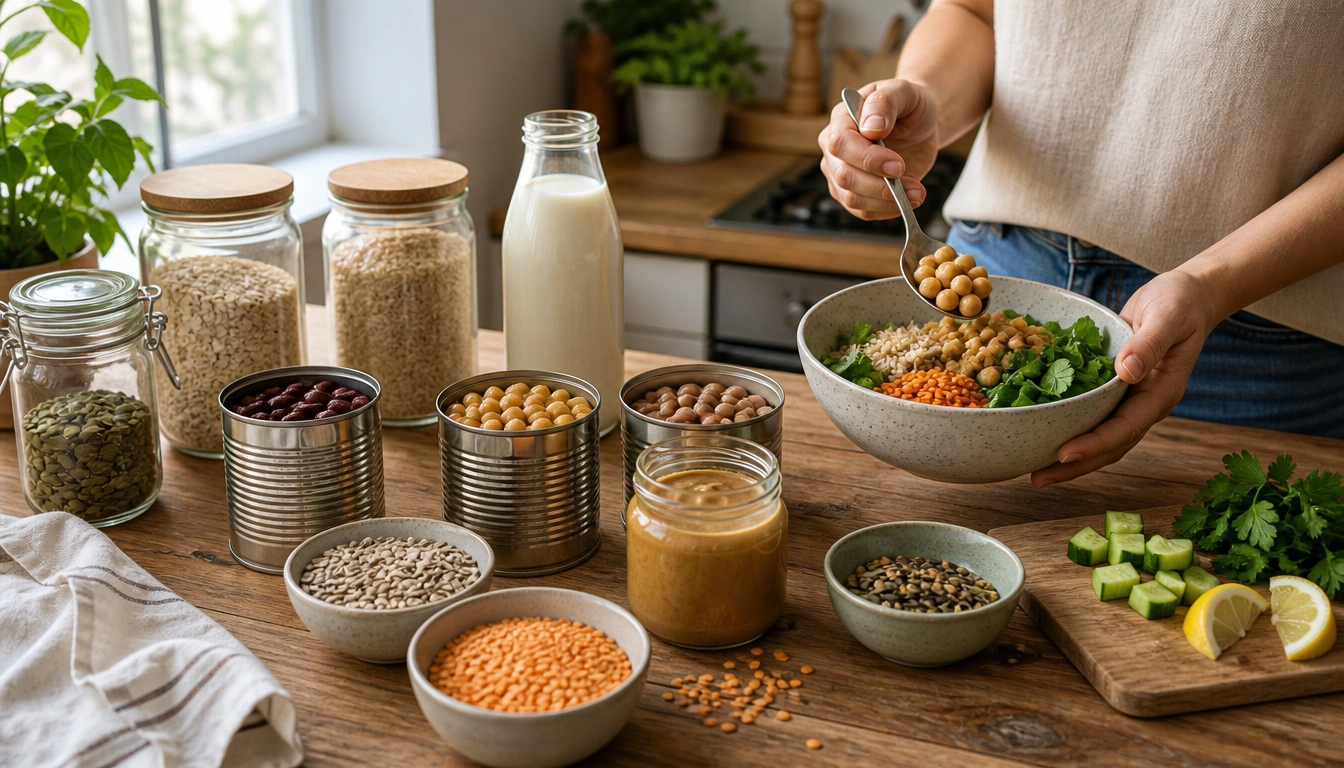
Vegetarian beginners should start with a pantry built around beans, lentils, chickpeas, soy foods, whole grains, nuts, and seeds. These staples make it easy to meet protein needs without meat, especially when you use them across the day in bowls, soups, salads, snacks, and sauces. You do not need to combine plant proteins in the same meal; variety over the day is enough.
Key Takeaways
- Legumes, whole grains, nuts, seeds, and soy are the most useful protein-rich pantry staples for beginners because they are flexible, affordable, and filling.
- You do not need to eat complementary plant proteins in the same meal; a varied vegetarian diet across the day covers amino acid needs.
- If you increase beans and lentils quickly, start with small portions and drink enough water while your digestion adapts to more fiber.
- For non-heme iron from beans, lentils, and tofu, pair the meal with vitamin C-rich foods such as citrus, tomatoes, peppers, or broccoli.
- Strict vegans need reliable vitamin B12 sources from fortified foods or supplements; lacto-ovo vegetarians can usually get B12 from eggs and dairy.
- Shelf-stable basics can support real meals fast: think canned beans, microwave grains, nut butter, soy milk, oats, and jarred sauces.
Why pantry protein matters when you first go vegetarian
For many new vegetarians, the hardest part is not interest or motivation. It is having a default meal system that still feels familiar when meat is no longer the center of the plate. A protein-rich pantry solves that problem by making the easiest option also the nourishing one. Instead of asking what to cook from scratch, you keep a few reliable staples on hand and combine them in different ways.
The most useful first buys are legumes, whole grains, nuts, seeds, and soy foods. Legumes include beans, lentils, peas, and chickpeas. They are especially valuable because they bring protein together with fiber, potassium, magnesium, and slow-digesting carbohydrates. Whole grains such as oats, barley, farro, brown rice, and quinoa add energy, texture, and additional protein. Nuts and seeds contribute protein too, but they are especially helpful for healthy fats, crunch, and flavor. Soy foods, including soy milk, tofu, tempeh, and edamame, are especially practical because they are versatile and protein-dense.
A good beginner pantry does not need to be fancy. It just needs foods that you will actually use. If you can open a can, boil water, or stir together a sauce, you can build vegetarian meals that are satisfying and repeatable.
How to use these staples in real meals
Think of your pantry as a meal-building system rather than a list of isolated ingredients. Beans and grains can become bowls. Lentils can thicken soups and sauces. Nut butter can turn plain noodles or rice into a meal with more staying power. Seeds can finish breakfast or add texture to salads. Soy milk can replace dairy milk in cereal, oats, or smoothies.
Start with combinations that are familiar. A grain bowl might use brown rice, black beans, jarred salsa, and pumpkin seeds. A soup might combine lentils, canned tomatoes, frozen spinach, and broth. A salad can become more substantial with chickpeas, sunflower seeds, and a simple dressing. For a quick snack, try whole-grain toast with peanut butter or hummus with crackers.
Practical sauces make the biggest difference for beginners. Peanut butter whisked with warm water, soy sauce, and lime juice becomes a fast dressing. Tahini with lemon and garlic can turn beans and vegetables into something richer. Nutritional yeast can add a savory note to popcorn, pasta, or roasted vegetables. These are small upgrades, but they keep pantry meals from feeling repetitive.
If you are busy, use the “assembly meal” approach: one base, one protein, one flavor source, and one texture booster. For example, microwaved rice plus canned chickpeas plus marinara plus seeds is a complete, low-effort meal. You do not need a fully cooked recipe every time.
How much protein beginners actually need
According to the National Academy of Medicine, the Recommended Dietary Allowance for healthy adults is 0.8 grams of protein per kilogram of body weight per day. That is a minimum benchmark, not a special vegetarian target. In everyday terms, many adults can meet that goal with regular meals built around beans, lentils, soy, dairy, eggs, grains, nuts, and seeds.
Beginners often worry that plant foods are “too light” on protein, but the better question is whether the whole day adds up. A modest serving of oats at breakfast, beans at lunch, tofu or lentils at dinner, and a few protein-containing snacks can cover a normal day’s needs without complicated tracking. The Acceptable Macronutrient Distribution Range for protein is broad enough to allow different eating patterns, so there is no single perfect vegetarian template.
If you want a practical habit instead of numbers, build most meals around a protein anchor. That anchor might be beans in a soup, soy in a stir-fry, yogurt at breakfast, or lentils in a pasta sauce. Repeating that pattern makes protein intake more predictable without turning meals into math.
Protein quality without the stress
Protein is made from amino acids, and plant foods vary in the amino acids they contain. That is where many beginners get nervous, but the old idea that you must combine complementary proteins in the same meal is outdated. You do not need beans and rice on the same plate to “make” a complete protein. A varied diet across the day is enough for most people.
Some plant foods, especially soy and quinoa, are often described as complete protein sources because they contain all nine essential amino acids in useful amounts. That does not mean other plant proteins are inferior or inadequate. It means variety matters. When you eat legumes, grains, nuts, and seeds regularly, your body can use the amino acids you consume over time.
A practical way to think about it: instead of chasing perfect combinations at one meal, aim for repeated coverage across the day. Lentils at lunch, oats with peanut butter at breakfast, and tofu or chickpeas at dinner is a much better beginner strategy than trying to engineer every plate.
Budget, storage, and convenience
The cheapest vegetarian protein foods are often the least dramatic ones. Dried lentils, dried beans, canned beans, oats, peanut butter, soy milk, and bulk grains usually give the most protein for the lowest cost. Canned and shelf-stable options are especially useful when you are still learning how to cook because they reduce waste and remove some of the friction from meal planning.
Canned beans and lentils are the fastest option. Look for lower-sodium versions when possible, and rinse regular canned beans to remove some of the sodium and improve flavor. Dried beans are usually cheaper, but they take planning, soaking, and cooking. Lentils are a strong middle ground because they cook quickly and are easy to use in soups, curries, and pasta sauces. Frozen vegetables and frozen edamame are also useful because they keep well and can be added at the last minute.
For tiny kitchens or shared housing, choose foods that do more than one job. Oats can be breakfast, a binder for veggie patties, or an ingredient in baking. Peanut butter can be breakfast, sauce, or snack. Soy milk can be for cereal, coffee, or smoothies. Shelf-stable basics make vegetarian eating less dependent on a perfect refrigerator.
Nutrient nuances beginners should not miss
Protein is only part of the picture. Vegetarian beginners also need to think about iron, vitamin B12, sodium, and fiber tolerance. Plant foods provide non-heme iron, which is absorbed less efficiently than the iron in meat. A useful strategy is to pair iron-rich foods such as beans, lentils, tofu, or fortified grains with vitamin C at the same meal. Citrus, strawberries, tomatoes, bell peppers, and broccoli are easy pairings that can help.
Vitamin B12 deserves special attention. Lacto-ovo vegetarians often get B12 from dairy and eggs, but strict vegans cannot rely on unfortified plant foods for it. They need B12-fortified foods, such as some plant milks and nutritional yeast, or a supplement. Because B12 deficiency can develop slowly, it is better to plan for it early than wait for a problem.
Sodium is another common issue. Canned soups, sauces, and beans can help you eat well quickly, but some are very salty. Choose low-sodium versions when available and balance them with unsalted staples like plain grains, vegetables, and beans you rinse yourself. Fiber is useful, but a sudden jump in beans and lentils can cause gas or bloating. Increase portions gradually and drink enough water while your gut adjusts.
A simple starter pantry checklist and meal-building formula
For the first week, keep the pantry focused. A useful starter list includes canned beans, dried or canned lentils, chickpeas, oats, brown rice or another whole grain, whole-grain pasta, peanut or almond butter, chia or flaxseed, pumpkin seeds, soy milk, nutritional yeast, canned tomatoes, broth, salsa, and a few frozen vegetables. If you like tofu or edamame, add those too.
Then use a simple meal formula: base + protein + vegetable + flavor. The base might be rice, oats, pasta, or bread. The protein might be beans, lentils, tofu, soy milk, yogurt, or nut butter. The vegetable can be canned, frozen, or fresh. The flavor can come from salsa, marinara, curry paste, herbs, lemon, or soy sauce. This pattern keeps meals flexible and prevents decision fatigue.
A realistic emergency meal could look like this: microwaveable whole grains, a rinsed can of chickpeas, frozen spinach, and jarred marinara. Another version is oats cooked with soy milk, topped with peanut butter and chia seeds. These are not “fallback” meals in a negative sense. They are the foundation of a sustainable vegetarian routine.
Common beginner mistakes and how to avoid them
The most common mistake is buying too many specialty products before building a basic pantry. Fancy meat substitutes can be helpful, but they are not the place to start if your goal is everyday consistency. Focus first on legumes, grains, nuts, seeds, and soy. Those foods are cheaper, more versatile, and easier to use in many different meals.
Another mistake is assuming a meal is not high protein unless it looks like meat. Vegetarian meals often spread protein across several ingredients rather than one large center item. That can still work well. A bowl with beans, grains, seeds, and vegetables may feel less obvious than a steak or chicken breast, but it can be nutritionally robust.
Beginners also sometimes overdo fiber too quickly or forget that storage matters. If dried beans sit unused because cooking feels difficult, choose canned versions first. If a pantry meal tastes bland, add acid, salt in moderation, herbs, or a sauce. If you worry about variety, rotate through a few reliable templates instead of inventing new recipes every day. Consistency beats novelty during the transition.
Frequently Asked Questions
How much protein do vegetarian beginners need each day?
For healthy adults, the standard reference is 0.8 grams of protein per kilogram of body weight per day. Vegetarian beginners can usually meet that with regular meals based on beans, lentils, soy foods, dairy or eggs if included, grains, nuts, and seeds.
Do plant proteins need to be combined in the same meal?
No. Most people do not need to combine complementary plant proteins at the same meal. A varied vegetarian diet across the day is enough to provide essential amino acids.
Which pantry protein staples are best for beginners on a budget?
Dried lentils, canned beans, chickpeas, oats, brown rice, peanut butter, soy milk, and seeds are strong budget-friendly choices. They are affordable, shelf-stable, and easy to turn into meals.
How can vegetarians improve iron absorption from beans and lentils?
Pair non-heme iron foods with vitamin C at the same meal. Good options include tomatoes, bell peppers, citrus, strawberries, broccoli, and salsa with bean-based dishes.
What vitamin B12 sources do strict vegetarians or vegans need to watch?
Strict vegans should plan for B12-fortified foods or a B12 supplement. Lacto-ovo vegetarians can usually get B12 from dairy and eggs, but vegans cannot rely on unfortified plant foods.
The Bottom Line
A smart vegetarian pantry does not need to be complicated. If you stock legumes, grains, nuts, seeds, and soy, you can build enough protein into ordinary meals without relying on meat substitutes or elaborate cooking.
The most helpful habits are simple: use canned or dried beans often, keep a few shelf-stable grains and sauces on hand, pair iron-rich foods with vitamin C, and introduce high-fiber foods gradually if your digestion is adjusting. If you are vegan, do not leave B12 to chance.
With a small set of repeatable staples, vegetarian eating becomes easier, cheaper, and more sustainable. The goal is not perfection at every meal; it is a pantry that makes good choices the default.
Medical disclaimer
Medical disclaimer: This content is for educational and informational purposes only and is not a substitute for professional medical advice, diagnosis, or treatment. Dietary needs and supplement suitability vary by individual.
Sources
- National Health Service (NHS) — www.nhs.uk. Accessed October 2026.
- National Health Service (NHS) — mkuh.nhs.uk. Accessed October 2026.
- National Health Service (NHS) — gatesheadhealth.nhs.uk. Accessed October 2026.
- Academic Research Institution — harvard.edu. Accessed October 2026.
