
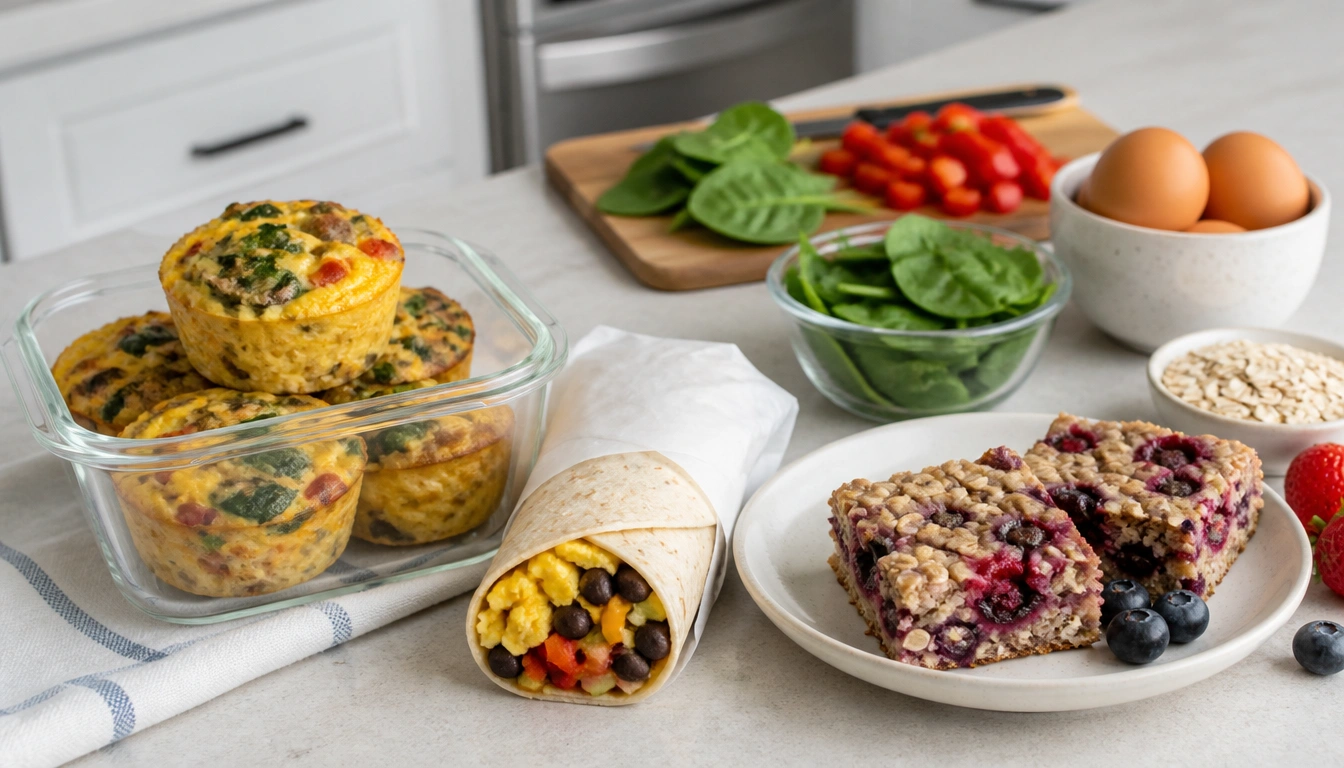
The easiest healthy freezer breakfasts are egg muffins, breakfast burritos, and baked oatmeal slices. They are beginner-friendly, use basic ingredients, and reheat well if you choose freezer-friendly fillings, cool food fully before packing, and add delicate toppings after reheating. For the best texture, keep the meal balanced with protein plus fiber so it feels more filling and holds morning energy better.
Key Takeaways
- Start with one recipe batch, not a full month of food. A small first run helps you learn what freezes well in your kitchen.
- Protein plus fiber is the most useful breakfast structure for steady morning energy and lasting fullness.
- Egg muffins, breakfast burritos, and baked berry oatmeal slices are the most forgiving starter options.
- Freeze only foods that handle moisture well; add watery vegetables, avocado, yogurt, and sauces after reheating.
- For best flavor and texture, aim to use frozen breakfasts within 2–3 months, even though they remain safe if kept frozen.
The simplest freezer breakfast framework
If you want freezer-friendly breakfast ideas for meal-prep beginners, start with a very small formula: one protein, one fiber-rich base, and one produce component. That structure gives you a breakfast that is more satisfying than pastry or cereal alone, because protein and fiber slow digestion and help you feel full longer. Public-health plate guides from the NHS and MyPlate both favor balanced meals built from protein, grains, and produce, and that same logic works well in the freezer.
Think in combinations rather than recipes. Eggs or tofu can supply protein. Oats, whole-grain tortillas, or beans can supply fiber and staying power. Vegetables or berries bring color and nutrients. Once you know that pattern, breakfast prep stops feeling like a complicated project and starts feeling like assembly.
The beginner move is to make one batch, taste it, and adjust. You do not need special tools to get started. A muffin tin, a baking dish, a skillet, and a freezer bag are enough for most starter recipes.
Savory egg muffin bakes
Egg muffin bakes are one of the best entry-level freezer breakfasts because they portion themselves and reheating is simple. Whisk eggs, add chopped cooked vegetables, and fold in a little cheese or a lean protein if you like. Bake in a muffin tin until set, cool completely, and freeze in a single layer before packing them into a container or bag.
Flavor variations can stay very simple. Try spinach and cheddar, bell pepper and onion, or turkey and broccoli. Cooked vegetables usually work better than raw ones because they lose less texture after freezing. If you want a softer result, mix in a small amount of cottage cheese or shredded cheese, but keep in mind that the texture is best when the add-ins are not watery.
For beginners, the appeal is flexibility. You can make a mild batch for the whole household and season individual servings later. Egg muffins also pair well with fruit on the side, which keeps the breakfast balanced without adding extra cooking steps in the morning.
Breakfast burritos and baked berry oatmeal slices
Breakfast burritos are useful when you want a more complete grab-and-go meal. Fill a whole-wheat or high-fiber tortilla with scrambled eggs, black beans, cooked potatoes, or a lean sausage substitute if you like. The main anti-soggy rule is to let fillings cool fully before wrapping. Warm filling creates steam, which softens the tortilla and can turn the inside gummy after freezing.
Keep moisture under control by using cooked, drained fillings and layering dry ingredients near the tortilla. Wrap each burrito tightly, then freeze them in a flat layer before stacking. When reheating, remove any outer wrap if needed, then warm gently so the tortilla does not get tough. A quick finish in a skillet can improve texture after the center is hot.
Baked berry oatmeal slices are the sweet counterpart to the burrito. They work especially well if you want something closer to a breakfast bar than a bowl of cereal. Mix oats with milk, eggs or another binder if your recipe uses it, cinnamon, and berries, then bake and cool before slicing. They freeze well because the oat structure holds up better than many soft breakfast pastries. Add milk, yogurt, or fresh fruit only after reheating, not before freezing, so the slices stay firm instead of soggy.
What freezes well and what is better added fresh
Freezing is best for ingredients that tolerate moisture loss and rewarming without collapsing. Cooked eggs, baked oats, beans, cooked potatoes, whole grains, shredded cheese, and many cooked vegetables freeze well enough for practical meal prep. Frozen fruit also works well in baked oatmeal because the fruit is already being cooked into the dish.
Foods that freeze poorly are usually high in water or very delicate. Raw cucumbers, fresh tomatoes, and watery zucchini can turn limp and release liquid after thawing. Soft fresh herbs can darken and lose brightness. Dairy toppings such as sour cream, yogurt toppings, and mayonnaise-based sauces often separate or become loose after freezing. That does not make them unsafe; it just makes the texture worse.
A helpful rule is to freeze the sturdy parts and add the fragile parts later. Avocado slices, fresh herbs, salsa, hot sauce, and yogurt are often better added after reheating. That one habit makes freezer breakfasts taste fresher without adding much work.
A beginner workflow that avoids common mistakes
Most freezer frustration comes from rushing the prep, not from the recipe itself. Start by cooling cooked food fully before freezing. The NHS advises cooling food promptly and safely before refrigeration or freezing so it does not warm other foods and spend too long in the temperature range where bacteria can grow. Spread hot items out in shallow containers if you need to speed cooling.
Once the food is cool, pack it in portions you will actually eat. Single servings are easier to reheat and less likely to be wasted. Use freezer-safe bags or containers, press out extra air when possible, and label each package with the name and date. That date matters because it helps you rotate older food first and keep quality high.
Organization also makes breakfast feel easy on busy mornings. Keep your freezer breakfasts in one section together, if you can, so you are not digging behind ice cream and frozen vegetables. If you are new to meal prep, choose one recipe and repeat it until the steps feel natural. Skill comes from repetition, not from making six recipes at once.
How to reheat each format without ruining texture
Different breakfasts need different reheating methods. Egg muffins do well in the microwave because they are small and evenly shaped. Heat them until hot throughout, then let them sit briefly so the steam evens out the center. If you prefer a firmer top, a short finish in a toaster oven works well.
Breakfast burritos usually reheat best with a gentler approach. If you microwave from frozen, use a lower power setting or short bursts so the tortilla does not dry out before the center warms. A damp paper towel can help keep the wrap supple, but do not overdo it. For a crisper shell, thaw first and then finish in a dry skillet or toaster oven.
Baked oatmeal slices are forgiving. Microwave them with a splash of milk if they seem dry, or warm them in a toaster oven for better edges. The goal is not to fully recreate a fresh-baked texture. It is to heat the food evenly, preserve moisture, and make the breakfast enjoyable enough that you will keep using the system.
Storage rules, freezing time, and food safety
Food safety and food quality are related but not identical. According to the NHS, foods kept frozen at a constant safe freezer temperature remain safe for a long time. The practical issue is quality: flavor, moisture, and texture slowly decline. For that reason, a 2–3 month window is a smart target for the best taste, even though frozen food can remain safe longer if it stays fully frozen.
Keep in mind that the freezer does not fix poor food handling. Do not freeze food that has sat out too long, and do not put hot food straight into the freezer. Cooling first protects both the food and the rest of the freezer contents. If an item develops obvious freezer burn or a strange smell after reheating, it is better to discard it.
Use your freezer as a rotation system, not a storage vault. Labeling, portioning, and using food in order are the habits that keep breakfast prep low-stress. They also make it easier to notice what you actually enjoy, which helps you plan better next time.
Gluten-free, dairy-free, and plant-based swaps that still freeze well
Freezer breakfasts can work for many eating patterns with a few smart substitutions. For gluten-free breakfasts, use certified gluten-free oats and check that wraps, sausage, and seasoning blends are also gluten-free. Oats are a useful base because they freeze well and provide the kind of fiber that helps breakfast feel more substantial.
For dairy-free meals, plant milk can work in baked oatmeal, and dairy-free cheese can be used in egg muffins or burritos if it melts and reheats well in your kitchen. For plant-based protein, tofu scramble, beans, and lentils are practical options. Tofu scramble freezes better when it is cooked fairly dry and seasoned well, since excess moisture leads to a softer texture after reheating.
These swaps are most successful when you keep the same freezer logic: avoid excess liquid, cool completely, portion well, and add fresh toppings later. If you manage a medical condition that needs personalized nutrition advice, such as diabetes or chronic kidney disease, use the recipe as a starting point and get individual guidance from a clinician or registered dietitian.
Troubleshooting soggy burritos, dry oats, and rubbery eggs
If your burrito turns soggy, the fillings probably held too much water or were packed while warm. Cook vegetables until most surface moisture has evaporated, drain beans well, and let everything cool before wrapping. A thin layer of scrambled egg or beans can also act as a moisture buffer between the tortilla and wetter fillings.
If baked oats come out dry, the issue is usually too little liquid or too much reheating. Try adding a spoonful of milk before heating and stop as soon as the center is warm. Oat slices are meant to be soft, not baked twice. A little moisture before reheating can make a big difference.
If eggs become rubbery, they were probably overheated. Eggs are sensitive to aggressive microwave cooking. Use shorter intervals and let residual heat finish the job. The texture will not be exactly the same as fresh eggs, but the result can still be pleasant if you heat gently and avoid drying them out.
Once you learn these fixes, freezer breakfasts become less about perfection and more about dependable routine. That is the real win for beginners: a breakfast that is ready when you are, with fewer decisions and less morning stress.
Frequently Asked Questions
How do I keep freezer breakfast burritos from getting soggy?
Cool all fillings completely before wrapping, and avoid watery vegetables or wet sauces inside the burrito. Use cooked, well-drained ingredients, wrap tightly, and reheat gently so the tortilla does not steam itself soft.
What breakfasts freeze best for beginners with no special equipment?
Egg muffins, baked oatmeal slices, and breakfast burritos are the easiest starter options. They need only basic tools like a bowl, baking dish or muffin tin, and a freezer-safe container or bag.
How long can freezer breakfast meal-prep items safely stay frozen?
If kept frozen continuously, they can remain safe for a long time. For best flavor and texture, try to use them within 2–3 months, which is a practical quality target rather than a strict safety cutoff.
Can I freeze oatmeal, egg muffins, and breakfast burritos without losing quality?
Yes, those are all strong freezer candidates. Quality changes are normal, but they usually reheat well if you freeze them fully cooled, portion them well, and avoid excess moisture in the fillings.
What ingredients should I add fresh after reheating instead of freezing?
Add delicate or watery toppings after reheating, such as yogurt, sour cream, avocado, fresh herbs, salsa, and some fresh fruit. These ingredients usually taste brighter and keep a better texture when added at the end.
The Bottom Line
For beginners, the easiest freezer breakfasts are the ones built from a simple formula: protein plus fiber plus produce. That is why egg muffins, breakfast burritos, and baked oatmeal slices are such reliable first recipes.
The most important habits are also the simplest ones: cool food fully, portion it well, label it, and add fragile toppings after reheating. Do that, and freezer breakfasts can save time without turning breakfast into a compromise.
Medical disclaimer
Medical disclaimer: This content is for educational and informational purposes only and is not a substitute for professional medical advice, diagnosis, or treatment. Dietary needs and supplement suitability vary by individual.
Sources
- National Health Service (NHS) — scot.nhs.uk. Accessed October 2026.
- National Health Service (NHS) — www.nhs.uk. Accessed October 2026.
- Academic Research Institution — rutgers.edu. Accessed October 2026.
- Academic Research Institution — clemson.edu. Accessed October 2026.
- Academic Research Institution — usu.edu. Accessed October 2026.
- myplate.food — myplate.food. Accessed October 2026.
