
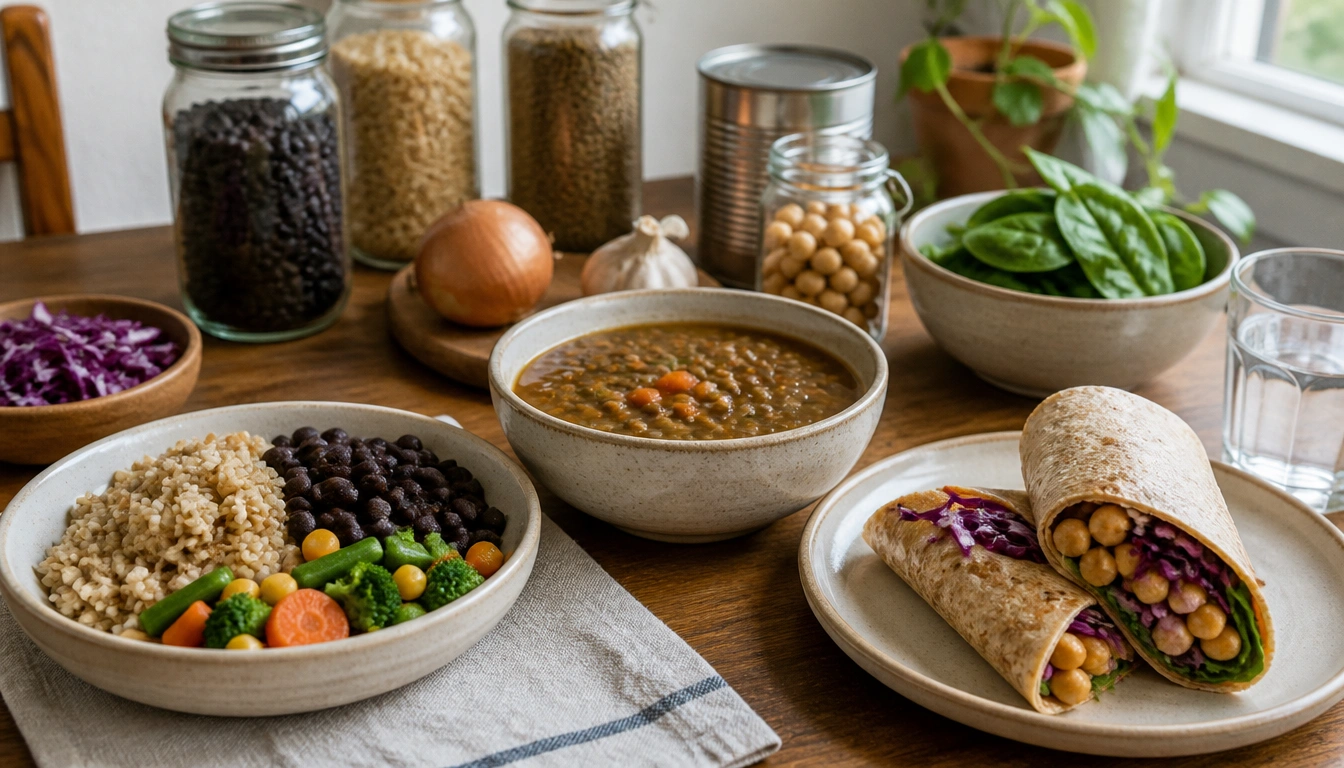
Affordable high-fiber lunch ideas are usually built from low-cost staples like beans, lentils, brown rice, oats, whole-wheat tortillas, and frozen vegetables. A practical approach is to batch-cook one fiber-rich base, then turn it into bowls, soups, wraps, or salads across several days. If you increase fiber slowly and drink enough fluids, these lunches can support fullness, regularity, and better overall nutrition without expensive specialty products.
Key Takeaways
- Beans, lentils, whole grains, and frozen vegetables are usually the cheapest high-fiber lunch building blocks.
- A budget lunch formula that works well is: base + protein or fiber anchor + vegetables + sauce or seasoning.
- Frozen vegetables are often a smart substitute for fresh produce and are useful for quick lunch assembly.
- Increase fiber gradually. A sudden jump can cause gas, bloating, cramping, or diarrhea, especially if hydration is low.
- Checking unit price helps you compare real value, which is often more useful than comparing package price alone.
Fiber basics for lunch planning
Dietary fiber is the part of plant foods your body does not fully digest. That sounds simple, but it matters a lot for lunch planning because fiber helps with three things many budget shoppers care about: fullness, digestive regularity, and steadier blood sugar after meals. Fiber-rich meals tend to be more satisfying because they take longer to chew and digest. They also tend to stretch farther, which is useful when you are trying to make one grocery trip cover several lunches.
There are two broad types of fiber. Insoluble fiber helps add bulk to stool and supports regular bowel movements. Soluble fiber dissolves in water and forms a gel-like texture that can slow digestion. Both types show up in cheap lunch foods such as beans, lentils, oats, barley, whole-wheat bread, brown rice, cabbage, carrots, and frozen vegetables. You do not need a special product to get them.
For lunch planning, the practical goal is not to make every meal perfect. It is to choose foods that are affordable, filling, and easy to repeat. A lunch that combines fiber with some protein and enough fluid is usually more satisfying than a refined-carb meal that leaves you hungry an hour later.
How much fiber adults generally need
According to the Dietary Guidelines for Americans, adults generally need about 22 to 34 grams of fiber per day, depending on age, sex, and calorie intake. Many people fall short of that target. That gap is not usually because fiber is hard to find. It is often because convenience foods, refined grains, and low-vegetable meals crowd out the cheaper plant foods that naturally contain more fiber.
You do not have to reach your full daily target from lunch alone. It is more realistic to think in terms of building one or two better meals each day. A high-fiber lunch can make a real difference if breakfast is light or dinner is unpredictable. Even adding one serving of beans, a whole grain, and a vegetable to a lunch can move your day in a better direction.
The best target is the one you can actually maintain. If your current intake is low, a big jump can backfire. The digestive system usually does better with gradual changes that give your body time to adjust. That is especially true if your meals have been low in plant foods for a while.
The cheapest high-fiber lunch building blocks
The lowest-cost high-fiber lunch foods are often the foods that look plainest in the grocery store. Dry beans, canned beans, lentils, brown rice, oats, barley, whole-wheat tortillas, cabbage, carrots, onions, and frozen vegetables tend to give a lot of fiber for the money. USDA and other federal nutrition resources consistently point shoppers toward these kinds of staples because they are affordable, flexible, and easy to combine.
Beans and lentils are especially useful. Dry lentils cook quickly and usually do not need soaking, which makes them one of the easiest budget staples to turn into lunch. Canned beans are also convenient and still useful if you rinse them to reduce excess sodium. Black beans, chickpeas, kidney beans, and pinto beans all work well.
Whole grains help round out a lunch. Brown rice, oats, barley, and whole-wheat bread or tortillas are easy bases. They are not flashy, but they do the job. A whole-grain base paired with beans or lentils is often more filling than a refined grain meal of the same size.
Frozen vegetables are another budget advantage. They are often cheaper than fresh produce, last longer, and are easy to portion into a lunch bowl, soup, or wrap. Frozen broccoli, spinach, mixed vegetables, peas, and cauliflower can all help you build a high-fiber lunch without worrying about spoilage. If you have fresh vegetables on hand, use them. If not, the freezer aisle is still a smart option.
A simple budget lunch formula is: base + protein or fiber anchor + vegetables + sauce or seasoning. For example, brown rice plus black beans plus frozen peppers plus salsa. Or whole-wheat tortilla plus hummus plus cabbage plus carrots. This formula keeps shopping simple and makes leftovers easier to reuse.
Low-cost lunch ideas you can actually make
Bean and rice bowl: Cook a pot of brown rice, then top it with black beans, frozen corn, and sautéed onions or peppers. Add salsa, hot sauce, or cumin for flavor. If you already have leftover rice, this becomes even cheaper and faster.
Lentil soup lunch: Simmer lentils with canned tomatoes, carrots, onion, and frozen spinach or kale. Serve it with whole-grain bread or a tortilla. This is one of the easiest ways to make several lunches from one batch, and it reheats well.
Chickpea wrap: Mash canned chickpeas with a little mustard, yogurt, or mayo, then spread it in a whole-wheat tortilla with shredded cabbage and grated carrot. This works well when you want a cold lunch and do not have time to heat food.
Bean salad box: Mix rinsed canned beans with chopped cucumber, onion, tomato, and a simple vinaigrette. Add a piece of whole-grain bread or a small whole-grain pita. If fresh vegetables are expensive, swap in thawed frozen corn, carrots, or peas.
Vegetable grain soup: Use barley or brown rice in a soup with frozen mixed vegetables and white beans. This is a useful way to turn leftover grain into a second meal instead of wasting it. It also stretches a small amount of beans across multiple servings.
If you need a lunch that feels more substantial, combine two cheap fiber sources instead of one. For example, beans plus brown rice, or hummus plus whole-wheat bread. That approach often works better than buying a special high-fiber snack product that costs more and delivers less food.
Smart shopping tips for budget shoppers
One of the most useful habits for saving money is checking unit price. Package price can be misleading. A larger bag of dry beans or a store-brand tub of oats may look more expensive at checkout, but the price per ounce or per pound is often lower. The shelf tag usually gives you the number you need.
Dry vs. canned beans: Dry beans usually cost less per serving, but they take planning. Canned beans cost more per serving, yet they save time and may be worth it if you are busy or do not have reliable prep time. Both can fit into a healthy budget lunch. If you use canned beans, choose low-sodium or no-salt-added options when possible, and rinse them before eating.
Frozen vs. fresh vegetables: Frozen vegetables can be a cost-effective substitute for fresh produce, especially when fresh options are out of season or likely to spoil before you use them. They are convenient for lunch assembly because you can heat only the amount you need.
Low-sodium choices: When you are relying on canned soup, beans, tomatoes, or vegetables, look for lower-sodium versions if available. That does not make the food “better” in every sense, but it helps you build a lunch with more control over salt. You can always add flavor later with herbs, vinegar, garlic, lemon, or spices.
Low-cost add-ons: Cabbage, carrots, onions, bananas, apples, peanut butter, eggs, and plain yogurt can all support a budget lunch plan, even though they are not all high in fiber on their own. Use them to round out the meal instead of buying separate convenience items for every lunch.
Batch-prep and leftovers that save money
Batch cooking is one of the best ways to keep high-fiber lunches cheap. A single pot of lentils, beans, or brown rice can become several different lunches with only small changes. That matters because variety helps you avoid boredom without requiring a new recipe every day.
A practical weekly pattern is to cook one fiber base on the weekend, then divide it into containers or mix-and-match portions. For example, cook lentils once and use them in a soup on Monday, a grain bowl on Wednesday, and a wrap filling on Friday. Do the same with rice or beans. This strategy reduces food waste and makes it easier to buy in larger, cheaper quantities.
Leftovers also help with time. If you make dinner with beans or whole grains, intentionally cook extra. A leftover cup of rice or roasted vegetables can become the start of lunch the next day. That is often cheaper than buying separate lunch ingredients after a busy workday. Keep sauces, salsa, mustard, or vinaigrette on hand so the same base does not taste identical every day.
If you are very short on prep time, start with one batch item rather than a full meal plan. Even cooking one bag of lentils or one pot of rice can change the week. The goal is not perfection. It is to make the cheapest fiber foods easier to use than takeout or highly processed snacks.
How to increase fiber safely
Fiber is helpful, but the digestive system may need time to adapt. If you go from low fiber to a much higher intake too quickly, you may notice gas, bloating, cramping, or diarrhea. That does not usually mean fiber is a problem. It often means the increase was too fast for your current routine.
A gradual approach is usually more comfortable. Add one fiber-rich food at a time, or increase the portion slowly over several days or weeks. For example, move from a half-cup of beans to a full cup only if your body tolerates it well. The same goes for switching from white bread to whole-grain bread or from few vegetables to several servings a day.
Hydration matters at the same time. Fiber works best when you are drinking enough fluid. If you increase fiber without enough water, you may feel more uncomfortable instead of less. Water does not have to be complicated: keep a bottle with you, drink with meals, and pay attention to thirst. That is especially important if you are adding dry beans, oats, or other dense fiber foods.
If you know your stomach is sensitive, choose softer textures first. Soups, cooked lentils, and well-cooked vegetables may be easier to tolerate than a very large raw salad. You can build up to more variety later.
Special considerations and when to ask a clinician
Most healthy adults can increase fiber through food without special supervision, but some people need personalized guidance. If you have inflammatory bowel disease, a bowel stricture, recurrent bowel obstruction, active diverticulitis, or another digestive condition that changes how you tolerate roughage, ask a clinician before making a major fiber increase. The same is true if you have been told to follow a low-fiber or modified diet.
Medication matters too. Some medicines and supplements can be affected by when and how you eat fiber-rich foods. If you take prescriptions for a condition that requires careful timing with meals, or if you are unsure how a diet change fits your treatment plan, speak with a healthcare professional or registered dietitian.
Also get advice if you develop persistent abdominal pain, unexplained weight loss, blood in the stool, ongoing diarrhea, or constipation that does not improve. Those symptoms are not something to troubleshoot with a lunch plan alone. A budget-friendly eating pattern should still fit your health needs.
For many people, though, the practical answer is straightforward: choose the cheap plant foods already in the store, build lunches around them, and increase fiber gradually enough that your body can keep up.
Frequently Asked Questions
How much fiber should adults aim for each day?
The Dietary Guidelines for Americans generally place adult fiber needs around 22 to 34 grams per day, depending on age, sex, and calorie intake. You do not need to hit that perfectly at every meal. A budget-friendly lunch that includes beans, whole grains, or vegetables can make a meaningful contribution.
What budget-friendly foods are highest in fiber?
Dry beans, lentils, canned beans, oats, barley, brown rice, whole-wheat bread or tortillas, cabbage, carrots, and frozen vegetables are among the most useful low-cost choices. They are flexible, filling, and easy to combine into lunch meals without buying specialty products.
How can I make a high-fiber lunch without using expensive specialty products?
Use a simple formula: one base such as rice, lentils, or whole-wheat bread; one fiber anchor such as beans or hummus; and vegetables, fresh or frozen. Season it with salsa, vinaigrette, mustard, spices, or broth. That approach is usually cheaper than buying packaged high-fiber convenience foods.
How do I increase fiber without causing bloating or stomach discomfort?
Increase fiber gradually instead of all at once, and drink enough fluids as you do it. If your intake has been low, start with smaller portions of beans, whole grains, or vegetables and build up over time. Cooked foods like soup or lentils may be easier to tolerate than very large raw salads at first.
Is canned beans just as useful as dry beans for a budget high-fiber lunch?
Yes. Dry beans usually cost less, but canned beans are still a useful high-fiber option, especially when time is limited. Choose low-sodium or no-salt-added versions when possible and rinse them before using. That keeps the lunch convenient while still giving you fiber and protein.
The Bottom Line
Affordable high-fiber lunches usually come from the most basic grocery staples: beans, lentils, whole grains, and frozen vegetables. Those foods are inexpensive, filling, and easy to combine into bowls, soups, wraps, and grain salads.
The biggest money-saving habits are simple: check unit price, buy some foods in dry form when you can use them, keep frozen vegetables on hand, and batch-cook a base that can become several lunches. If you raise fiber slowly and drink enough water, these meals can support digestion without causing unnecessary discomfort.
You do not need specialty products to eat better at lunch. A few dependable pantry and freezer foods can do most of the work.
Medical disclaimer
Medical disclaimer: This content is for educational and informational purposes only and is not a substitute for professional medical advice, diagnosis, or treatment. Dietary needs and supplement suitability vary by individual.
Sources
- U.S. Government / Health Authority — usda.gov. Accessed October 2026.
- Centers for Disease Control and Prevention (CDC) — cdc.gov. Accessed October 2026.
- U.S. Government / Health Authority — dietaryguidelines.gov. Accessed October 2026.
- U.S. Government / Health Authority — nutrition.gov. Accessed October 2026.
- Mayo Clinic — mayoclinic.org. Accessed October 2026.
