
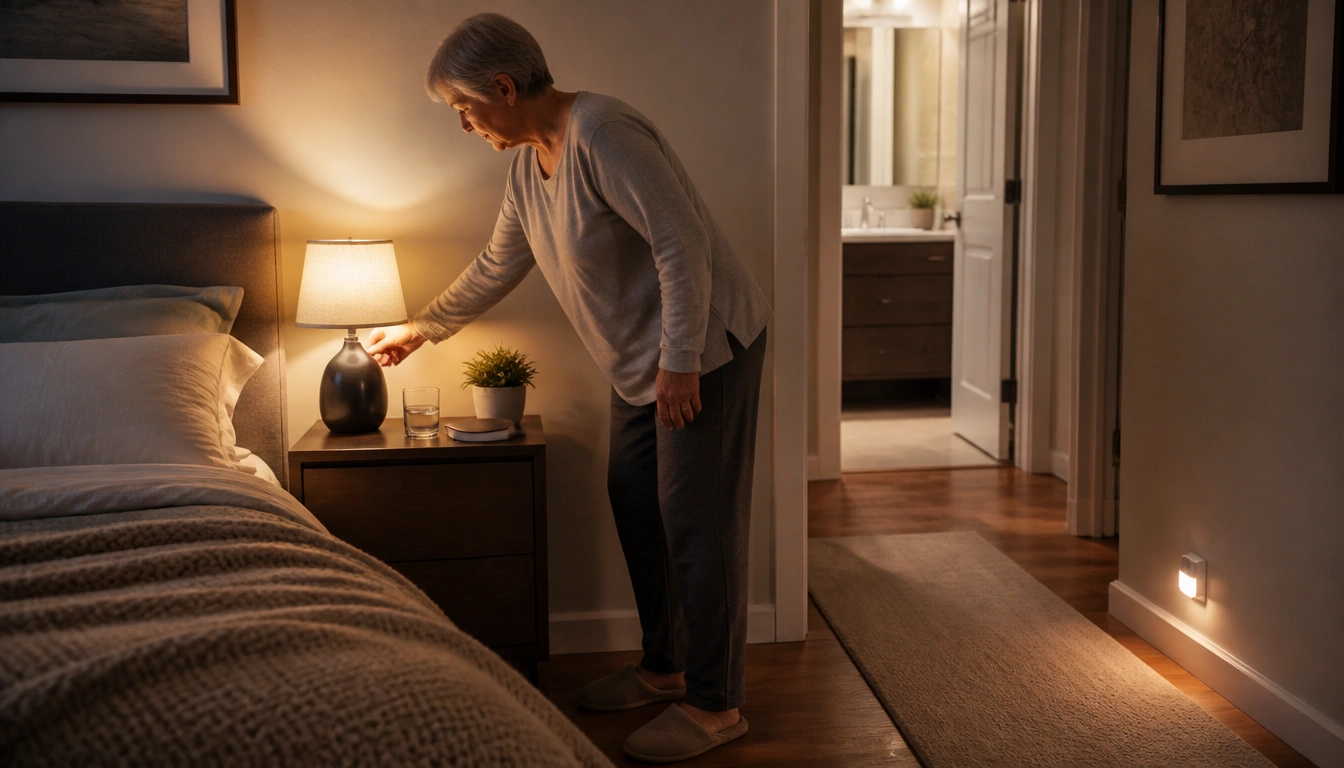
In the last hour before bed, focus on reducing light and stimulation, giving your body time to cool down, and avoiding habits that can fragment sleep. For adults over 50, a simple routine usually works best: dim screens or turn them off, do a calming activity, avoid late caffeine and heavy meals, prepare the bedroom, and make nighttime bathroom trips safer. Consistency matters more than perfection.
Key Takeaways
- A 30–60 minute wind-down can help cue melatonin, reduce alertness, and make sleep feel less abrupt after a busy day.
- Adults over 50 often sleep more lightly and wake more easily, but that does not mean poor sleep is inevitable or untreatable.
- Caffeine, alcohol, heavy late meals, and bright screens can all work against sleep pressure and normal sleep timing.
- A warm shower or bath, gentle stretching, or quiet reading can support the body’s natural drop in core temperature before sleep.
- If you wake at night, safe low-light pathways, clear floors, and motion-activated nightlights can reduce fall risk.
- Loud snoring, gasping, crawling leg sensations, or chronic insomnia are not just “normal aging” and deserve medical attention.
Why sleep changes after 50 and how a wind-down routine helps
Many adults notice that sleep becomes lighter after 50, with more brief awakenings and a greater chance of waking early. That can happen because circadian rhythms shift with age and deep sleep often becomes less abundant. The National Institute on Aging and the CDC both emphasize that older adults still need about 7 to 9 hours of quality sleep, even if the pattern is different from what it was decades earlier.
A wind-down routine helps because sleep is not a switch you flip at bedtime. It is the result of several signals lining up. Evening darkness supports melatonin release, daytime wakefulness builds adenosine-related sleep pressure, and the body needs a small drop in core temperature to fall asleep smoothly. A steady routine gives your brain repeated cues that it is time to transition.
The goal is not a perfect ritual. The goal is to make the last hour before bed predictable, quiet, and low effort so your nervous system has fewer reasons to stay alert.
A simple 60-minute sequence:
- 60 minutes before bed: stop mentally “pushing through” tasks, reduce bright light, and begin lowering the pace of the evening.
- 45 minutes before bed: choose one calming activity that is easy to repeat.
- 30 minutes before bed: finish food, alcohol, or caffeine decisions for the night and prepare the bedroom.
- 15 minutes before bed: use the bathroom, set out what you need for the morning, and get into a sleep-ready environment.
For many people, this sequence is more effective than trying to fall asleep by force. It helps the body get there on its own.
Screen and light control without making evenings feel strict
Light matters because it tells the brain whether it should stay alert or start producing melatonin. Bright screens, overhead lights, and late-night scrolling can all keep your brain in a more wakeful state than you intend. This tends to matter more after 50, when sleep may already be lighter and more easily interrupted.
You do not need a no-screen rule to get benefits. A more realistic approach is to lower brightness, reduce exposure time, and avoid content that keeps your mind revved up. If you must use a phone or tablet, turn on the dimmest comfortable setting and keep the device at arm’s length. If possible, shift to non-screen activities during the final part of the evening.
Helpful screen changes:
- Turn off the television if you usually doze off with it on.
- Set devices to the lowest practical brightness.
- Avoid news, work email, or anything emotionally activating near bedtime.
- Use a paper book, audiobook, or quiet music instead of endless scrolling.
Keep the routine flexible. If screens are part of your social life, the main aim is to reduce stimulation, not to create a rigid rule that feels impossible to follow.
Warm shower or bath, stretching, or reading: choosing low-stimulation activities
A warm shower or bath can be a useful part of a bedtime routine because it supports the body’s natural cooling process. Warm water opens blood vessels near the skin; after you step out, heat dissipates more easily, which can help the slight core temperature drop that supports sleep onset. For many people, the timing works best about 30 to 60 minutes before bed.
Gentle stretching can also help if it feels relaxing rather than energizing. Keep movements slow and easy. The goal is to release physical tension, not to do a workout. Reading a physical book, listening to calm audio, or sitting quietly in low light are also reasonable options.
What tends to help most is choosing one low-stimulation habit and repeating it regularly. That creates a cueing effect. Your brain starts associating the activity with sleep and begins to settle sooner.
Choose activities that:
- Feel boring in a good way.
- Do not require problem-solving or urgency.
- Do not leave you emotionally charged.
- Can be repeated most nights without much effort.
If a bath or shower leaves you too alert, try moving it earlier or choosing something gentler. Not every relaxing habit suits every person.
Food, drink, caffeine, and alcohol timing
Eating too heavily late in the evening can make sleep harder by causing reflux, discomfort, or a sense of fullness that keeps you awake. This is especially important if you already wake often or notice indigestion at night. A light evening meal is usually easier on sleep than a large, rich, or high-fat meal close to bedtime.
Caffeine deserves special attention because it blocks adenosine, the chemical signal that builds sleep pressure across the day. In some people, caffeine lingers for hours and still affects sleep even when taken earlier than expected. That is why a midday cutoff is often a practical choice, especially if sleep is already fragile.
Alcohol can feel sedating at first, but it often fragments sleep later in the night. It may increase awakenings and make breathing problems such as sleep apnea worse. If you drink, treat alcohol as something that can interfere with sleep quality, even if it seems to help you fall asleep faster.
If you are hungry at night: a small, easy-to-digest snack is usually better than going to bed very hungry. Think light and simple rather than heavy or spicy. The main idea is to avoid a full stomach while also preventing hunger from keeping you awake.
Practical evening rules:
- Finish caffeine earlier in the day, especially if you are sensitive to it.
- Keep dinner moderate rather than heavy and late.
- Limit alcohol if nighttime waking is a problem.
- If needed, choose a small snack instead of lying down hungry.
If reflux, diabetes, or another condition affects what you can eat or drink at night, individual guidance matters more than general sleep advice.
Bedroom setup for better sleep
Your bedroom can either support sleep or make the night feel more fragmented. A cooler room, lower light, and less noise usually make it easier to drift off and return to sleep after brief awakenings. Adults over 50 may notice these factors more because sleep can become lighter and more easily disrupted with age.
Start with temperature. Many people sleep better in a cool room rather than a warm one, though the exact preference varies. Darkness also matters because even small amounts of light can make the room feel less restful. Blackout curtains, a sleep mask, or turning off glowing devices can help.
Noise is another common issue. White noise, a fan, earplugs, or closing a door may help if the environment is inconsistent or if small sounds wake you. Keep the setup simple so it is easy to maintain every night.
Bedroom checklist:
- Make the room cool enough to feel comfortable under the covers.
- Block or reduce outside light.
- Limit light from chargers, clocks, and electronics.
- Reduce random noise where possible.
- Keep essentials within reach so you do not need to search for them at night.
If your sleep space feels too cold, too dry, or too noisy, making one small change at a time is often more sustainable than trying to fix everything at once.
Fall prevention and bathroom-trip safety at night
Nighttime bathroom trips become more important with age because vision, balance, joint stiffness, and nighttime grogginess can make walking in the dark riskier. If you wake up to urinate, the goal is to make the path clear before you are half asleep.
Use warm-toned, dim nightlights or motion-activated lights rather than bright overhead lighting. Harsh light can make it harder to fall back asleep, but completely dark paths are also unsafe. The best setup lets you see where you are going without fully waking your brain.
Safer nighttime navigation:
- Keep floors free of cords, shoes, pet toys, and loose rugs.
- Make the route to the bathroom as direct as possible.
- Use a stable bedside lamp or motion light if needed.
- Keep glasses, a cane, or other mobility aids within reach.
- Avoid rushing, especially if you feel dizzy when standing up.
If nighttime urination is frequent, address the bedroom environment and also consider whether fluids, medications, or a medical issue may be contributing. Safety and the cause of waking both matter.
Red flags that suggest sleep apnea, restless legs, or chronic insomnia
Not all sleep trouble after 50 is normal aging. Some symptoms suggest a sleep disorder or another medical issue. Loud snoring, gasping, choking, or witnessed pauses in breathing are classic warning signs of obstructive sleep apnea and should be discussed with a clinician. Sleep apnea can cause unrefreshing sleep even when time in bed seems adequate.
Restless legs syndrome is different. It often feels like an uncomfortable urge to move the legs, especially in the evening or when sitting still. People sometimes describe crawling, pulling, tingling, or a need to keep moving to relieve discomfort. That is not the same as ordinary restlessness.
Chronic insomnia is also worth attention when trouble falling asleep, staying asleep, or waking too early happens at least three nights a week for more than a month and starts to affect daytime functioning. If you are sleepy, irritable, foggy, or worried about sleep most days, self-help alone may not be enough.
Seek medical advice if you notice:
- Loud snoring with gasping or breathing pauses.
- An urge to move the legs that worsens at night.
- Persistent trouble sleeping that affects daily life.
- Sleep that is getting worse despite a solid routine.
These problems are common, but they are also treatable. Getting checked can prevent months of poor sleep from becoming your new normal.
How to adapt the checklist for reflux, nocturia, or an irregular schedule
A good evening routine should fit your life, not the other way around. If reflux bothers you, finish dinner earlier and avoid lying down soon after eating. If nighttime urination is the main issue, focus on bathroom safety, but also consider whether evening fluids or medications are part of the pattern. If your schedule is irregular, anchor the routine to your actual bedtime rather than to an idealized clock time.
Some people do best with a shorter routine, such as 30 minutes instead of a full hour. Others need the full window because they take longer to unwind. The best version is the one you can repeat often enough to matter.
If stress is the main barrier, use the first part of the wind-down to offload tomorrow’s tasks on paper and then stop problem-solving for the night. If pain or stiffness is the issue, gentle movement, heat, or supportive bedding may be more useful than reading. The checklist is a framework, not a rulebook.
Personalize it like this:
- Reflux: earlier dinner, smaller portions, and more upright time before bed.
- Nocturia: clear path to the bathroom and reduced evening disruption.
- Irregular schedule: keep the same sequence even if bedtime shifts.
- Stressful evenings: use a brief written plan to settle your thoughts.
If you keep adjusting the routine and still sleep poorly, that is a sign to look beyond habits alone.
Frequently Asked Questions
What is the best bedtime routine for adults over 50?
The best routine is one you can repeat most nights. A practical version is to dim lights, reduce screens, avoid caffeine and heavy food late, take a warm shower or bath if it helps, and keep the bedroom cool and quiet. Consistency matters more than doing every step perfectly.
How early should adults over 50 stop drinking caffeine?
A midday cutoff is a good starting point for many adults over 50, especially if sleep is light or you wake during the night. Some people are more sensitive and may need an even earlier cutoff. The closer caffeine is to bedtime, the more likely it is to interfere with sleep pressure.
Is a warm shower or bath before bed actually helpful for sleep?
Yes, it can be. Warm water may help the body release heat afterward, which supports the natural drop in core temperature that helps initiate sleep. It works best when done as part of a calm wind-down rather than as an energizing routine.
What should I avoid eating or drinking at night if I wake up often?
Try to avoid heavy, rich, or spicy meals close to bedtime, and limit alcohol if nighttime waking is a problem. If you are hungry, a small, easy-to-digest snack is usually better than going to bed hungry. If reflux is a concern, timing matters even more.
How can I make my bedroom safer if I get up at night?
Use dim, warm-toned nightlights or motion-activated lights, clear the floor, and keep the path to the bathroom free of obstacles. Put glasses, shoes, and any mobility aids within reach. The goal is to reduce fall risk without flooding the room with bright light.
The Bottom Line
For adults over 50, the last hour before bed should lower stimulation, support melatonin, and make nighttime waking safer. A predictable sequence — dimmer light, less screen time, a calming activity, and a prepared bedroom — often works better than a long list of sleep rules.
Pay attention to caffeine, alcohol, late meals, and your sleep environment, because these are common reasons sleep gets lighter or more broken up with age. If your routine is still not helping, or you have snoring, gasping, restless legs, or chronic insomnia, it is worth getting checked rather than assuming it is just aging.
Medical disclaimer
Medical disclaimer: This content is for educational and informational purposes only and is not a substitute for professional medical advice, diagnosis, or treatment. Dietary needs and supplement suitability vary by individual.
Sources
- National Institutes of Health (NIH) — nih.gov. Accessed October 2026.
- Centers for Disease Control and Prevention (CDC) — cdc.gov. Accessed October 2026.
- National Institutes of Health (NIH) — nih.gov. Accessed October 2026.
- National Health Service (NHS) — www.nhs.uk. Accessed October 2026.
