
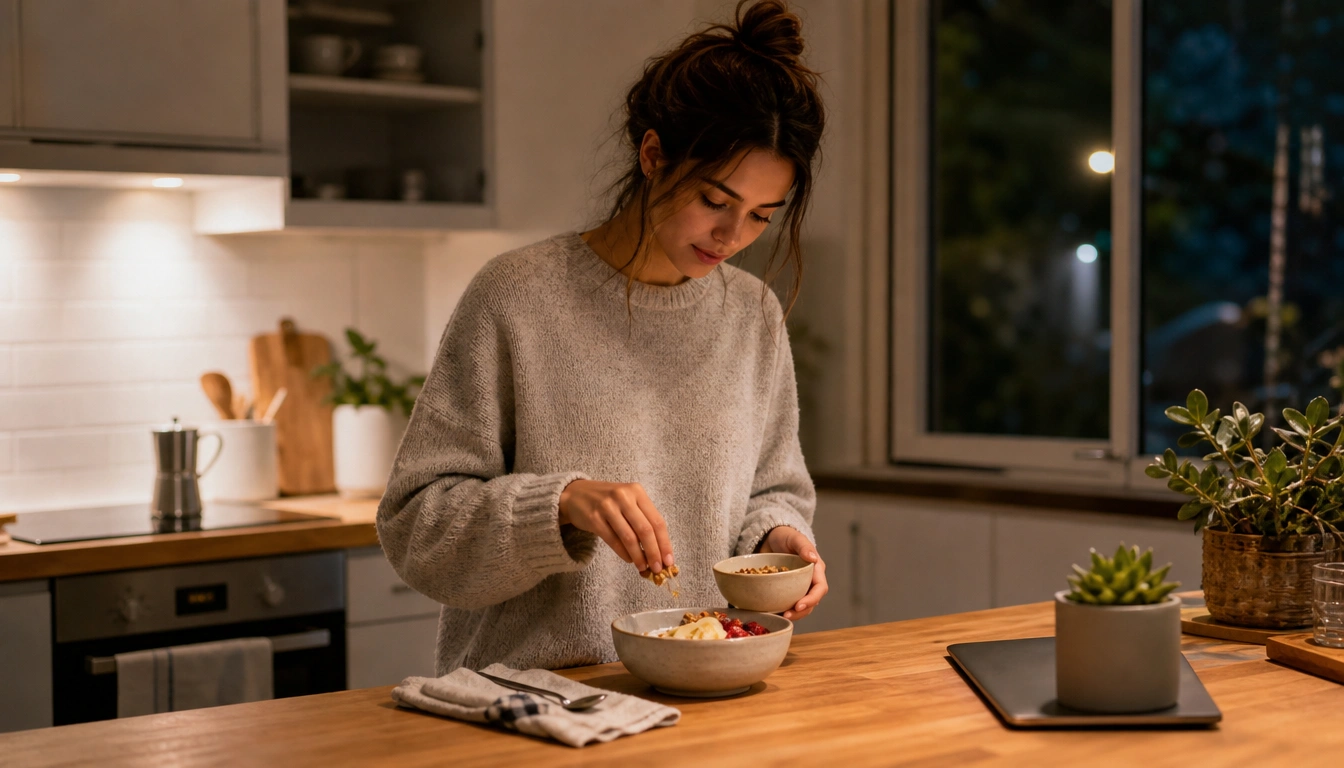
If you’re working from home and want a nighttime snack that is less likely to keep you awake or upset your stomach, choose a small portion that combines a light carbohydrate with a little protein or soothing dairy, and eat it well before bed. Good options include oatmeal, yogurt with fruit, a banana with a little nut butter, or whole-grain crackers with hummus. Avoid caffeine, alcohol, heavy fried foods, and very spicy snacks close to bedtime.
Key Takeaways
- A sleep-friendly evening snack is usually small, simple, and easy to digest—not a second dinner.
- A light carbohydrate plus a little protein can be more sleep-friendly than protein alone for some people.
- For most adults, stopping food 60 to 90 minutes before bed helps reduce reflux and sleep disruption; some people need a longer gap.
- Caffeine, chocolate, alcohol, heavy fatty foods, and spicy foods are common nighttime sleep disruptors.
- If you have GERD, IBS, diabetes, insulin resistance, or irregular late shifts, the best snack and timing may need to be adjusted.
- Remote work snacks are often driven by boredom, stress, or fatigue, so checking your real hunger signal matters as much as the food choice.
Why remote work changes evening hunger and sleep risk
Working from home can make evening snacking feel almost automatic. The pantry is close, the laptop is still open, and your day may stretch later than it would in an office. That matters because late-night eating is not only about calories; it can also affect how easily you fall asleep and how comfortably you sleep once you do.
Remote work can blur the usual cues that tell you dinner is over. A person may snack because they are genuinely hungry, but they may also reach for food because they are bored, mentally drained, stressed, or trying to stay alert for one more meeting or email. The CDC notes that regular routines support sleep, and a predictable evening pattern can be part of that.
The other issue is timing. When food sits too close to bedtime, digestion may compete with sleep. For some people that means reflux, a heavy feeling, or waking up more often overnight. Sleep-friendly evening snack ideas work best when they fit the rhythm of your evening instead of adding another large eating window after dinner.
What makes a snack sleep-friendly
A snack that supports sleep is usually modest in size, not overly rich, and built from foods that are easy to tolerate. Think of it as a bridge between dinner and bedtime, not a second meal. The goal is to satisfy real hunger without triggering fullness, indigestion, or a blood sugar swing that leaves you feeling restless.
One helpful pattern is a small carbohydrate paired with a little protein. Research-based sleep guidance explains that tryptophan, an amino acid used to make serotonin and melatonin, may reach the brain more easily when carbohydrates trigger a small insulin response. That response can shift other amino acids out of the way, giving tryptophan a clearer path. In plain language, a light carb plus a little protein can be more sleep-friendly than protein alone for some people.
That does not mean every snack has to follow one formula. Some people do well with dairy, others prefer grains, and some feel best with fruit and a small amount of nut butter. The more important rule is moderation. Large portions, greasy foods, and very sugary snacks are more likely to leave you uncomfortable than relaxed.
Best food-first evening snack ideas
Good sleep-friendly snacks are simple enough to prepare when you are tired and still balanced enough to feel satisfying. Oatmeal is one of the easiest examples. A small bowl made with milk or fortified plant milk gives you a gentle carb base, plus fluid and a little protein. It is warm, soft, and usually easy to digest.
Banana with a thin layer of almond butter is another practical option. The banana provides carbohydrate and potassium, while the nut butter adds a small amount of protein and fat. Keep the portion modest so it stays light. If you prefer dairy, plain yogurt or cottage cheese with kiwi can be a good choice. The yogurt or cottage cheese contributes protein, and kiwi adds a fresh, lower-effort fruit option that many people find easy to tolerate.
Whole-grain crackers with hummus or a small slice of turkey can also work, especially if you need something more savory. The crackers supply the carbohydrate piece, while the hummus or turkey adds protein. If you want a beverage instead of food, a small cup of tart cherry juice or chamomile tea can fit a wind-down routine. Tart cherries contain natural melatonin and plant compounds that have been studied for sleep support, while chamomile offers a caffeine-free cue that the evening is ending.
If you are trying to keep things even lighter, think in terms of a few bites rather than a full snack plate. A small bowl, not a large container, helps keep the portion honest.
When to eat the snack
For most people, finishing an evening snack about 60 to 90 minutes before bed is a useful target. That gives your stomach some time to start digesting before you lie down, which may reduce reflux and the sense of heaviness that can interfere with sleep onset.
People who are prone to reflux, slow digestion, or discomfort when they lie flat often need a longer gap. In those cases, a lighter snack earlier in the evening may work better than eating close to lights-out. If you know certain foods trigger symptoms, timing matters even more than the exact menu.
The same idea applies to late-shift schedules. If your workday runs late, the best move is usually to keep the snack small and avoid turning it into a second dinner. A light, balanced option is easier on digestion than a large late meal, especially when you still need to sleep soon after.
What to avoid at night
Several common foods and drinks are more likely to interfere with sleep than help it. Caffeine is the clearest one. Coffee, many teas, cola, energy drinks, and chocolate can all keep you wired longer than you want, especially if you are sensitive or you drink them late. Caffeine can delay sleep onset and make sleep lighter.
Alcohol is another common trap. It may feel relaxing at first, but it tends to fragment sleep later in the night. That means you may fall asleep faster and still wake up unrefreshed. Heavy, fatty foods can also be a problem because they slow digestion and may worsen reflux. Spicy foods are not a sleep problem for everyone, but if they bother your stomach, they are best kept away from bedtime.
Large portions are worth avoiding even if the ingredients seem healthy. A big bowl of “healthy” granola, a large smoothie, or a huge serving of leftovers can still leave you too full to sleep comfortably.
How to tell real hunger from boredom or stress
Remote work makes it easy to snack by habit. Before you eat, pause long enough to ask what kind of hunger you are actually feeling. Physical hunger usually builds gradually and may come with a growling stomach, low energy, or difficulty focusing. Boredom hunger tends to arrive suddenly, often after scrolling, answering email, or sitting through a stressful meeting.
A quick check can help: would you eat plain oatmeal, yogurt, or toast? If the answer is no and you only want something salty, sweet, or crunchy, the urge may be more about stimulation than nutrition. Another useful test is to drink a glass of water, stretch, or step away from the screen for a few minutes. If the craving fades, you probably did not need food right away.
That said, if you truly are hungry, ignoring it can backfire and leave you more alert or irritable. The goal is not to force restraint. It is to match the response to the reason.
Adjustments for GERD, IBS, diabetes, and late shifts
If you have GERD, the best bedtime snack is often the simplest one you can tolerate in the smallest portion that still feels satisfying. Reflux-prone sleepers usually do better with earlier timing, smaller servings, and fewer trigger foods. If tomatoes, citrus, chocolate, mint, fried foods, or spicy foods bother you, keep them out of your late-evening routine.
With IBS, the issue is often individual tolerance rather than one universal rule. Some people handle yogurt, oats, or fruit well, while others do not. If a food regularly causes bloating, cramping, or urgent bowel symptoms, it is not a good bedtime choice even if it is generally considered healthy.
For diabetes or insulin resistance, evening snacks should be personalized. Some people need a snack to prevent overnight lows, while others sleep better with no food close to bedtime. In that situation, your clinician or dietitian can help you match timing and carbohydrate amount to your treatment plan. If you work late shifts, the same principle applies: eat for your schedule, but keep the late-night option light and predictable.
People with these conditions should think less about “the perfect snack” and more about the snack that is most likely to leave them stable, comfortable, and ready for sleep.
Simple wind-down swaps that support sleep
Food works best as part of a wider evening routine. If you usually snack while still answering messages or watching bright screens, try linking food with a clear stopping point. Finish the snack, close the laptop, and switch to a low-stimulation activity such as reading, stretching, or preparing for the next morning.
Drink choices matter too. If you want something warm, chamomile tea is a gentle caffeine-free option. If you prefer a cold drink, water is often enough, especially if you are not truly hungry. Tart cherry juice can be used in a small amount if it fits your digestion and blood sugar plan, but it should still be treated as part of your intake, not a free sleep hack.
It also helps to create a repeatable cue that says “work is done.” That might be washing the mug, putting snacks away, dimming lights, or moving your device out of the bedroom. A consistent cue does not just reduce snacking. It also helps your brain shift from work mode to rest mode, which is the real goal of a sleep-friendly evening routine.
Frequently Asked Questions
How long before bed should I stop eating if I want better sleep?
A common target is to finish any evening snack about 60 to 90 minutes before bed. If you have reflux, slow digestion, or a sensitive stomach, a longer gap may be more comfortable. The best timing is the one that lets you lie down without feeling too full or uneasy.
Which evening snacks are least likely to trigger reflux or heavy digestion at night?
Smaller, simpler snacks are usually best. Plain oatmeal, yogurt, cottage cheese, a banana with a little nut butter, or whole-grain crackers with hummus are common options. For reflux-prone sleepers, portion size and timing matter as much as the food itself.
Are there foods or drinks I should avoid at night because they can delay sleep?
Yes. Caffeine, chocolate, and alcohol are the biggest common issues. Heavy, fried, and very spicy foods can also make sleep harder, especially if they cause reflux or a heavy stomach. If you are sensitive, even smaller amounts can matter late in the evening.
What’s the difference between a sleep-friendly snack and a late-night craving snack?
A sleep-friendly snack usually answers real hunger and leaves you comfortably satisfied. A craving snack is often driven by boredom, stress, fatigue, or screen time and may be high in sugar, salt, or caffeine. If the urge appears suddenly and only one specific food sounds good, pause and check the trigger.
Can tart cherry juice, chamomile, kiwi, yogurt, or oatmeal actually help with sleep?
These foods and drinks can be part of a sleep-friendly routine, but they are not magic fixes. Tart cherry juice contains natural melatonin, chamomile is calming and caffeine-free, kiwi has been studied for sleep support, and yogurt or oatmeal can be easier on the stomach than heavier snacks. Their effect is usually modest and depends on your overall routine.
The Bottom Line
If you are working from home and want a nighttime snack that is less likely to disrupt sleep, keep it small, simple, and early enough that digestion can settle before bed. A light carbohydrate with a little protein is often a better fit than a heavy, greasy, or caffeinated snack.
The best choice depends on your body. GERD, IBS, diabetes, insulin resistance, and late shifts can all change what works and when it works. If sleep problems, reflux, or fatigue keep happening, it is worth discussing your pattern with a healthcare professional rather than trying to solve it only with food.
Medical disclaimer
Medical disclaimer: This content is for educational and informational purposes only and is not a substitute for professional medical advice, diagnosis, or treatment. Dietary needs and supplement suitability vary by individual.
