
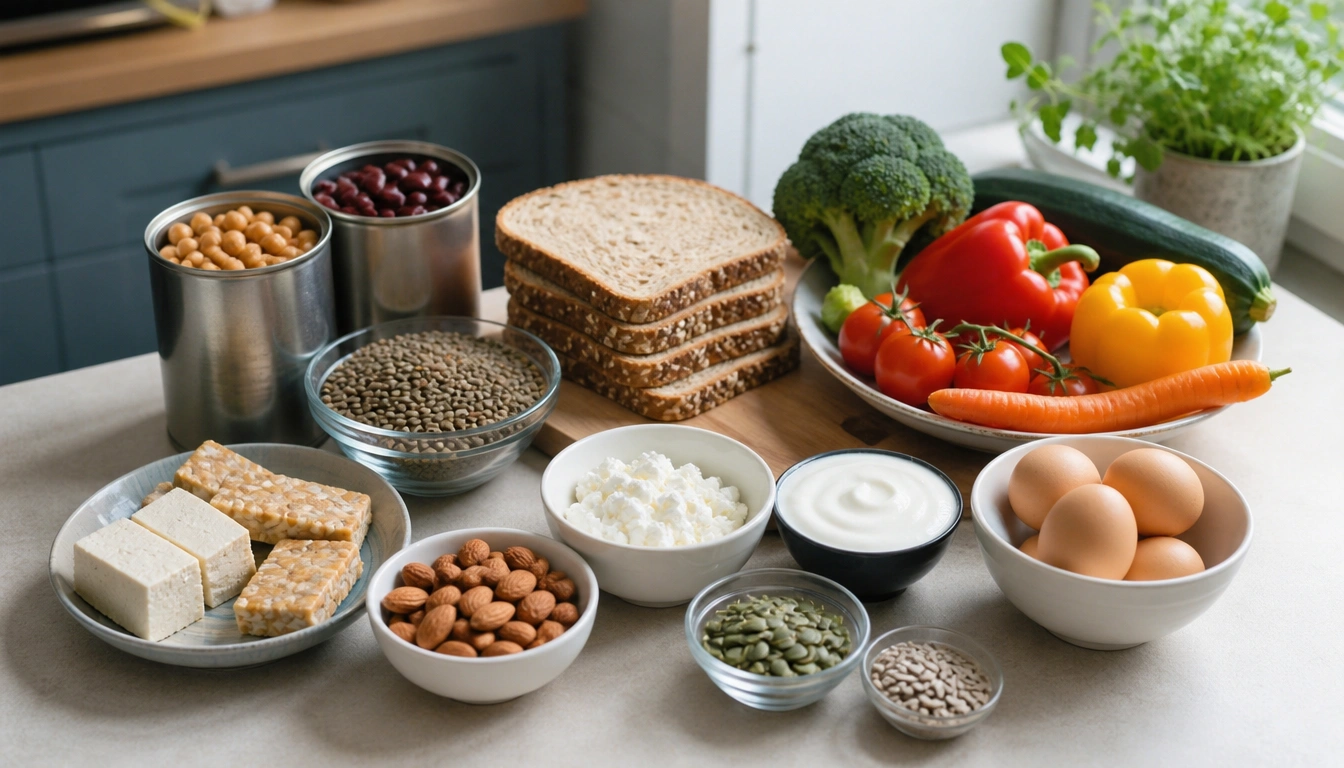
The easiest vegetarian protein foods to use right away are tofu, tempeh, canned beans, lentils, eggs, Greek yogurt, cottage cheese, nuts, seeds, and nut butters. You do not need to make every meal perfect; a varied day of eating is usually enough to cover essential amino acids. Start by adding one protein anchor to each meal and build from there.
Key Takeaways
- You do not need to combine plant proteins perfectly at every meal; variety across the day is what matters most.
- Beginner-friendly options include canned beans, lentils, tofu, tempeh, eggs, Greek yogurt, cottage cheese, nuts, seeds, and nut butters.
- A protein anchor approach makes meals easier: keep the foods you already eat and add one obvious protein source.
- If you have a small appetite, choose more concentrated options such as tofu, tempeh, Greek yogurt, cottage cheese, nut butters, and seeds.
- Beginners often overuse cheese; balancing it with legumes, soy foods, and seeds helps keep saturated fat in check.
- If you move toward vegan eating, pay attention to vitamin B12; plant iron can also absorb better when paired with vitamin C.
Why vegetarian protein is easier than beginners think
Easy vegetarian protein sources for beginners are less about memorizing rules and more about learning a few repeatable foods. Major nutrition groups, including the Academy of Nutrition and Dietetics, recognize that well-planned vegetarian diets can meet protein needs at every life stage. For most people, the challenge is not whether enough protein exists in the diet. It is usually choosing a few convenient foods and using them consistently.
The common fear is that vegetarian protein is fragile or incomplete unless every meal is engineered with precision. That is not how the body works. Your body keeps an amino acid pool that can be drawn on across the day, so the old idea that you must match specific plant foods at each meal is outdated. A mix of beans, grains, soy foods, dairy, eggs, nuts, and seeds over the course of the day is generally enough for healthy adults.
That is why beginner success often comes from simplicity, not complexity. If you already know how to make a sandwich, soup, pasta, or stir-fry, you can make it vegetarian without starting over. The job is to identify a few proteins you actually like and keep them within easy reach.
Easy vegetarian protein sources for beginners and how to build a protein anchor
A useful beginner strategy is the protein anchor approach. Choose one clear protein source and build the meal around it instead of trying to make the entire plate “perfect.” If lunch is a salad, the anchor might be chickpeas, tofu, eggs, or cottage cheese. If dinner is pasta, the anchor might be lentils, tempeh, or a bean-based sauce.
Some of the easiest foods need almost no skill at all:
- Canned beans: rinse and add to tacos, soups, grain bowls, or salads.
- Lentils: use red lentils for quick soups or sauces; they cook faster than many other legumes.
- Tofu: firm or extra-firm tofu can be cubed, baked, pan-seared, or scrambled.
- Tempeh: slice and pan-fry it, then add it to stir-fries, sandwiches, or bowls.
- Eggs: quick to cook and easy to add to toast, rice, noodles, or vegetables.
- Greek yogurt and cottage cheese: convenient for breakfasts, snacks, and savory bowls.
- Nuts, seeds, and nut butters: useful when you need a no-cook boost with less volume.
The biggest beginner mistake is waiting for one “perfect” vegetarian recipe before eating well. Instead, treat protein like a building block. If breakfast is oatmeal, stir in nut butter or seeds. If lunch is a wrap, add hummus plus beans or eggs. If dinner is soup, make sure it contains lentils, tofu, or another protein you can see and taste.
Low-effort pantry and fridge stocking plan for busy beginners
If you want vegetarian meals to feel easy, stock foods that solve decisions fast. The fewer barriers between “I am hungry” and “I have something to eat,” the better your routine tends to go. A small starter supply is often enough:
- 2 to 3 cans of beans, such as black beans, chickpeas, or kidney beans
- 1 or 2 packages of tofu or tempeh
- Dry or canned lentils
- Eggs, if you eat them
- Plain Greek yogurt or cottage cheese
- Peanut butter or another nut butter
- Seeds such as chia, hemp, or pumpkin seeds
- A few dependable grain foods, such as whole-grain bread, rice, or oats
This is not about creating a huge “health food” kitchen. It is about reducing the need for last-minute improvisation. A can of beans plus rice becomes a meal. Yogurt plus fruit plus seeds becomes breakfast. Peanut butter on toast becomes a snack that actually holds you over. The most useful pantry foods are the ones you can use without a recipe.
It also helps to keep one or two backup proteins that require minimal cooking. Tofu, eggs, Greek yogurt, and canned beans can prevent the common beginner pattern of ending up with a meal that is mostly bread, pasta, or vegetables and not enough protein to keep you satisfied.
Smart meat swaps in familiar meals
One of the easiest ways to eat vegetarian is to keep your familiar meals and swap the protein. You do not need a whole new menu. You can use the same seasonings, sauces, and cooking style you already know.
For chili, replace ground beef with beans, lentils, or a mix of both. For tacos, use black beans, refried beans, scrambled eggs, tofu crumbles, or tempeh. For curry, add chickpeas, lentils, or cubes of tofu. For pasta sauce, stir in red lentils, crumbled tempeh, or white beans. For stir-fries, add tofu, tempeh, edamame, or a handful of cashews or peanuts.
If you are used to meat-based meals, these swaps work because they preserve the comfort of the meal while changing the protein source. The seasoning stays familiar, which lowers the learning curve. The texture may be different at first, but consistency matters more than perfection in the early weeks.
These swaps also help you avoid the trap of accidentally building meals around only starch and vegetables. A pasta dinner can be filling and still fall short on protein if the sauce is light and there is no added bean, soy, egg, or dairy component. A few deliberate additions solve that quickly.
When bulky high-fiber foods are not enough
Beans, lentils, whole grains, and many vegetables are excellent vegetarian foods, but they can be filling fast because they contain fiber and water. That is a benefit for many people. It can also be a problem if you have a small appetite, are recovering from illness, or simply get full before you have eaten enough.
In those cases, concentrated protein foods are often more practical than bulky ones. Greek yogurt, cottage cheese, tofu, tempeh, nut butters, seeds, eggs, and some soy-based foods pack more protein into a smaller volume. They can help you meet your needs without forcing you to eat a huge plate of food.
Older adults may find this especially useful, since appetite can decrease with age. A smaller appetite does not mean protein needs disappear. It just means the form of the protein matters more. A bowl of lentil soup may be healthy, but a smaller serving paired with yogurt, eggs, tofu, or nut butter may be easier to finish.
If bulky foods make meals feel too large, try adding protein in layers instead of relying on one giant serving. For example, have yogurt with breakfast, beans at lunch, and tofu or eggs at dinner. Smaller, repeated protein anchors are often easier than one very large meal.
How to balance convenience with nutrition
Many vegetarian beginners lean heavily on cheese because it is easy, tasty, and familiar. Cheese can absolutely fit in a vegetarian pattern, but it is not the only convenient protein, and relying on it too much can crowd out legumes, soy foods, and seeds. It can also push saturated fat higher than you may intend, especially if cheese becomes the main protein in multiple meals a day.
A better pattern is to use cheese as one tool rather than the default. Combine it with other protein sources so your diet stays broader and more balanced. A quesadilla can include beans as well as cheese. A salad can include chickpeas and seeds with a smaller sprinkle of cheese. A pasta dish can use cottage cheese or ricotta in moderation, but still include lentils or another legume.
This balance matters because vegetarian diets work best when they are varied, not narrow. Legumes, soy, nuts, and seeds add more than protein alone. They also bring fiber, minerals, and different textures that make it easier to stick with the diet long term.
| If you want convenience | Try this first | Why it helps |
|---|---|---|
| Fast breakfast | Greek yogurt, cottage cheese, or eggs | High protein with very little prep |
| Fast lunch | Canned beans, hummus, or tofu in a wrap or bowl | Easy to assemble and satisfying |
| Fast dinner | Tempeh, tofu, or lentils in familiar sauces | Fits meals you already know |
| Fast snack | Nut butter, seeds, or yogurt | Useful when you need a smaller portion |
Key nutrient notes beyond protein
Protein is the headline concern for many beginners, but two other nutrients deserve attention: iron and vitamin B12. Plant-based iron is less efficiently absorbed than the iron found in meat. That does not mean vegetarians cannot get enough iron. It means food pairing matters more. According to the NHS, pairing iron-rich plant foods with vitamin C can improve absorption. Practical examples include lentils with peppers, beans with salsa, or spinach with citrus.
Vitamin B12 is a different issue. If you are eating eggs and dairy, B12 is usually less of a concern than it is for people who move fully toward vegan eating. Once the diet becomes fully plant-based, B12 needs more deliberate attention because it is not naturally present in unfortified plant foods. That is why people shifting from vegetarian to vegan eating often need to plan ahead rather than assume B12 will take care of itself.
These nutrients are worth watching, but they should not make vegetarian eating feel fragile. A varied diet built around beans, soy, dairy, eggs, grains, fruits, and vegetables can be both practical and nutritionally sound. The main adjustment is learning where the nutrients are coming from, not overcomplicating every meal.
Your first-week beginner checklist
For the first week, focus on habits that are easy to repeat. You do not need a total diet overhaul. You need a few dependable actions that make protein visible in your meals.
- Pick three protein anchors you will actually eat, such as beans, tofu, and Greek yogurt.
- Keep one no-cook protein option ready for busy days.
- Add protein to breakfast instead of saving it only for dinner.
- Use familiar meals like chili, tacos, pasta, or stir-fries and swap the protein source.
- Watch for the cheese-heavy pattern and add legumes, soy, or seeds to balance it.
- If your appetite is small, choose concentrated proteins instead of bulky portions alone.
- Include a vitamin C food when you eat an iron-rich plant meal.
The goal is not to become an expert immediately. The goal is to make vegetarian protein feel ordinary. Once a few foods become automatic, the rest gets much easier.
Frequently Asked Questions
Do I need to combine plant proteins at every meal to get enough protein?
No. The old rule about perfectly combining plant proteins at every meal is outdated for most healthy people. What matters more is eating a variety of protein foods across the day so your body has access to the amino acids it needs.
Which vegetarian protein foods are the easiest for beginners to prepare quickly?
The simplest choices are canned beans, lentils, tofu, tempeh, eggs, Greek yogurt, cottage cheese, nuts, seeds, and nut butters. Several of these need almost no cooking, which makes them especially useful when you are still learning.
How can I add more protein to meals without relying on meat or processed substitutes?
Use a protein anchor in meals you already make. Add beans to salads or tacos, tofu to stir-fries, lentils to pasta sauce, Greek yogurt to breakfast, or seeds and nut butter to snacks and oatmeal.
Are eggs and dairy necessary for vegetarian protein, or can plants alone be enough?
Plants alone can be enough if the diet is planned well. Eggs and dairy are convenient options for lacto-ovo vegetarians, but beans, lentils, soy foods, nuts, seeds, and whole grains can also provide protein in a balanced vegetarian diet.
What should older adults or people with smaller appetites do if bulky high-fiber foods fill them up too fast?
Choose more concentrated proteins such as tofu, tempeh, Greek yogurt, cottage cheese, eggs, nut butters, and seeds. These foods provide more protein in less volume, which can be easier to manage when appetite is limited.
The Bottom Line
Easy vegetarian protein does not have to be complicated. If you keep a few reliable foods on hand—beans, tofu, tempeh, eggs, yogurt, cottage cheese, nuts, and seeds—you can build meals quickly without obsessing over perfect combinations.
A simple protein anchor in each meal is usually enough to get started. From there, you can improve variety, reduce dependence on cheese, and adjust for appetite, age, or dietary preferences as needed.
If you later move toward vegan eating, give extra attention to vitamin B12, and remember that plant iron is easier to absorb when paired with vitamin C. That small bit of planning goes a long way.
Medical disclaimer
Medical disclaimer: This content is for educational and informational purposes only and is not a substitute for professional medical advice, diagnosis, or treatment. Dietary needs and supplement suitability vary by individual.
Sources
- National Health Service (NHS) — www.nhs.uk. Accessed October 2026.
- National Health Service (NHS) — uhsussex.nhs.uk. Accessed October 2026.
- National Health Service (NHS) — cuh.nhs.uk. Accessed October 2026.
- Academic Research Institution — dartmouth.edu. Accessed October 2026.
